
Amazing Animal Photos #2: Thirteen Frames of Timing and Temperament
From mountain goats and polar sparring to flamingo strides and elephant family lines—thirteen animal photographs that hinge on contact, motion, and stillness.
Part two of this weekly animal series keeps the original promise: incredible shots hinged on timing, closeness, and temperament. Where the first installment now reads as craft without its embedded gallery, this one still holds the pictures—thirteen frames spanning alpine goats and polar sparring, flamingo marches and kitten stares, galloping horses and a quiet line of elephants. Together they argue that “amazing” in animal photography is less about rarity of species than about a readable instant: contact, motion, or stillness that feels finished.
Scroll with an eye for pairs. Many of these images are duets—two bodies negotiating space. That pattern is not accidental. Social animals give photographers grammar: approach, reply, lean, open beak, raised paw. Solo animals give soliloquies. Both belong here.
1. Mountain goats on a bright ridge
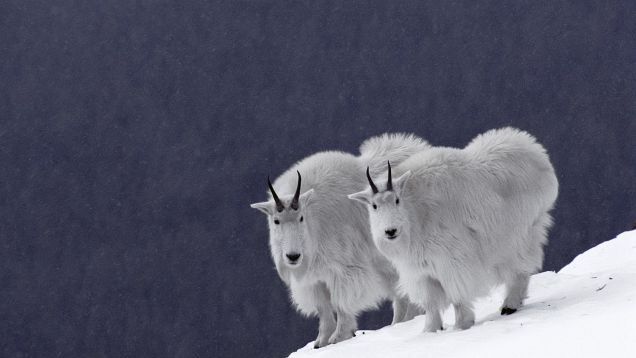
Two white mountain goats stand on a narrow snow edge against a dark, nearly abstract wall of rock or weather. Shaggy coats, black horns, and black noses punch contrast into the monochrome cold. Placed low in the frame, they feel precarious and calm at once—altitude as home, not stunt. Soft overcast light keeps fur detail instead of blowing the whites to blank paper.
2. Golden snub-nosed stillness
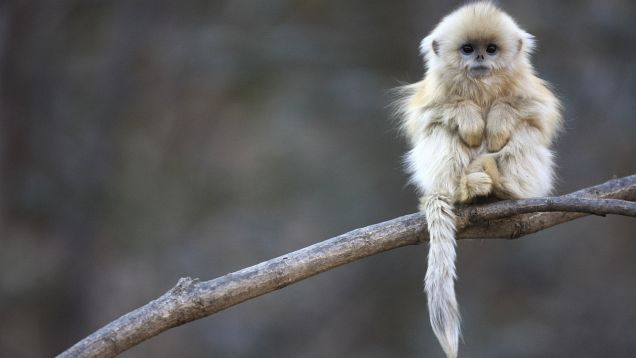
A pale, thick-coated golden snub-nosed monkey tucks onto a branch, creamy fur catching diffuse light, blue-gray face turned toward the lens. Tail hangs like a plumb line. Heavy bokeh turns forest into charcoal and olive wash so the animal reads as a lantern of texture. High-cold adaptation becomes visible: coat as climate gear, gaze as curiosity without chase energy.
3. Flamingos through reed water
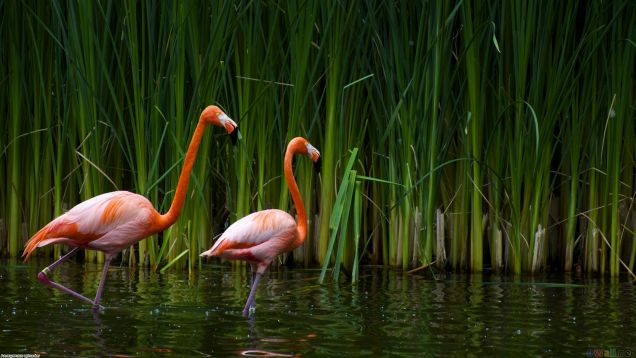
Two coral-pink flamingos wade left to right before a vertical curtain of green reeds. One leg lifts mid-stride; necks curve in different S-shapes; black-tipped bills cut graphic notes against dark water that holds their reflections. Warm plumage against cool marsh is classic color strategy. The moment is locomotion made elegant—neither feeding frenzy nor static postcard pose.
4. Polar bears upright in white
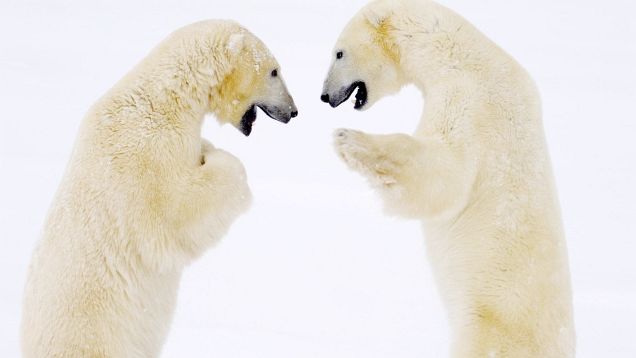
Two polar bears rise on hind legs into a blown-out white field—no horizon, only cream fur, black noses, and open mouths. One paw lifts between them. Sparring or play practice reads as dance when landscape disappears. Minimalism forces attention onto muscle, breath, and social rules among animals strong enough to injure and often careful enough not to.
5. Emperor chicks in conversation
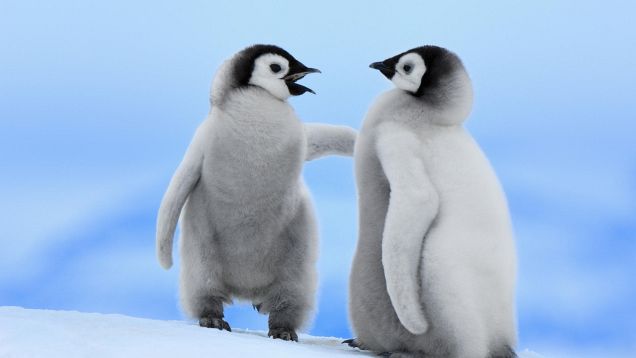
Two downy emperor penguin chicks face each other on a snow ridge. One beak gapes; a flipper extends as if emphasizing a point. Soft blue distance keeps Antarctica present without stealing focus. Juvenile gray fluff and black-and-white facial patches turn social noise into a readable scene: colony life scaled down to a two-body argument or greeting.
6. Cheetahs allogrooming
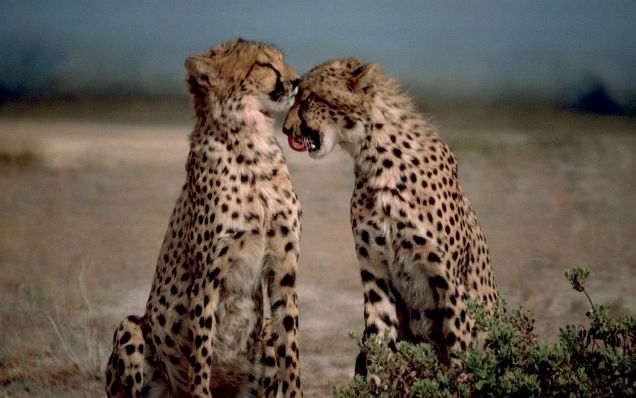
On dusty savanna ground, one cheetah licks the forehead and ear of another, pink tongue visible, eyes of the recipient nearly closed. Tear tracks, spot fields, and lean muscle stay sharp while scrubland softens behind. Speed is the species myth; here the photograph chooses trust. Coalitions and siblings bond through grooming—intimacy as maintenance, not sentimentality pasted on.
7. Rabbits nose to nose
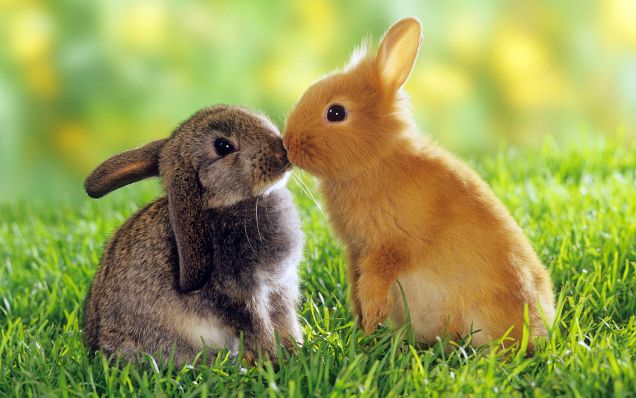
In sunlit grass, a gray-brown rabbit and a golden one meet at the whiskers. Bokeh circles of green and yellow turn the meadow into jewelry around a small ceremony of smell and greeting. Low angle and sharp near blades sell immersion. Domestic or wild-adjacent, the frame still hinges on timing: contact lasts a blink before one animal startles away.
8. Panda lounging through a snack
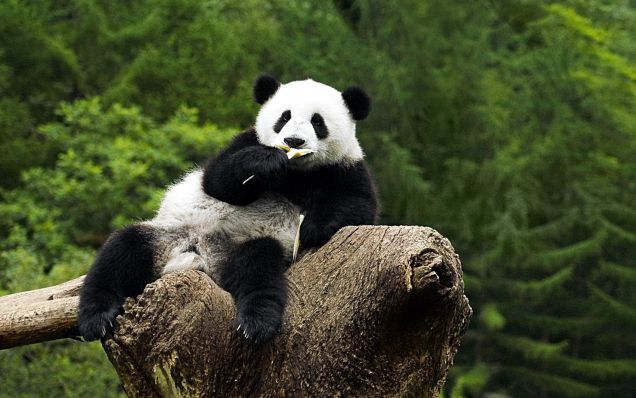
A giant panda reclines against weathered wood, belly forward, paw delivering pale bamboo to the mouth—sofa posture in a forest. Black-and-white pattern locks against blurred greens. Humor arrives without captions because the body language is so human-legible. Candid eating beats staged “look at camera” every time; appetite is honest choreography.
9. White horses and dust
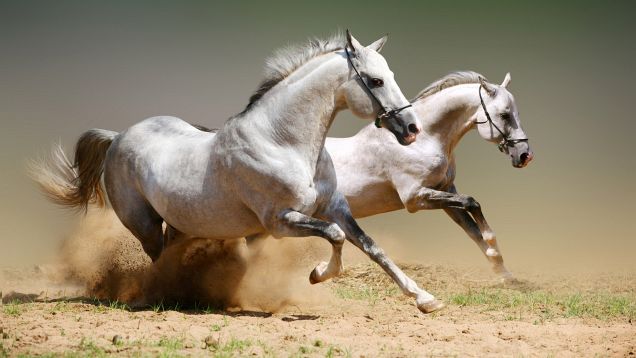
Two light horses gallop left to right, muscles defined, nostrils open, a sand cloud blooming behind hooves. Thin dark halters hint at managed lives, yet the physics remain wild: suspension, stride, grit. Shallow depth keeps coats luminous against muted greens and browns. Action photography’s right moment is a leg pattern that still reads as power when frozen.
10. Blue-eyed longhair kittens
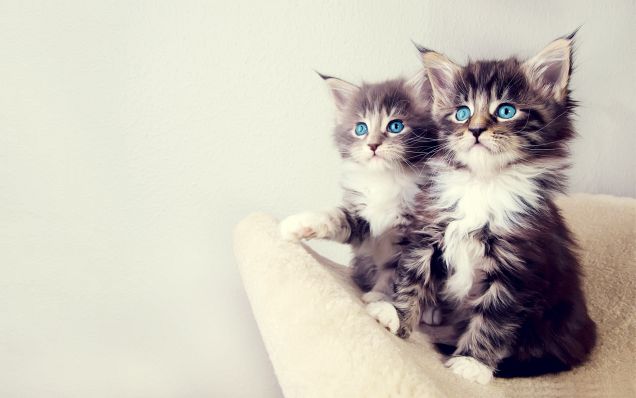
Two tufted-ear kittens—brown tabby-and-white and blue tabby-and-white—share a cream bed, both staring off-frame with crystalline blue eyes. Lynx tips, white chests, and soft wall bokeh make a studio-clean domestic portrait. The “moment” here is shared attention: whatever they watch, the viewer wants it too. Negative space on the left keeps the pair from feeling cramped.
11. Bee-eaters mid-exchange
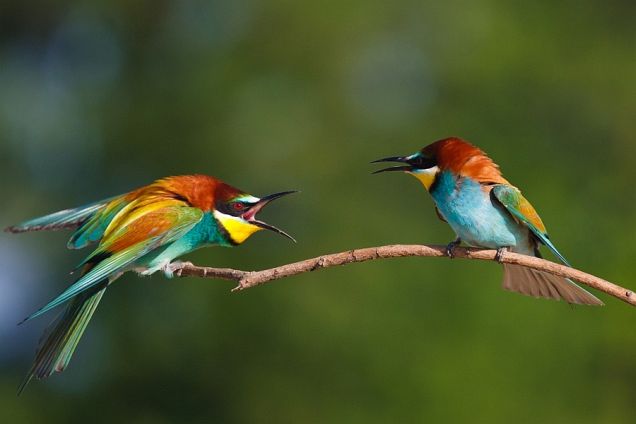
Two European bee-eaters face each other on a thin curved twig—chestnut crowns, turquoise breasts, yellow throats, black masks, beaks open in call or clash. Wings of one hint at lift. Green bokeh isolates the jewelry of plumage. Bird photography often fails on closed bills and blank stares; this frame catches social voltage, the instant before peace or flight.
12. Tiger cubs in a hug
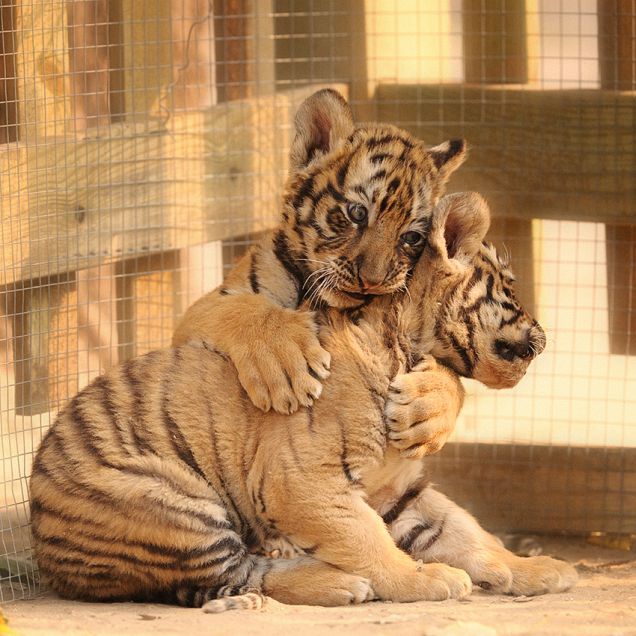
Two young tigers sit in warm sand while one wraps paws around the other’s neck and chest—an embrace that reads as play-bond more than hunt rehearsal. Stripes, oversized feet, and golden sidelight do the sentimental work honestly. Wire and timber behind place the scene in managed care without canceling tenderness. Cub social glue is future survival practice in soft costume.
13. Elephants facing the bank
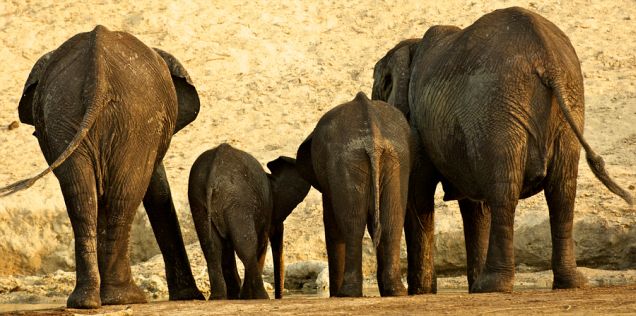
Four African elephants stand in a rear view at the edge of damp ground—adults flanking a calf and a mid-sized companion—tails and wrinkled hides lit by low sun against a pale embankment. Faces withheld, the photograph becomes about family width and skin topography. Puddles between feet hint at water’s pull. Quiet observation replaces spectacle; belonging is the subject.
What the set teaches as a whole
Across cold ridges and warm grass, a few constants hold. Soft or directional light that reveals coat and feather texture beats empty drama. Backgrounds either simplify into color fields or earn their detail as habitat. Pairs and groups multiply meaning because behavior becomes dialogue. Domestic, captive, and wild contexts all appear; honesty about setting matters less than refusing cruelty for a shot.
The weekly-series habit was to gather such frames until variety itself became a lesson: goats teach edge and exposure; flamingos teach color contrast; polar bears teach subtraction; cheetahs teach that predators have gentle minutes; horses teach shutter timing; bee-eaters teach that small birds can carry operatic energy; elephants teach patience with backs turned.
If you make pictures of animals, borrow the set’s appetite without copying its trophies. Wait for contact—nose, tongue, open beak, raised paw, shared stare. Prefer one true gesture over a dozen almosts. Leave when stress rises. And when you edit, keep the frames that still feel slightly surprising on the second week, the way this gallery still does: not because every species is exotic, but because each instant looks like it could not have been held a second longer or a second less.
The series continues wherever someone next matches breath to wingbeat, stride to dust, or quiet to a line of elephants facing the bank. The photographs above are simply evidence that the match sometimes lands.

Comments
Continue reading
15 Perfectly Timed Animal Photos: Predator, Prey, and the Decisive Second
Fifteen wildlife frames—from salmon-run bears to ospreys, puffins, and savanna hunts—where shutter timing freezes predator and prey in one readable instant.
Irresistible Adorables, Part 1: A First Round of Animal Cuties
The opening gallery in a four-part cute-animal series—sugar gliders, patient dogs, comedy cats, a chipmunk heist, and a few wilder guests from late 2012.
Irresistable Adorables #3: Stares, Scrambles, and Tiny Effort
Duckling climbs, fox dives, and big-eyed portraits—adorable photos driven by intention, not laundry-line props.