
Sharon Nowlan’s Pebble Art: Minimal Stone Scenes of Family, Flight, and Companionship
Sharon Nowlan’s pebble figures—swings, balloons, cats, dragonflies—show how a few beach stones and empty space can carry an entire story.
Beach stones are stubborn collaborators. They refuse fine facial features and elaborate costumes; they offer only mass, color, and the curve water carved over years. Sharon Nowlan’s pebble art turns that stubbornness into a style. On plain boards and textured paper she arranges a handful of water-worn pebbles—sometimes with a twig, sometimes with a single drawn line—into scenes that feel instantly familiar: a couple on a swing, a child with a balloon, cats under a small heart, a family sharing a narrow bench.
This gallery collects examples of that approach. The photographs preserve the quiet drama of shadow under each stone and the breathing room of empty background. Look at them as finished pictures first, then as lessons in how little you need once the right pebble finds the right place.
How pebble figures speak without faces
Most of Nowlan’s people are two or three stones: a round head, an elongated body, optional limb fragments. Emotion arrives through tilt and spacing. Heads lean toward each other for intimacy; arms lift for celebration or for holding balloon strings; dangling feet under a seat suggest ease. Because faces never appear, viewers project their own families onto the silhouettes—which is why the work travels so well as gifts and nursery art without becoming sentimental cartoons.
Color stays inside a shoreline palette: charcoal, slate, rust, cream, soft purple-gray. A single warmer stone often marks a child, a balloon, or a skirt-like base. That one accent is usually enough. More color would turn the piece into collage; Nowlan keeps it closer to sculpture photographed against paper.
Flight, lift, and play
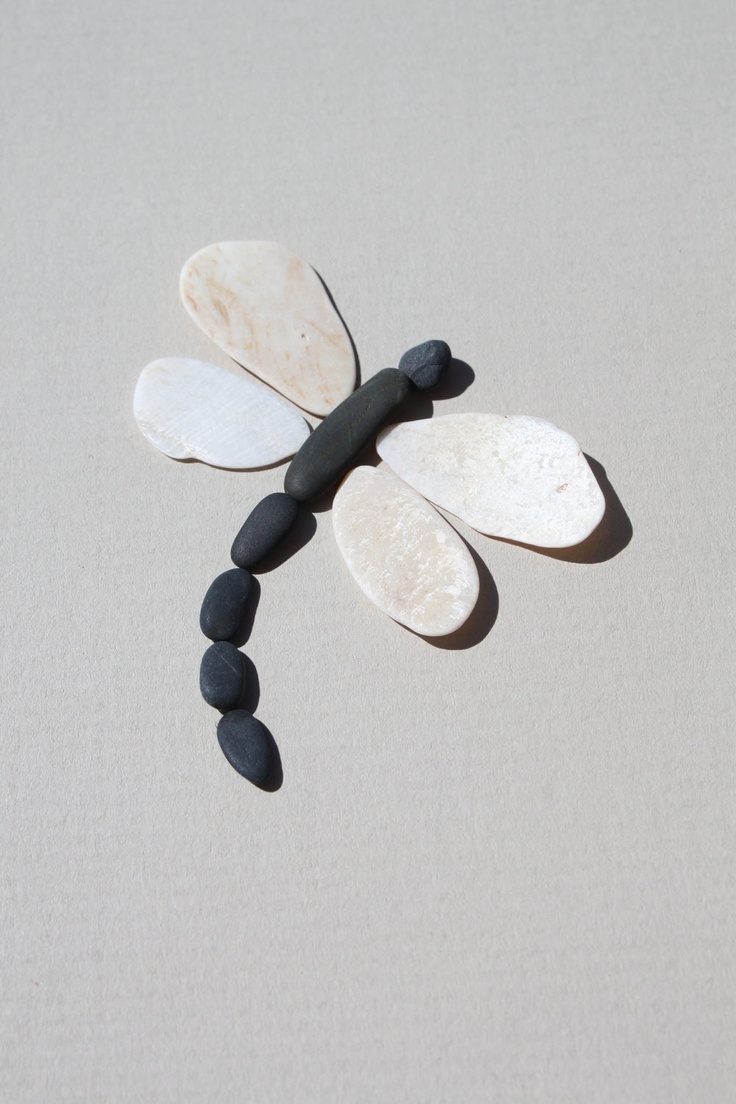
A dragonfly made of dark charcoal body stones and pale, flat wing ovals shows the medium at its most graphic. The abdomen curves; four wings overlap lightly; soft light from one side throws crisp shadows so the insect reads as an object resting on the page, not a flat sticker. No antennae, no painted veins—contrast and silhouette do the identifying.
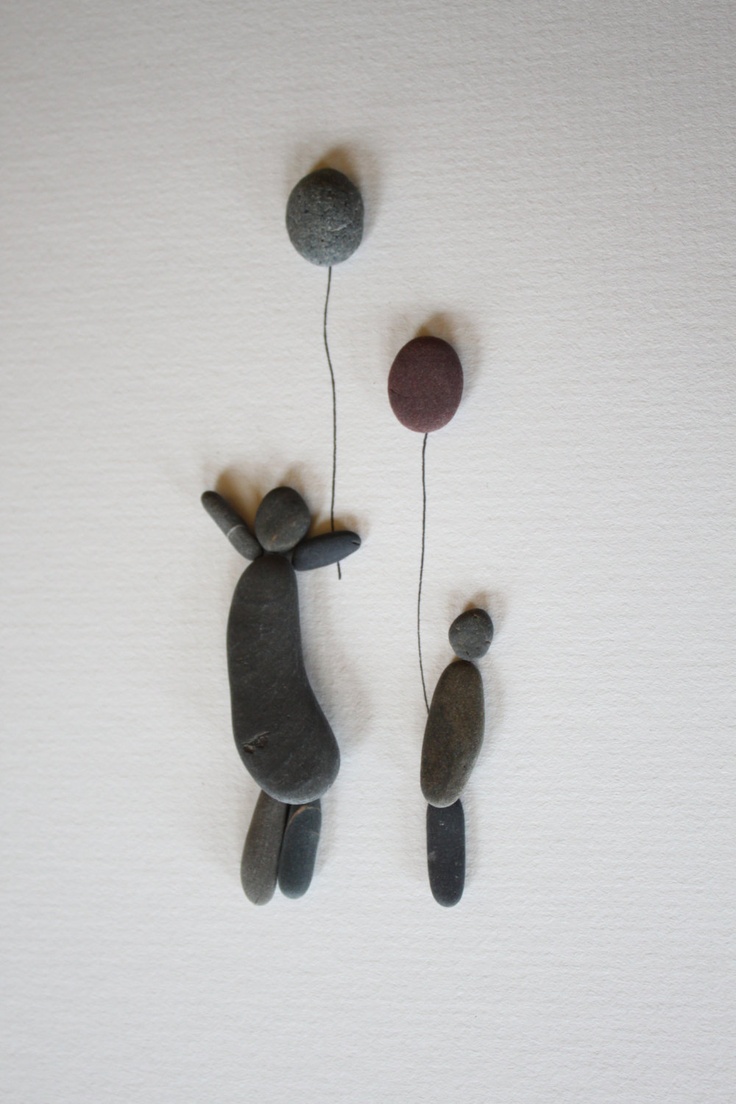
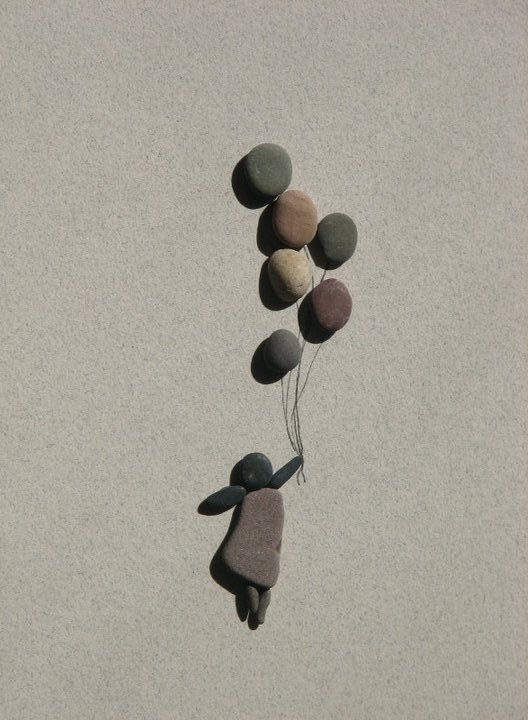
Balloons introduce a rare drawn element: thin black strings. An adult and child hold separate orbs—one gray, one reddish—so scale and color separate generations without labels. Another composition sends a lone figure skyward under a cluster of six stone balloons, legs hanging, arms raised to the strings. Gravity becomes a joke the stones tell together.
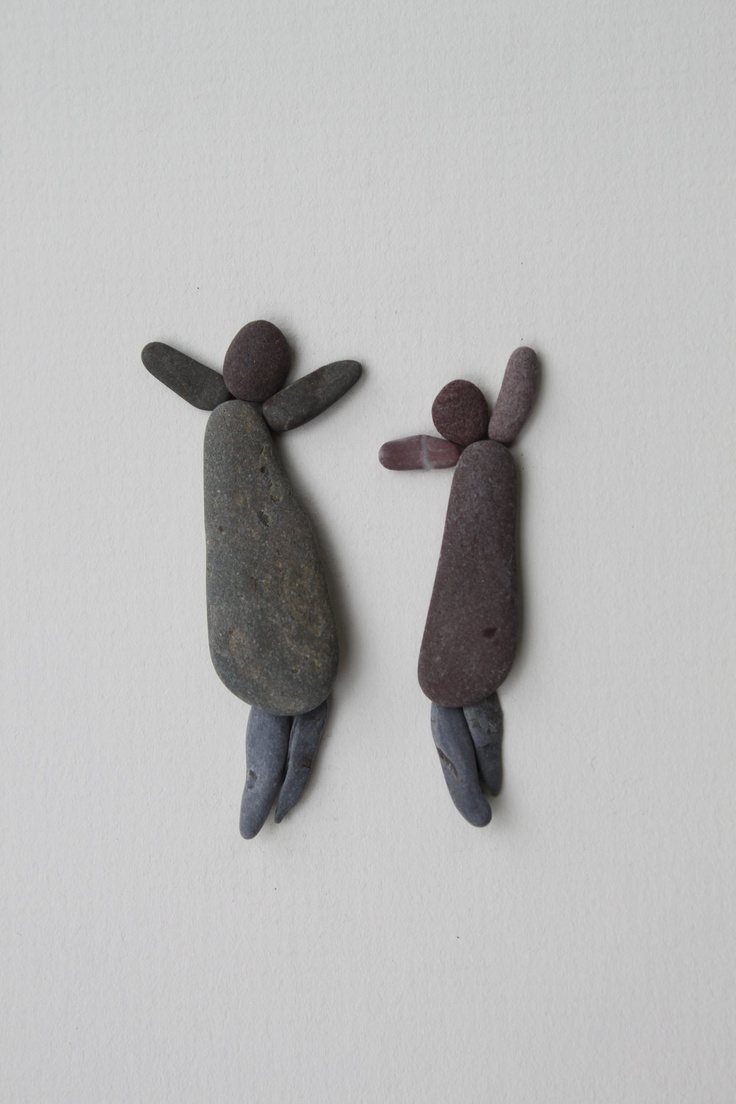
Two jumping figures with arms flung wide trade quiet company for celebration. Teardrop bodies and pointed foot pebbles imply the peak of a leap. Negative space around them matters as much as the stones; without that empty margin the jump would feel cramped.
Benches, swings, and shared ground
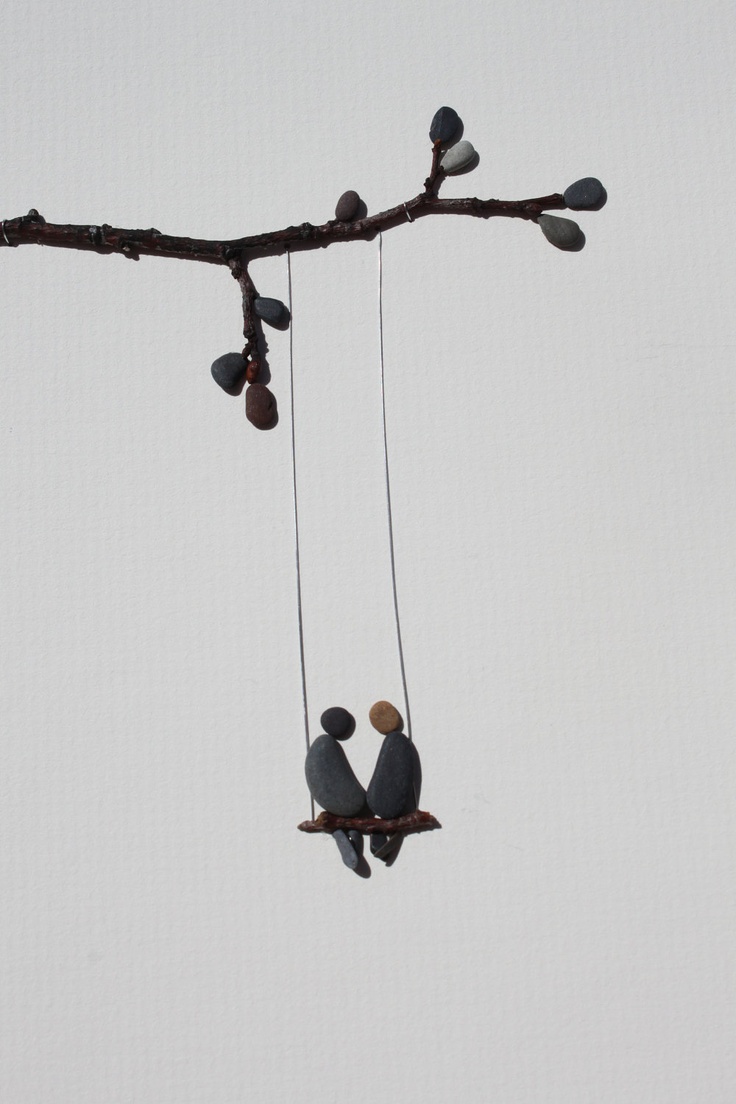
Companionship is the emotional center of the series. A twig branch spans the top of one frame, dotted with small “bud” pebbles; wire or thread drops to a twig seat where two figures lean together, tiny leg stones dangling below. Different head tones keep the pair distinct. The scene is almost aggressively simple, and that is why it holds.
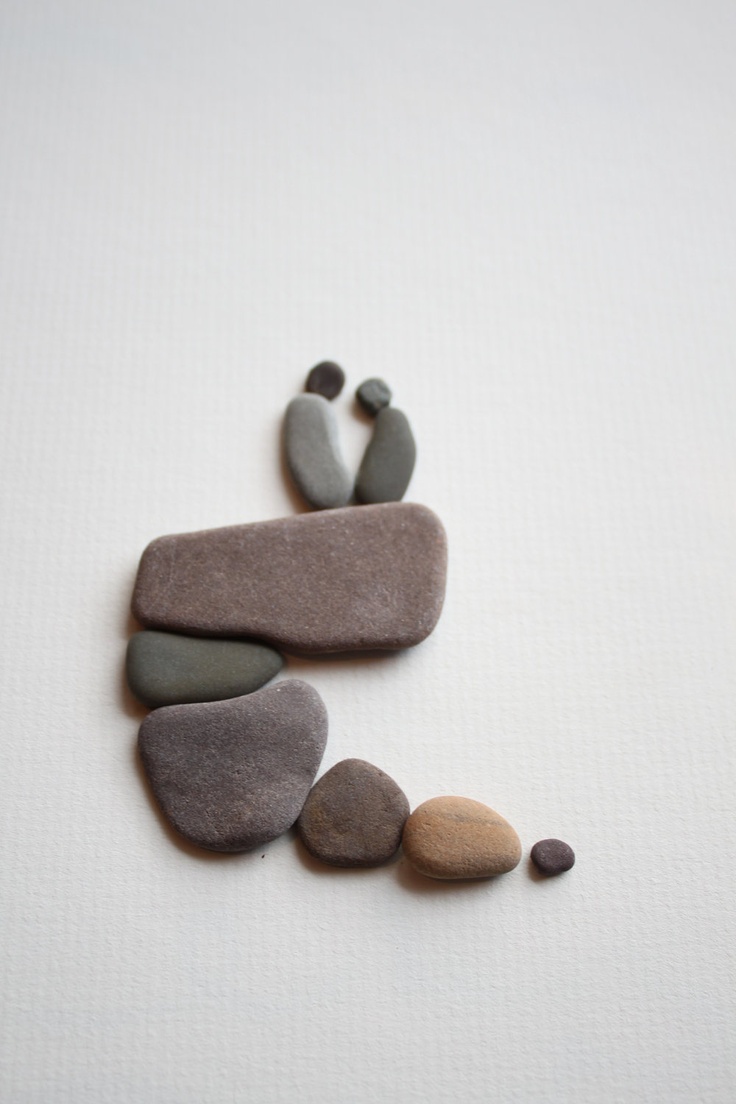
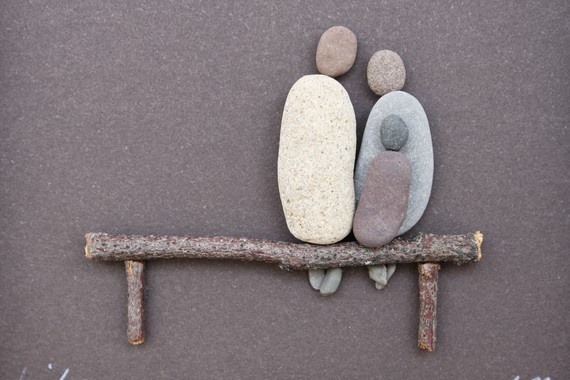
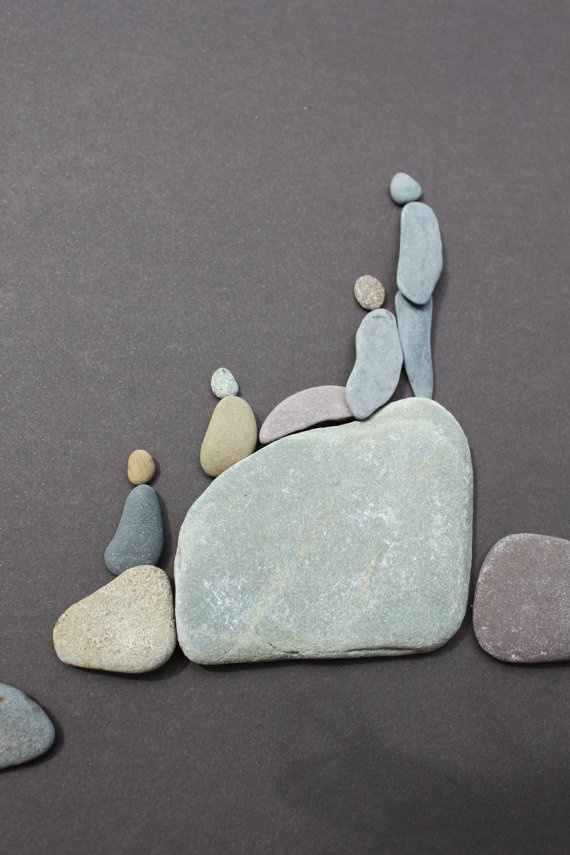
Elsewhere two figures sit atop a stacked outcrop that trails into smaller stones like a path or shoreline. On a dark charcoal ground, three figures share a twig bench—two adults framing a child who leans into one side—while miniature feet peek under the seat. Light-ground and dark-ground versions prove the vocabulary travels: change the field, keep the grammar of head, body, and lean.
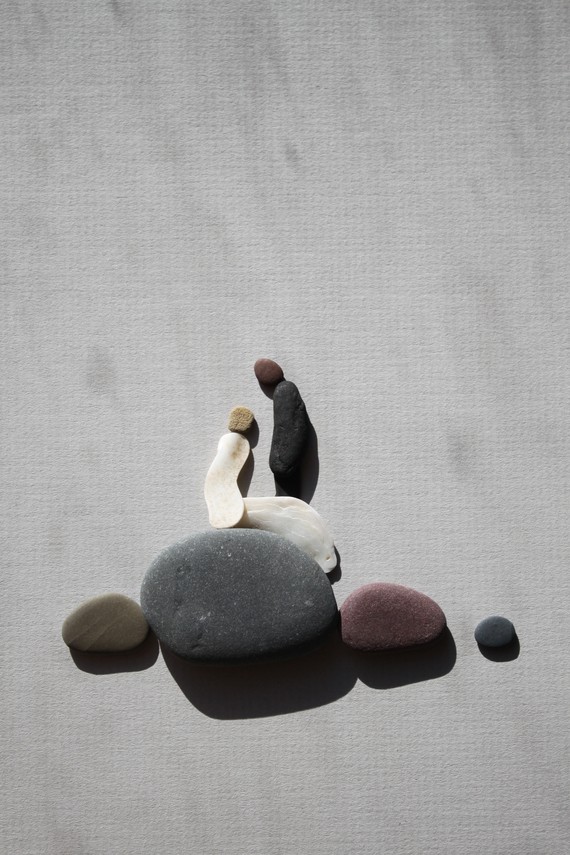
A facing pair on a large central stone, flanked by lesser rocks, uses a pale curved base on one figure and a tall dark body on the other to suggest difference without costume. A group of four on a rocky shelf expands the cast—standing, sitting, leaning—still without crowding. Size steps imply ages; clustered posture implies a shared view toward something outside the frame.
Landscape, animals, and pattern
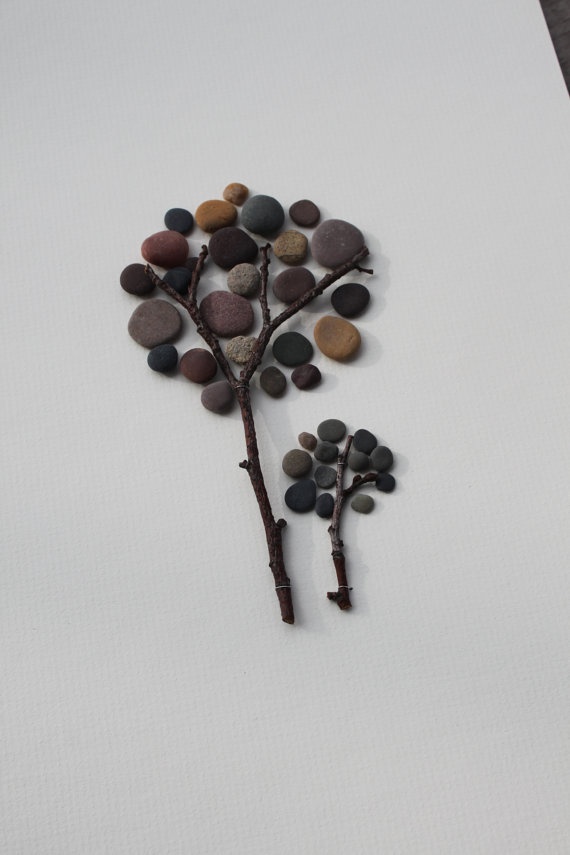
Not every piece is a human vignette. Two trees with real twig trunks carry canopies of clustered pebbles—one large mixed-tone crown, one smaller dark knot—like a parent tree and a sapling. Wire wraps near the trunks reveal the practical side of the craft: stones must be fixed, not merely placed for the camera.
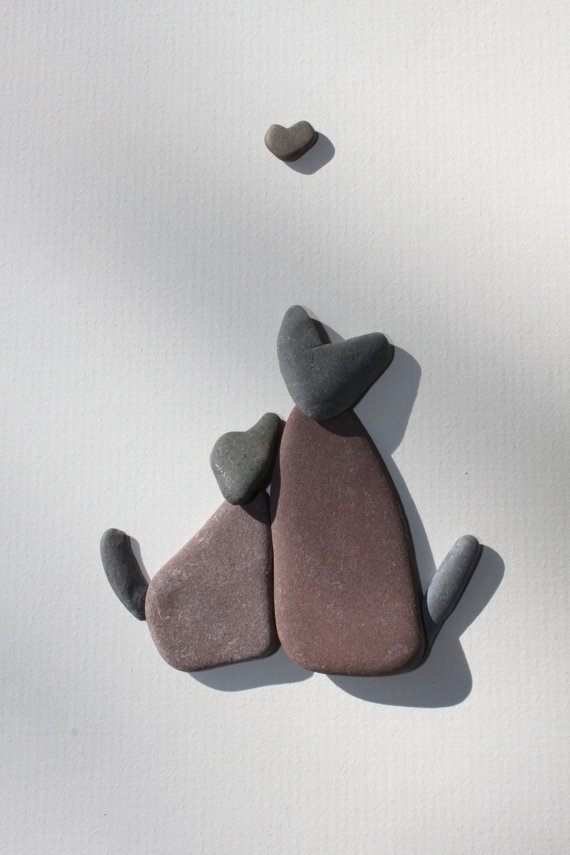
Two cats with reddish bodies, gray heads and tails, and a heart pebble floating above them show how found shapes become characters. A heart-shaped head leaning into a taller companion is luck as much as design; beach collecting is partly waiting for the stone that already wants to be a head.
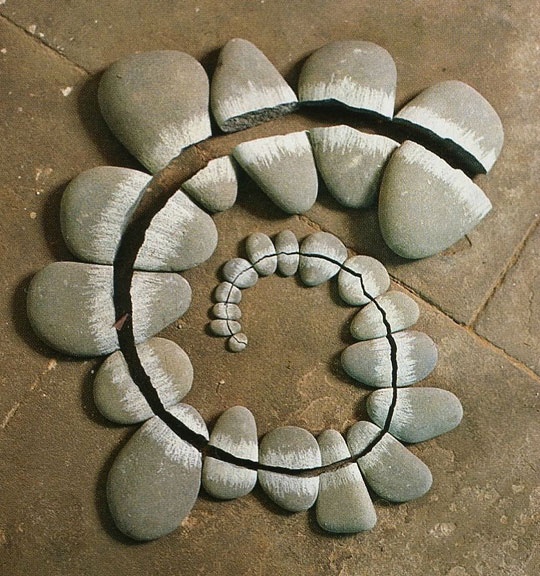
A spiral of graduated gray pebbles on a stone floor, each split so a continuous dark gap winds to the center, with white feathering along the cut, belongs to a more land-art register. It widens the gallery’s definition of pebble work from figurative wall pieces to sequenced stone as meditation and line. Pattern here replaces narrative, yet the patience of sorting sizes feels related to Nowlan’s patience of sorting bodies and heads.
Craft notes for anyone inspired to try
Start by sorting, not gluing. Piles for heads (small rounds), bodies (ovals and teardrops), and limbs (thin fragments) save hours of forced fitting. Dry-arrange on archival board until the lean of a relationship feels true—sitting together, holding something shared, or watching the same direction. Only then commit adhesive. Use a glue that dries clear and stays flexible enough not to kick stones off when the board flexes slightly in humidity.
Drawn lines should be scarce. Balloon strings and swing ropes earn their ink because stone cannot stretch into thread. Drawn facial features usually cheapen the effect; trust silhouette. Backgrounds work best nearly empty—off-white paper or a matte dark field—so shadows under the pebbles become part of the drawing.
Collect lightly and legally. A few stones from a permitted beach, never a stripped pocket of habitat, keep the practice aligned with the gentleness the pictures suggest. Rinse salt and grit; let stones dry fully before glue. Store extras in clear jars sorted by size so the next composition begins with looking rather than hunting.
Sharon Nowlan’s examples remain persuasive because they treat pebbles as partners. Each stone already carried a shape; the artist noticed who it could become and stopped when the scene was complete. After enough time with these photographs, ordinary shorelines start offering casts of their own—couples, cats, dragonflies—waiting in the wet line where the tide turns back.

Comments
Continue reading
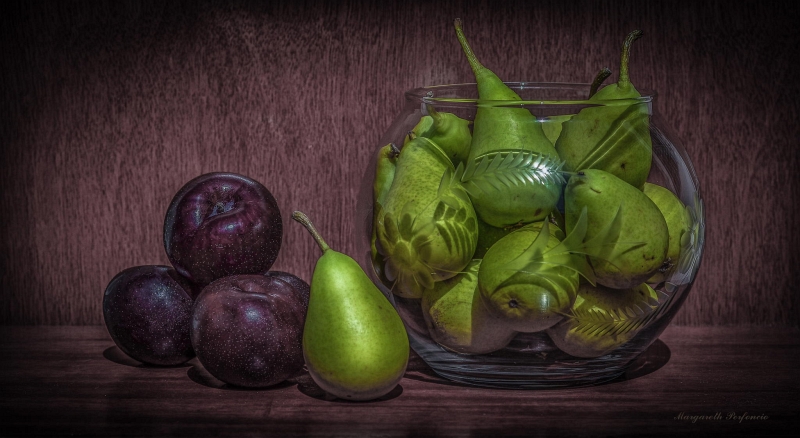
Still-Life Photography by Margareth Perfoncio
São Paulo photographer Margareth Perfoncio’s still lifes of food and flowers—Old Master light, dark wood, and tables that feel inevitable.

Meaningful Love Quotes for Inspiration (and Ink)
Meaningful love quotes that still feel true — short lines for tattoos, gifts, and everyday reminders, with placement and wording tips.

Christina Hess’s Animals From History: Costumed Pets as Playful Portraits
Illustrator Christina Hess reimagines historical icons as ornate animal portraits—Elvis Petme and friends—mixing puns, costume detail, and soft history lessons.