
3D Origami Sculptures by Jaroslav Mishchenko
Kyiv artist Jaroslav Mishchenko folds painted three-dimensional origami sculptures—animals, objects, and abstract forms—where crease, color, and careful light share the work.
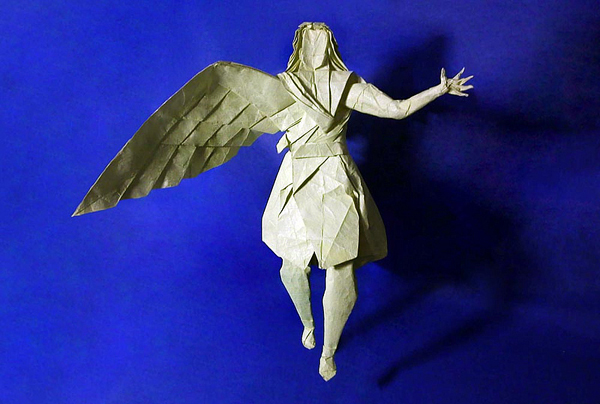
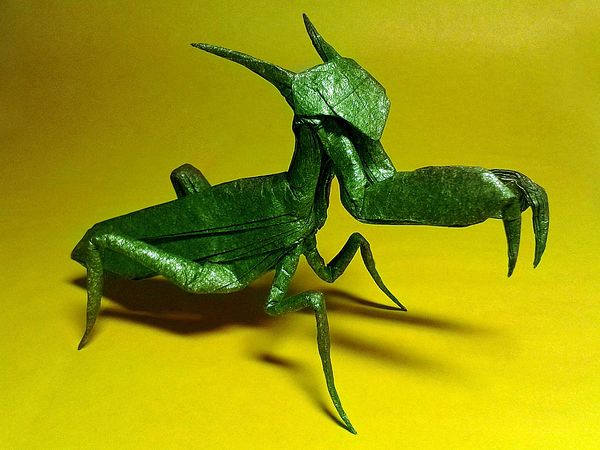
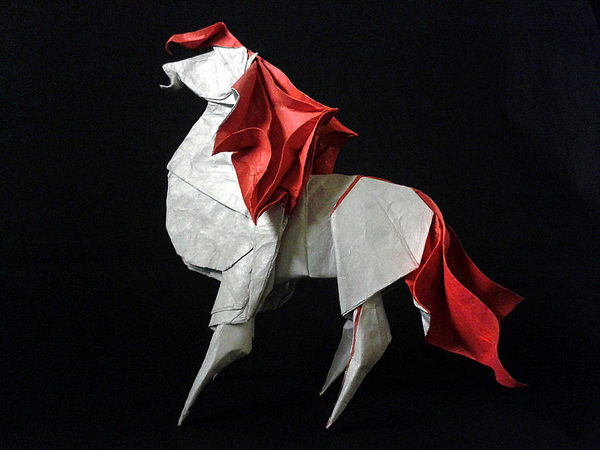
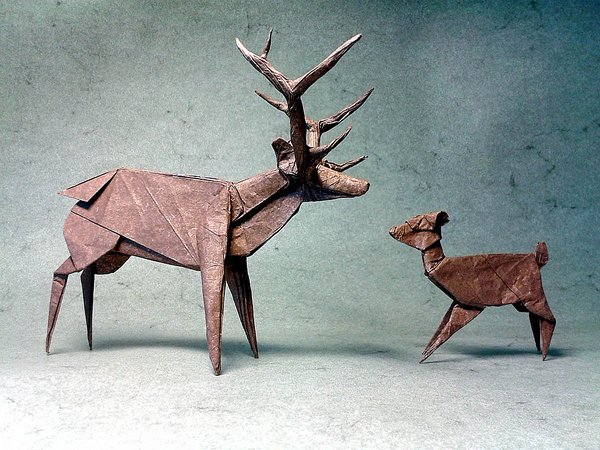
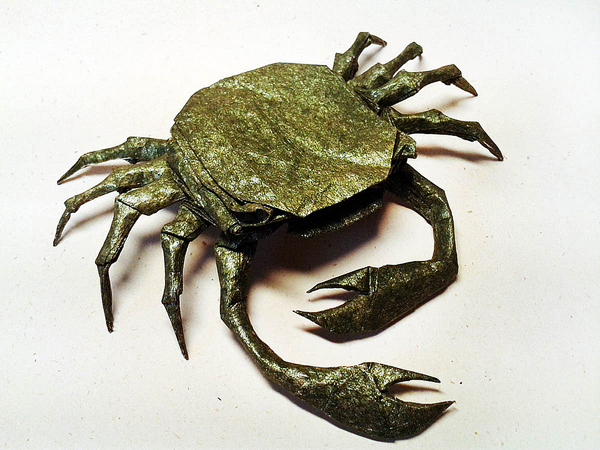
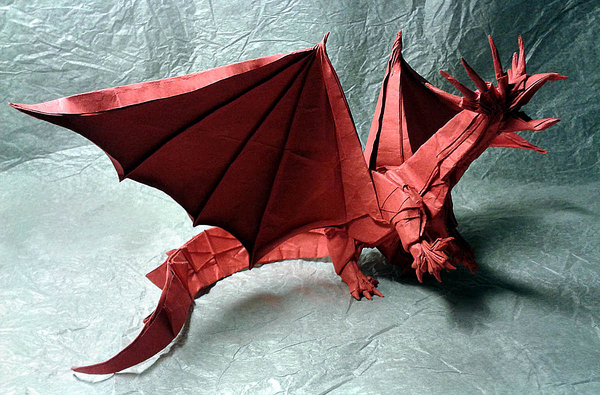
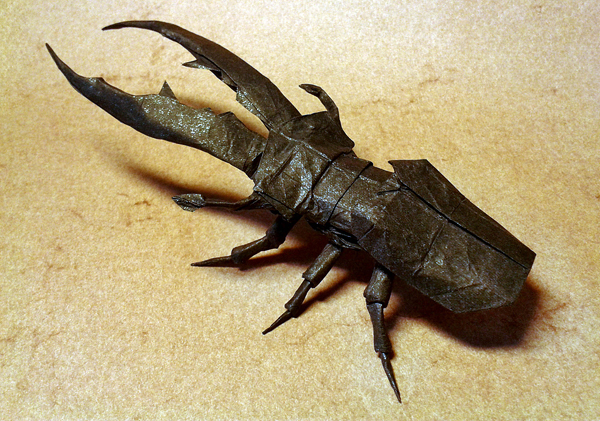
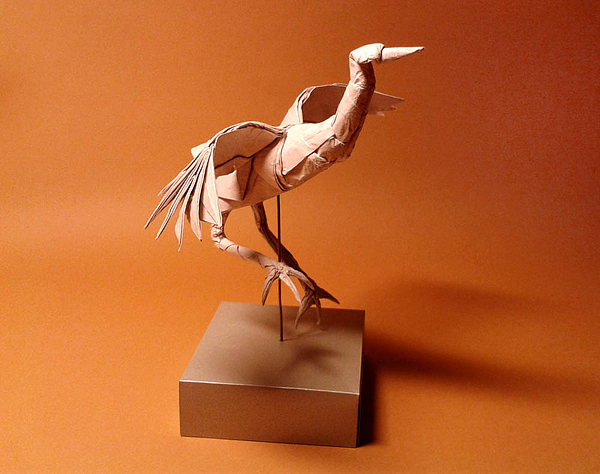
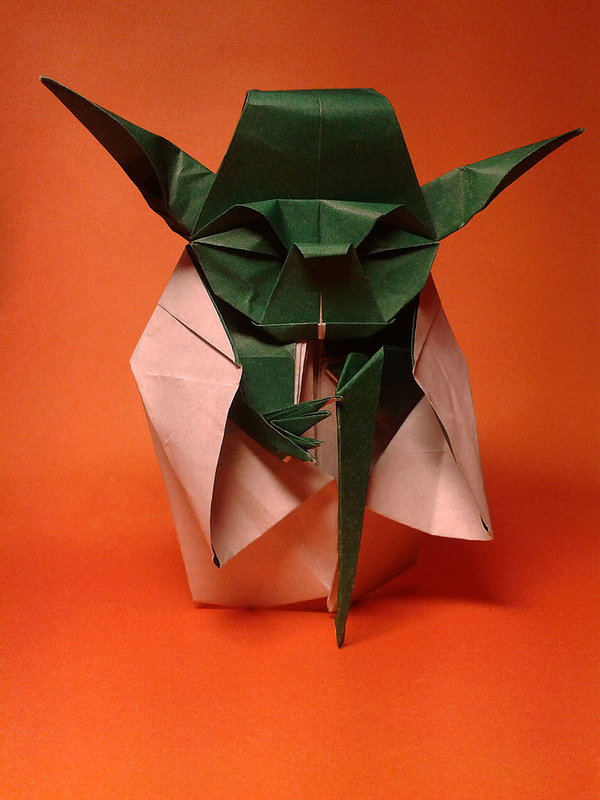
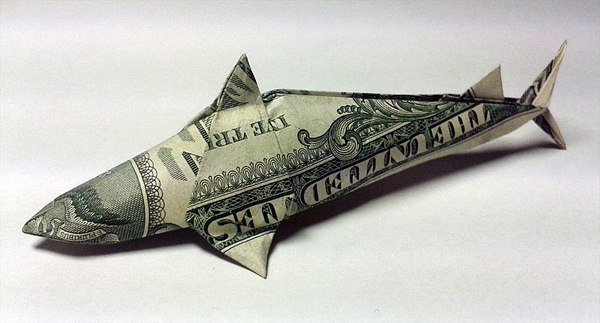
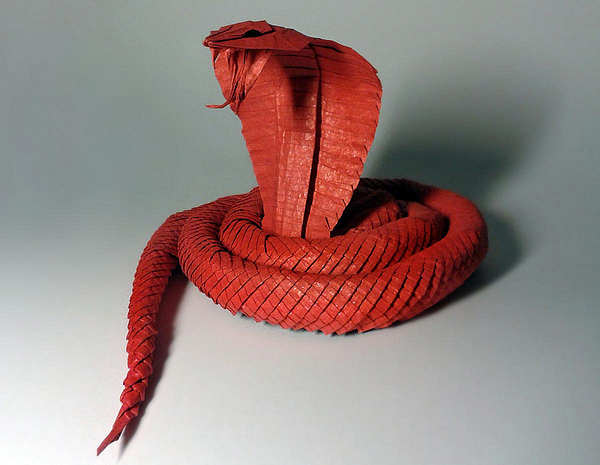
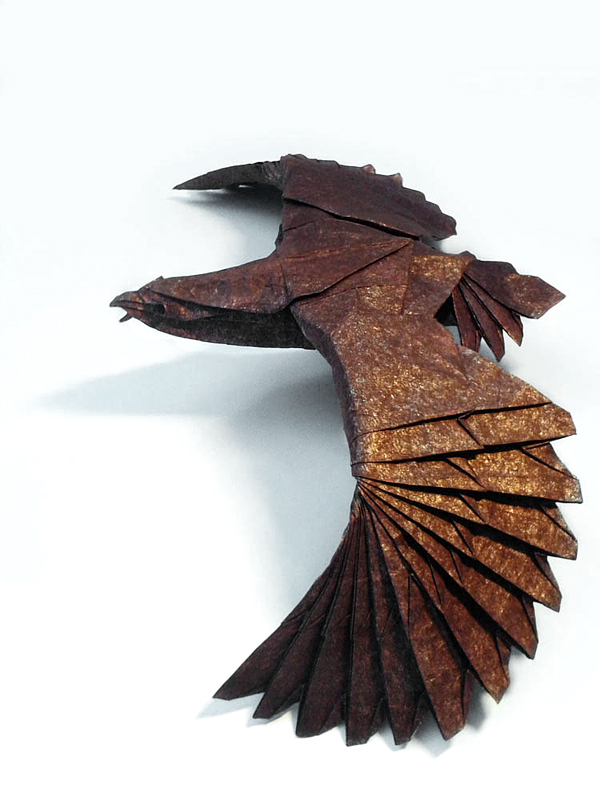
Paper begins flat and ends, in Jaroslav Mishchenko’s hands, as something that casts a shadow. Working from Kyiv, the artist folds, shapes, and finishes three-dimensional origami sculptures that range from animals and objects to more architectural or abstract forms. The pieces in this gallery are small enough to sit on a table and detailed enough to read as sculpture rather than craft-class novelty. Color, crease, and careful photography do as much work as the fold sequences themselves.
Origami’s classical ideal often insists on a single uncut sheet and no glue. Contemporary practice is broader: modular assemblies, wet-folding, painted finishes, and hybrid techniques that still honor paper as the primary material. Mishchenko’s three-dimensional sculptures sit in that living tradition. They keep origami’s vocabulary of edges and planes while pursuing naturalistic presence—forms that look ready to move, even when they are still.
From plane to presence
Every successful origami sculpture negotiates a bargain between geometry and life. Too much geometry and the piece becomes a diagram. Too much “life” without structural logic and the paper collapses into soft suggestion. Jaroslav Mishchenko’s work thrives where those demands meet: facets that catch light like scales or metal panels, volumes that hold their own weight, and silhouettes that remain readable from several angles.
Three-dimensional origami is not simply a flat model pulled open. It requires thinking in load paths—where the paper must thicken into a spine, where a fold becomes a hinge of posture, where a narrow point needs reinforcement through clever layering. Animals especially punish weak engineering. A neck that cannot support a head, a tail that droops without intention, or legs that skate instead of stand will break the illusion faster than an imperfect color match.
That is why these sculptures reward slow looking. Follow a ridge along a back. Notice how a plane turns a corner and becomes a limb. Watch how a single crease line can stand in for muscle or armor. The intelligence of the fold is the artwork’s quiet plot.
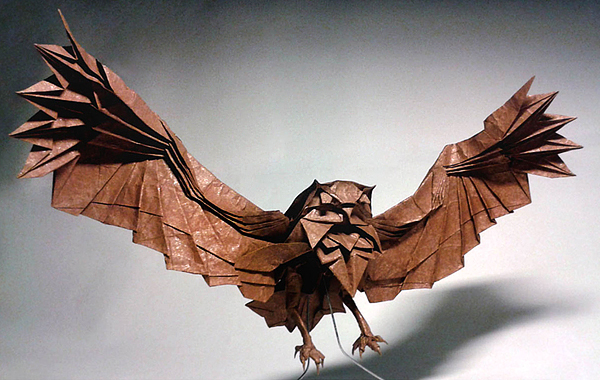
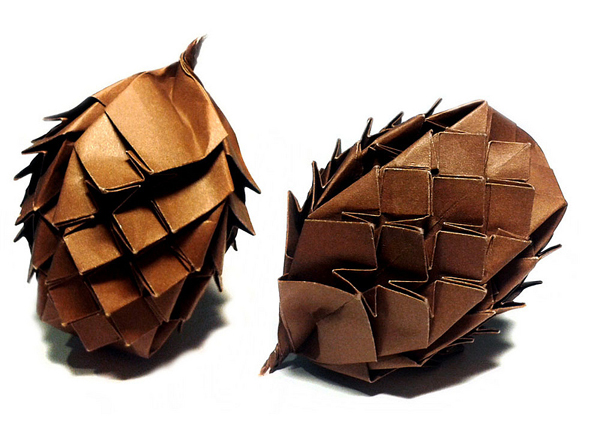
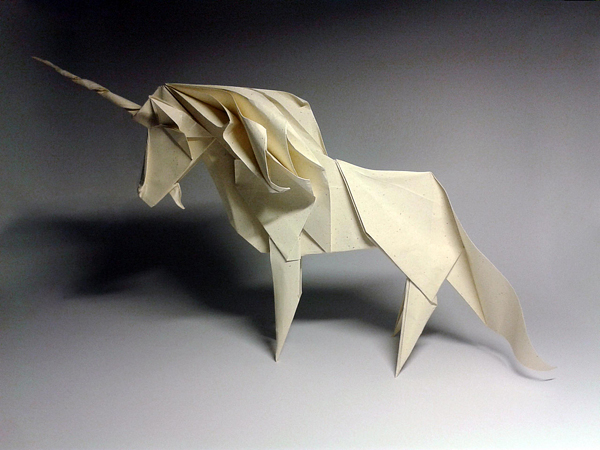
Paint, paper, and the push toward the natural
Many of Mishchenko’s sculptures are finished with color so the paper does not remain an anonymous white symbol. Paint can deepen recesses, separate materials that origami can only imply, and nudge a figure toward the natural world—fur suggestion, shell tone, vehicle body color, the warm and cool shifts that make a form feel observed rather than invented overnight.
Painting origami is a delicate risk. Too heavy and the paper warps; too timid and the piece stays schematic. The finish must respect the topography of folds. Highlights belong on raised planes; shadows belong where layers tuck inward. When that collaboration works, viewers momentarily forget the starting rectangle. They see a cobra’s hood, a car’s chassis, a creature’s stance—then remember, with a second jolt, that it is still paper.
That double recognition is part of the pleasure. Origami’s magic is not that it hides its material. It is that the material remains obvious while the form becomes persuasive. Mishchenko’s painted sculptures lean into persuasion without abandoning the honesty of crease lines. The folds remain visible like brushwork in a painting: evidence of how the thing was made.
Range without losing the medium
What distinguishes a strong origami portfolio is range under constraint. Cars and animals ask for different silhouettes and different kinds of volume. Abstract or architectural pieces shift attention toward pure form—ramps of paper, stacked planes, lamp-like geometries—that still feel folded rather than carved. Across subjects, Mishchenko keeps returning to paper’s specific strengths: sharp edges, compressible thickness, and the ability to suggest mass without true weight.
That range also shows a mind curious about the world beyond the folding table. A vehicle is industrial design translated into crease patterns. A predator or bird is biology simplified into facets. An abstract object can be closer to product design or miniature architecture. The common thread is transformation: the same humble sheet logic applied to different vocabularies of shape.
Viewers sometimes assume origami is “cute” by default. Complexity and finish push back against that assumption. When a sculpture holds tension in its posture—coiled readiness, forward lean, balanced stillness—it claims the seriousness of small sculpture. Scale does not diminish that claim. If anything, miniature precision intensifies it. You lean in. The work meets you halfway with detail.
Photography as the second studio
Origami lives badly in indifferent light. Soft shadows erase the planes that make a fold legible; harsh glare turns paper into a blown-out rectangle. The photographs that circulate Mishchenko’s sculptures are part of the artistic circuit. Angle chooses which edges speak. Background isolation keeps the eye on silhouette. Color balance protects the painted finish from looking muddy or synthetic.
In that sense, each image here is both documentation and presentation. You are seeing paper objects, but you are also seeing a deliberate staging of those objects—how they sit, how they face the lens, how much space they are allowed. Good origami photography teaches viewers how to look: search for the hinge, trust the contour, notice where one sheet becomes many apparent materials through fold and paint alone.
For anyone who folds at home, that lesson is practical. A finished model that looks dull on a cluttered desk may wake up under a single lamp and a clean surface. Mishchenko’s gallery images demonstrate how presentation completes craft. The sculpture earns the photograph; the photograph returns the favor by clarifying structure.
Why the work still startles
We live among disposable paper—receipts, packaging, printouts—and still gasp when paper refuses to stay humble. Jaroslav Mishchenko’s origami sculptures restart that gasp by combining patience, structural invention, and finish. They do not ask you to pretend paper is bronze. They ask you to notice how far bronze-like presence can go without leaving the fold.
There is also a cultural through-line worth naming. Origami carries centuries of Japanese folding history and a global community of designers who share crease patterns, diagrams, and exhibitions. An artist working in Kyiv participates in that international conversation: local hands, shared medium, portable results. Sculpture that ships as an image can still feel intimate because everyone understands paper. The familiarity of the material is the springboard for wonder.
Spend time with the sequence. Let one piece teach you edges; let another teach you volume; let a third teach you how paint and shadow conspire. By the end, the flat sheet in your mind should feel less like a limit and more like a promise Jaroslav Mishchenko keeps making visible—one crease, one plane, one carefully held shape at a time.
When you look away, the afterimage is simple: paper that learned posture. That is enough. The table is quiet again, but the sculptures remain standing in the photographs, proof that a rectangle can become a world if someone is willing to fold it until it believes in three dimensions.

Comments
Continue reading
Thomas Allen’s Book-Cut Illustrations
Michigan illustrator Thomas Allen cuts pulp paperback figures into 3D tableaux, photographs them in shallow focus, and gathers the practice in his Aperture book Uncovered.
Steven Backman’s Mini Toothpick Sculptures
San Francisco artist Steven Backman assembles miniature sculptures from toothpicks and glue—compact lattices where joinery, patience, and structural logic replace fancy materials.
Mathilde Roussel’s Lives of Grass: Hanging Living Sculptures
Paris artist Mathilde Roussel hangs anthropomorphic forms of recycled metal, fabric, soil, and wheatgrass—living sculptures that grow, yellow, and decay.