
David Foster’s Nail Portraits: Pointillism Built with a Hammer
From architectural drafting to thousands of nails on canvas—how Warrington artist David Foster turns density, light, and patience into three-dimensional portraits.
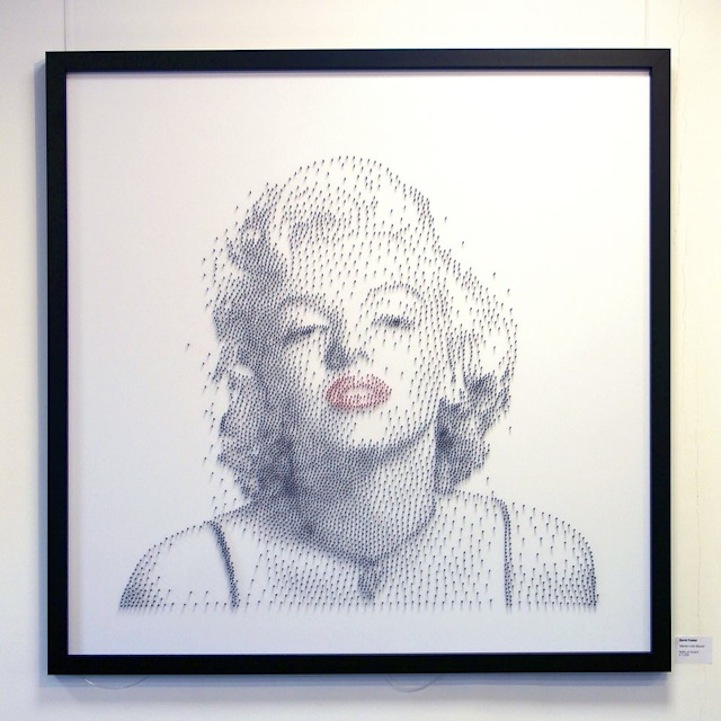
David Foster, working from the Warrington area in Cheshire, UK, builds portraits the hard way: one nail at a time. What looks from across a room like a stippled drawing resolves, up close, into thousands of metal heads driven into a white ground. Light rakes across those tiny elevations and the face changes with your footsteps. Photography flattens that drama; in person, the work is as much relief sculpture as picture.
Foster came to the technique after a career as an architectural technician, later limited by health problems that pushed him away from that job and toward drawing as both craft and outlet. Ink stippling—building tone from dots—was the bridge. Nails were the leap: the same logic of density and sparseness, translated into hardware you can hear being set.
From photograph to ink to hammer
The process is orderly, which suits someone trained in technical drawing. Foster typically begins with a photographic reference. He then rebuilds the image as an ink study, stippling light and shadow until the likeness holds with nothing but dots. That drawing is not a disposable sketch; collectors sometimes acquire the ink version alongside the nail piece as a matched pair.
Next comes translation at scale. The dotted study is enlarged into a map for placement. Only then does the hammering begin. Smaller works may use on the order of five thousand nails; larger portraits can climb toward thirty thousand. Density creates darks—hair masses, eye sockets, deep shadow under a chin. Open spacing lets the white ground become highlight. A few pieces introduce color at key accents; the Marilyn Monroe portrait here keeps almost everything monochrome so that red lips read like a spotlight.
Pointillism you can feel
Foster has said he is fascinated by how little information the brain needs to assemble a picture, and by the simplicity of images made only from dots. That is classic pointillist thinking, but the material changes the stakes. Ink dots sit in the plane of the paper. Nail heads cast real shadows. Walk left and a cheek hollow deepens; walk right and a highlight blooms. The portrait is interactive without electronics.
That tactile quality also explains why the work belongs in rooms, not only on feeds. A phone compresses depth into pattern. Standing in front of the framed canvas, you negotiate distance the way you do with mosaics or tapestry: too close and you see only metal; too far and you lose the labor; at the right range the face locks in and the labor becomes invisible for a second—then you step closer again and the spell breaks on purpose.
Architecture’s afterlife in art
Technical drawing teaches patience, accuracy, and respect for systems. You can see those habits in Foster’s control of value. Random hammering would produce noise; mapped density produces cheekbones. The same mind that once translated buildings into precise marks now translates celebrity and cultural faces into grids of decisions: here, tighter; there, leave air.
Subjects have ranged across architecture, nature, sport, and film icons. Early recognition accelerated after he entered contemporary open competitions; winning attention at the Warrington Contemporary Art Competition in 2012, followed by a first solo exhibition in 2013, moved the practice from private experiment toward public commission. Later corporate and private clients—reported names have included sports figures and brand spaces—fit a career that already understood client briefs from architecture days.
Reading the Marilyn piece
The Monroe portrait in this gallery is a useful teaching example. The iconic head tilt and shoulder straps are enough to trigger recognition before you count a single nail. Hair is handled as a field of denser marks that still suggest wave and volume. Facial modeling stays delicate: fewer nails on forehead and cheek planes, more along contours and lashes. The red mouth is the only loud chromatic decision, which keeps the piece from turning into a novelty rainbow and instead feels like classic studio glamour rebuilt in hardware.
Framing matters too. A simple dark square frame against a white wall lets the object read as fine art rather than craft-fair stunt. The nails are the medium; the composition is still portraiture with a clear hierarchy of face, hair, and negative space.
Labor as part of the meaning
Thousands of repeated actions invite viewers to think about time. Each nail is a small commitment; tens of thousands become a calendar. That duration is not sentimental padding—it is visible in the evenness of the field. Uneven craft would show as blotches of panic. Controlled craft shows as a skin of decisions that feel inevitable once the likeness appears.
There is also an irony Foster’s audience enjoys: hammer and nails usually hang art, they do not constitute it. Flipping the tools into the image itself is a one-line concept, but the execution has to outrun the pun. When the likeness holds at gallery distance, the pun becomes a doorway instead of the whole house.
What to notice if you see a nail portrait in person
- Start far enough away for the face to cohere, then move in until it dissolves into hardware.
- Watch how side light changes value; ask for that lighting if you can.
- Compare dense hair masses to sparse highlight zones—that map is the drawing.
- Check whether any color accent is structural (as with lips) or merely decorative.
- If an ink study is shown beside the nails, compare how each medium solves the same shadows.
Why the work traveled in 2013
Feature stories from that period—gallery blogs, local press, and international curiosity posts—tended to seize on the same facts: former architectural technician, Warrington base, five-to-thirty-thousand-nail range, photograph-to-ink-to-hammer pipeline. Those facts are durable because they describe a method, not a trend costume. Trends around “unusual materials” come and go; a coherent value system survives when the material actually extends an existing drawing language.
Foster’s own emphasis on seeing the work up close remains the best viewing advice. Screens are useful for discovery. Walls are where the medium argues for itself. The Marilyn canvas here is a still invitation: count nothing at first, recognize the face, then step in and let the portrait become a field of metal again. That back-and-forth is the piece working.
If you leave with one practical takeaway for your own making, let it be this: pick a constraint as strict as “only dots” or “only nails,” then spend your invention on placement, not on adding extra tricks. Foster’s portraits convince because the rule stays pure long enough for the likeness to feel earned.

Comments
Continue reading
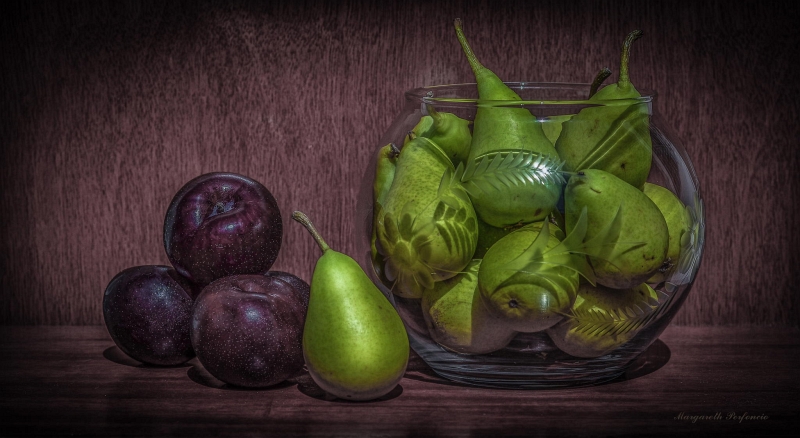
Still-Life Photography by Margareth Perfoncio
São Paulo photographer Margareth Perfoncio’s still lifes of food and flowers—Old Master light, dark wood, and tables that feel inevitable.

Meaningful Love Quotes for Inspiration (and Ink)
Meaningful love quotes that still feel true — short lines for tattoos, gifts, and everyday reminders, with placement and wording tips.

Christina Hess’s Animals From History: Costumed Pets as Playful Portraits
Illustrator Christina Hess reimagines historical icons as ornate animal portraits—Elvis Petme and friends—mixing puns, costume detail, and soft history lessons.