
Coastal Tablescapes: Blue, White, Shells, and Room to Eat
How to build a coastal summer table with a calm blue-and-white palette, layered place settings, low centerpieces, and natural materials that still leave space for the meal.
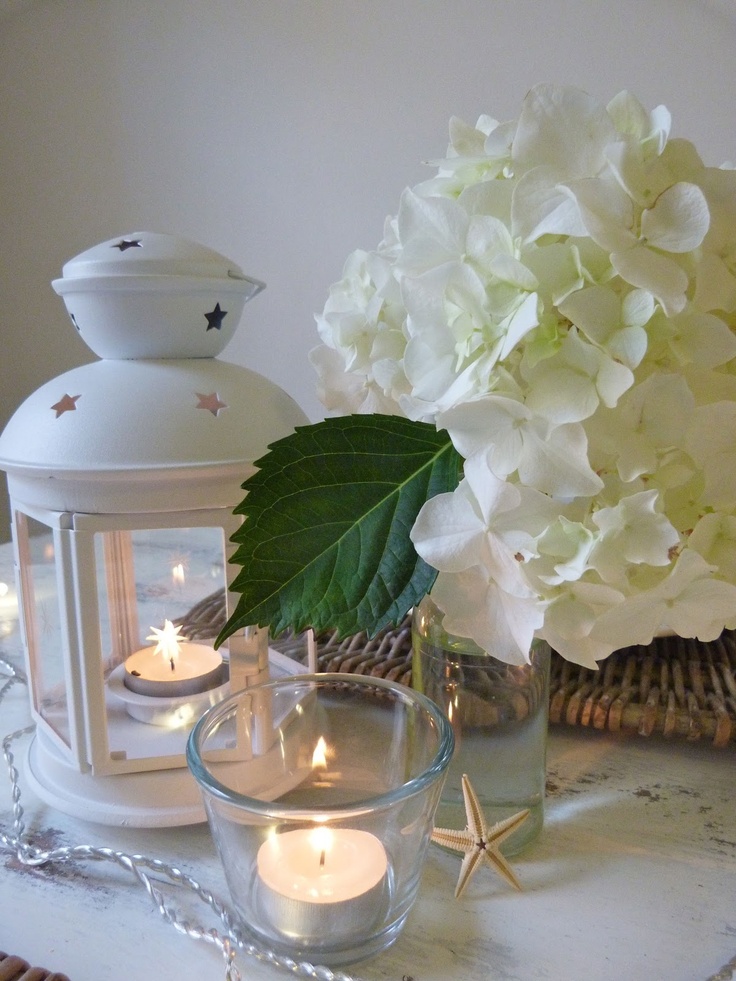
A coastal tablescape is not a crate of seashells dumped on a blue cloth. It is a dining mood built from salt-air colors, open space, and a few objects that feel collected rather than themed. The best summer tables read as breezy in one glance: white china, cool blues, sand-toned wood, and a restrained scatter of shell, glass, or greenery that still leaves room for plates and elbows.
The ideas below work for beach houses, backyard dinners, and city apartments that only wish they faced the water. Pick one palette, one texture story, and one vertical note. Then stop decorating before the table becomes a souvenir shop.
Start with blue, white, and breathing room
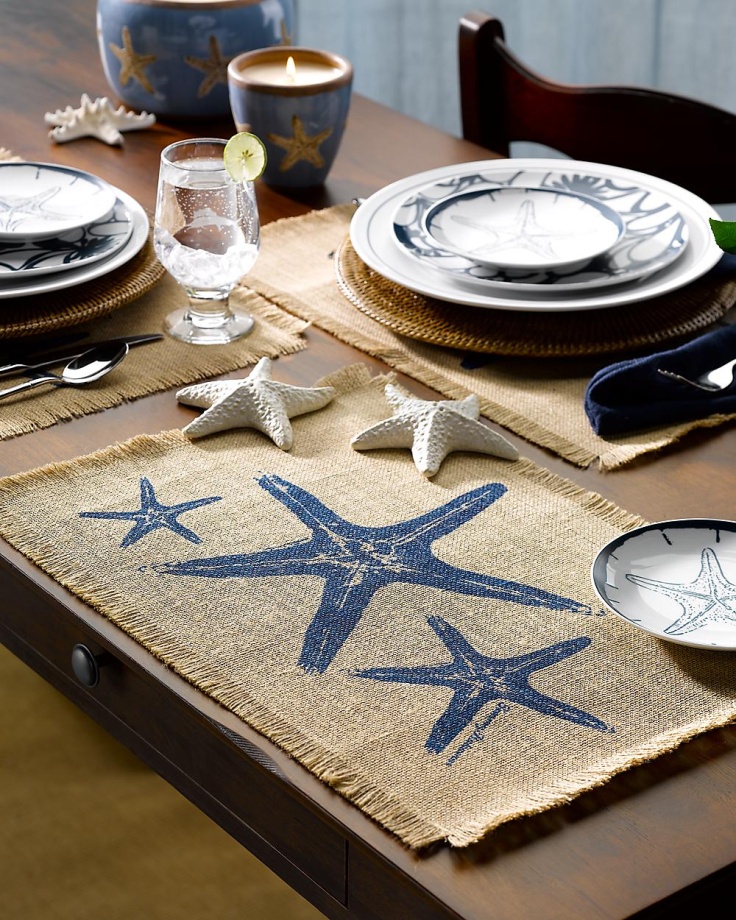
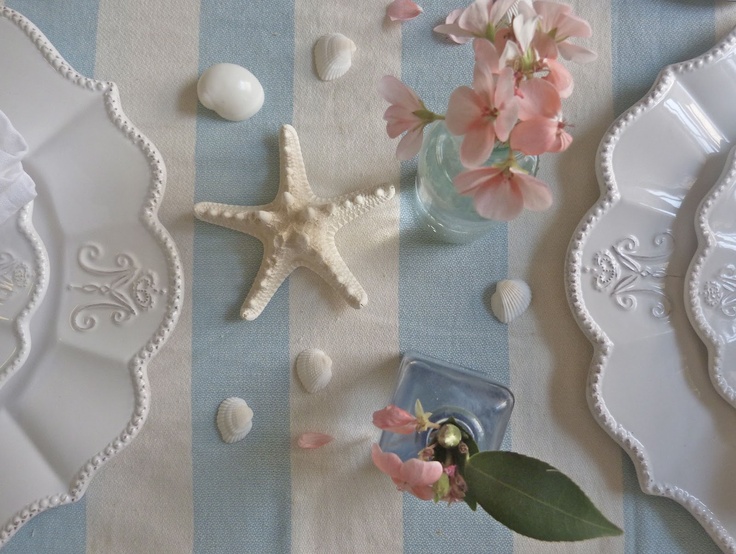
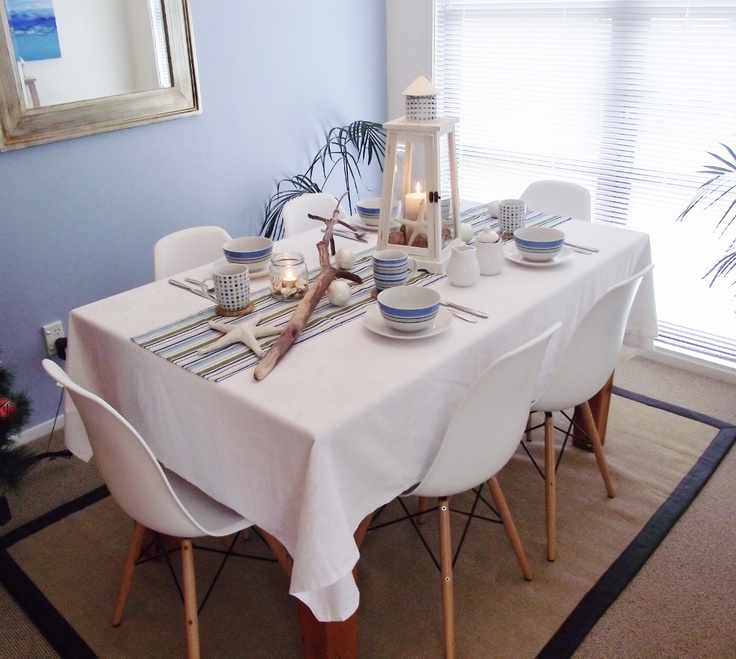
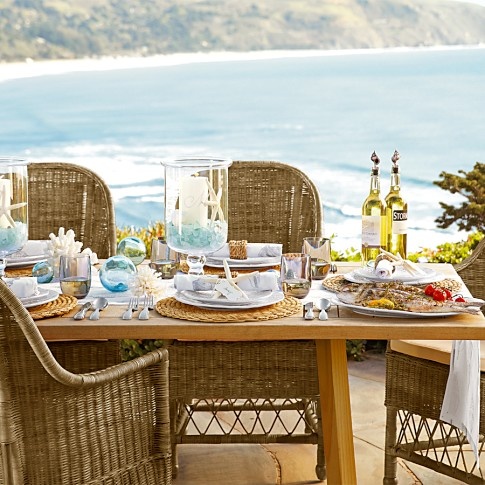
Coastal style earns its calm from contrast, not clutter. White plates against a soft blue runner or placemat already announce the theme. Add a second blue—navy napkin, striped cloth, or glassware with a sea-glass tint—and you have enough color for a full meal. Resist the urge to also introduce coral, lime, gold rope, and driftwood signs in the same setting. One accent family is plenty.
Negative space matters as much as objects. A runner that does not cover the full width of the table, or a bare wood surface with only a low center line of shells, keeps the look airy. Guests should see the tabletop between settings. If every inch is filled, the room feels smaller and the food has nowhere to land.
Pattern works when it stays quiet. Narrow stripes, soft ikat, or a single damask napkin can sit beside plain china. Busy floral plates plus patterned linens plus printed glassware will fight the coastal idea, which depends on clarity more than ornament.
Build place settings like shoreline layers
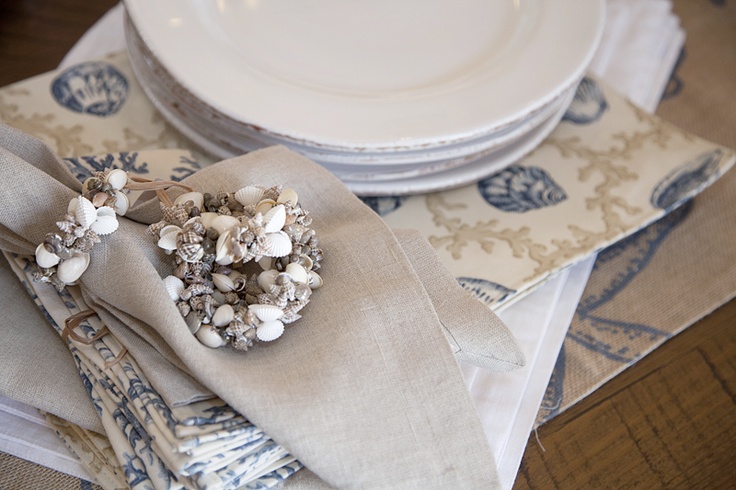
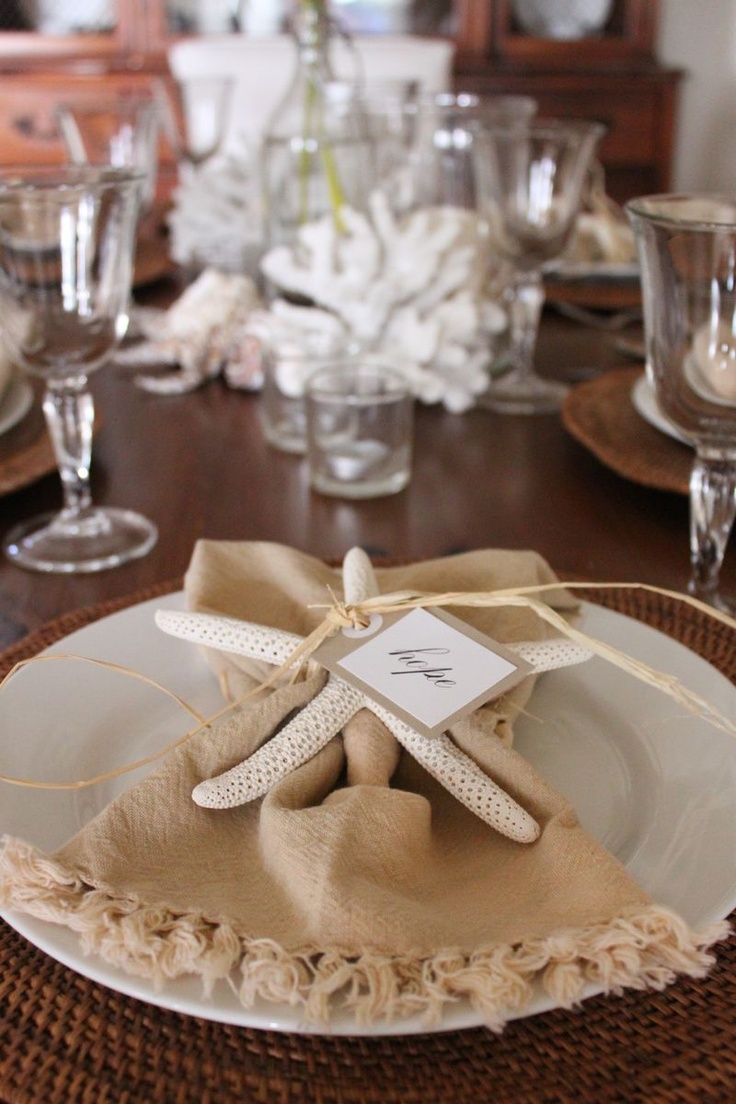
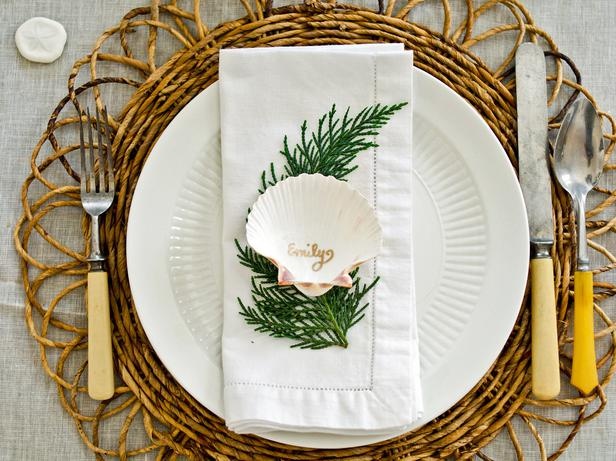
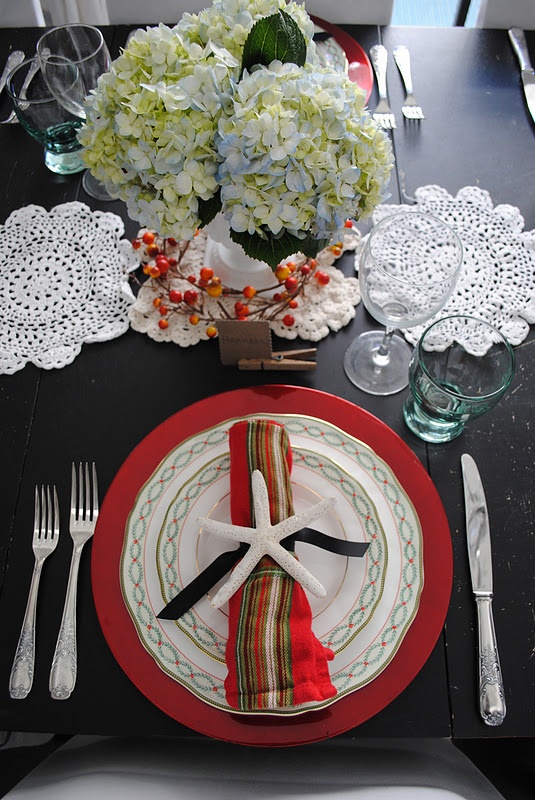
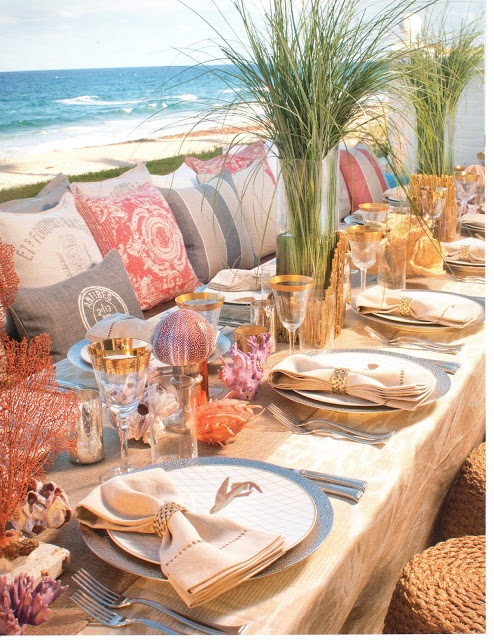
Guests meet the table at their seat first. A charger or woven placemat, a dinner plate, a smaller salad plate or shallow bowl, and a napkin that repeats one color from the runner will carry the theme even if the center is simple. Texture does the decorating: linen against ceramic, matte against gloss, rope or jute against polished glass.
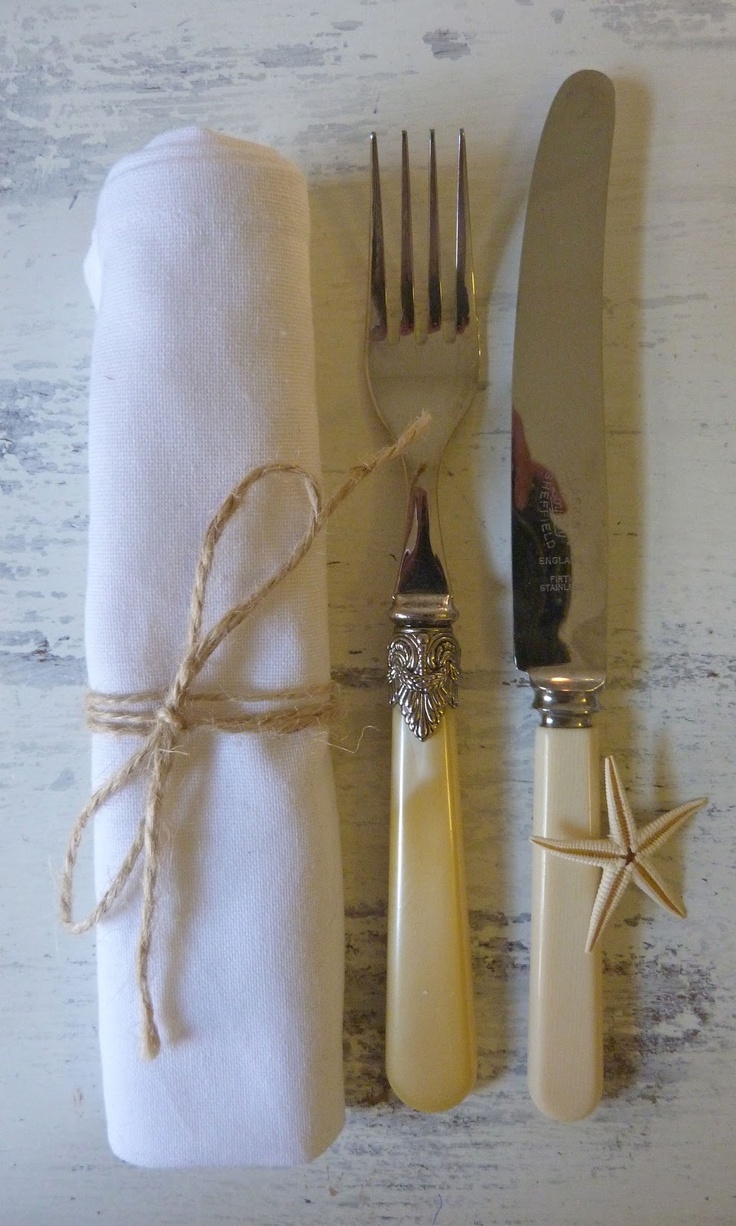
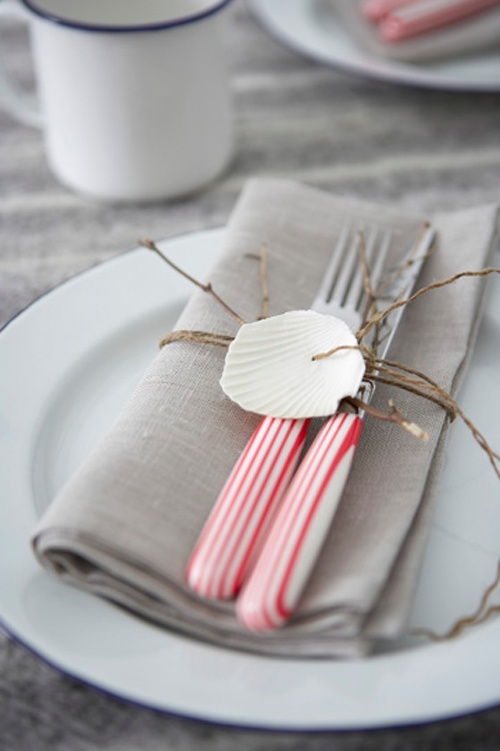
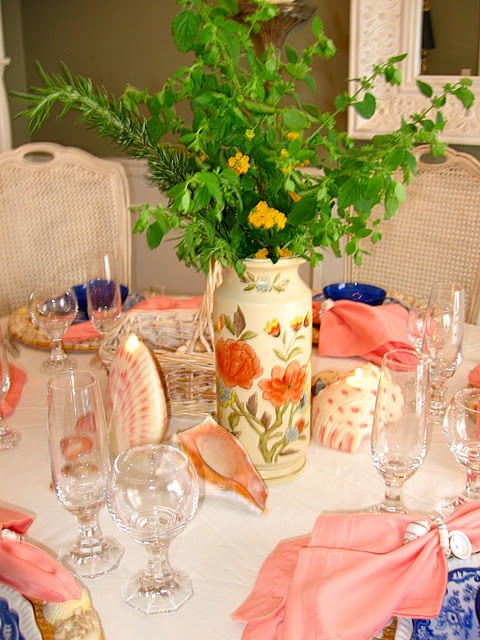
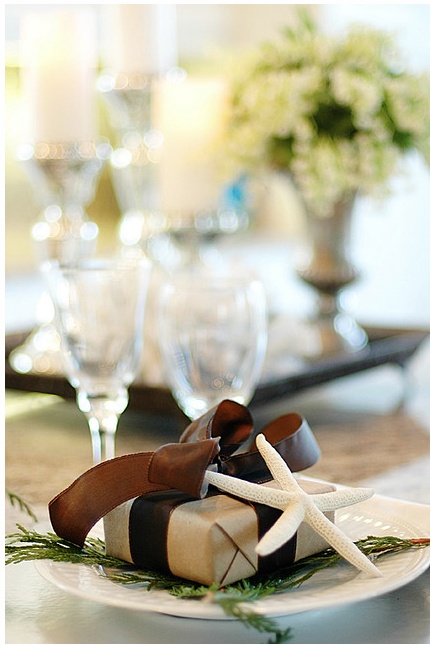
Napkins can be casual. A loose fold under the fork, a soft roll in a simple ring, or a napkin tucked into a wine glass all feel more coastal than a stiff origami flourish. If you want a small object on the plate—a shell, a sprig of rosemary, a place card on kraft paper—use one item, not three. The seat should feel welcoming, not like a craft fair booth.
Glassware should look intentional. Clear stems keep the palette clean. Colored tumblers in pale aqua or smoke add mood without buying a full matching set. Mix heights carefully so water glasses do not crowd wine stems. Set only the glassware you will actually use for the meal you are serving.
Centerpieces that do not block conversation
Coastal centerpieces fail when they become walls. Keep the middle of the table low enough that people can see each other, or break height into several short clusters instead of one tall arrangement. A line of small vases, a shallow tray of sand and shells, or a few candle hurricanes spaced along the runner usually works better than a dense floral mound.
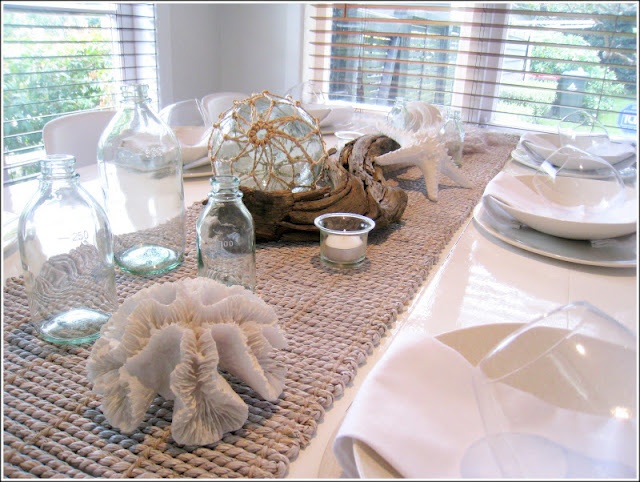
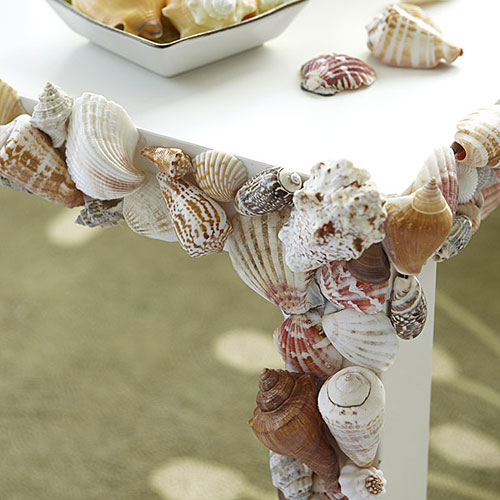
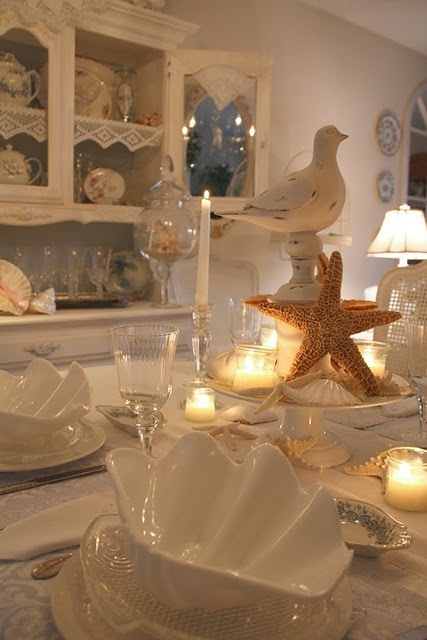
Shells are useful when they look sorted, not spilled. Group similar sizes, leave gaps, and mix in glass, white coral forms, or smooth stones so the center does not read as a single material dump. If children will be at the table, avoid tiny shells that become toys mid-meal. Larger pieces and candles in glass are safer.
Greenery softens the maritime props. Eucalyptus, olive branches, or simple white blooms keep the palette cool. Skip neon tropical flowers unless you are deliberately shifting toward Caribbean party mode. Fresh cuttings should be prepped the day before: strip lower leaves, give stems a clean cut, and keep arrangements away from hot vents and direct afternoon sun.
Food can finish the center. A bowl of lemons, a tray of oysters on ice for a short cocktail hour, or a cake stand with pale cookies gives the table a reason beyond decoration. Edible pieces also solve the problem of décor that is too precious to move when serving begins.
Materials that feel collected from the shore
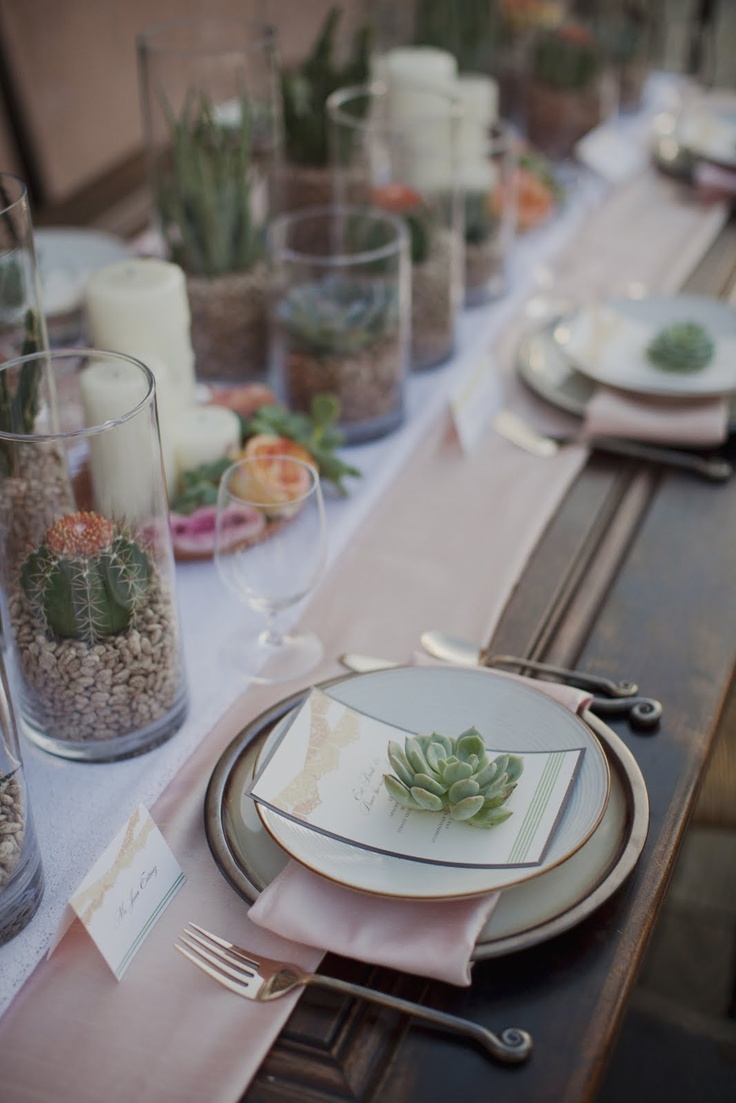
Natural materials stop a coastal table from looking like a catalog page. Unfinished wood boards, woven trays, jute runners, ceramic pitchers with irregular glaze, and clear glass bottles all photograph warmer than plastic starfish and printed vinyl. Even one authentic texture—real linen, real wood, real shell—can make simpler pieces around it feel intentional.
Metal should stay quiet. Brushed nickel, pewter, or soft brass in small doses can frame candles and flatware. Bright chrome and heavy gold usually pull the mood toward formal evening rather than daytime shore. If your flatware is mismatched, keep the rest of the table calm so the mix reads as cottage, not chaos.
Lighting finishes the scene. Daytime tables lean on daylight and pale cloth. Evening tables need candles or string lights nearby, not overhead glare. Mix candle heights in glass holders so flame stays clear of greenery and napkins. Battery tapers help outdoors where wind is constant; real wax still looks better in still air indoors.
Match the table to the meal and the room
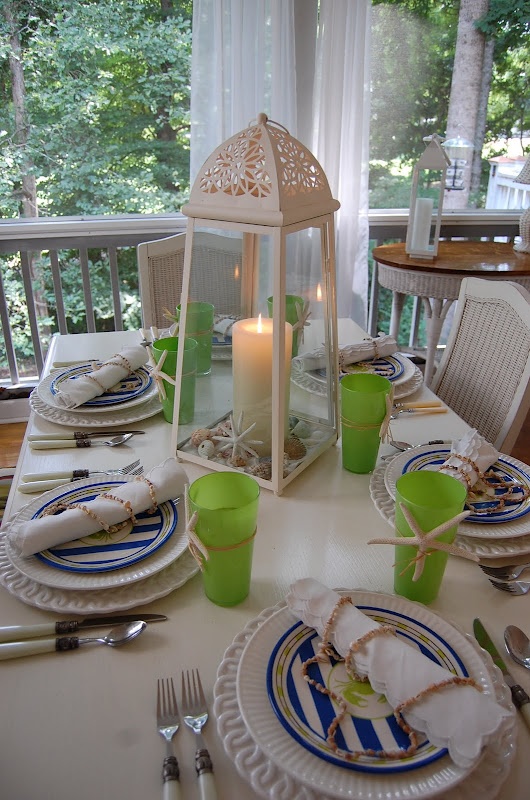
A seafood lunch wants a different density than a late dinner. For grilled fish and salads, keep settings lighter: fewer layers, more bare wood, a pitcher of water with citrus. For evening entertaining, deepen the blues, add candles, and bring in a second textile—perhaps a darker napkin against a pale runner—so the table holds up under softer light.
Outdoor tables need wind logic. Weighted runners, low centerpieces, and clips or stones for paper menus matter more than perfect symmetry. Avoid tall empty bottles that tip. Prefer squat hurricanes and trays that can be carried inside when weather shifts. Sand on outdoor cloth looks charming until it grinds into every plate; keep sandy props on a tray, not loose across the surface.
Indoor rooms already have color. If your walls are warm beige, cooler blues on the table create contrast. If the room is already blue-gray, lean harder on white china, natural wood, and clear glass so the tablescape does not disappear into the architecture. The table should feel related to the room, not pasted on from another house.
A practical build order
Work in this sequence so you do not overbuy or overcrowd:
- Clear the table and choose cloth or bare wood.
- Lay the runner or placemats and test spacing for the number of seats.
- Set plates, flatware, and glassware for the real menu.
- Add napkins and one small place accent if needed.
- Build a low center line: tray, shells, greenery, or candles.
- Step back from the doorway. Remove anything that blocks faces or serving paths.
- Add water carafes and serving pieces last so décor does not steal their space.
Photograph the finished table in daylight if you care about the look; overhead kitchen light flattens blues and makes white china glare. Adjust once more after you place the first serving bowl. A coastal table succeeds when it still functions as a table.
If you take only one idea from these settings, make it restraint: fewer blues, fewer shells, more open wood, and a place for the food to arrive without a fight.

Comments
Continue reading
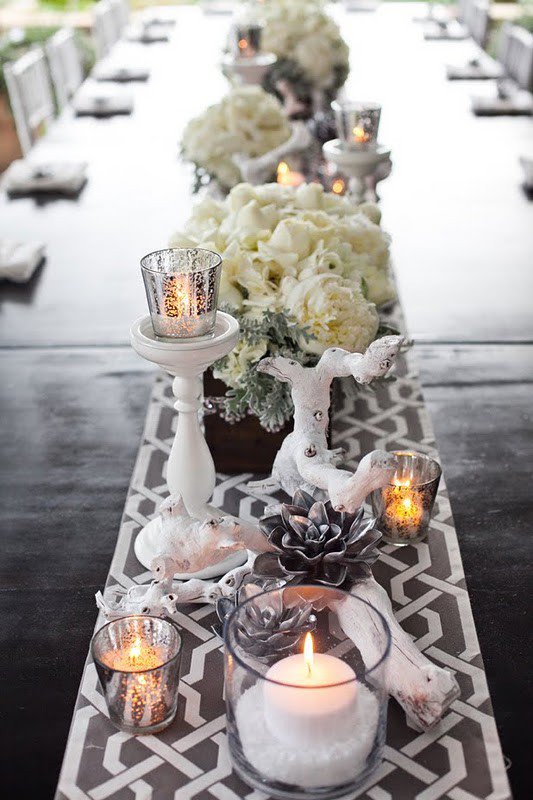
White Winter Creamy Tablescapes
Ivory runners, candlelight, and pale centerpieces — how to build a creamy white winter table that feels seasonal without crowding every place setting.
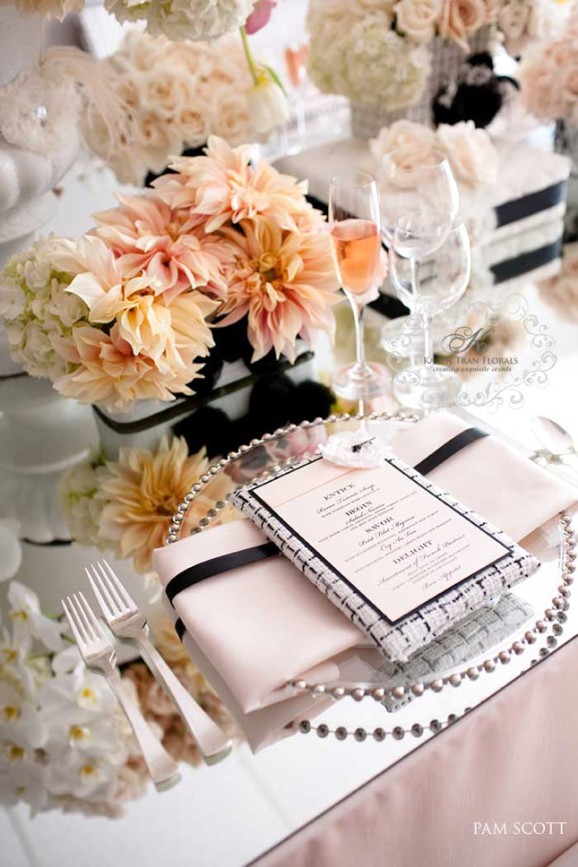
Dream Wedding Tablescapes: Color, Height, and Place-Setting Ideas
Inspiration for reception tables - blush-and-black place settings, purple banquet florals, candlelit outdoor orchids - plus practical notes on contrast, sightlines, and guest comfort.
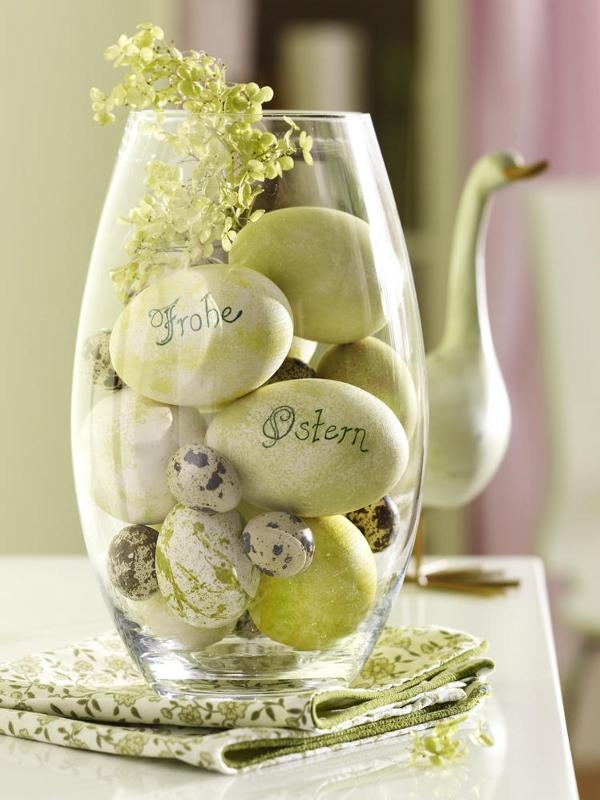
Easter Table Decorations: Linens, Low Centerpieces, Place Settings
Build a whimsical spring Easter table from the ground up—linens, conversation-friendly centerpieces, one cue per place, and a calm color story.