
Bryan Dunn’s Daily Lunch-Bag Illustrations
Graphic designer Bryan Dunn drew colorful characters on his son’s brown paper lunch bags nearly every school day—practice, parenting, and a series that traveled from cafeteria tables to the web.
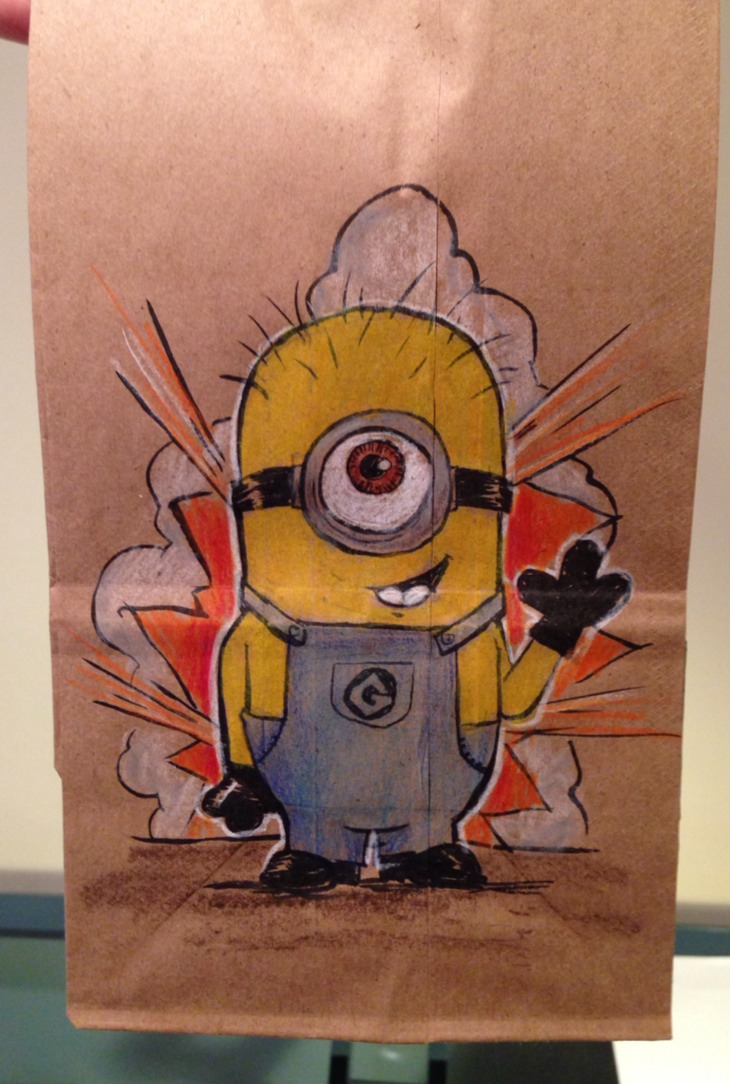
Bryan Dunn is a graphic designer and illustrator who turned his son’s brown paper lunch bag into a daily drawing assignment. Not a weekend craft. Not a holiday surprise. A new illustration, most school days, on the same cheap kraft surface that usually only carries a name in marker. By the time his son finished first grade, the stack of bags had become a body of work—and a small internet phenomenon when Dunn shared favorites online.
The project sits in a sweet spot between parenting and practice. The bags make lunch feel noticed. The deadline makes the artist keep inventing. Tough paper, limited time, and a kid audience are unusual constraints for a commercial designer. They are also excellent ones.
How a preschool kindness became a daily studio
Dunn has described the beginning simply: he wanted his son’s brown-bag lunch to feel a little extra special when preschool started. The habit stuck. Years later the boy was older, a daughter had joined the rotation, and both kids were still getting a new bag. What began as a kindness hardened into a creative exercise—something to keep the drawing hand honest when client work could otherwise swallow every hour.
Around the 2014 wave of attention, the story that traveled was specific and easy to love. A freelance designer and devoted father had been drawing on his first-grader’s lunch bags for roughly two years. Sometimes the kid requested characters. More often Dunn invented. After lunch, or on a break, or after bedtime, he would draft and color while ordinary family life continued around the table. Pencil crayons on kraft paper. About half an hour a bag when the schedule cooperated. A photo of each finished piece before the sandwich went in.
He posted favorites on Tumblr under Moremonger and elsewhere online. Design blogs, list sites, and parents’ media picked them up. The appeal needed almost no explanation. You could see the craft immediately, and you could feel the reason for it without a manifesto.
What goes on the bags
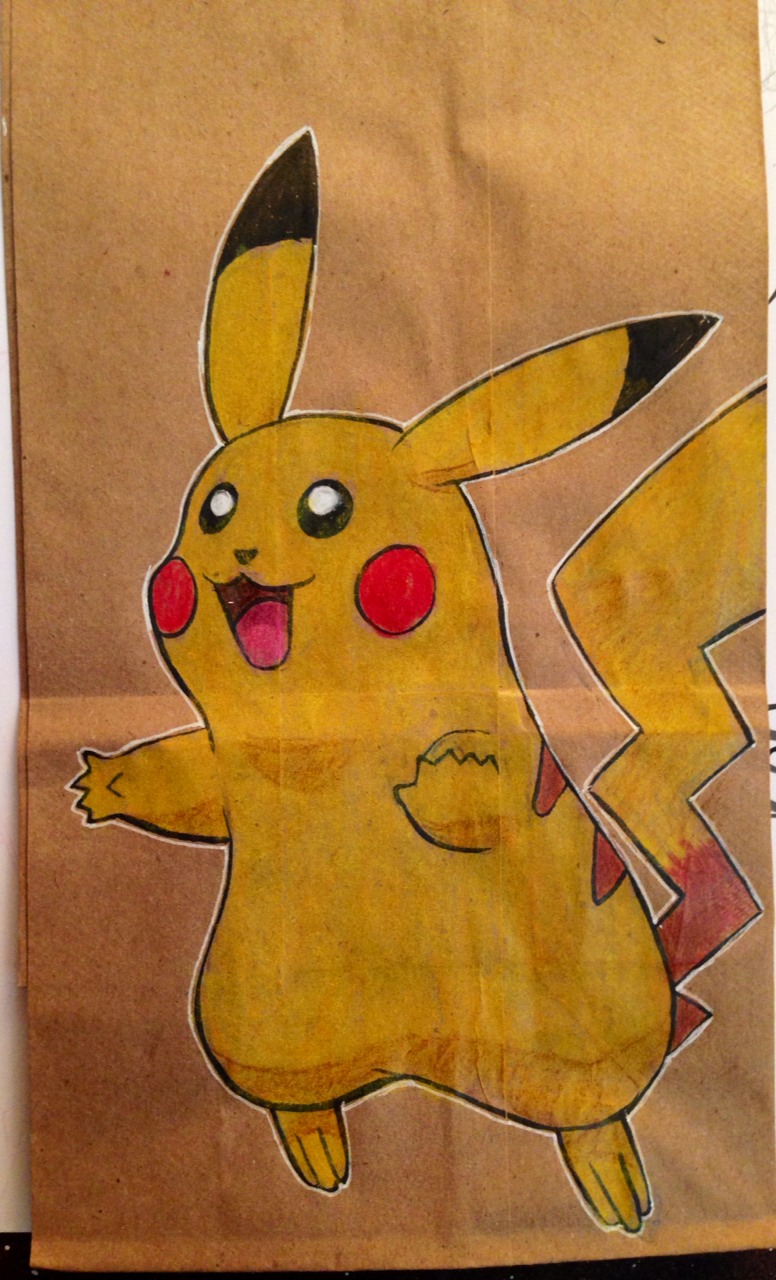
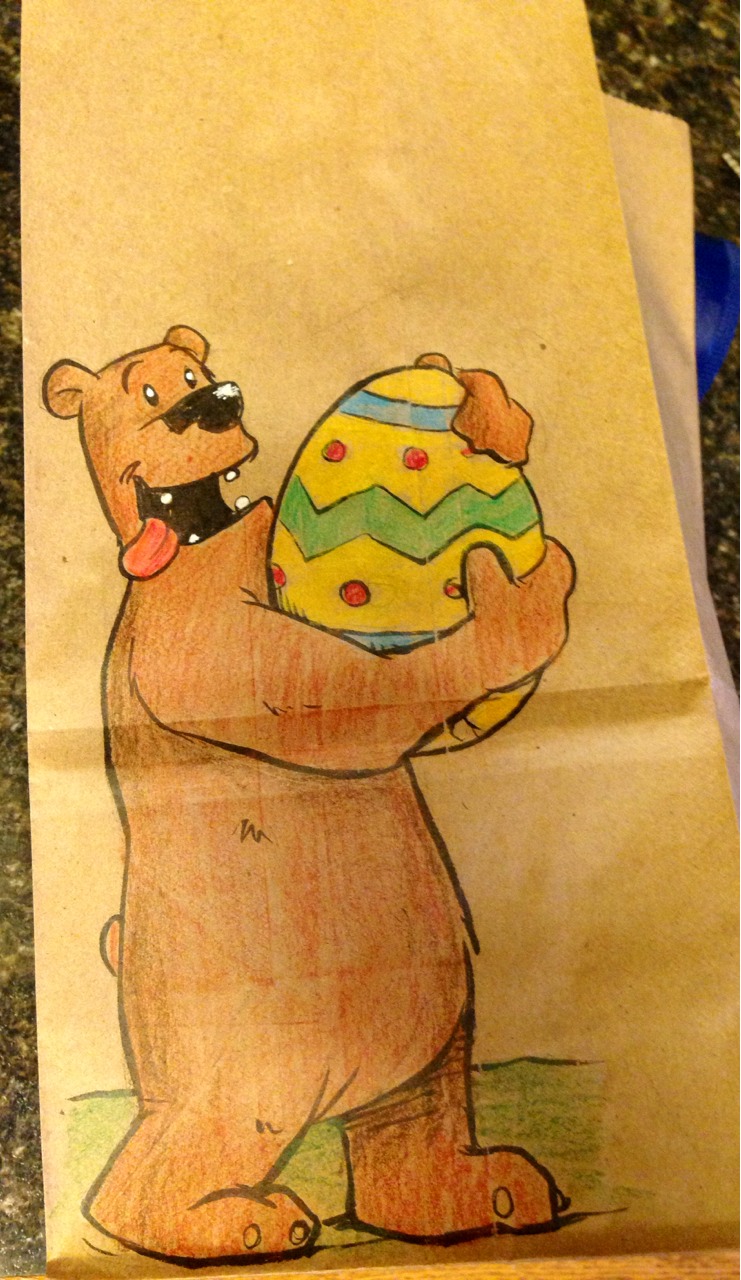
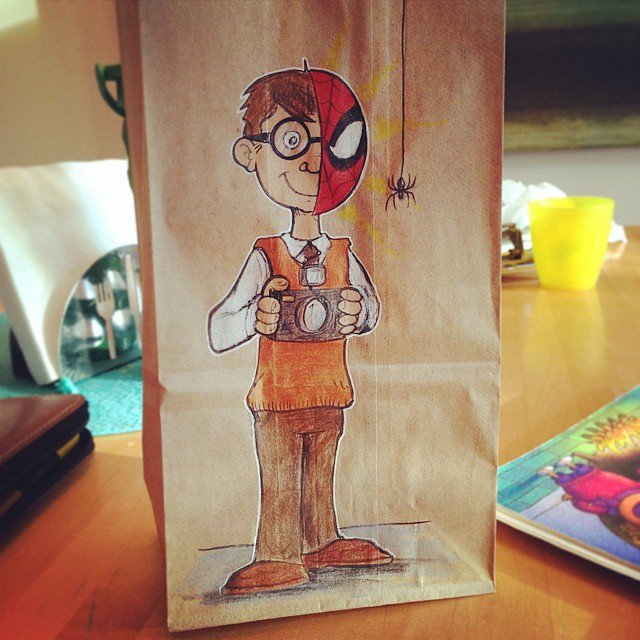
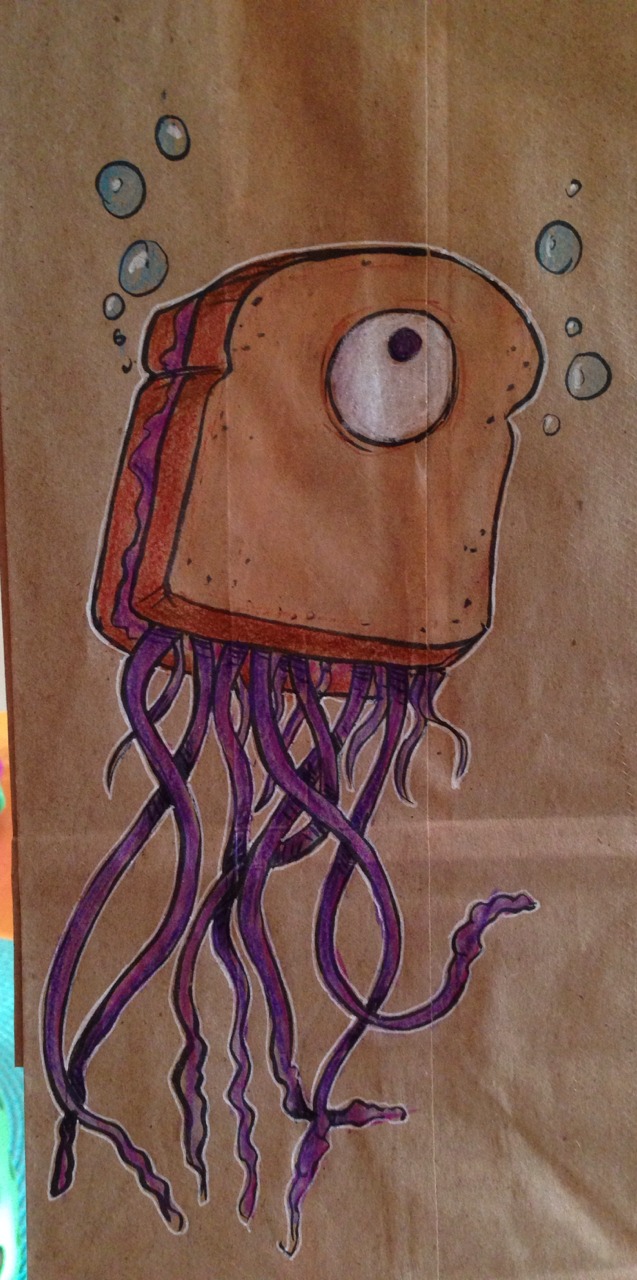
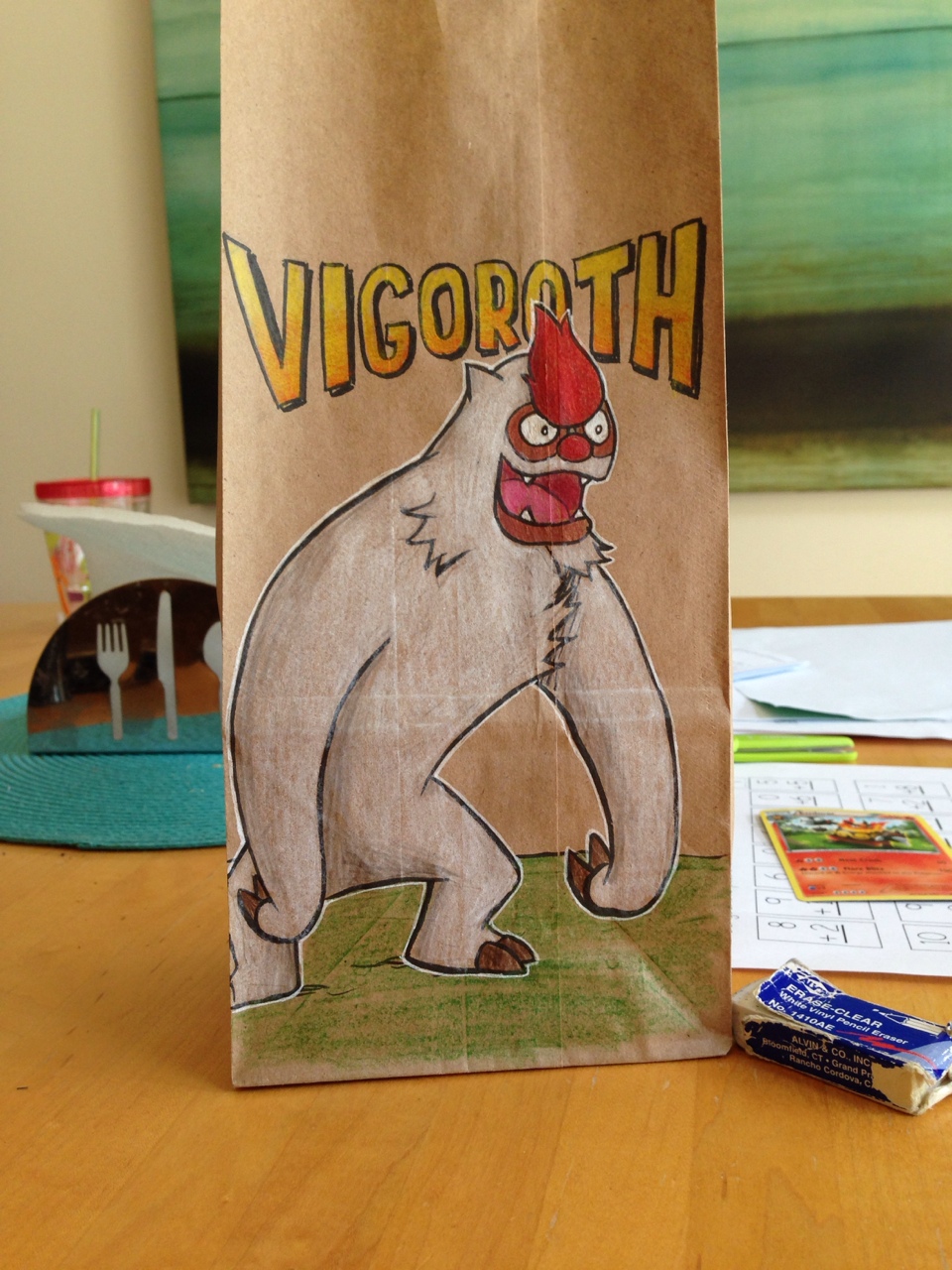
The cast is cheerfully crowded. Superheroes such as Spider-Man share space with Pikachu, Calvin and Hobbes energy, dinosaurs that somehow acquired lightsabers, jetpack alligators, monster bananas, multi-handed frogs, and bears riding unlikely mounts. Pop culture sits beside pure invention. That mix matches how kids actually talk about stories—franchises and freestyle nonsense in the same breath.
Color does more work than the kraft paper should allow. Dunn pushes bright fills and clear outlines so the drawing reads across a cafeteria table, not only in a portfolio scan. The brown bag is not corrected into white illustration board; it stays a bag. Grain, folds, and rectangular limits are part of the charm. Working on a difficult surface was, by his own account, partly the point: practice that refuses to be precious.
Composition respects the object. A lunch bag has a front panel, side tucks, and a top that will be rolled or folded. Strong silhouettes and centered characters survive that abuse better than delicate edge detail. Many of the best pieces could be read as stickers or poster icons if lifted off the paper. That clarity is design training applied to affection.
Why the project resonates beyond cute-dad content
Internet culture is full of parental crafts that peak once and vanish. Dunn’s bags endured attention because they demonstrate repetition with variation. One charming bag is sweet. Hundreds of bags imply discipline. Viewers who draw for a living recognize the harder achievement: showing up again when yesterday’s idea already used the obvious dinosaur.
There is also a quiet argument about where illustration can live. Not every drawing needs a gallery wall or a client brief. A disposable bag that protects a sandwich can still carry real draftsmanship. Kids at adjacent tables become an accidental audience. Teachers become witnesses. The art leaves the house and returns crumpled, which is a more honest lifecycle than many prints receive.
For parents who are not illustrators, the transferable idea is smaller and still useful: a repeating signal of attention. It does not have to be a polished character every morning. A doodle, a note, a sticker collage, a comic panel—anything that says the lunch was packed by someone who was thinking about the person who will open it. Dunn’s professional skill raises the ceiling; the structure of the habit is what travels.
Process notes worth stealing
Work ahead when you can. Dunn has mentioned drawing on a lunch break the day before or after kids are asleep. Same-morning heroics are fragile. A small buffer turns the project from stress into ritual.
Limit the toolkit. Pencil crayons on kraft keep decisions finite. Infinite digital brushes invite fussing; a handful of pencils invite finishing. Constraints are not the enemy of color—they are why the colors stay bold.
Photograph before packing. The bag will crease. The record matters if you care about the series, and it trains you to see the drawing as complete before food stains edit it.
Let requests in without surrendering invention. A child asking for a favorite character is collaboration. Filling every bag only on request turns the adult into a vending machine. Dunn’s balance—sometimes requests, mostly invention—keeps both people curious.
Accept that some days will be thinner. A minimal critter still counts. The streak is the art form as much as any single virtuoso bag.
After the first-grade landmark
The 2014 posts framed a chapter ending: first grade done, favorites gathered, Tumblr as the public sketchbook. The habit did not have to stop there to have succeeded. Dunn’s own later notes describe the project stretching as children grew, eventually including a daughter who challenged him toward other animals and minimal menageries. Features accumulated—local press, television, parenting sites, his portfolio page for lunchbags—without turning the kitchen table into a content studio first and a family table second.
That order matters. The bags work online because they worked offline first. They were for a specific kid opening a specific lunch, not for algorithmic praise. The praise arrived anyway, which is a nicer sequence than the reverse.
If you scroll the drawings, notice how rarely they apologize for being on a bag. No faux-canvas pretension. No attempt to hide the folds. Just clear characters, loud color, and the daily proof that a designer’s hand can clock in for love as reliably as for invoices. Tomorrow’s sandwich will need a new panel. That is the brief.

Comments
Continue reading
5 DIY Clutch Bags: Bell, Glitter, Minaudière, Bow, and Book
Five DIY clutch bag projects—Louboutin-inspired bell, glitter refresh, golden-horse minaudière, sewn bow clutch, and recycled book clutch—without the designer price tag.
Still-Life Photography by Margareth Perfoncio
São Paulo photographer Margareth Perfoncio’s still lifes of food and flowers—Old Master light, dark wood, and tables that feel inevitable.
Meaningful Love Quotes for Inspiration (and Ink)
Meaningful love quotes that still feel true — short lines for tattoos, gifts, and everyday reminders, with placement and wording tips.