
Alastair Magnaldo’s Dreamlike Landscapes and Child Imagination
French photographer Alastair Magnaldo builds tender surreal scenes from real landscapes—children, animals, and quiet impossibilities that treat nature as play, not conquest.
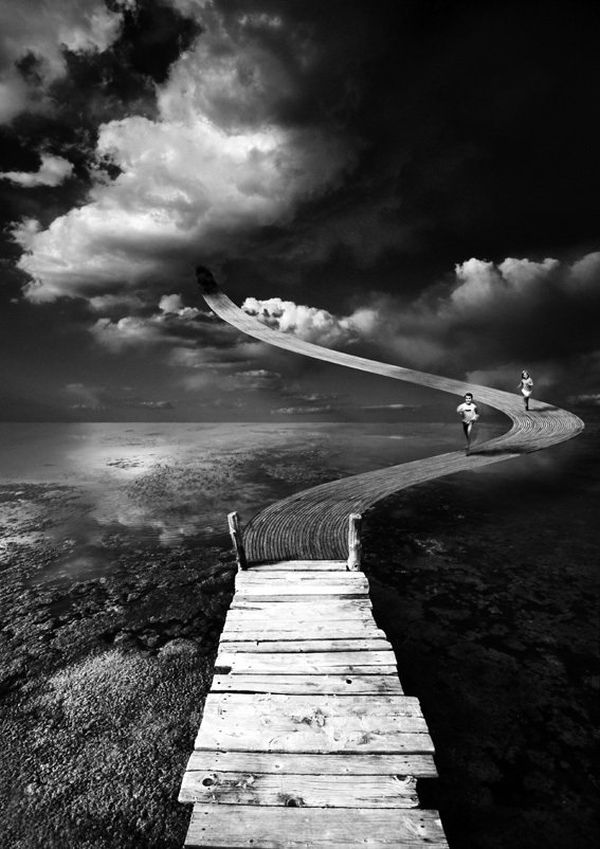
Some photographs ask you to admire a place. Alastair Magnaldo’s ask you to remember how a place felt before you learned the rules. In his dreamlike landscapes, hills, seas, roads, and skies behave like stage sets for childhood logic: animals appear where they should not, figures float or shrink, ordinary objects turn ceremonial, and the weather seems to conspire with wonder rather than meteorology. The pictures are surreal, but they are not cold puzzles. They are tender, slightly mischievous invitations back into a “small world” where imagination still outruns the map.
Magnaldo was born in Great Britain and raised in Nice, France. He trained in physical chemistry to Ph.D. level before turning fully toward art and photography—an unusual route that may help explain the patient craft behind images that look effortless. He has exhibited widely in France and abroad, including nature and photography festivals, and his work has circulated through magazines and print editions. What matters most for this gallery, though, is the emotional contract of the pictures themselves: escape without cynicism, fantasy without cruelty, and landscapes treated as partners in play rather than trophies to own.
A small world, built from real ground
Magnaldo’s long-running series often gathered under titles such as A Small World begins with genuine landscape photography. He travels, shoots diverse terrains, and stays close to nature’s textures—coastlines, open fields, roads that vanish into weather. Only then does he assemble scenes that feel like stories half-told: a child-scale encounter with animals, a house that seems to belong to a fable, a mobile or machine that has wandered into poetry. The method is composite and imaginative, but the base is photographic. You sense mud, wind, and light before you notice the impossible.
That order matters. Pure illustration can invent anything; Magnaldo’s work keeps enough of the world’s gravity that the dream lands with a soft thud. The limited planet we actually inhabit—finite land, finite seasons, finite bodies—meets an imagination that refuses those limits. He has described the series as an ecological idea as much as an aesthetic one: instead of appropriating nature by force, represent it through reflection and play. Looking becomes a non-aggressive act. The landscape is not conquered; it is re-entered as if through a child’s side door.
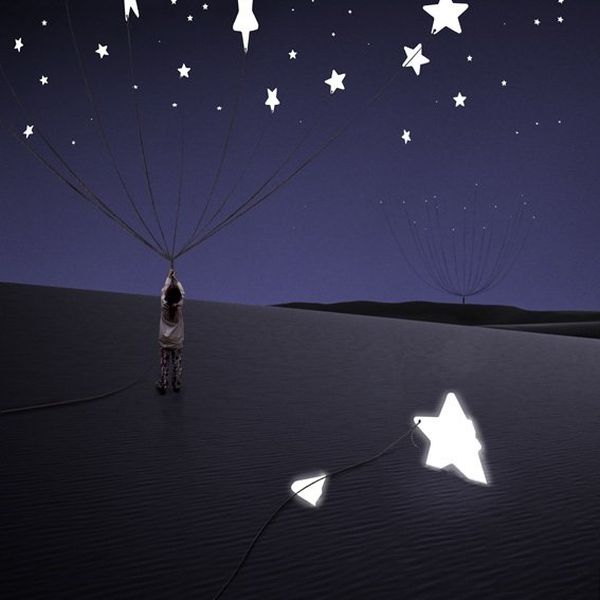
Viewers often reach for literary cousins—Antoine de Saint-Exupéry’s gentle astronomy of childhood, for example—because Magnaldo’s pictures share that mixture of seriousness and lightness. The surreal gesture is rarely a shock gag. It is closer to a private joke the landscape agrees to keep.
Children, animals, and the soft absurd
Children appear not as props for cuteness but as the correct scale for Magnaldo’s metaphysics. In a world where adults measure, own, and fence, a child still negotiates with mystery. Animals cross paths with human figures as if species boundaries were temporary etiquette rather than law. A road becomes a corridor between states of mind. A tower, island, or house sits in the frame like a noun waiting for a verb the viewer must supply.
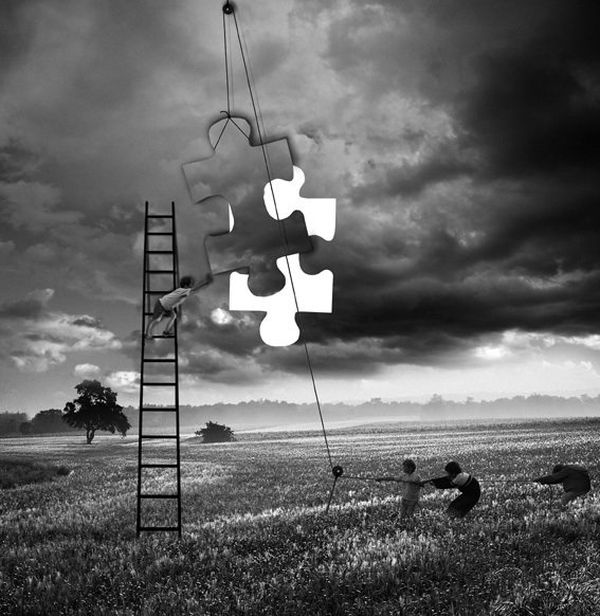
Look for how little the pictures shout. Color is often restrained; atmospheres lean toward mist, dusk, or pale daylight. The surreal element arrives as if it had always been there and you simply failed to notice. That quiet delivery is why the work feels dreamlike rather than theatrical. Dreams rarely announce their logic. They present a completed scene and leave you holding the aftertaste.
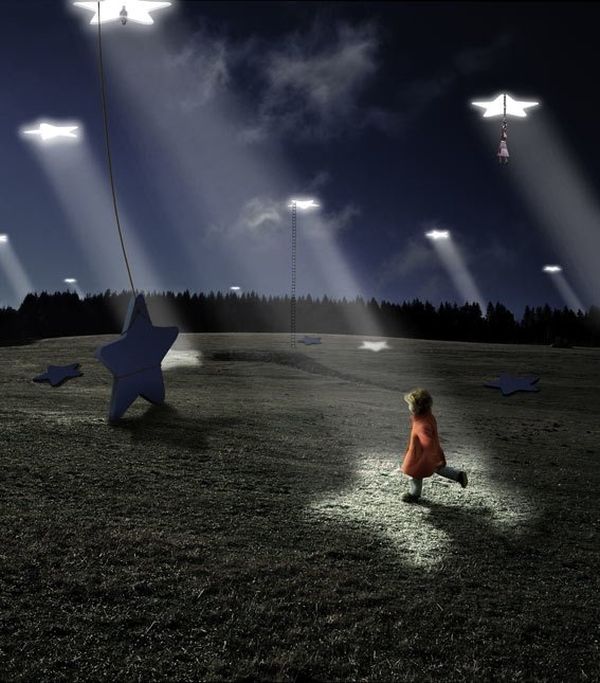
There is also pathos under the playfulness. Magnaldo has spoken of clinging to a childish heart against a world that teaches us to close our eyes. The photographs do not sentimentalize childhood as innocence alone; they treat imagination as a form of courage—the decision to keep seeing possibility after adulthood has filed everything under “already known.”
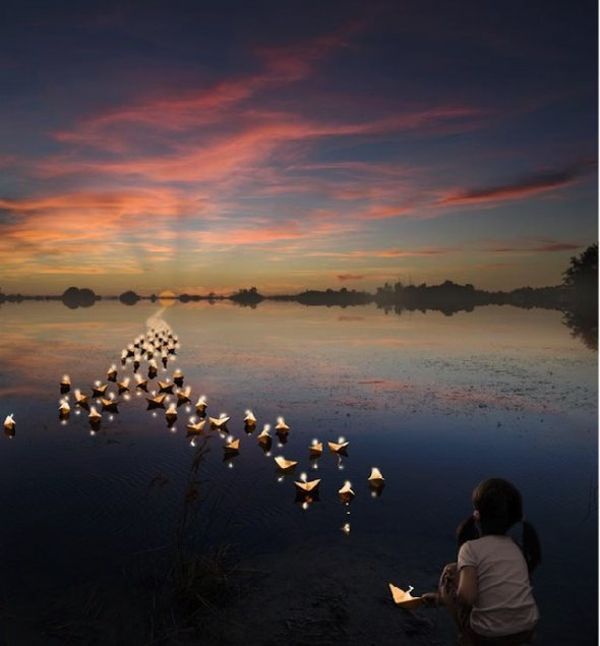
How the pictures are built to be believed
Technically, Magnaldo’s images depend on seamless assembly: matching light direction, horizon logic, scale relationships, and tonal continuity so the invented encounter feels photographically inevitable. When that craft succeeds, you stop hunting seams and start inhabiting the scene. When it nearly succeeds, you feel the productive tension between documentary landscape and studio-minded storytelling—the same tension that runs through much contemporary surreal photography.
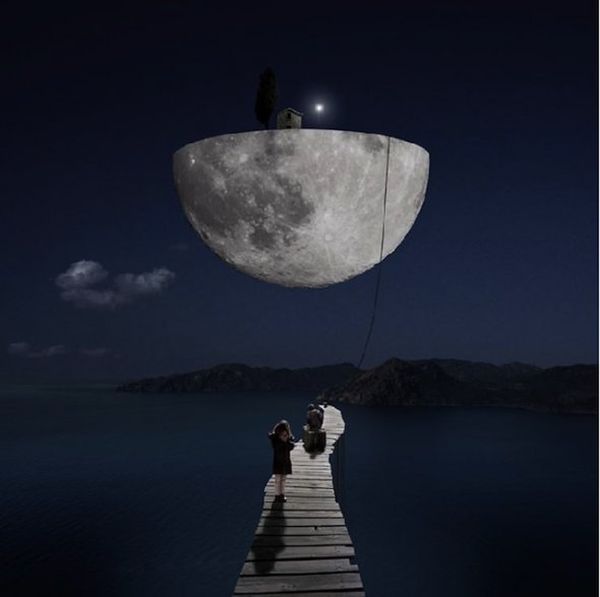
He has described wandering through life with a camera, assembling pictures, then searching afterward for a deeper series meaning. That reverse engineering—shoot first, discover the theme later—suits work about imagination. Childhood play rarely begins with a thesis. It begins with an object, a hill, a dare, and only later becomes a story you can tell.
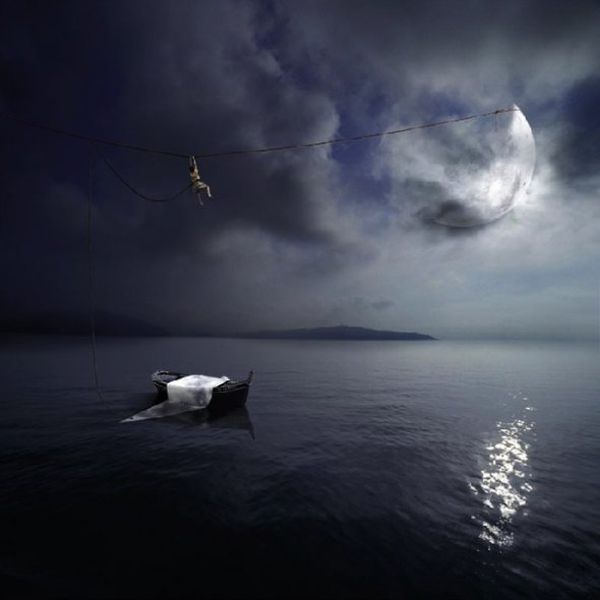
Compared with harder-edged digital surrealism that revels in glitch, violence, or glossy impossibility, Magnaldo’s register stays closer to fairy tale and quiet absurdity. The pictures want you to smile without becoming ironic. They want escape that still cares about the ground underfoot. In an era when “surreal” often means maximal spectacle, that restraint is its own signature.
Looking slowly through this set
A fast scroll rewards you with mood. A slower pass rewards you with structure. Try treating each image as a short scene from an unwritten book:
- Where is the horizon, and what sits on the “wrong” side of it?
- Who or what holds the emotional center—child, animal, object, or empty space?
- What would the photograph lose if the surreal element were removed? Would it still be interesting as landscape alone?
- Does the light feel continuous, or do you sense two weathers gently arguing?
- What story would a child invent in one sentence? What story would an adult invent to explain it away?
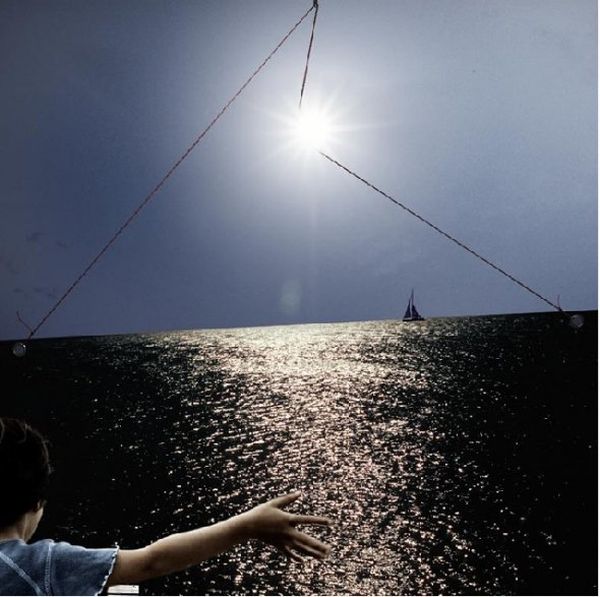
Those questions keep the gallery from becoming wallpaper. Magnaldo’s best frames are not merely pretty impossibilities; they are proposals about attention. If imagination is a way of looking at nature without grabbing it, then each picture is a small ethic as well as a small poem.
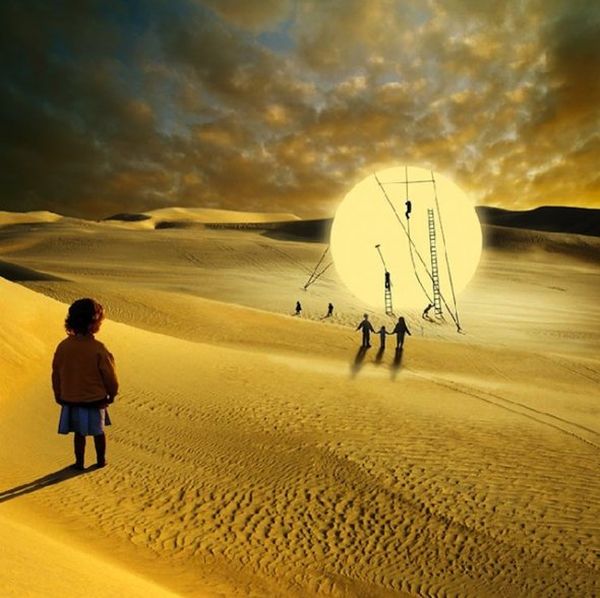
Print culture suits this work. On a wall or in a large book, the quiet details—tiny figures, soft transitions, the exact place where fantasy meets grass—have room to breathe. On a phone, you still get the spell, but you may miss how carefully the ordinary world has been left intact enough to host the extraordinary.
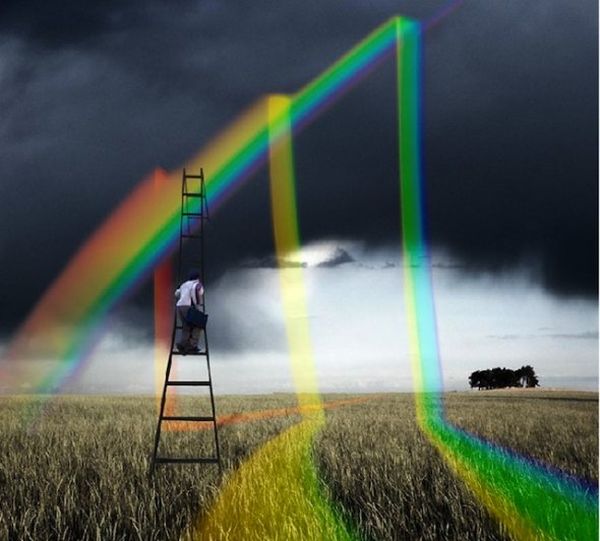
Why these images still feel needed
Dreamlike photography can tip into escapism that ignores the real. Magnaldo’s version keeps circling back to nature, animals, and the friction between limited earth and unlimited mind. That friction feels newly sharp in an age of climate anxiety and screen-saturated attention. His answer is not a lecture. It is a set of pictures that practice another relationship to landscape: curious, playful, protective, and stubbornly open.
Spend a few minutes with one frame until the surprise settles and the tenderness remains. Then ask what ordinary hill, street, or shoreline near you might look like if you returned to it with the same permission Magnaldo gives his scenes—the permission to let imagination stand beside fact without apologizing for either.

Comments
Continue reading
Surreal Photography by Nikita Sergyshkin
Belarusian photographer Nikita Sergyshkin stages dream-logic portraits—fashion-adjacent light, controlled estrangement, and surreal mood without collage monsters.
Surreal Worlds by Nois7: Robert Jahns’s Dream Composites
Hamburg artist Robert Jahns—known as Nois7—builds travel photographs into seamless surreal scenes. A look at the mood, craft, and Instagram-era gallery that made his work famous.
Oleg Oprisco’s Surreal Film Photography on Kiev 6C and Kiev 88 Cameras
Kyiv photographer Oleg Oprisco builds dreamlike conceptual scenes on older Kiev medium-format film cameras—soft color, quiet staging, and surreal mood without the rush of digital spray-and-pray.