
Easter Home Decoration Ideas: Color, Eggs, and Easy Vignettes
Style your home for Easter with a short color story, egg displays, spring branches, and entry or mantel vignettes that pack away cleanly.
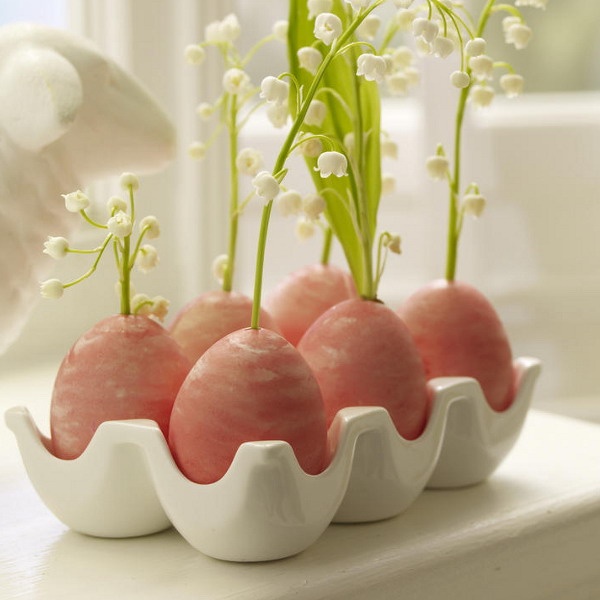
Easter home décor works best when it borrows from spring itself: clearer light, softer greens, pale yellows, and a few handmade or natural objects that feel collected rather than rented for a weekend. You do not need to dress every shelf. Pick a short color story, repeat it in eggs, florals, and small vignettes, and leave everyday furniture doing its job underneath. Festive rooms look intentional when color, texture, and empty space share the load—and when you can pack the seasonal pieces away in one labeled box when April ends.
Think in layers: one natural material (wood, moss, twigs, linen), one color family (pastels, whites with a single accent, or soft brights), and one edible or living element so the house smells and feels awake. Limit how many surfaces you style. Three strong spots—an entry, a mantel or shelf, and a dining surface—read as celebration. Eight half-finished corners read as clutter you meant to finish later.
Walk your home once before you buy or craft anything. Notice where light falls in late morning, where guests pause with coats, and where you already set down keys and mail. Those are the places décor will be seen and also where it must stay out of the way. Decorating against traffic paths or on every windowsill usually fails by Saturday afternoon.
Choose a color story and stick to it
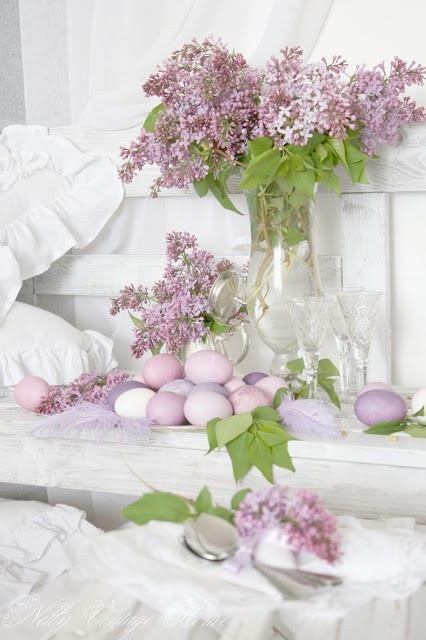
Two or three colors repeated across rooms make scattered objects feel like one season. Soft blue, cream, and white calm living rooms; blush, sage, and natural wood suit farmhouse corners; yellow and green cheer kitchens without tipping into cartoon brightness. If your everyday décor is already bold—patterned sofas, saturated art—keep Easter pieces quieter. White eggs, clear glass, and greenery sit as a temporary layer instead of fighting the furniture.
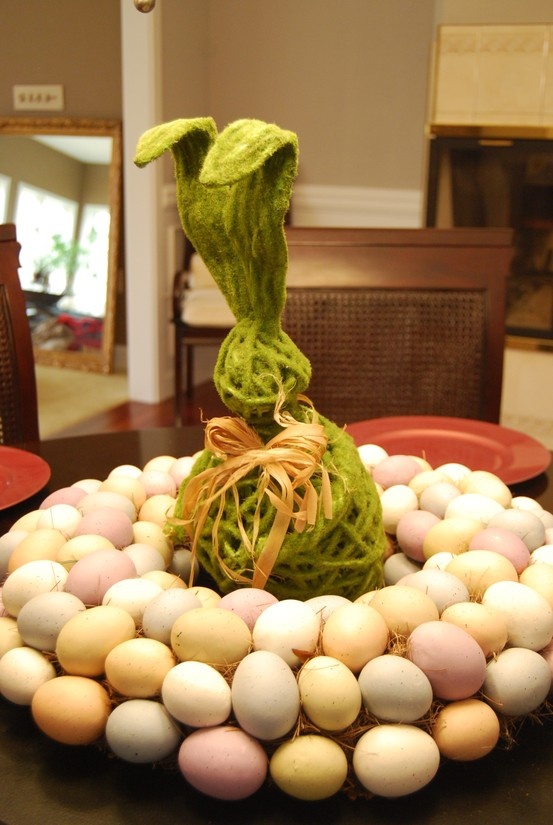
Echo the same hues in small places: ribbon on a wreath, a runner on a sideboard, painted eggs on a bookshelf, napkins in a basket by the coffee maker. Repetition is what turns a pile of seasonal objects into a coherent house. When you are tempted to add a fourth bright color because it was on sale, put it back. One unexpected accent used twice beats five accents used once.
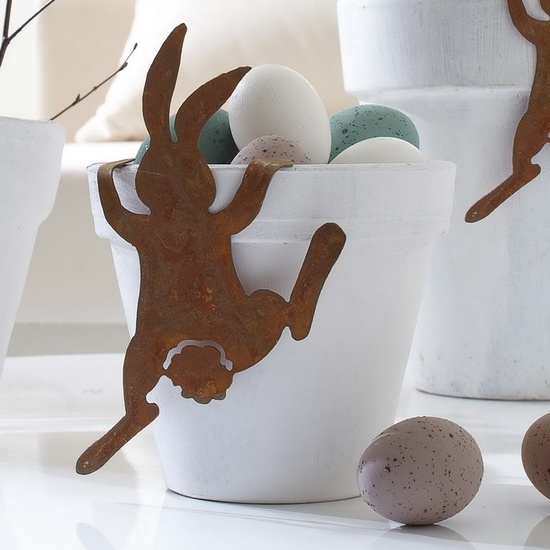
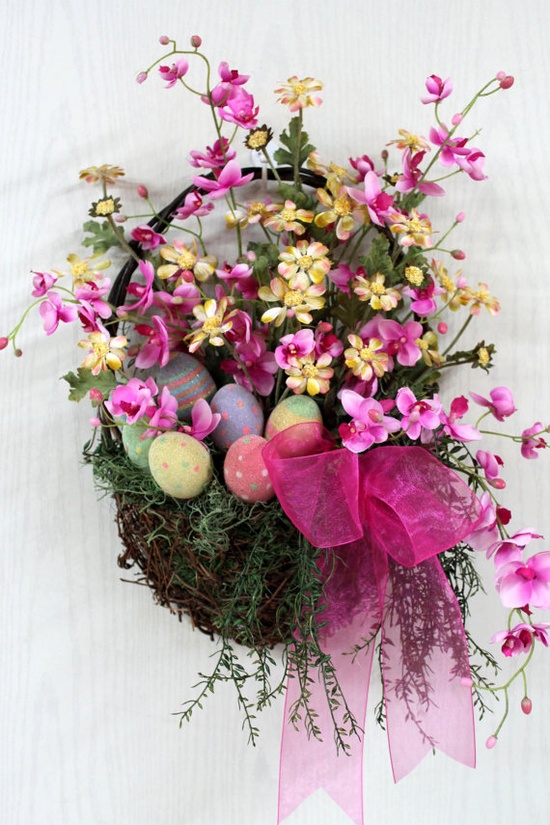
Test your palette against wall color and floor tone. Cool pastels can look chalky on warm beige walls; warm yellows can clash with cool gray paint. Hold a sample egg or scrap of ribbon against the wall in daylight before you commit a whole mantel to it.
Eggs, nests, and bowls as everyday displays
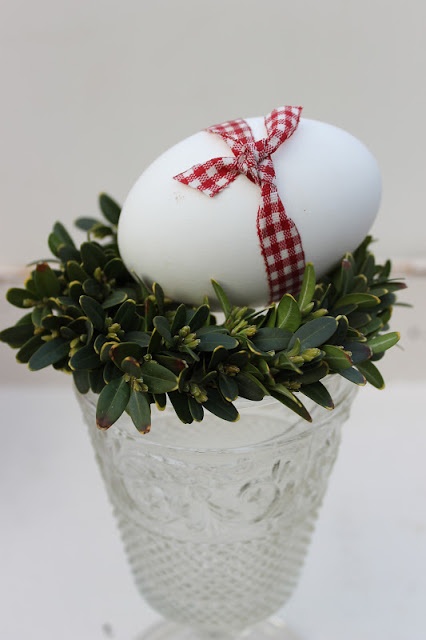
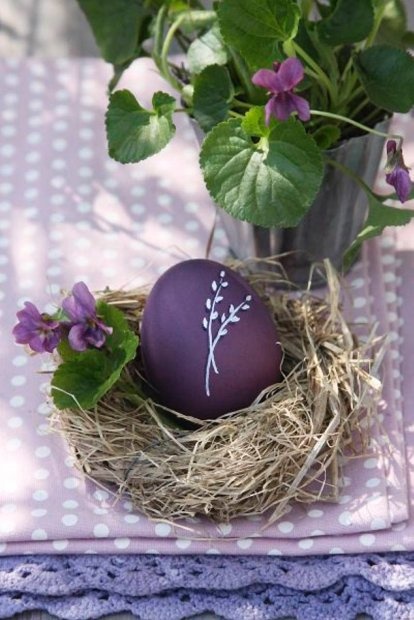
Decorative eggs earn their keep when they live in bowls, on cake stands, or tucked into moss—not only in plastic grass for a hunt. Wooden, ceramic, or blown eggs last through the week and photograph better on open shelves. Dye real eggs with onion skins, tea, coffee, or food coloring for mottled soft tones; leave a few undyed for contrast against saturated neighbors. Nest a handful in a shallow tray with feathers or tiny twigs for a sideboard piece that does not block walking paths.
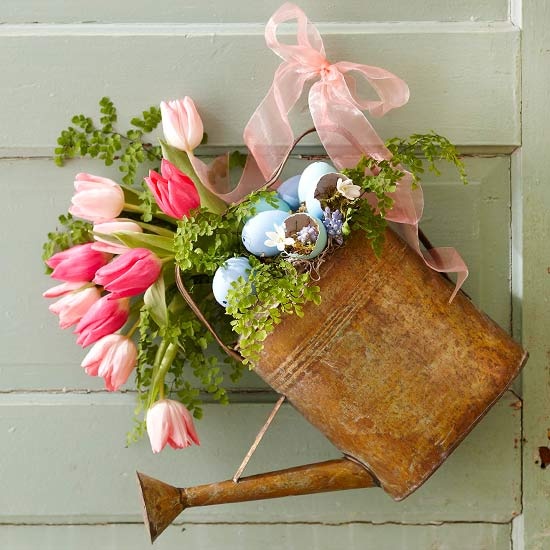
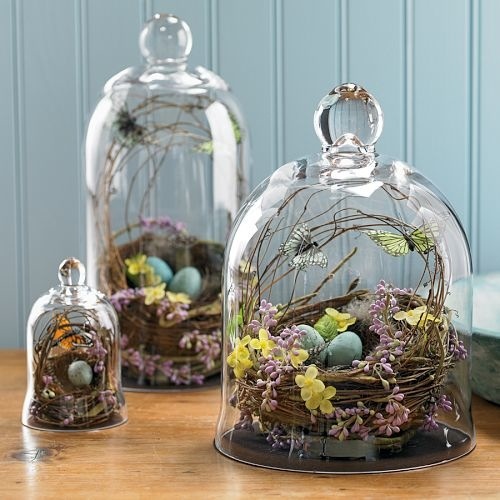
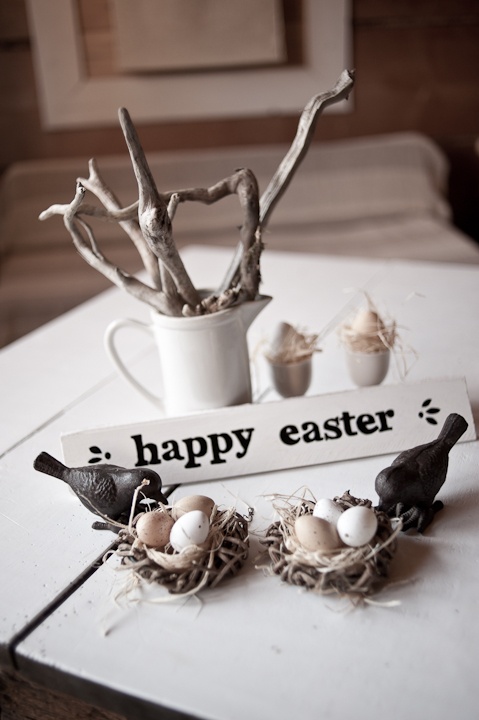
Keep indoor display eggs separate from outdoor hunt eggs. Mixing the two usually means half the mantel disappears into the yard by afternoon. Label storage boxes “display” and “hunt” so next year’s setup stays sane. If children will be around, place the most fragile ceramic eggs higher and use wooden or plastic ones at toddler height.
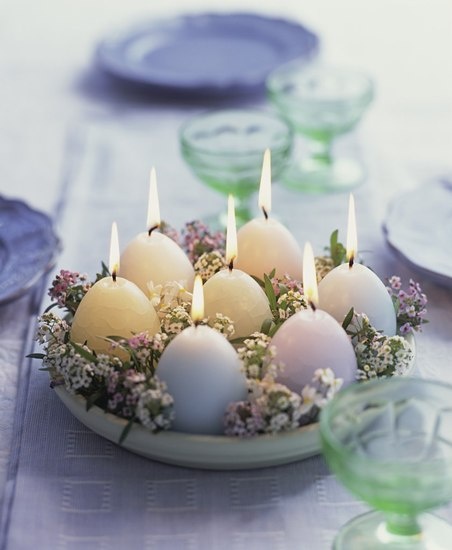
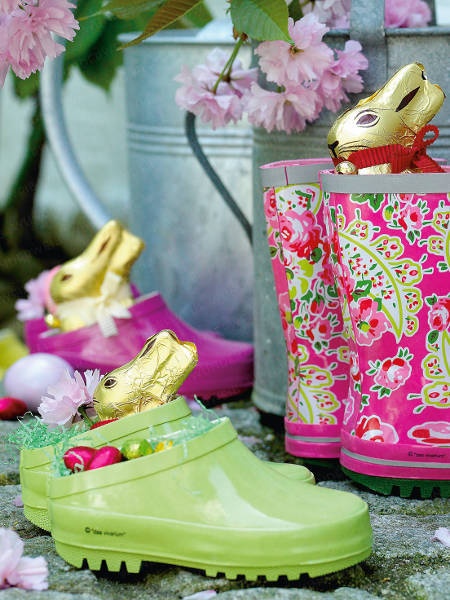
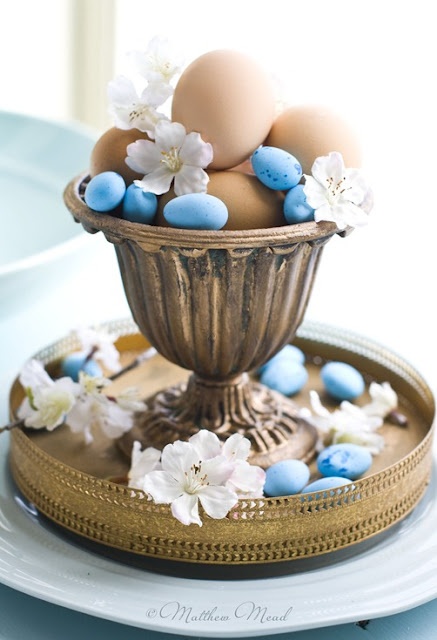
Bowls and cake stands do double duty: they contain rolling eggs and give height without a full centerpiece. A stack of two shallow bowls with moss between layers looks fuller than a single flat plate of eggs. Rotate one bowl to a different room midweek if the display starts to feel stale—moving objects is cheaper than buying more.
Branches, florals, and living greenery
Forced branches—forsythia, cherry, willow, flowering quince—add height without a florist budget. Cut them on a mild day, smash the woody ends lightly, and place them in a tall vase of warm water near a window. Hang lightweight eggs only if stems can hold without dipping into the water. Twig nests look best with restraint: one on a stack of books, another on a console, not a nest on every surface. Dry moss softens eggs and candles; keep it dry so it does not stain wood finishes.
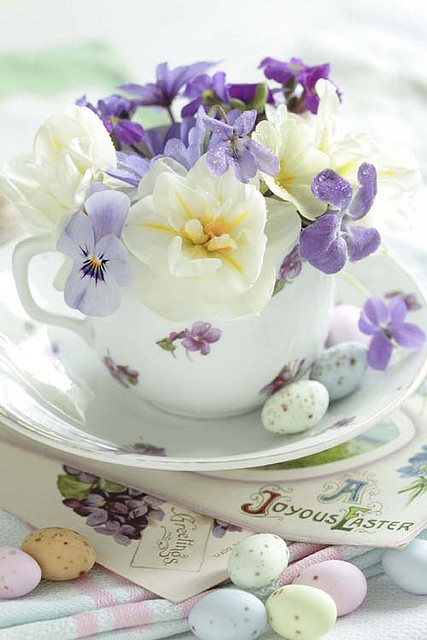
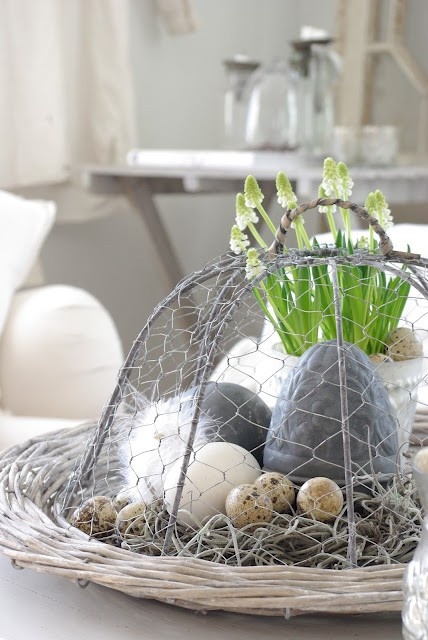
Potted hyacinths, tulips, and daffodils work as décor and as parting gifts for guests who stay through dessert. Group odd numbers of pots on a tray so watering spills stay contained. Cut flowers in bud vases along a mantel or windowsill keep sightlines open while still saying spring. When blooms fade, move hardy bulbs outdoors or compost spent plants rather than leaving tired stems through late April.
Herbs in small pots—thyme, mint, chives—bridge kitchen and living room. They smell useful, cost less than long-stem bouquets, and can move to a sunny sill after the holiday. Avoid heavily scented candles next to strong hyacinths; one fragrance story per room is enough.
Entry, mantel, and room corners
Guests form an opinion at the door. A basket of greenery, a simple wreath, or a tray of bottles with single stems signals the season without blocking coats and shoes. Keep floor space clear for bags and strollers. On the mantel, place the tallest object near center or to one side, then step heights down with eggs, frames, and candles. Empty space between objects matters; filling every inch makes spring feel frantic instead of fresh.
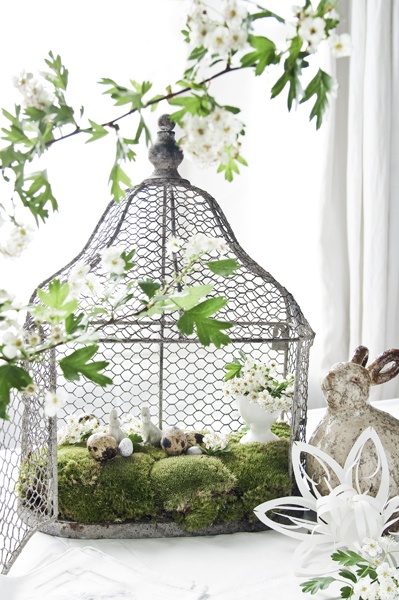
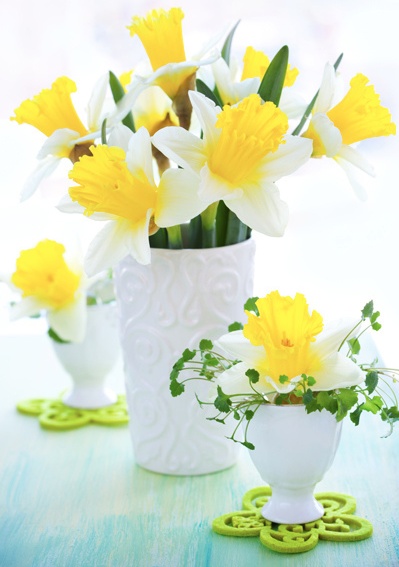
Bookshelves take a temporary swap well: clear one row of visual noise and replace it with a shallow box of moss and eggs, or a pale stack of books topped with a small seasonal object. Figurines work in ones and twos; a crowd of ceramic animals competes with everything else you styled carefully. Bathroom trays and kitchen sills can hold a single bud vase and one egg—small signals that the whole home is in on the season without demanding a full redesign.
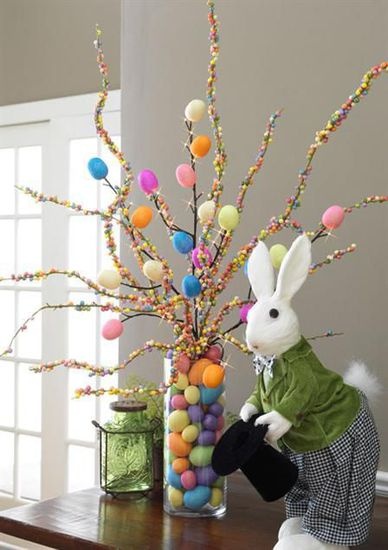
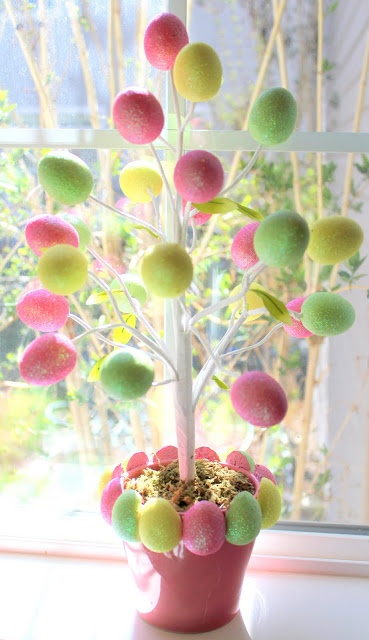
Corners that usually collect laundry baskets are poor décor candidates. Choose corners you already keep tidy: beside a reading chair, under a window with a plant stand, or on a rarely used console. Style those, then stop. The restraint is part of what makes the house feel ready rather than overworked.
Pack-away habits that save next year
Choose a limited set of reusable pieces—wooden eggs, a linen runner, glass bud vases, a simple wreath base—and let cut flowers and real branches be the disposable part. Photograph arrangements you like before you dismantle them; next year you will remember what worked in your light, not only what looked good in someone else’s photos. Wipe shelves as you pack so you are not storing dust with the décor. One labeled box beats three mystery bags of broken eggs and tangled ribbon.
If you only dress two places this year, make them the entry guests see first and the shelf or mantel you walk past every morning. Those two surfaces do more seasonal work than a house full of half-hearted bunny figurines—and they leave the rest of your rooms free for ordinary living.

Comments
Continue reading
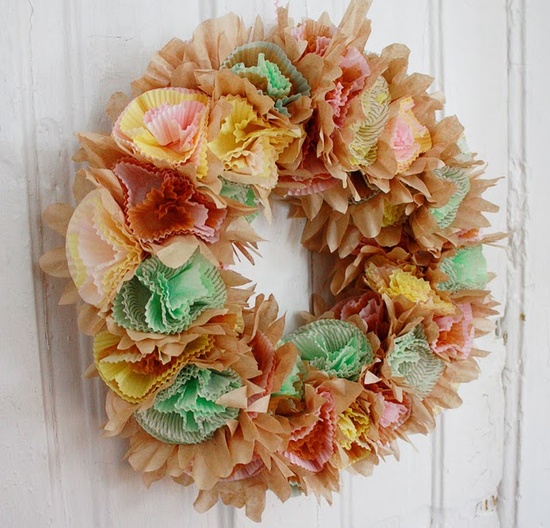
18 Easter and Spring Wreath Ideas: Eggs, Florals, Baskets, and Paper Blooms
Eighteen spring and Easter wreath directions—from coffee-filter ruffles and purple egg grapevines to basket hangs and citrus greenery—built around the surviving gallery photos.
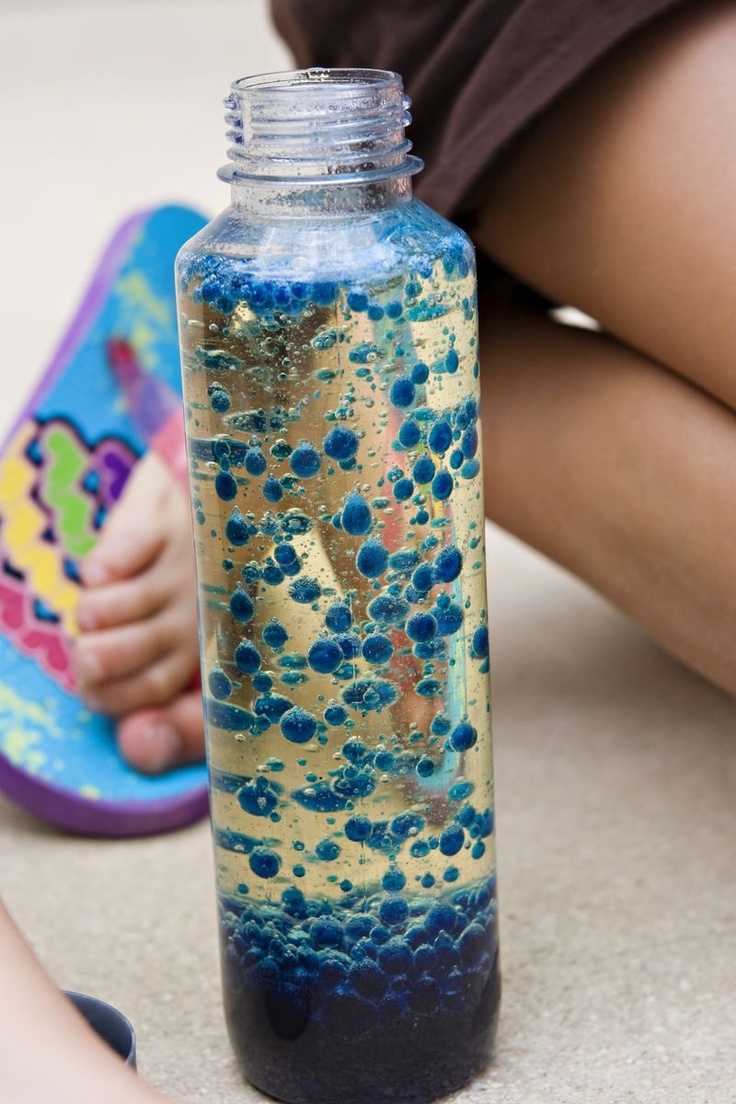
DIY Dollar Store Decoration: Lamps, Vases, Mirrors, Sconces, and Candle Holders
Turn dollar-aisle glass, mirrors, and candle holders into lava-style light jars, enamel vases, a silverware starburst mirror, stone-look sconces, and finished candle bases.
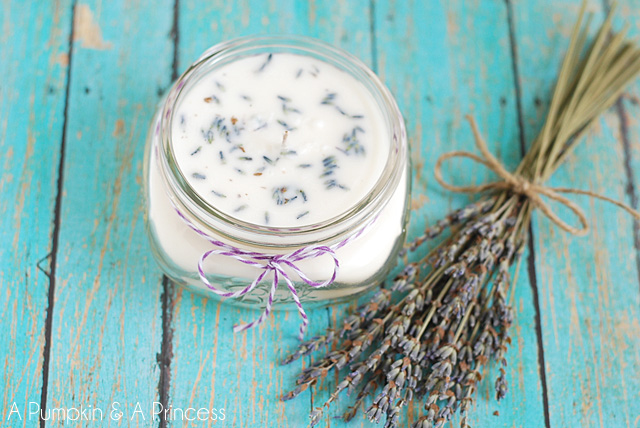
How to Make Mason Jar Candles: Pour, Tint, Hang, and Gift
Clean jars, size the wick, pour wax safely, then branch into coloured glass, hanging lanterns, lavender scents, remelted stubs, floating lights, and favor-ready finishes.