
Private Moon by Leonid Tishkov
Leonid Tishkov’s ongoing Private Moon project—an illuminated crescent, a caretaker myth, and photographs from journeys across cities, coasts, and the Arctic.
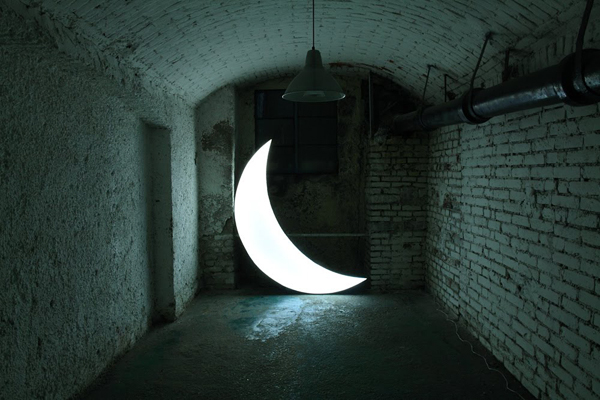
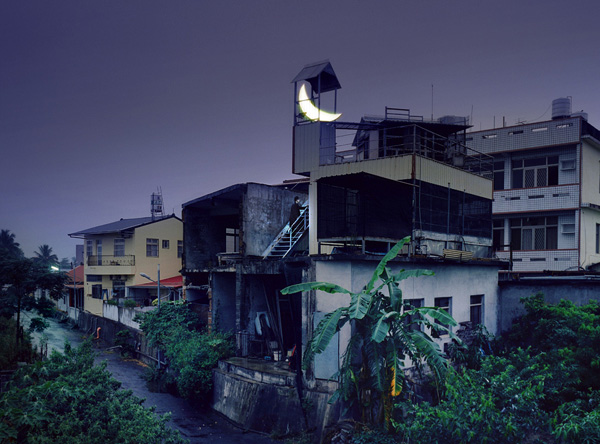
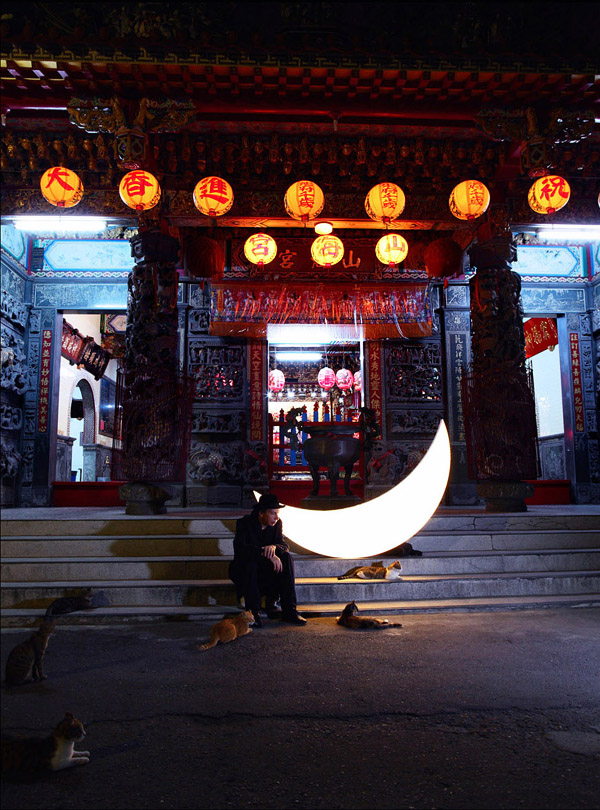
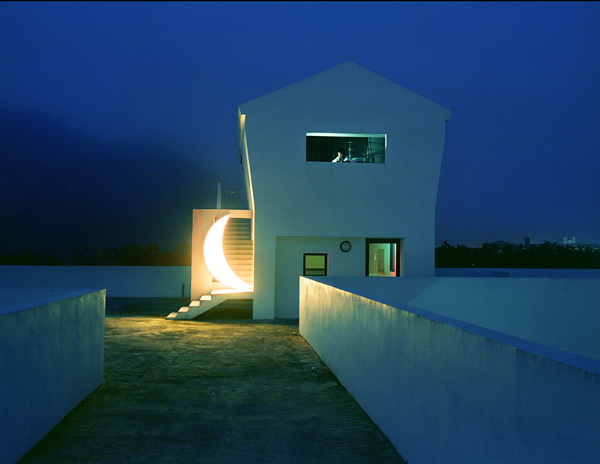
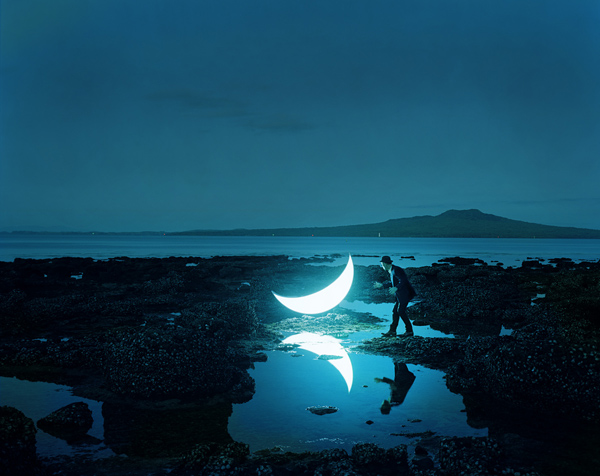
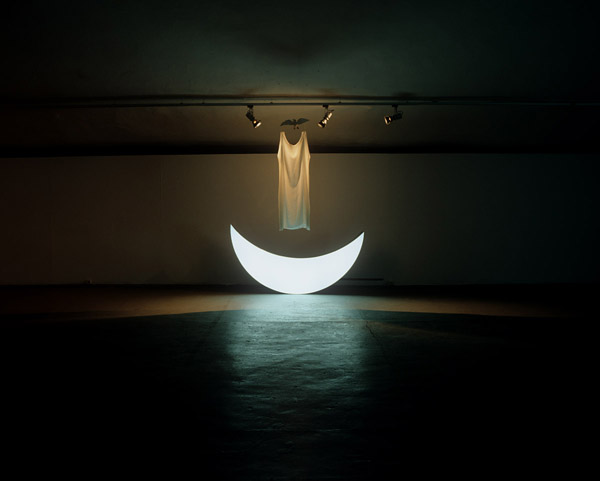
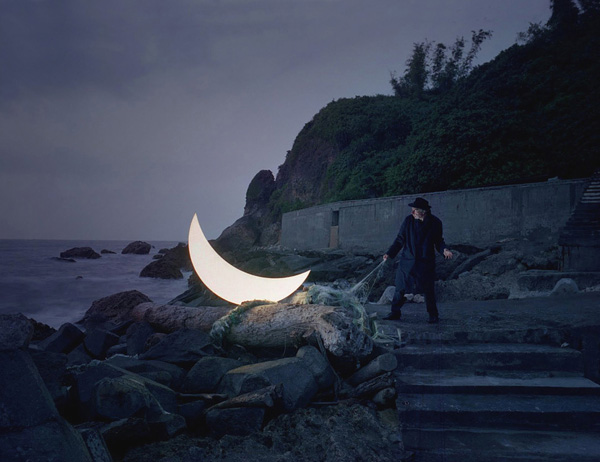
Leonid Tishkov, the Moscow-based artist and physician, has spent years traveling with a glowing crescent of his own making. The project is called Private Moon: part installation, part performance, part photographic series. An illuminated moon appears in attics, on rooftops, in boats, in snow, beside bridges, and in city nightscapes. A person—often the artist—keeps it company. The pictures look like fairy tales that somehow found a street address.
Private Moon began around 2003 and has continued as an ongoing body of work. Tishkov has taken the moon across Russia and far beyond—New Zealand, the Arctic, Japan, China, France, Italy, the United States, Taiwan, and other stops—documenting each encounter. The images on this page belong to that traveling visual poem. Keep his name with them. The moon is a fabricated object; the authorship is not.
Who Leonid Tishkov is
Born in 1953 in Nizhniye Serghi in the Urals, Tishkov trained in medicine at the Sechenov Moscow Medical Institute and later built a wide art practice: installation, sculpture, video, photography, drawing, and books. Early work in the 1980s leaned toward cartoon-like images with irony and political bite. Over time his attention moved toward large poetic installations and performances concerned with memory, myth, and the thin border between ordinary life and fairytale.
That background matters for Private Moon. The series is not a one-off digital trick. It grows from an artist who already thought in narrative sequences and symbolic objects. Medical training also leaves a faint trace in the caretaking tone of the story: the moon is wrapped, fed, sheltered, and escorted, as if convalescing. Tishkov lives and works in Moscow; the project’s home base and its international journeys both belong to his biography. His works have entered museum collections internationally, which helps explain why Private Moon reads as sustained artistic research rather than a viral prop gag.
The story the moon carries
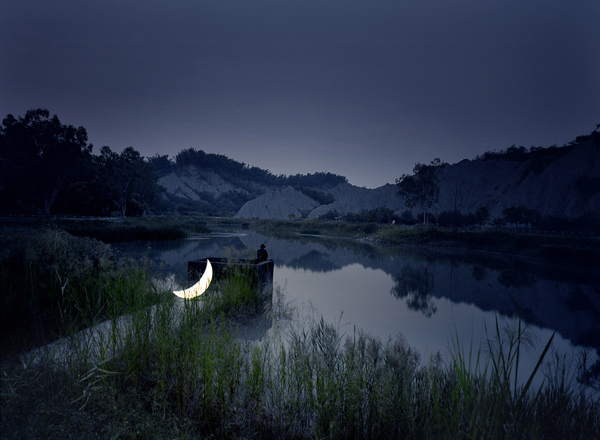
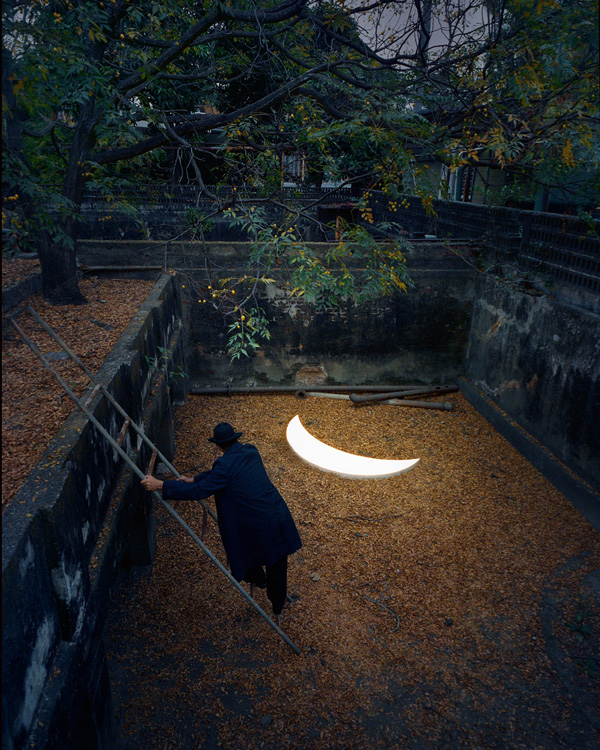
Tishkov describes Private Moon as a visual poem about a man who meets the Moon and stays with her for the rest of his life. In his telling, the Moon falls from the sky into the upper world—into the attic of a house. She has hidden from the Sun in a dark tunnel where trains frightened her. The man wraps her in warm blankets, offers autumn apples and tea, and, when she recovers, takes her by boat across a dark river to a high bank of moon pine-trees. He descends into a lower world wearing his deceased father’s clothes and returns lighting the path with his personal moon. Crossing a narrow bridge between worlds, caring for a heavenly creature, he becomes a mythological being who still lives in a real landscape.
Each photograph, he writes, is a small poem, often paired with verse composed while he sketched. The moon, in his view, overcomes loneliness by gathering people around a shared point of light. That statement is not marketing copy; it is the conceptual key. Private Moon is sentimental on purpose, and the sentiment is metaphysical rather than decorative. The glowing crescent is a companion against cosmic isolation, placed deliberately into prosaic and industrial settings so viewers feel the clash—and the consolation—of wonder in ordinary space. Read that way, even a rooftop shot becomes a scene from a personal cosmology.
Installation, travel, and how the pictures work
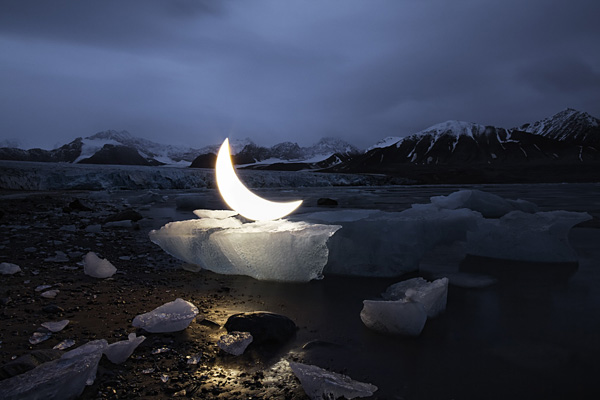
Private Moon is a mobile light installation as much as a photo series. Tishkov places a large artificial illuminated crescent in chosen sites—open landscape, balconies, gardens, club walls, abandoned buildings, power plants—then photographs and sometimes films the encounter. Passers-by can enter the scene and become temporary characters. The moon’s glow reorganizes local objects: snow becomes stage light, a rooftop becomes a perch, a boat becomes a ferry for the celestial.
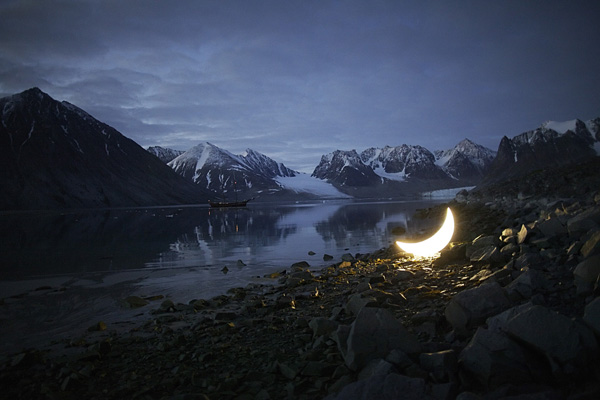
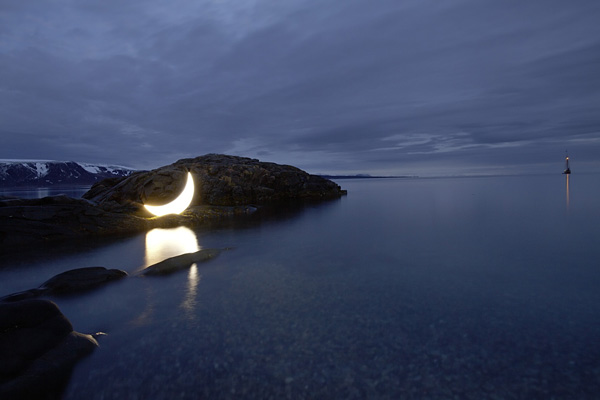
Journeys expand the mythology without abandoning it. Arctic chapters from around 2010 place the moon among ice, polar light, and fragile environmental beauty; Tishkov has written of glaciers whispering that they are still alive, and of the private moon helping turn earth into a magical space that must be preserved. Paris frames include homage-minded night walks; Taiwan and New Zealand stops show the crescent negotiating different architectures and coastlines. The continuity is the object and the caretaker figure. The variation is geography. Seeing the same moon in many climates teaches you to notice what changes: architecture, weather, and the emotional temperature of solitude.
Technically, the photographs succeed through contrast and scale. A handmade moon looks both toy-like and monumental depending on distance. Night exposures keep the crescent dominant while letting ambient city or landscape light remain readable. Composition often leaves room for solitude: one person, one moon, a lot of dark. That spareness is why the images travel well across languages. You do not need the full written myth to feel the emotional claim; the myth deepens what the eye already suspects. Daylight or twilight frames, when they appear, trade some mystery for a clearer sense of the moon as a physical sculpture being moved through the world.
How to look at this gallery
Give each frame two questions. First: where is the moon relative to human scale—held, followed, perched, ferried? Second: what does the surrounding world become once the moon arrives—attic, riverbank, industrial edge, snowfield? Notice caregiving gestures: blankets, boats, hands near the light. Notice also the humor. A private moon is slightly absurd, and Tishkov allows that absurdity to sit beside sincerity. The work fails if read only as whimsy or only as solemn allegory. It needs both.
Collections and exhibitions have carried Private Moon into museum and festival contexts; Tishkov’s wider oeuvre appears in institutions including major Russian museums and international contemporary collections. For viewers meeting the series online, the correct habit is simple credit: Leonid Tishkov, Private Moon, with place and year when known. Related project materials live through the artist’s channels—including his site and the dedicated Private Moon project pages. Looking further is encouraged; lifting the images away from his name is not.
If you make images yourself, borrow the constraint rather than the crescent. Choose one portable symbol of care and place it in environments that normally refuse poetry—parking structures, ferry docks, utility corridors—then document the negotiation. The lesson from Tishkov is not that everyone needs a moon prop. It is that a sustained personal myth, carried patiently across years and borders, can reorganize how ordinary places feel.
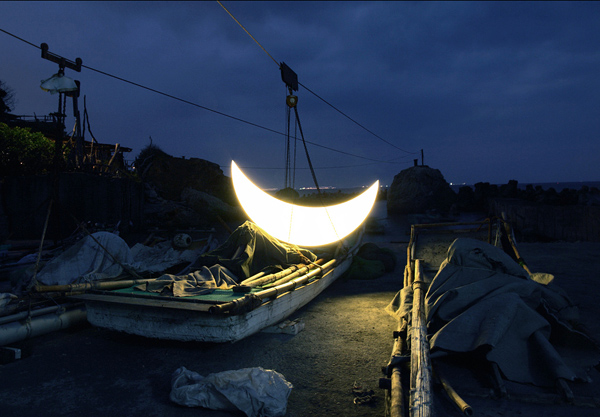
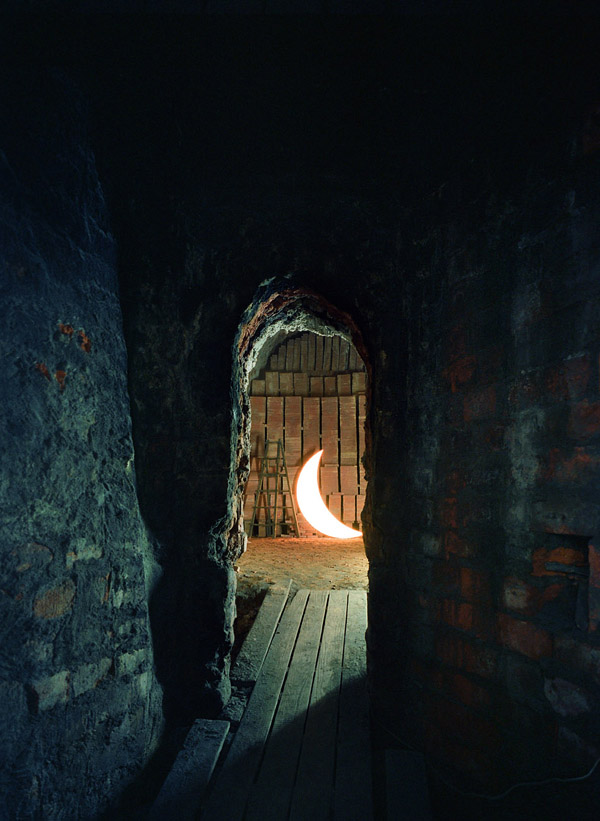
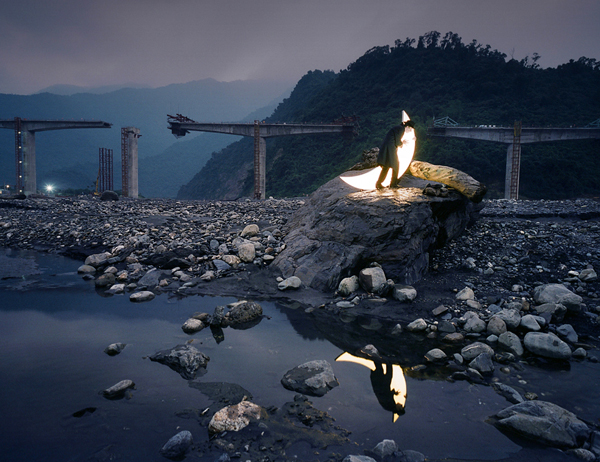
Pick one photograph and imagine the minutes before the shutter: the moon powered on, the site chosen, the figure stepping into position. Private Moon is a practiced ritual of placing light where loneliness usually sits. In Tishkov’s hands, that ritual looks almost inevitable—as if every city and shoreline had been waiting for its own moon to come home.

Comments
Continue reading
31 Moon Tattoo Ideas: Crescents, Phases, and Celestial Placements
From micro ear crescents and finger phases to mandala napes and spine-length lunar cycles—thirty-one moon tattoo directions with honest placement notes.

Original Handmade Papercuts by Dmytro and Iuliia
DreamPapercut’s Ukrainian duo cut interconnected silhouettes from a single sheet—nature, love motifs, and typography held together by patient knife work.

Still-Life Photography by Margareth Perfoncio
São Paulo photographer Margareth Perfoncio’s still lifes of food and flowers—Old Master light, dark wood, and tables that feel inevitable.