
Self Sketches by Tamypu
Thai My Phuong (Tamypu) and her quick self-portrait sketches—journal logic, mixed media, and how to look at a face drawn again and again.
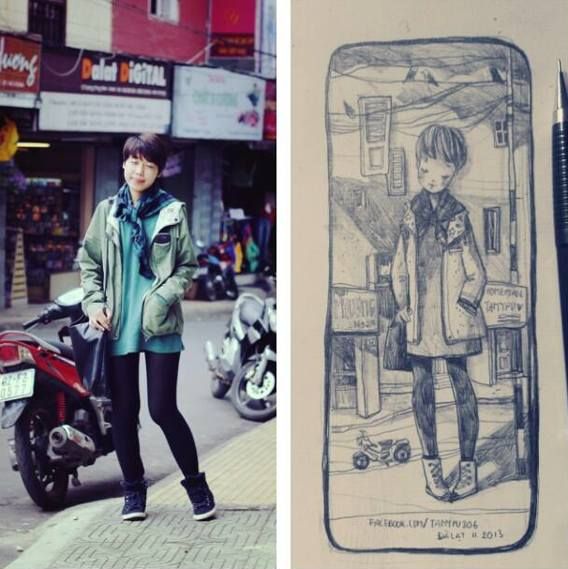
Thai My Phuong—better known as Tamypu—has spent years turning the self into a flexible sketchbook page. Long associated with Ho Chi Minh City’s design community and later with study and work abroad, she is a Vietnamese illustrator whose quick self-portraits treat identity as something you draw again rather than fix once. The series often filed under titles like “Draw Myself” or quick self sketches is exactly what it sounds like: rapid likenesses, shifting styles, and a journal kept in graphite, ink, watercolor, and collage instead of only in prose.
If you have followed café speed-sketch culture—artists who capture faces between sips—Tamypu’s project sits nearby but turns the gaze inward. The model is always available. The variable is mood, costume of the day, medium, and how honestly a line can admit fatigue, play, or quiet confidence. The image below is one frame from that habit of looking.
Who Tamypu is
Tamypu is the compact signature of Thai My Phuong—short enough to sign repeatedly when books and prints began asking for a mark. She trained in interior design before illustration and storytelling took the center of her practice, later deepening sequential and narrative skills through further study. Public profiles describe a path through publishing, teaching, children’s books, and covers, with a personal voice that mixes observational humor and tender detail.
She has described herself, in early project notes, with a small-creature lightness—someone who wants to make “tiny beauty things” and who treats drawing as a way to save a journal. That tone matters. The self sketches are not corporate personal branding. They are closer to diary pages that happen to be visually sharp enough for Behance-era sharing. Watercolor blooms, ink edges, cut-paper shapes, and pencil scaffolding appear as tools for mood rather than as a single locked style guide.
Context helps without turning this page into a résumé. Vietnam’s contemporary illustration scenes in the 2010s were actively negotiating local reference and international blog circulation. Artists who posted process-friendly series—clear themes, readable thumbnails, generous grids—traveled well on platforms like Behance. Tamypu’s self-sketch habit fit that era: modular, personal, easy to credit, hard to confuse with stock illustration.
What the quick self sketches are doing
A self-portrait series with changing styles sounds like a student assignment until you notice the emotional continuity. Hair, posture, and facial proportions recur just enough that you trust the person; media and stylization shift enough that each page feels like a different hour. That is journal logic. Monday’s ink contour is not required to match Thursday’s soft wash. The contract is honesty of attention, not brand consistency.
Speed is part of the ethic. Quick sketches refuse the paralysis of the “important” self-portrait. You sit down, you draw what the face is doing now, you stop before the page becomes a negotiation with vanity. Mistakes stay visible. A too-heavy line becomes character. A watercolor edge that ran becomes weather. For viewers, that unfinished-friendly quality is often more inviting than a polished headshot illustration.
Cut-outs and mixed media push the diary further. Collage lets clothing, props, or background planes feel assembled from the day’s scraps—literally or visually. Ink and watercolor keep the hand present. Together they echo how memory actually works: some parts crisp, some parts stained, some parts glued on from elsewhere.
How to look at the work
Start with the eyes and mouth, as you would with any portrait, but then notice what the medium is arguing. A dry pencil sketch may emphasize structure and thought. A wet wash may emphasize atmosphere and fatigue. A graphic ink shape may emphasize costume or attitude. Ask what each page is prioritizing: likeness, mood, fashion of the day, or pure mark-making pleasure.
Compare pages across imagined time. Even when only one image sits on a blog post, the project implies a sequence. Mentally place the sketch beside a photograph of the same person in the same week. Many of Tamypu’s circulating sets historically paired or suggested that dialogue between camera fact and drawn interpretation. The drawing is not a failed photo; it is a different truth claim—how it felt to be in that face.
Watch for humor. Self-sketch journals that never joke can turn oppressive. Tamypu’s lighter register—playful framing, soft self-mockery, decorative joy—keeps the series companionable. You are not being asked to worship an icon. You are being invited to witness someone practicing seeing.
Why the project still teaches
For illustrators, the prompt remains durable: draw yourself often, change tools, keep sessions short, date the pages. You will learn your default lines—the mouth you always exaggerate, the eye you always enlarge—and you will learn how to break them on purpose. Character designers gain a library of expressions rooted in a face they know from the inside. Teachers gain a low-cost assignment that still yields portfolio-worthy variety.
For non-artists, the series models a gentle alternative to performative social photography. A sketch journal does not need lighting setups or audience metrics. It needs a chair, a few materials, and permission to be approximate. In a culture that often packages the self as a product, Tamypu’s pages feel like practice instead of launch.
There is also a craft lesson about style. Young illustrators sometimes fear that multiple media mean an incoherent brand. This body of work argues the opposite: a recognizable sensibility can survive—and strengthen—across watercolor, ink, and collage if the attention is consistent. Style here is a way of noticing, not only a brush preset.
Credit, context, and care
Keep the name attached. Tamypu / Thai My Phuong is the author of these likenesses. Circulating cropped sketches without credit turns a journal into anonymous aesthetic fuel. When you share, prefer the artist’s name and the project framing over vague “cute girl drawing” captions.
Remember career breadth. Children’s books, covers, teaching, and later geographic moves are part of a longer story; the quick self sketches are one beloved node, especially visible in mid-2010s blog features. They do not summarize everything she makes. They do show a foundation: narrative empathy starting at home in the mirror.
If you try the exercise yourself, set a timer for ten or fifteen minutes. No erasing spirals. No switching faces halfway because the nose “failed.” Finish the page, write a three-word note about the day, and close the book. Tomorrow’s page can contradict today’s. That contradiction is the point of a journal.
Return to Tamypu’s sketches when your own drawing feels stiff. The remedy on offer is not a trick about proportions. It is a posture: small beauty, quick honesty, and the courage to let the self be plural on paper. One careful looking pass through a single sketch—line, wash, and the mood between them—is enough to remember why the series traveled in the first place.

Comments
Continue reading
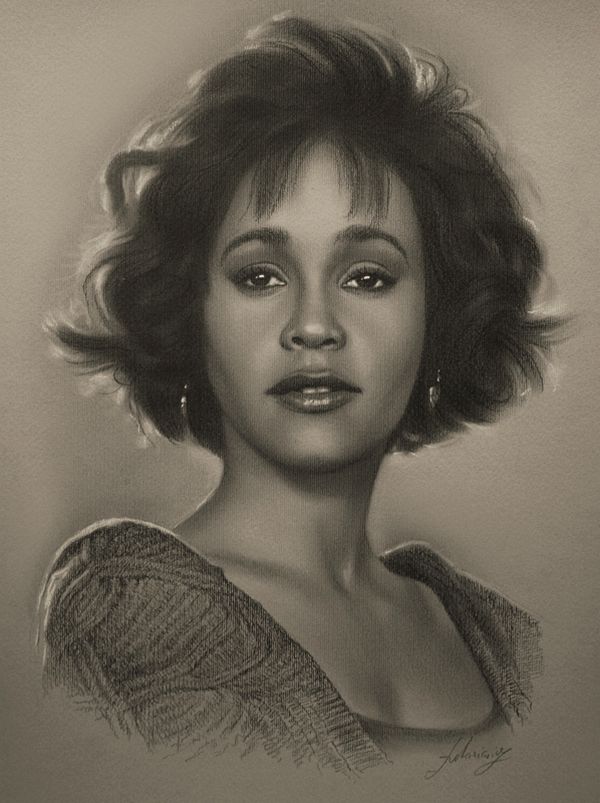
Pencil Portrait Sketches by Krzysztof Lukasiewicz
Krzysztof Lukasiewicz’s graphite celebrity portraits—Houston, Freeman, Clooney, and more—built from careful values, paper grain, and catchlight.
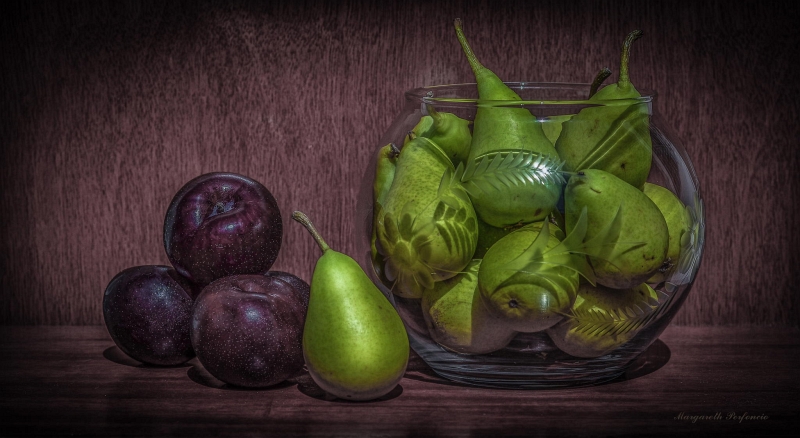
Still-Life Photography by Margareth Perfoncio
São Paulo photographer Margareth Perfoncio’s still lifes of food and flowers—Old Master light, dark wood, and tables that feel inevitable.

Meaningful Love Quotes for Inspiration (and Ink)
Meaningful love quotes that still feel true — short lines for tattoos, gifts, and everyday reminders, with placement and wording tips.