
Serious Drawings by Marc Johns
Canadian illustrator Marc Johns turns sparse pen lines and dry wit into drawings that say a lot with almost nothing—gallery, context, and why the work still lands.
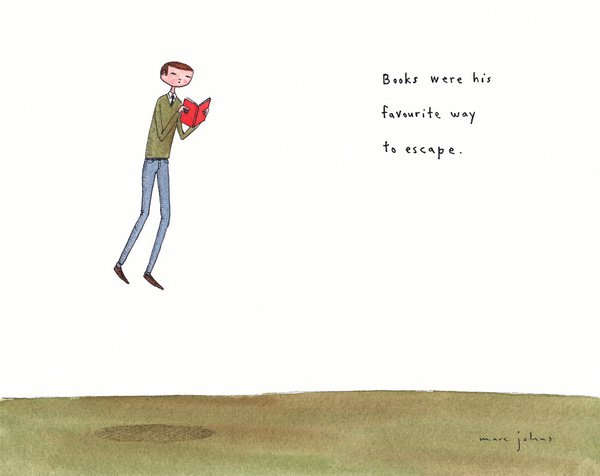
Canadian artist Marc Johns builds jokes and quiet truths out of almost nothing: a few pen lines, a spare caption, a situation that feels both absurd and familiar. His drawings are often called whimsical, but the better word might be economical. He has described the aim as saying as much as possible with as few elements as possible. That economy is not emptiness. It is editing until the idea can stand without decoration.
Johns grew up drawing in Quebec’s Eastern Townships and later settled in Victoria, British Columbia, with a drawer full of pens and a habit of posting work regularly online. Beginning in the mid-2000s, that habit turned into a wide audience. The internet rewarded the scroll-stopping clarity of his images: you could understand the premise in a second, then feel the aftertaste for much longer. Dry wit travels well across screens. So does kindness. His humor rarely punches down; it tilts the everyday until you recognize yourself in the tilt.
He has made drawings for brands and publications including Google, Wired, Newsweek, Tommy Hilfiger, HarperCollins, and others, and his work has appeared in exhibitions from New York and San Francisco to Amsterdam and Vancouver. Books such as Serious Drawings and I Made These Drawings for You collect the same voice that first spread through his blog. Some pieces have even wandered into tattoo culture as temporary designs—proof that a simple line can feel personal enough to wear.
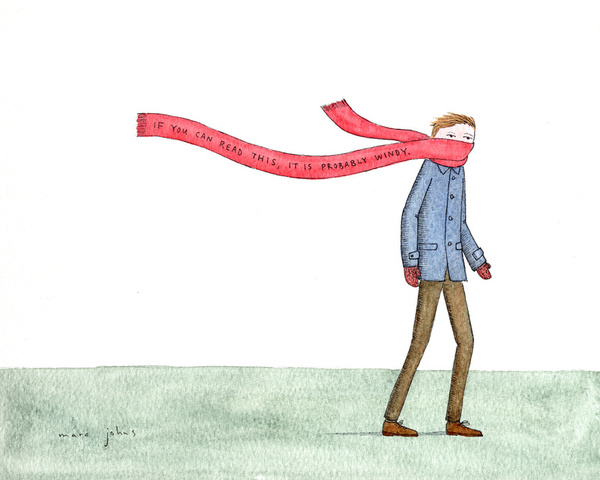
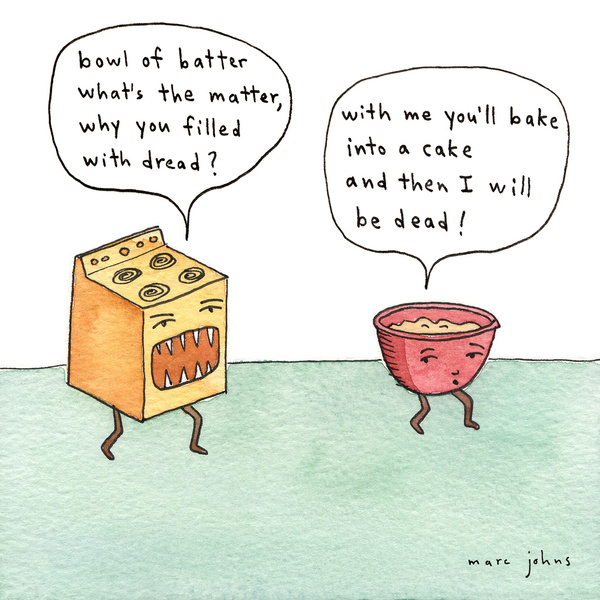
What “serious drawings” means here
The phrase sounds like a contradiction until you look closely. Johns’s lines are playful; the subjects often are not shallow. Anxiety, ambition, love, self-image, and the small negotiations of daily life show up wearing silly costumes. A pipe trying to quit smoking, a person sprouting branches that need pruning—these are jokes with a hinge. You laugh, then you recognize the metaphor. That double beat is the signature.
Serious, in this sense, is about attention. The drawings take ordinary feelings seriously enough to give them a clean visual form. They do not lecture. They do not stack detail to prove craft. White space does part of the storytelling. So does the decision to stop drawing before the page gets busy. In a culture that often equates effort with excess, Johns’s restraint reads as confidence.
Captioning is part of that restraint. Some pieces need words; others would weaken if over-explained. When text appears, it usually behaves like a second drawing line—short, dry, perfectly timed. The voice on the page matches the voice in the line work: conversational, slightly sideways, never shouting. That unity is harder than it looks. Many illustrators can draw sparsely or write wittily; fewer can make both halves feel like one thought.
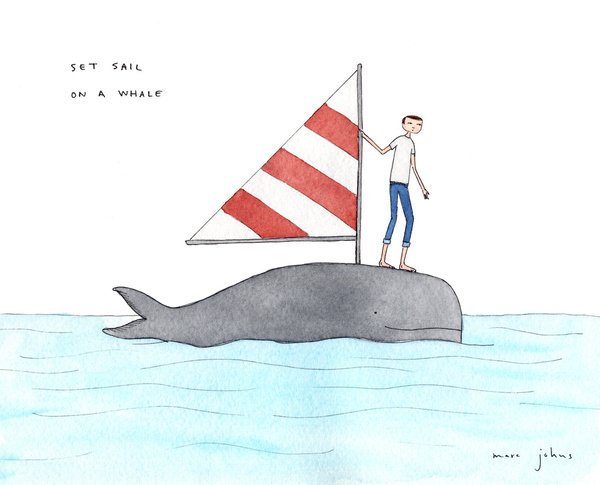
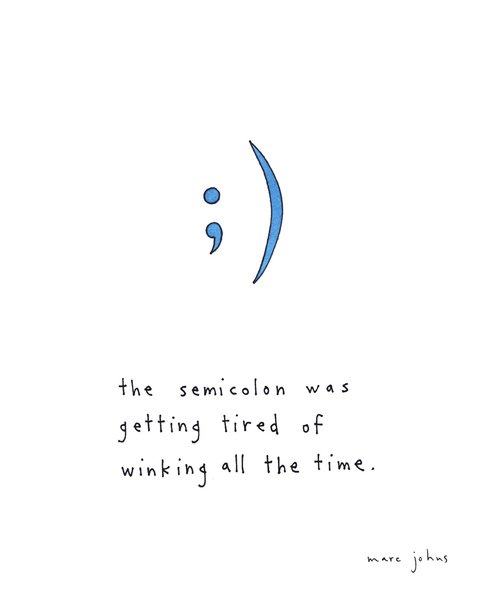
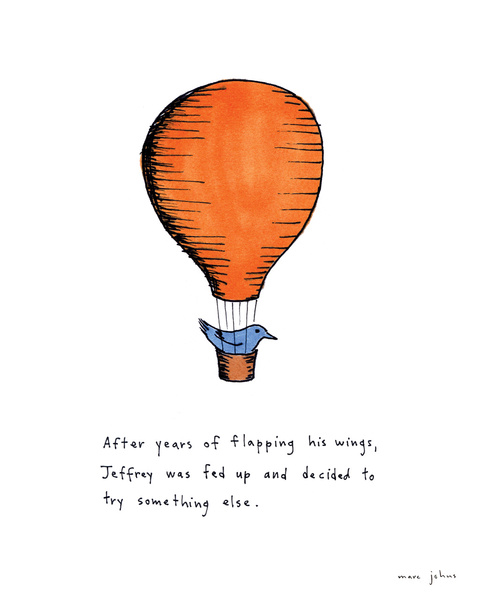
Looking at the gallery
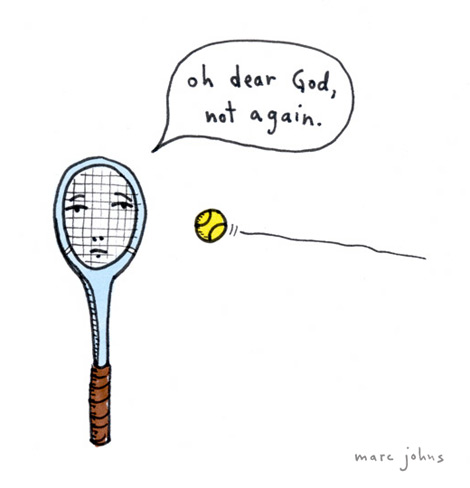
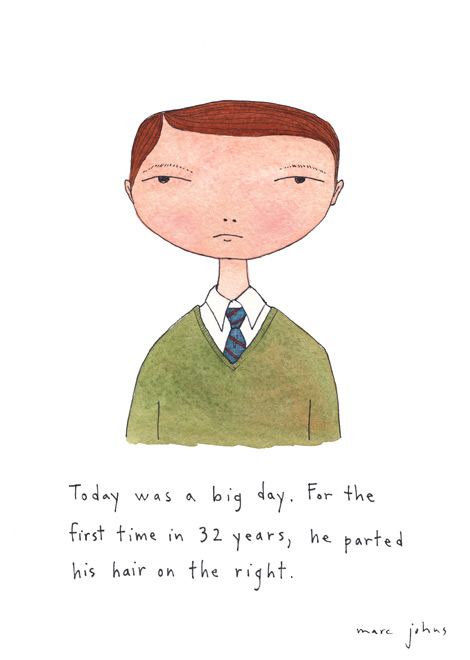
The images gathered here reward a slow pass. Some rely on a single visual pun. Others set up a tiny narrative with almost no scenery: a figure, an object, a caption that arrives like a punchline or a sigh. Notice how rarely the drawings depend on elaborate backgrounds. The void around the figure is active. It gives the joke room to land and keeps the emotional temperature readable at thumbnail size—one reason the work thrived online.
Line quality stays consistent even when subjects change. Johns’s hand is friendly without becoming cute for its own sake. Faces are simplified; gestures do the acting. That clarity is why the pieces feel quotable. You can describe one to a friend in a sentence and still preserve the spark. Good cartoons have always had that property. Johns updates it for a blog-and-print era without chasing trends that age quickly.
As you move through the set, watch for recurring strategies: objects with secret lives, bodies that become landscapes for metaphor, and social moments compressed into a single awkward beat. The variety of premises keeps the feed from feeling like one joke told twenty ways. What stays constant is the ethics of the humor. The drawings invite recognition rather than superiority. You are in on the joke because you have been the joke, quietly, on an ordinary Tuesday.
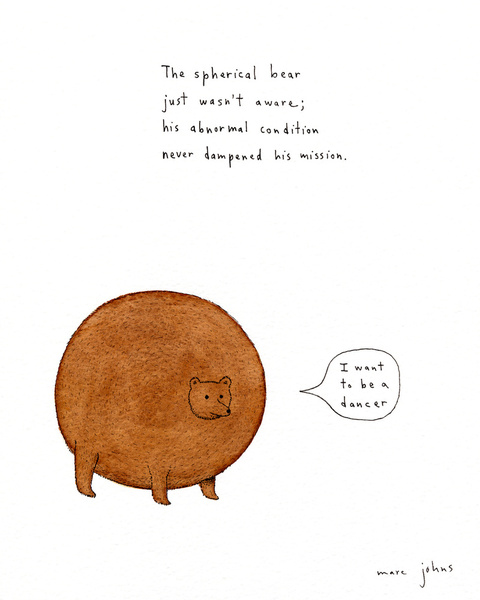
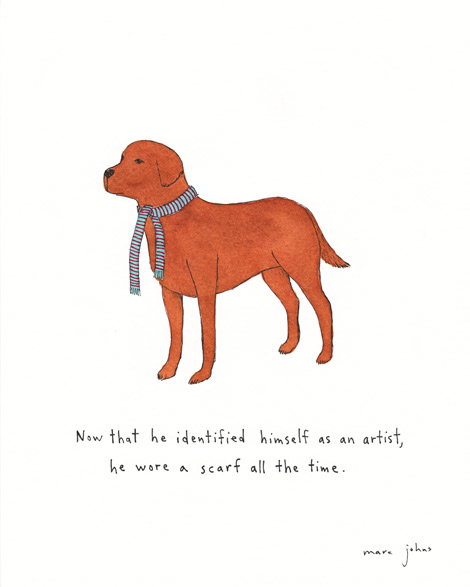
Practice, publishing, and staying human
A body of work this consistent usually hides a daily discipline. Johns has long drawn almost every day. Publishing on a schedule teaches an artist what survives contact with strangers: which jokes still feel true after a night’s sleep, which images need one fewer line, which captions sharpen the drawing instead of explaining it to death. The blog format also preserved intimacy. Readers met the work as a stream of small encounters rather than as a single monumental statement.
Commercial projects sit beside that personal stream without erasing it. When an illustrator’s voice is this distinct, clients often hire the voice itself. The risk in that arrangement is sanding edges for brand safety. Johns’s best-known pieces suggest he kept the oddness intact. Oddness is the point. Without it, the drawings would be merely neat.
In later years he has also collaborated with artist Kristen Johns, his partner, combining their hands in joint pieces while continuing his own sparse pen language. Parallel practices can dilute a signature; here they seem to widen the household studio without confusing who draws which kind of silence on the page.
Why the work still lands
Minimal drawings age better than dense trend illustrations because they are not married to a season’s rendering style. A clear idea, a clean line, and a humane punchline remain legible years later. That is useful for anyone studying how to communicate visually: remove until the remaining marks are load-bearing. Ask whether the empty space is doing work. Ask whether the caption is necessary or decorative. Johns’s pages answer those questions by example.
There is also comfort in humor that does not require cruelty. Plenty of internet comedy sharpens itself on someone else’s embarrassment. These drawings more often share embarrassment—gently, as a communal resource. That tone may be why people return to them when they want a smile that does not leave a sting.
For students of illustration, Johns’s archive is a masterclass in hierarchy. Primary idea first, secondary charm second, decoration almost never. Printmakers and tattoo artists who borrow his compositions are responding to that hierarchy: the image survives transfer across media because its structure is already strong. Designers hunting for “simple” inspiration often discover that simple is the result of ruthless choosing, not of skipping thought.
Collectors and casual fans meet the work differently. One person frames a print because it names a feeling they could not. Another bookmarks the blog because each visit resets the day’s mood in under a minute. Both responses are fair. The drawings were built to be entered quickly and left carrying something small but real.
If this selection hooks you, Marc Johns’s own site at marcjohns.com remains the best door into the wider archive, books, and shop. Look slowly. The jokes are quick; the craft is patient. Between those two speeds is the reason a few pen marks can still feel, somehow, serious.

Comments
Continue reading
Still-Life Photography by Margareth Perfoncio
São Paulo photographer Margareth Perfoncio’s still lifes of food and flowers—Old Master light, dark wood, and tables that feel inevitable.
Meaningful Love Quotes for Inspiration (and Ink)
Meaningful love quotes that still feel true — short lines for tattoos, gifts, and everyday reminders, with placement and wording tips.
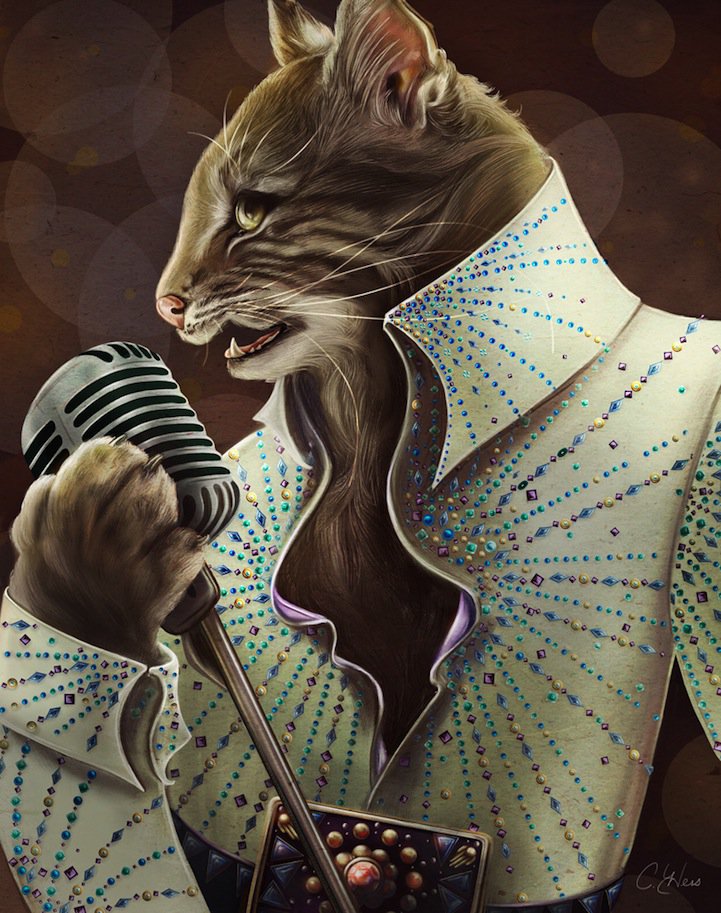
Christina Hess’s Animals From History: Costumed Pets as Playful Portraits
Illustrator Christina Hess reimagines historical icons as ornate animal portraits—Elvis Petme and friends—mixing puns, costume detail, and soft history lessons.