
Yellow Sticky Notes: Jeff Chiba Stearns’s Canadian Anijam
Fifteen Canadian independents, 4×6 yellow notes, and one black pen—Chiba Stearns’s collaborative follow-up turns to-do lists into an eight-minute coast-to-coast diary film.
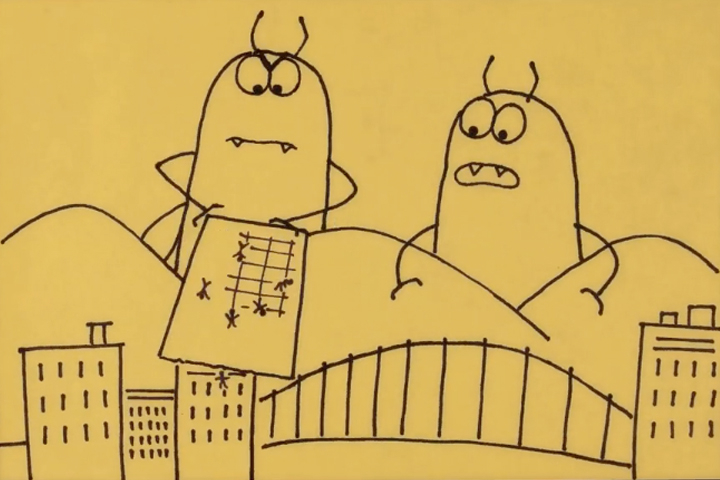
A 4×6 yellow sticky note is office debris until an animator treats it as a frame. Yellow Sticky Notes | Canadian Anijam, directed and produced by Vancouver filmmaker Jeff Chiba Stearns, turns that office scrap into a national collaboration: fifteen Canadian independents, one black pen, thousands of drawn notes, and roughly eight minutes of linked self-portraits about a single memorable day.
The project is a deliberate sequel to Chiba Stearns’s 2007 solo short Yellow Sticky Notes, which became a viral calling card for intimate, pen-on-paper diary animation. The Anijam expands the method from one artist’s desk to a coast-to-coast relay—Vancouver to Halifax and points between—without abandoning the original’s stubborn materials. No fancy paper. No rainbow markers. Yellow stock, black ink, and whatever honesty those constraints force.
What an anijam actually is
An anijam is collaborative animation by design: artists create separate segments that are later stitched into one film. Marv Newland, often credited with popularizing the form, served as mentor on this Canadian edition. The structural gamble is artistic isolation. Contributors did not know what the others were drawing. Continuity had to emerge afterward in editing, music, and the shared grammar of sticky-note rectangles.
Chiba Stearns’s brief asked each animator to begin with a to-do list from a pivotal day, then move from text into “animation meditation”—a phrase the production used for the shift from checklist language into drawn poetry about how that day changed a life. The notes therefore hold two kinds of writing: the practical list and the emotional aftermath. Watching the film, you feel both the grocery-run banality and the private weather systems that sit underneath it.
A roster that could fill a festival night alone
The participant list reads like a Canadian independent animation honor roll: Paul Driessen, Cordell Barker, Alison Snowden and David Fine, Chris Hinton, Janet Perlman, Marv Newland, plus Chiba Stearns himself, Lillian Chan, Malcolm Sutherland, Louise Johnson, Joel Mackenzie, Jody Kramer, Jonathan Ng, and Howie Shia. Oscar winners and nominees sit beside newer voices. The point is not celebrity stacking; it is range. An anijam only works if handwriting, timing, and comic instincts stay visibly plural.
Because each segment is authored alone, style clashes become features. One run of notes may twitch with comic timing; another may linger on a domestic object until it becomes mythic. The yellow field stays constant, so difference reads as personality rather than production error. That is the film’s quiet thesis: a shared material can still host fifteen different nervous systems.
Constraint as character design
Sticky notes impose hard rules. The page is small. The adhesive edge is a visual scar. The paper curls, shadows, and catches light differently than pristine animation paper. Instead of fighting those flaws, the Anijam leans into them. Edges wobble. Ink bleeds. The camera (and the edit) keep reminding you that these are objects on desks, not vectors in a vacuum.
That material honesty is why the project feels distinct from polished studio shorts. It is also why it belongs next to diary comics and sketchbook films more than next to high-render fantasy. The craft question is not “How do we hide the paper?” It is “How much life can one pen pull out of paper designed for reminders?”
Chiba Stearns directed, edited, and produced; Ruth Vincent is credited as producer in festival listings. Music by Genevieve Vincent, additional piano by Yuma Sung, and sound by Raphael Choi give the collage a through-line so the film does not collapse into fifteen disconnected demos. Sound is the social glue when picture authorship is intentionally fragmented.
Compared with a single-author sticky-note film, the Anijam multiplies risk and reward. One weak segment can dent the reel; one unexpected segment can redefine it. Chiba Stearns’s edit has to honor authorship without letting the film feel like a demo reel with a shared background color. The successful passages are the ones where a private day becomes briefly public without losing its handwriting.
Festival life, then the open web
The Anijam premiered on the festival circuit around 2013—Hot Docs and Ottawa International Animation Festival among the early stops—and traveled widely before a 2014 online release across major video platforms. Chiba Stearns framed the launch as a second chance at the original film’s shareable spirit: the 2007 short had already racked up enormous YouTube numbers, and he hoped the collaborative edition would inspire younger animators to attempt their own sticky-note experiments.
That pedagogical hope is not marketing fluff. Anijams are teaching machines. They show students that collaboration need not mean design-by-committee sameness, and that cheap materials can still carry adult subject matter. A memorable day might be a birth, a breakup, a diagnosis, a move, or a quiet decision that only looks small from outside. The film’s power is cumulative: fifteen private weathers become a weather system.
How to watch it without flattening it
First pass: enjoy the hand-drawn humor and the novelty of office stationery as celluloid. Second pass: notice transitions—how a to-do verb becomes an image, how one artist’s final note prepares the next artist’s first without literal matching. Third pass: listen. The score and sound design are doing editorial work the pictures cannot do alone.
Useful craft takeaways for anyone tempted to try a desk-drawer version:
- Pick one material rule and refuse to cheat it.
- Start from text if text is how the day was lived (lists, notes, calendars).
- Keep contributors blind to each other if you want genuine style collision.
- Use music and edit to create community after the drawings exist.
- Treat paper flaws as texture, not errors.
None of that requires a national roster. It requires discipline and curiosity—the same ingredients Chiba Stearns used when the first yellow pad became a film. The Canadian scale simply proves the method can survive fifteen egos, fifteen schedules, and fifteen definitions of what counted as a memorable day.
The note that remains
Yellow Sticky Notes | Canadian Anijam is not a manifesto against digital tools. It is a reminder that some stories get sharper when the surface fights back. A sticky note wants to be thrown away. These fifteen animators refused the throwaway, turned a to-do list into a poem, and left a coast-to-coast scrapbook that still looks like it could peel off a monitor and stick to your fridge.
If you leave with only one image, make it this: a blank yellow square, a black pen hovering, and a day that seemed ordinary until someone decided it was worth animating one note at a time.

Comments
Continue reading
Still-Life Photography by Margareth Perfoncio
São Paulo photographer Margareth Perfoncio’s still lifes of food and flowers—Old Master light, dark wood, and tables that feel inevitable.

Meaningful Love Quotes for Inspiration (and Ink)
Meaningful love quotes that still feel true — short lines for tattoos, gifts, and everyday reminders, with placement and wording tips.
Christina Hess’s Animals From History: Costumed Pets as Playful Portraits
Illustrator Christina Hess reimagines historical icons as ornate animal portraits—Elvis Petme and friends—mixing puns, costume detail, and soft history lessons.