
Small People by Bettina Güber
German photographer Bettina Güber turns coffee cups, newspapers, and household stages into comic landscapes for miniature figures—gallery and looking notes.
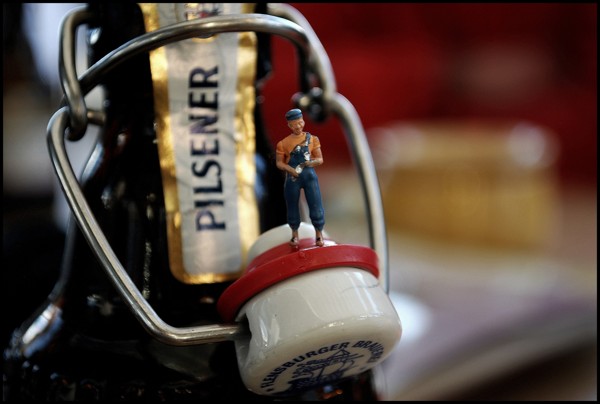
Germany-based photographer Bettina Güber builds small worlds the rest of us walk past. In the series gathered here as Small People, miniature figures negotiate coffee cups, newspapers, meat, ponds, and quiet domestic stages as if those objects were landscapes. The humor is immediate; the craft is quieter. Scale flips, focus tightens, and ordinary tables become cities with their own weather.
Güber (also present online as Bettina Schunk) works from Krefeld as a media designer who began photographing seriously around 2012. Her Behance presence helped these scenes travel: tiny casts, sharp jokes, and captions that behave like stage directions. The early framing stays broad—small people in a portable universe—rather than narrowing to one workplace set. Other posts may follow her figurines into offices or onto food; here the invitation is wider: watch how a miniature cast turns household life into adventure.
After the work is done…
What the miniature joke needs
Successful “small people” photography depends on three agreements with the viewer. First, eye level: the camera meets the figurines near their horizon so a mug rim becomes a cliff and a saucer becomes a plaza. Second, one readable action—climbing, napping, hunting, waiting—so the brain completes the story in a second. Third, a prop that keeps its real identity. Coffee remains coffee; the comedy is that someone tiny is living inside its logic.
Güber’s stronger frames respect those rules. They rarely over-explain with heavy allegory. A title might wink—“Coffee anyone?” “Don’t even think about it!”—but the picture still has to land silently. That balance keeps the work friendly without becoming only caption-dependent.
Depth of field does invisible labor. When the background softens just enough, the figurine occupies a believable pocket of space instead of sitting on a flat tabletop. Too much blur and the prop loses identity; too little and the illusion collapses into a toy snapshot. The sweet spot is narrow, which is why these pictures reward patience more than expensive kits. A steady hand, a willing morning table, and the discipline to stop arranging once the verb is clear will beat a suitcase of unused accessories.
Coffee anyone?
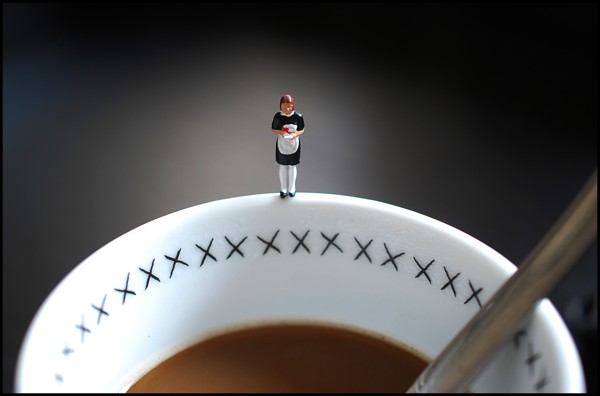
Don’t even think about it!
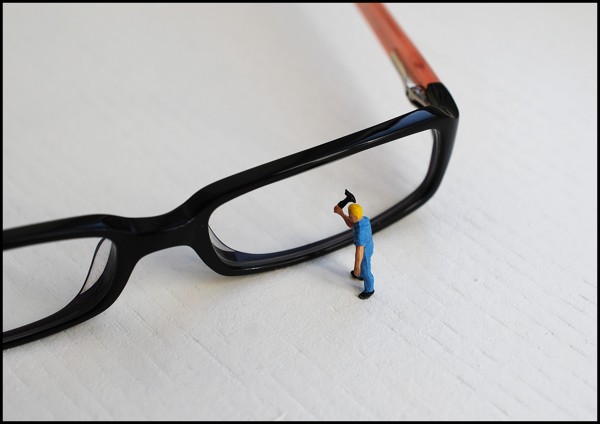
Domestic stages, not fantasy sets
Many miniature photographers build elaborate custom dioramas. Güber often does the opposite: she borrows the morning table, the newspaper, the kitchen counter, the pond edge, and asks what drama already lives there. Constraint becomes style. You recognize the props from your own life, which is why the peril and leisure feel oddly personal. A giant breakfast is funnier when you have made one yourself.
That domestic honesty also varies the emotional temperature across a gallery. Some scenes are pure mischief. Others tilt toward melancholy or waiting—figures stranded by scale beside objects that will outlast them. A title like “Waiting for Godot” or “Death is incorruptible” nudges the reading without forcing a lecture. You can take the joke, the shiver, or both.
Food and drink props add color and temptation; paper and outdoor water add quieter narratives. Moving between those registers inside one gallery is part of the charm. You are not locked into a single gag formula. One frame is a party. The next is surveillance. The next is rest. The cast stays small; the emotional map does not.
Morning Post!
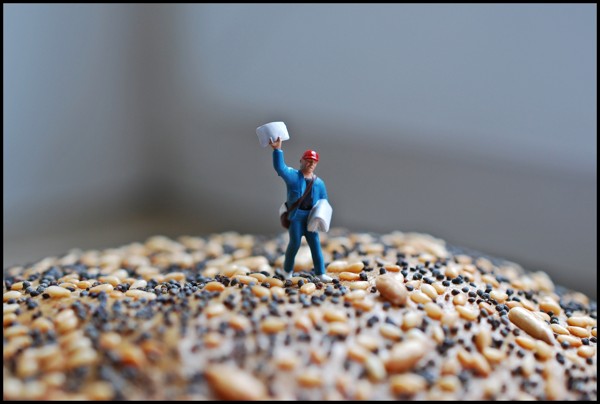
Hey! Siesta!
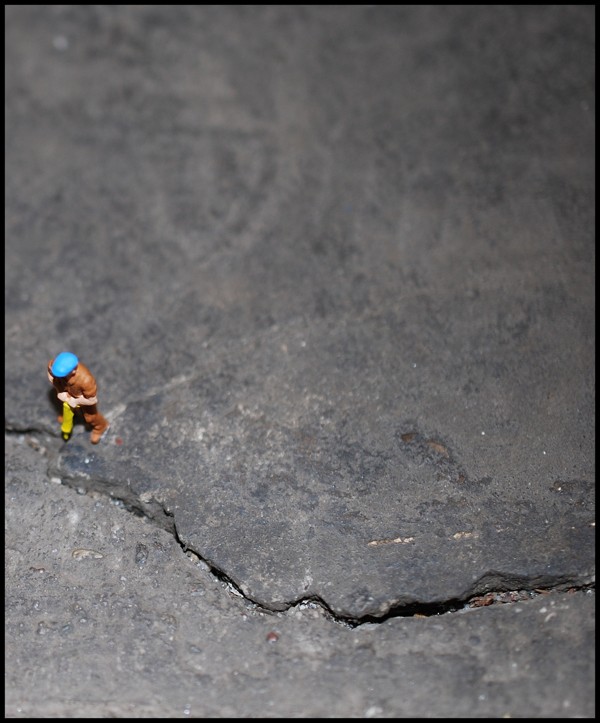
Cheers!
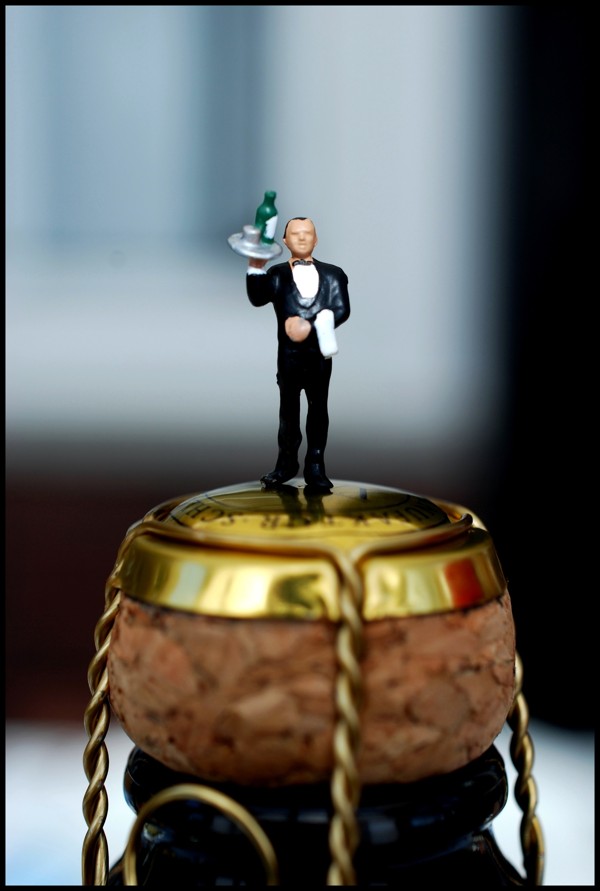
How to look at this gallery
Move slowly through the set. For each frame, locate the horizon of the little people first; then name the “building” or landform the prop has become; then identify the human verb being performed. That three-step looking turns amusement into attention. Notice gesture: a raised tool, a turned head, a body mid-climb. Miniature photography dies when figures look glued down; it lives when they seem caught mid-errand.
Light matters as much as posing. Soft window light and practical household lamps keep scenes believable. Over-produced studio glare can flatten the joke into product photography. Güber’s best images feel like discoveries made between tasks—proof that play and observation share a schedule.
Captions in the original presentation function like tiny playbills. They do not replace looking; they tempo it. Read the title, then return to the figure’s feet and hands. Ask whether the humor is physical comedy, social comedy, or a darker shrug. Different frames answer differently, which is why a long scroll still feels varied rather than like one joke told fourteen times.
Would you like some meat?
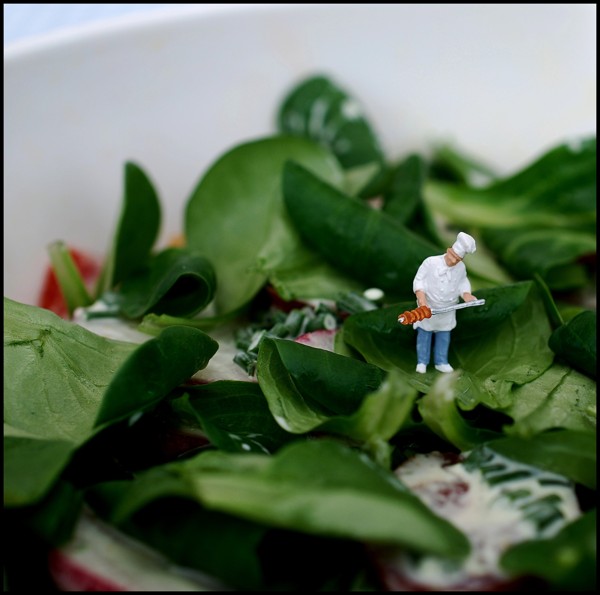
Waiting for Godot.
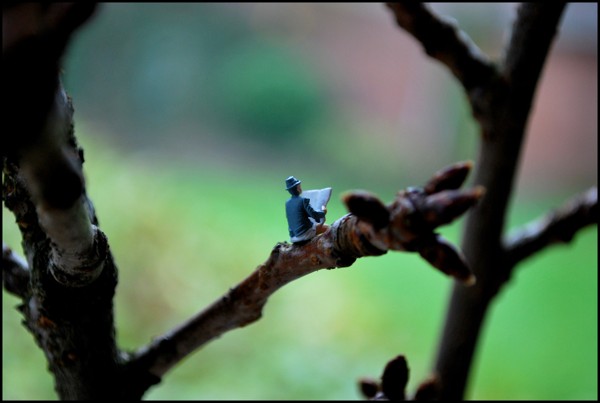
Death is incorruptible.
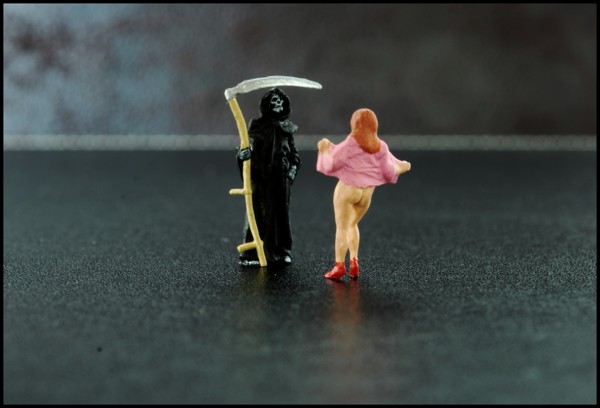
Recurring cast, changing worlds
Part of the pleasure is continuity. When familiar figurines reappear beside new props, the gallery becomes a traveling company rather than fourteen unrelated gags. Pond, kitchen, newspaper, and idle corners start to feel like districts in one comic city. That serial quality is why Behance-style project pages suit the work: scenes accumulate into a neighborhood.
Compared with office-supply miniatures—where staplers and hole punches supply cooler, grayer satire—these small-people scenes often lean warmer and more domestic, even when the joke turns dark. Food, drink, rest, and curiosity dominate. Keep the distinction in mind if you wander to related URLs: same artist, overlapping methods, different stage sets and emotional registers.
Lately at the pond…
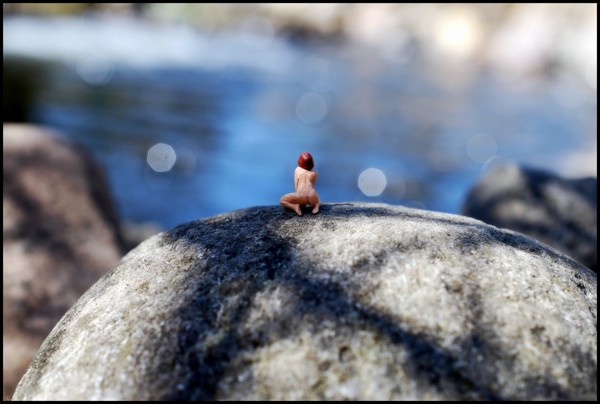
Peeping Tom
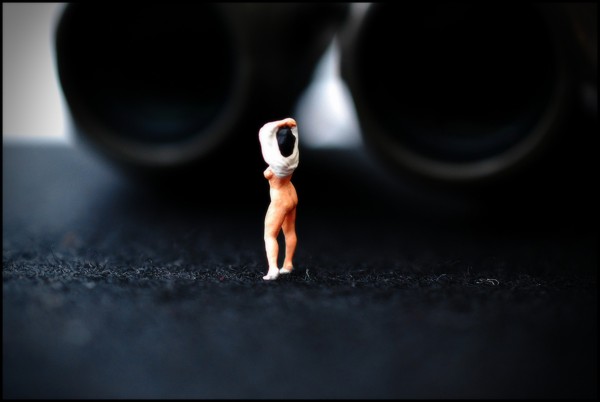
Hunter
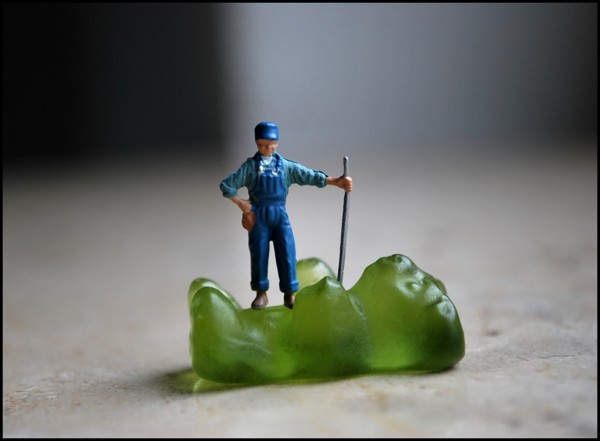
Hmm…where to begin?
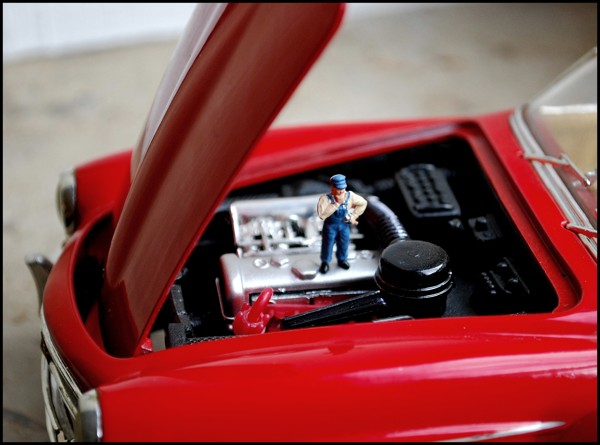
Please do not disturb!
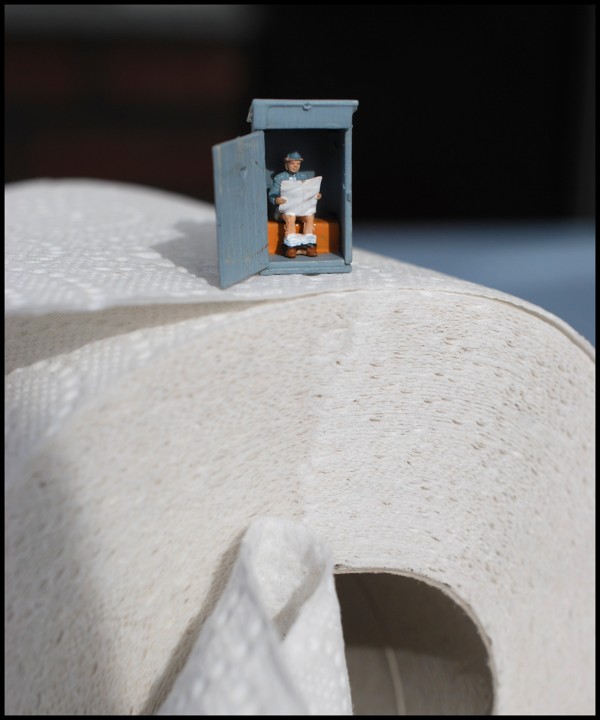
Craft notes for anyone tempted to try
Copying the spirit of this work is less about buying rare figurines and more about choosing one honest prop and committing to its scale. Clear clutter that does not serve the scene. Decide where “ground” is. Place the camera low before you refine poses. Shoot more frames than you think you need; micro-adjustments in a figure’s lean change the entire story. Then edit ruthlessly. One strong verb beats five clever objects fighting for attention.
Respect the difference between homage and clutter. Güber’s pictures look simple because decisions were finished before the shutter clicked. If your desk still looks like a desk with toys on it, lower the camera or subtract props until the desk becomes terrain.
Why the series still invites a second look
Internet novelty burns fast. What lasts in Güber’s small-people work is the discipline underneath the giggle: consistent scale logic, affectionate attention to gesture, and a willingness to let ordinary objects keep their names. You do not need a manifesto about consumer culture to enjoy a nap beside a giant cup. You only need a camera lowered to the height of a plastic person’s eyes.
There is also kindness in the humor. Even when titles flirt with danger or death, the prevailing mood is play rather than cruelty. The figures are adventurers in a world that happens to be oversized, not punchlines crushed for our superiority. That tone may be why people return after the first laugh: the gallery offers a portable vacation from adult scale without demanding cynicism as the entry fee.
If the set hooks you, her Behance profile at behance.net/bg242 remains a natural next door for more scenes and later projects. Look once for the joke, once for the craft, and once for the mood hiding under the caption. Somewhere between those three passes, the table in front of you may start to look suspiciously like a city—waiting, as these pictures suggest, for someone small enough to begin.

Comments
Continue reading
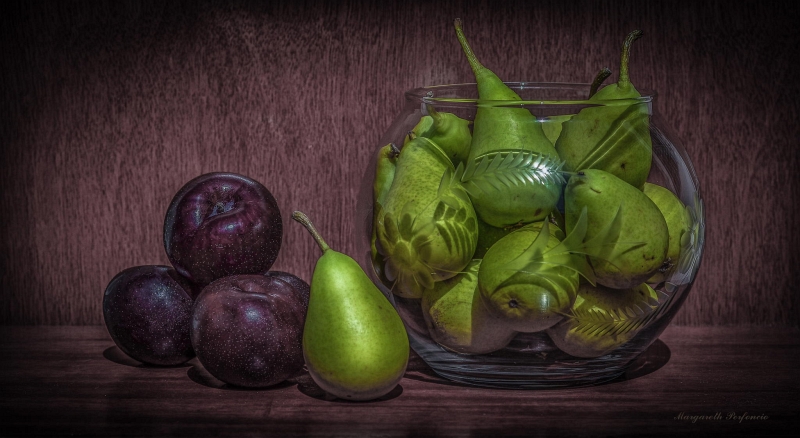
Still-Life Photography by Margareth Perfoncio
São Paulo photographer Margareth Perfoncio’s still lifes of food and flowers—Old Master light, dark wood, and tables that feel inevitable.

Meaningful Love Quotes for Inspiration (and Ink)
Meaningful love quotes that still feel true — short lines for tattoos, gifts, and everyday reminders, with placement and wording tips.
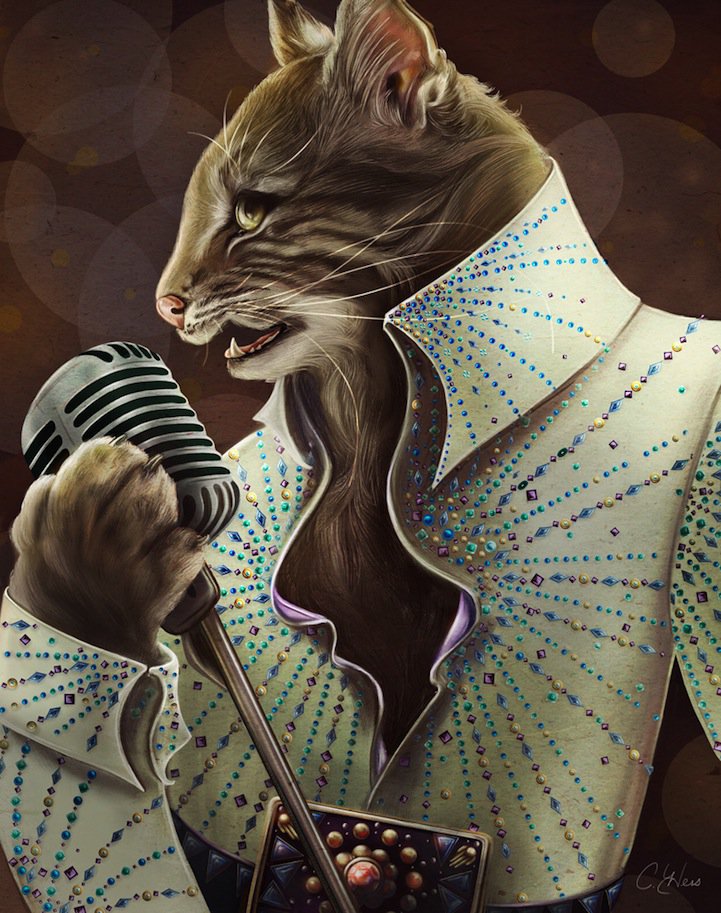
Christina Hess’s Animals From History: Costumed Pets as Playful Portraits
Illustrator Christina Hess reimagines historical icons as ornate animal portraits—Elvis Petme and friends—mixing puns, costume detail, and soft history lessons.