
Street Art by Ian Stevenson
Camberwell-trained illustrator Ian Stevenson draws deadpan faces and slogans onto bins, seats, and street leftovers until the city’s discard starts talking back.
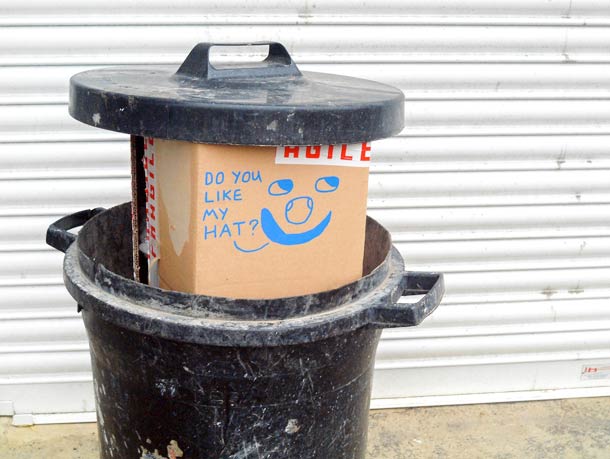
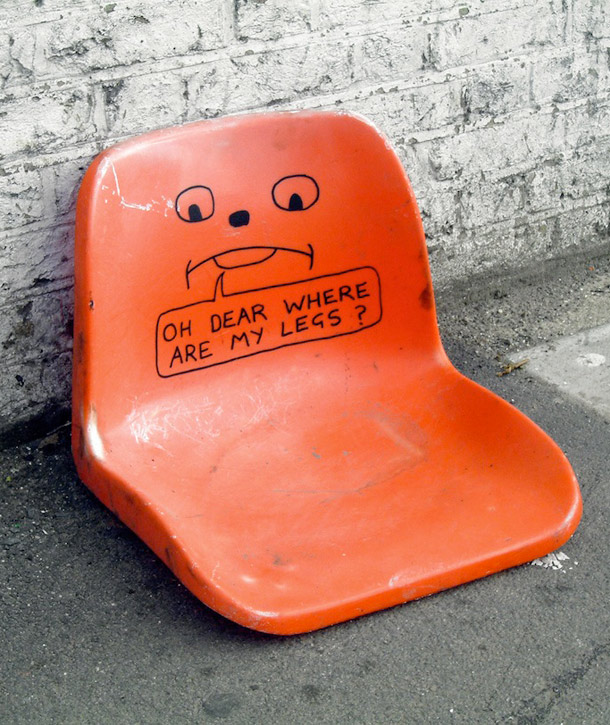
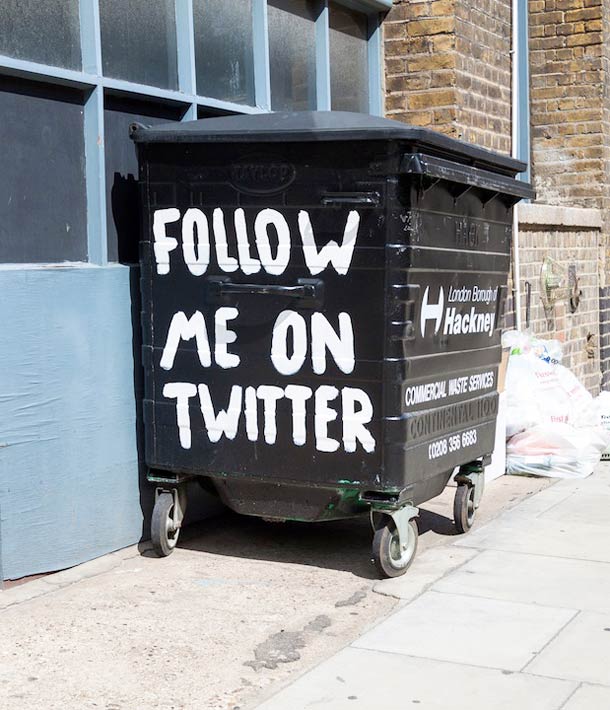
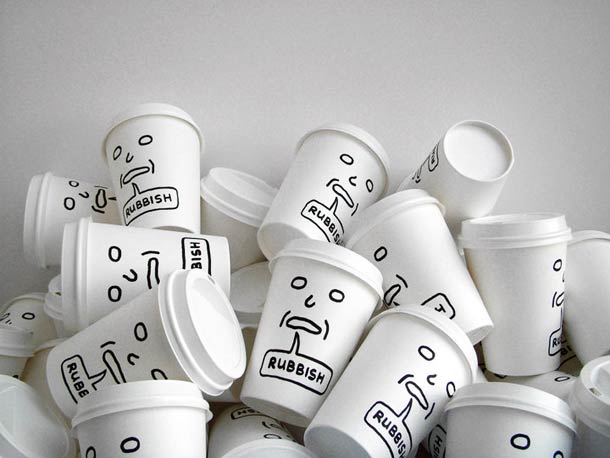
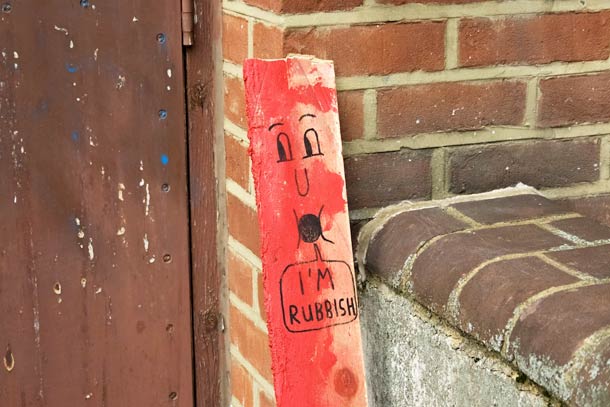
Mid-commute, a rubbish bin asks you to follow it on Twitter. A legless stadium seat wonders, politely, where its legs have gone. A cardboard box wearing a dustbin lid as a hat wants to know if you like the look. That is the register of Ian Stevenson’s street work: deadpan characters drawn onto the city’s leftovers until the leftovers start talking back.
Stevenson studied at Camberwell College of Arts, where the brief often meant making things look considered on paper and fabric. He also spent years in graphic design before leaving to chase his own ideas. The street pieces feel like that decision made public—an illustrator’s line escaping the desk and landing on skips, mattresses, fridges, bins, and whatever else the pavement offers as a temporary gallery.
Found objects as unwilling sitters
Most street art competes with architecture. Stevenson often chooses discard instead: objects already exiting usefulness. By drawing on them, he does not beautify trash so much as interview it. The blue marker face on a cardboard box, lid balanced like a flat hat, is barely more than eyes, nose, and a smile—yet the speech line does the heavy lifting. “DO YOU LIKE MY HAT?” turns sanitation furniture into a nervous dresser seeking approval.
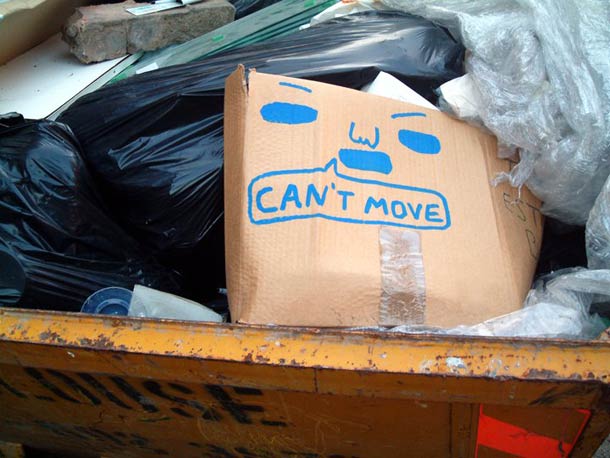
The humor is soft and slightly cruel, the way cartoons can be. The object cannot leave. Passersby can. That imbalance is the joke’s engine. You are free; the bin is stuck performing charm for whoever glances down.
Literal punchlines, drawn simply
An orange molded seat sits against a white brick wall, its metal legs long gone. Stevenson gives it round eyes, a small nose, two square teeth, and a speech bubble: “OH DEAR WHERE ARE MY LEGS?” The gag is almost too direct—and that directness is the craft. He refuses the ornate mural arms race. Line weight stays steady; lettering stays handmade; the city’s scuffs remain part of the picture.
Simplicity keeps the work readable at walking speed. You do not need a pamphlet. You need a half-second of recognition. In that half-second, the discarded object becomes a character with a grievance, and the street briefly feels narrated.
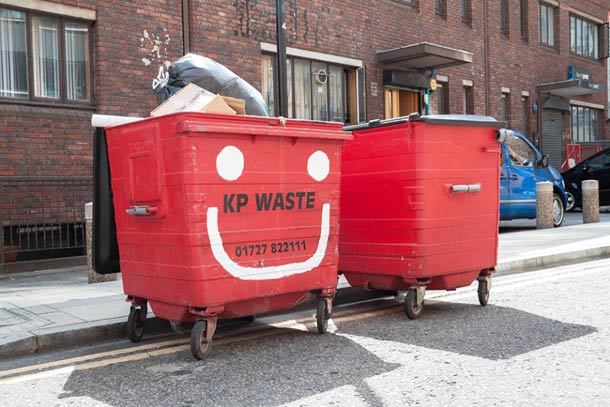
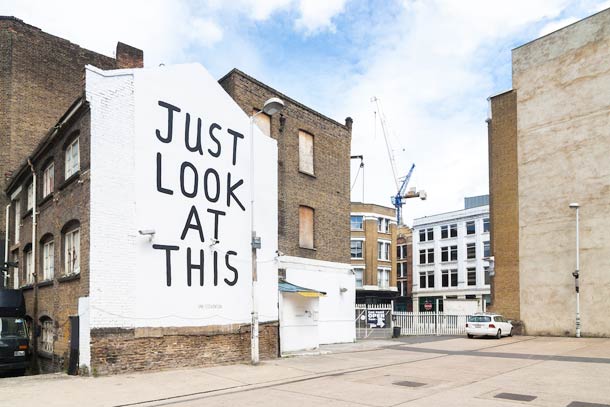
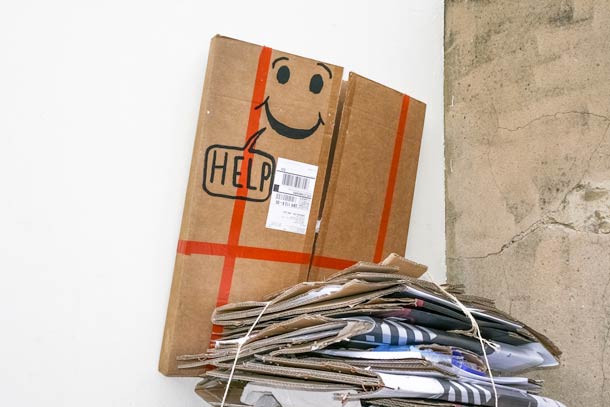
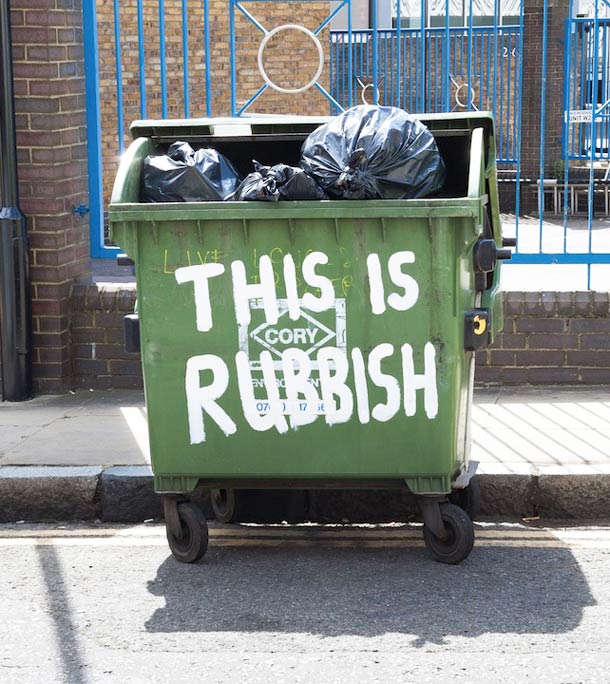
Illustration logic outdoors
Stevenson’s outdoor work inherits illustration habits: clear silhouettes, economical features, text that behaves like a caption glued to reality. He has described his head as crowded with ideas the way a child’s bedroom is crowded with toys—an image that fits the street pieces’ restless cast of odd creatures and slogans. The same sensibility shows up across his wider practice—drawings, objects, music videos, T-shirts—but the pavement versions have a special charge because their canvas might be gone by morning.
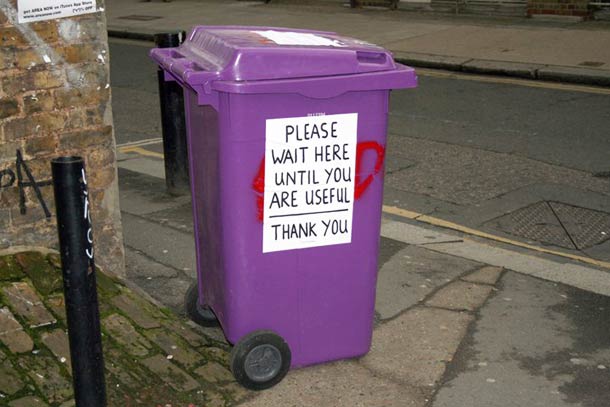
Ephemerality is not a brand strategy here so much as a working condition. Rubbish moves. Cleaners arrive. Weather peels marker. Photographing the work becomes part of finishing it. The images on this page are not secondary documentation; they are how the jokes survive their own materials.
Social media, but make it municipal
The “Follow me on Twitter” bin—widely circulated among admirers of Stevenson’s outdoor run—was funny because it confused categories. A municipal object spoke the dialect of personal branding. Years later the platform names change, but the satire still lands: even rubbish has a growth strategy in a culture that asks every surface to perform.
Stevenson’s wit stays mild enough to feel generous. He is not scolding the viewer so much as noticing the same absurd pressures the viewer already feels. Flawed humanity, social conformity, the desire to be liked—these themes appear in his studio biography as clearly as they appear in a cardboard face fishing for hat compliments.
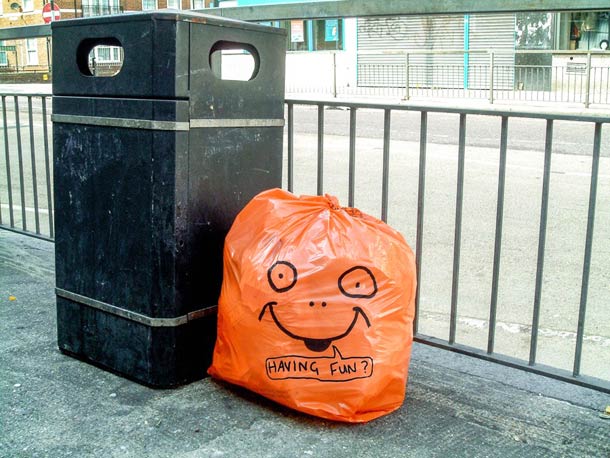
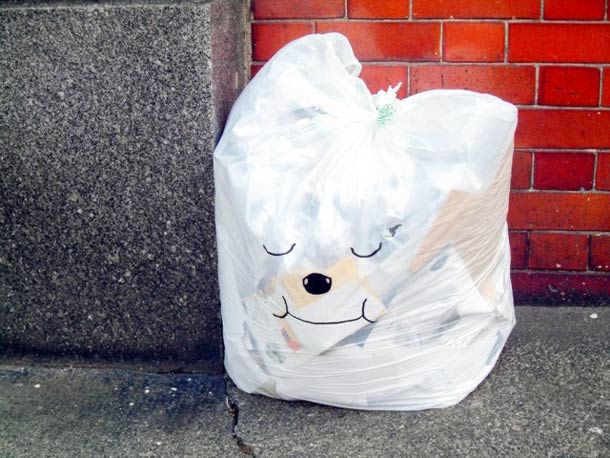
Color choices reinforce the joke’s timing. Bright marker on dull plastic reads instantly; black line on orange stadium plastic does the same. Stevenson rarely hides the drawing inside camouflage. He wants the double-take: first you see trash, then you see a person who should not be there, then you catch the line of dialogue that explains the person. Three beats, one glance.
Walking as studio practice
Accounts of Stevenson’s process often return to walking: brushes, paint, camera, and a willingness to treat the route as a supply closet. Painting outside replaces inbox time with looking time. The city edits the show—some pieces last days, some minutes. That unpredictability keeps the work from hardening into a fixed exhibition checklist.
It also places him beside, but not identical to, mural-centered street art. Scale can go large when commissions arrive; the signature outdoor mode remains conversational and portable. A face on a seat needs no scaffolding. A slogan on a bin needs no permission plaque. The democratizing gesture is real, even when the humor is proprietary.
There is an environmental aftertaste without a lecture. Drawing on refuse notices refuse. Current TV once framed his rubbish projects as a sideways eco story, and the framing still fits lightly: attention is a form of recycling when the alternative is invisibility. Stevenson does not turn every bin into a manifesto. He turns enough of them into characters that you start seeing the rest of the street’s castoffs as almost-characters—waiting for a line.
How to look at the set
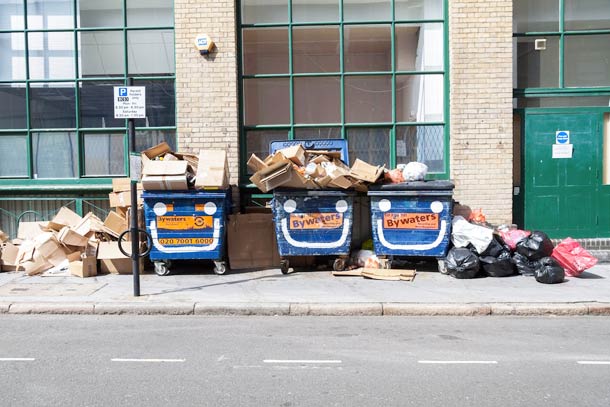
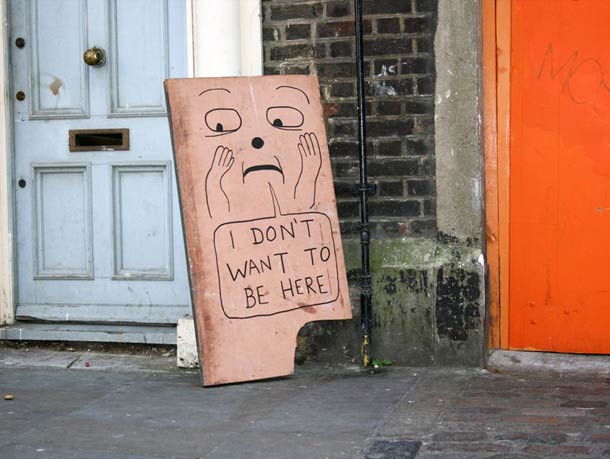
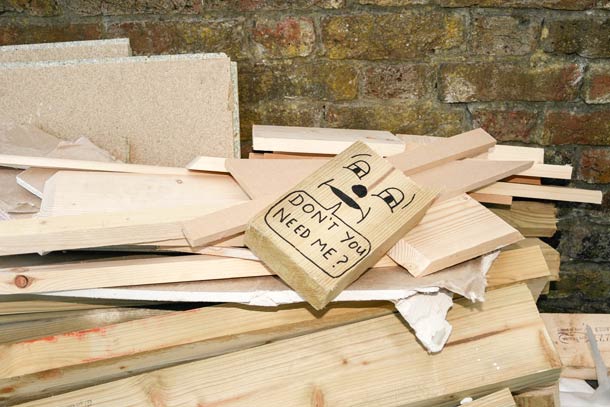
Move through these photographs the way you would move through a neighborhood: pause where the line is cleanest, where the text is sharpest, where the object’s original purpose still argues with the new face drawn on it. Notice color choices—bright blues and blacks that read from across a pavement. Notice how often the background is ordinary: shutters, brick, asphalt. Stevenson does not need a glamorous wall. He needs a surface that already looks a little abandoned.
Clients and commissions have taken his drawing into other arenas over the years, but the street pieces remain a useful key to the sensibility. They show an illustrator who treats humor as structure, not garnish, and who trusts a few marks to carry a whole personality.
Next time a bin lid sits slightly wrong, or a broken chair waits by a wall, you may feel a small narrative itch. That itch is Stevenson’s afterimage: the sense that discarded things are only one caption away from becoming someone. Whether you draw the caption or only imagine it, the walk home gets a little more populated—and the city’s leftovers, for a moment, get the last word.

Comments
Continue reading
Oakoak’s Playful Urban Street Interventions
French street artist Oakoak turns cracks, hydrants, and overlooked fixtures into small site-specific jokes—minimal marks, pop-culture wit, and ephemeral city play.
15 More Incredible Street Art Photos Worldwide
Part two: giant murals from Philadelphia, Lyon, Warsaw, Lisbon, Vienna, New York, Dublin, Berlin, and beyond—plus a few still-unlabeled walls.
Scratching the Surface: Street Art Carvings by Vhils
Portuguese artist Alexandre Farto, aka Vhils, digs portraits from city walls—subtractive street art that treats plaster, brick, and posters as a living palette.