
Vintage and Chic Bridal Bouquets That Feel Heirloom-Ready
Soft palettes, lace wraps, fabric blooms, and brooch details—how to build a bridal bouquet with lasting vintage chic instead of a one-day stem stack.
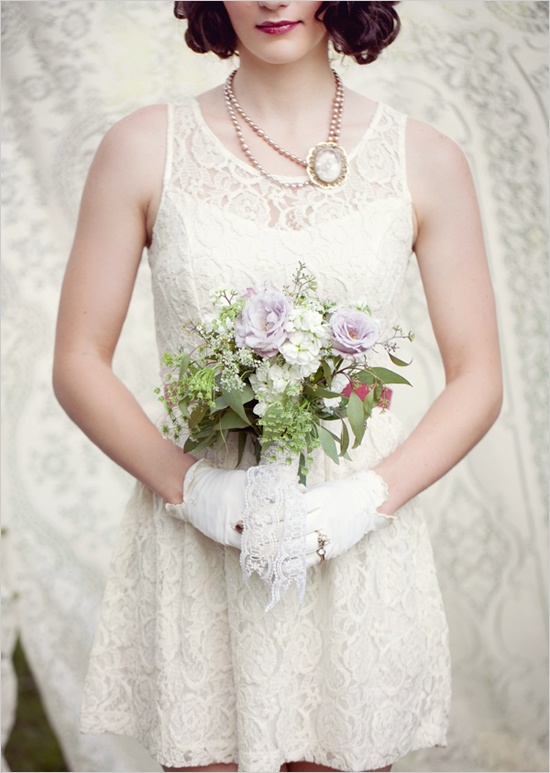
A bridal bouquet does more than fill the hands in photographs. It sets the temperature of the whole wedding look—soft or graphic, garden-fresh or heirloom-hardy, romantic or slightly rebellious. Vintage-leaning bouquets earn their reputation because they borrow from decades when flowers mixed freely with fabric, metal, ribbon, and family jewelry. They feel composed rather than merely pretty, and they often survive the day in a way a fragile stem-heavy bunch cannot.
Vintage here does not mean dusty or costume. It means a palette and construction language rooted in early-to-mid twentieth-century bridal taste: soft ivory and blush, muted greens, dried textures, lace wraps, fabric blossoms, and the occasional brooch catching light. The goal is chic permanence—something that photographs as intentional and can later sit in a vase, a shadow box, or a keepsake drawer.
What “vintage chic” actually looks like in the hand
Contemporary cascades and tight peony spheres have their place. Vintage chic usually prefers a different silhouette: slightly loose, rounded or teardrop, with visible stems wrapped in silk, lace, or velvet ribbon. Blooms sit among filler that feels gathered—waxflower, dusty miller, seeded eucalyptus, baby’s breath used sparingly, dried lavender, or soft ferns—rather than a single flower type stacked for maximum volume.
Color stays disciplined. Think cream roses with champagne ranunculus, soft mauve, dusty pink, soft apricot, and the occasional deep burgundy accent for depth. Pure white can work when tempered with ivory and greenery so the bouquet does not read as fluorescent. Metallic accents arrive as jewelry and buttons, not as glitter spray.
Scale should match the dress era you are echoing. A slender 1920s-inspired gown wants a smaller, more vertical cluster. A full 1950s skirt can carry a wider, rounder form. Oversized modern “statement” bouquets often fight a vintage dress; edit until the flowers look like they belong to the same decade as the silhouette.
Brooches, buttons, and fabric flowers
The durable heart of many vintage bouquets is non-botanical. Fabric roses, silk blossoms, and lace blooms hold shape through heat, travel, and dancing. Brooches and vintage buttons pinned into the arrangement catch flash photography and add a jewelry note that fresh petals alone cannot. Some brides build almost entirely from heirloom pins and fabric flowers, then tuck in a few live stems for scent and softness on the day.
Family pieces change the meaning of the bouquet. A grandmother’s cameo, a mother’s watch face remade as a pin, flea-market rhinestones mixed with real pearls—these turn the bouquet into a portable archive. Secure them properly: florist wire, hot glue on fabric bases only where heat is safe, and a backing so sharp pins never stab the hand. Weight matters; too many heavy metal pieces make the bouquet tip and tire the wrist during portraits.
Buttons deserve more credit than they get. Mother-of-pearl, fabric-covered, or etched metal buttons clustered near the wrap create texture that reads as couture in close-ups. They also photograph beautifully in black and white, which suits vintage-themed albums.
Fresh, dried, and mixed constructions
Pure fresh flowers can still look vintage if the variety and wrap are right—garden roses, sweet peas, stock, freesia, and soft foliage arranged with air between blooms. The risk is wilt and the urge to overstuff. Vintage style usually benefits from negative space: petals should breathe.
Dried and preserved elements solve longevity. Strawflowers, dried roses, lunaria, wheat, and preserved hydrangea give the dusty romance people associate with antique shops without looking like a craft-store mistake when colors stay muted. A mixed bouquet—fresh for fragrance, dried for structure, fabric for permanence—often performs best through a long day of ceremony, cocktails, and dancing.
If you want a forever piece, plan two versions: a wearable fresh-and-mixed bouquet for the ceremony, and a fully fabric or dried twin for display afterward. Or design one durable bouquet and accept that a few fresh stems may be swapped out between ceremony and evening if heat is brutal.
Wraps, stems, and the finishing details
The handle is half the look. Wide lace wraps, layered silk ribbons with trailing ends, velvet in winter, and pearl-headed pins arranged in a deliberate pattern all signal vintage more clearly than any single flower. Leave a clean stem base so the bouquet sits well on a table during speeches; messy tape ruins the chic.
Consider scent carefully. Heavy lilies can overwhelm a small chapel; soft garden roses and a touch of lavender feel period-appropriate without dominating dinner. Allergies in the wedding party argue for more fabric and dried content near faces.
Coordinate—but do not match—the bouquet to bridesmaids. Vintage chic often looks better when attendants carry smaller clusters or single stems in the same ribbon language, so the bride’s piece remains the jewelry of the group. Boutonnières can echo a button or tiny fabric bud rather than a miniature of the full bridal mix.
How to shop and assemble without chaos
Start with one anchor: a dress era, a color story, or a single heirloom pin. Build the bouquet outward from that decision. Hunt thrift stores and estate sales for brooches months ahead; do not wait until the week of the wedding. Test weight in your hand while wearing something with similar sleeve bulk to the gown.
If a florist is building the piece, bring physical references—fabric swatches, jewelry, ribbon—not only phone screenshots. Ask for a stem wrap that can be unfinished until the final pin placement, so last-minute heirlooms still fit. If you assemble it yourself, practice once with inexpensive materials, then rebuild for the real day. Wiring fabric flowers and pinning brooches is a craft; the first attempt teaches you what the second needs.
- Choose a silhouette that matches the gown decade, not a trend feed.
- Limit the palette to three related tones plus greenery.
- Include at least one durable element: fabric bloom, dried stem, or jewelry.
- Secure metal pieces so they cannot slip or scratch.
- Finish the wrap as carefully as the flower faces.
Keeping the bouquet after the vows
Fresh-heavy bouquets need prompt drying or professional preservation if you want them flat in a frame. Fabric and jewelry-led designs can hang in a closet, rest in a glass dome, or become wall art with almost no intervention. Many couples later separate the brooches for everyday wear and keep the floral structure as a shelf object—proof that a wedding bouquet can have a second life as décor rather than landfill.
Vintage chic succeeds when the bouquet feels collected, not catalogued. Mix eras lightly, favor soft light-catching materials, and let one or two special objects carry the story. The result should look as if it could have walked out of a 1930s portrait studio or a 1950s garden party—and still look right in tomorrow’s photographs.

Comments
Continue reading
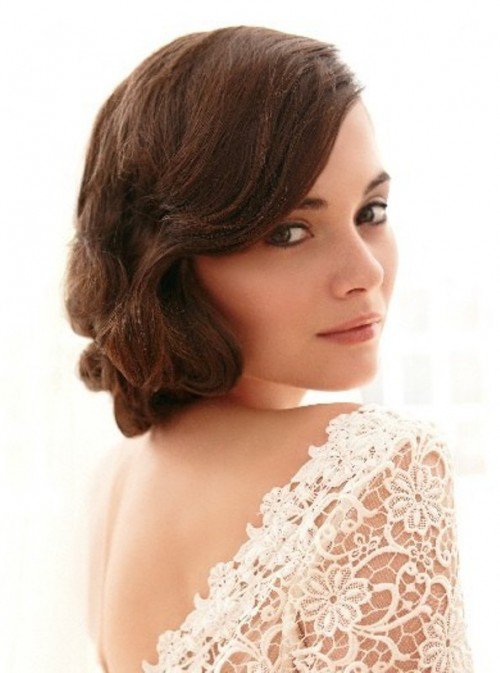
15 Vintage Wedding Hairstyles: Finger Waves, Bouffants, and Birdcage Veils
Fifteen vintage bridal hair looks—from 1920s finger-wave faux bobs to 1960s bouffants, victory rolls, and Hollywood waves with birdcage veils.
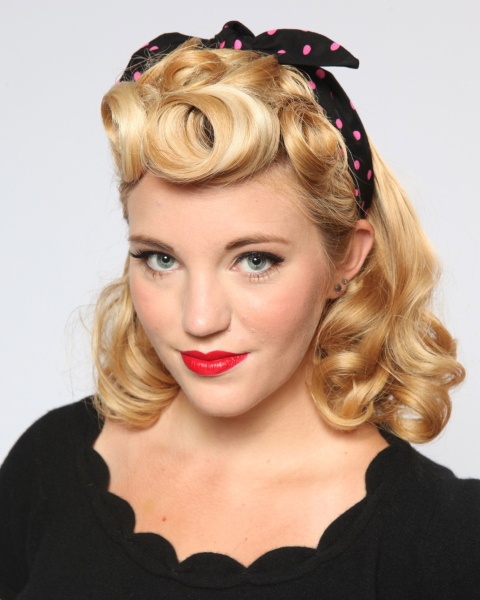
Vintage Hairstyles by Decade—Waves, Rolls, Flips, and Wearable Volume
A practical tour of 1920s waves through seventies feathers: silhouettes, tools, and how to wear period hair without a full costume.
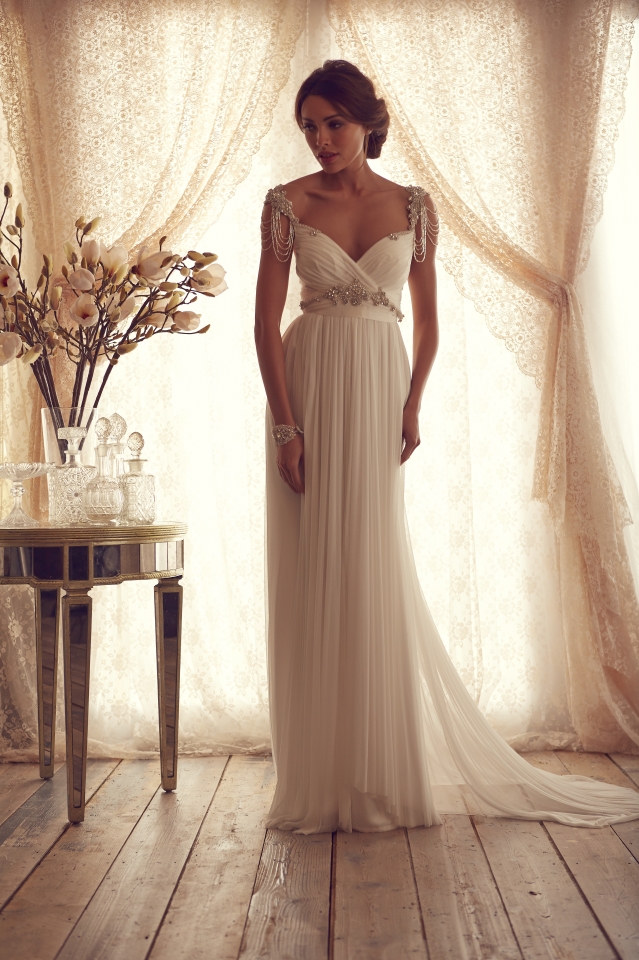
Anna Campbell’s 2013 Gossamer Made-to-Measure Bridal Collection
A historical look at Anna Campbell’s 2013 Gossamer made-to-measure wedding gowns—French-romance fit, crystal shoulders, bone color, and the Australian atelier moment.