
17 DIY Pencil Case Tutorials: Zip Pouches, Felt Sleeves, and Back-to-School Sewing
Seventeen handmade pencil case projects—floral zip pouches, felt pencil shapes, oilcloth sleeves, box bottoms, and patchwork scraps—with all gallery photos kept and outbound tutorial spam removed.
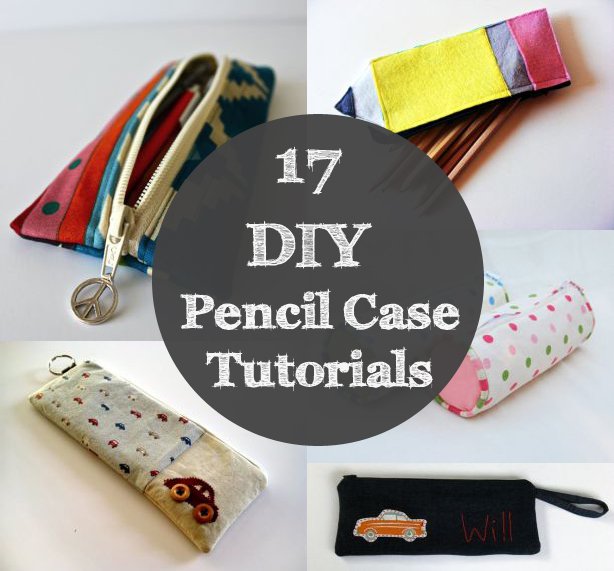
Back-to-school shopping rarely needs another plastic pouch from a bargain bin. A handmade pencil case lasts longer, holds the exact pens you actually use, and can be sized for a backpack, desk drawer, or art bag. The seventeen projects below follow the original gallery: zippered fabric pouches, felt sleeves, shaped cases, and a few structured box styles. Keep the local photos; skip the old outbound tutorial spam—each entry is written so you can sew or assemble from the description.
Basic supplies cover most of these: cotton or canvas scraps, felt, a zipper (7–12 inches depending on length), sewing machine or sturdy hand stitches, scissors, and optional appliqué fabric. Pre-wash woven fabrics so dye does not bleed onto homework later.
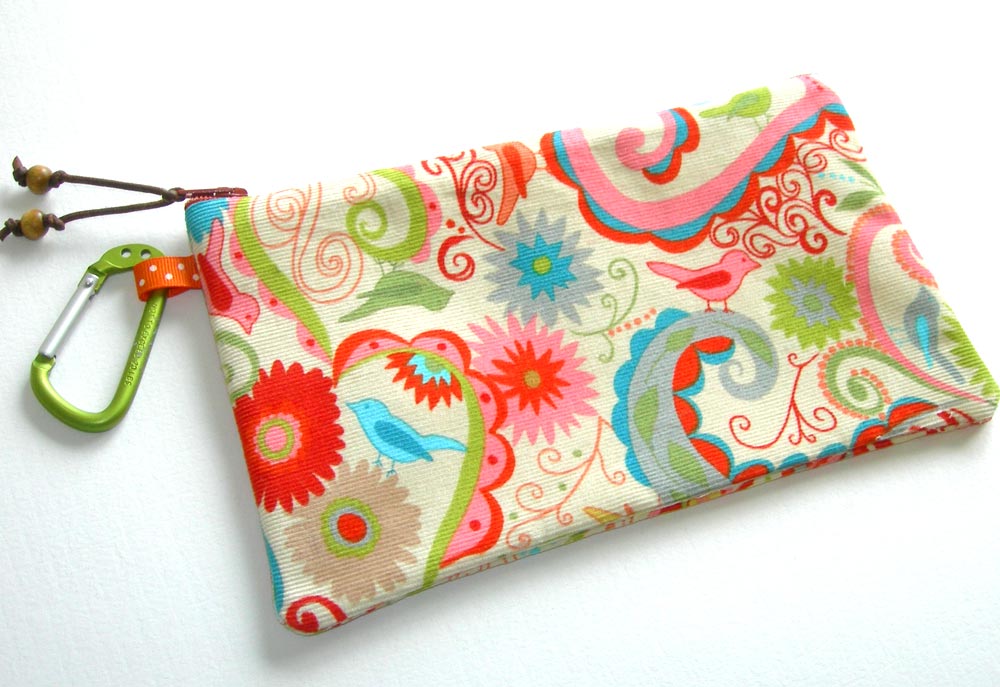
1. Floral zip pouch with carabiner clip
Sew a flat rectangular pouch from printed cotton or canvas, install a zipper along one long edge, and add a side loop for a carabiner so the case clips to a backpack strap. Wooden beads on the zipper pull make it easier to find in a dark bag. Round the corners slightly so the finished pouch does not poke through fabric backpacks.
2. Personalized name-and-appliqué case
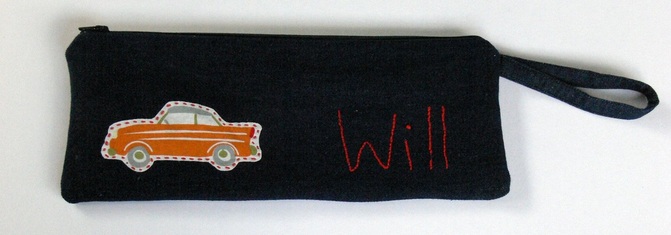
A dark denim or canvas rectangle with a top zipper becomes personal with a simple appliqué—here an orange car—and a name embroidered in contrasting thread. Fuse the appliqué, zigzag the edge, then backstitch the letters. Add a small side loop handle for hanging on a hook. This is the classic “nobody grabs the wrong pouch” gift.
3. Giant felt pencil pouch
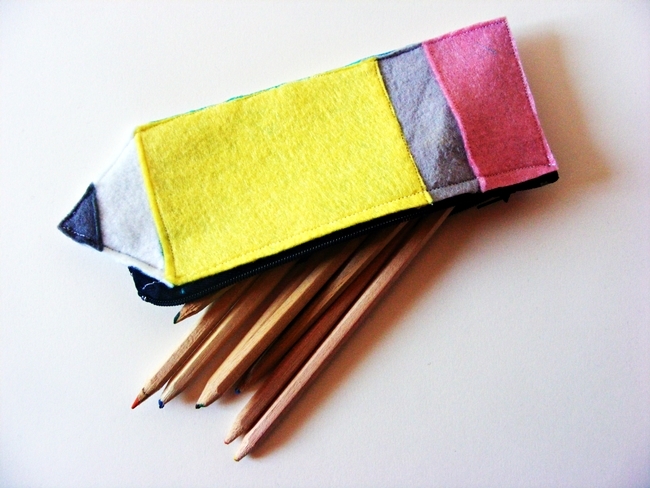
Cut felt panels for eraser (pink), ferrule (gray), yellow body, wood tip, and lead point. Stitch them into a long pencil silhouette and install a zipper along the bottom edge so colored pencils spill out like the real thing. Visible topstitching between color blocks is part of the charm. Keep the tip reinforced so it does not collapse in a backpack.
4. Slim oilcloth or laminated-fabric case
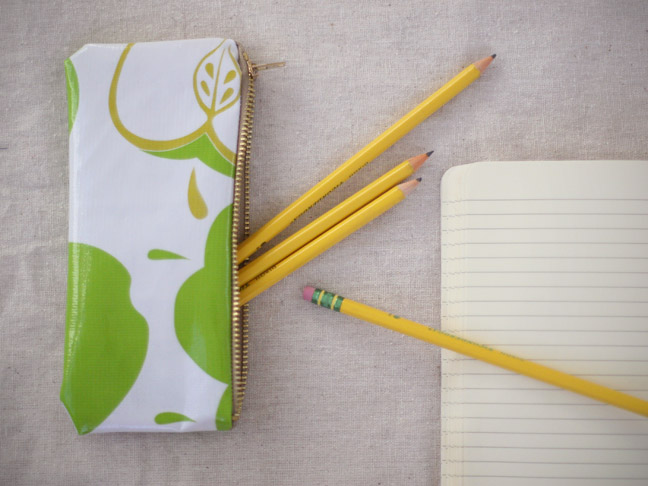
Oilcloth and laminated cotton wipe clean after snack crumbs and ink smudges. Cut a tall slim rectangle, zip one long side, and leave the top open for a few pencils. The glossy botanical print in the gallery shows how bold fabric does the decorating for you. Use a Teflon foot or tissue paper under the presser foot if the laminate sticks while sewing.
5. Scalloped felt tube sleeve
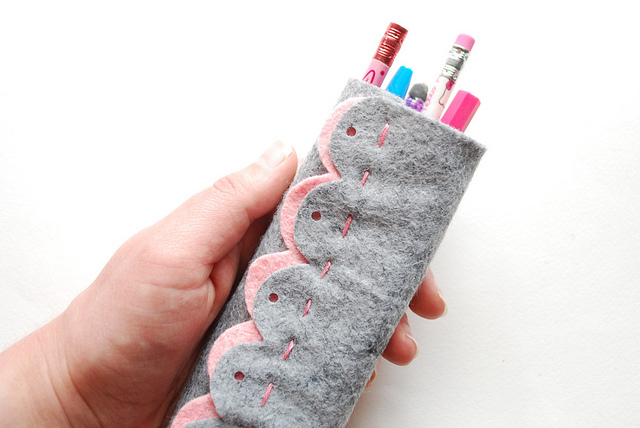
No zipper required: sew a gray felt tube and decorate the front with layered scallops in gray and pink, punched circles, and bold contrast stitches. Slip pens in from the top. Felt does not fray, so this is an ideal first project for kids who can manage a needle with supervision. Size the tube snug enough that pencils do not rattle out when the bag tips.
6. Circle appliqué zipper pouch
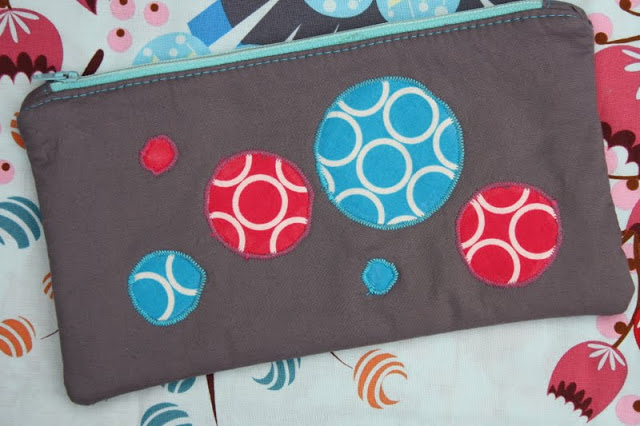
Start with a charcoal cotton pouch and a contrasting zipper, then zigzag-appliqué red and blue concentric-circle patches across the front. Vary the circle sizes so the composition feels playful rather than stamped. This tutorial teaches raw-edge appliqué without needing a specialty foot beyond a zigzag stitch.
7. Bold-print pouch with contrast lining
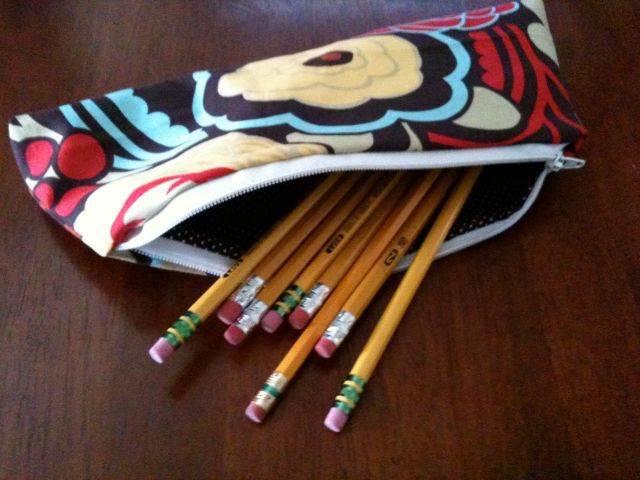
A large-scale floral exterior paired with a polka-dot lining looks intentional when the zipper opens. Cut outer and lining the same size, sew the zipper first, then finish the bag as a lined pouch so seams stay clean. Unsharpened pencils in the photo are a reminder: measure interior length before you cut if you carry full-size #2s.
8. Zakka-style car pouch with button wheels
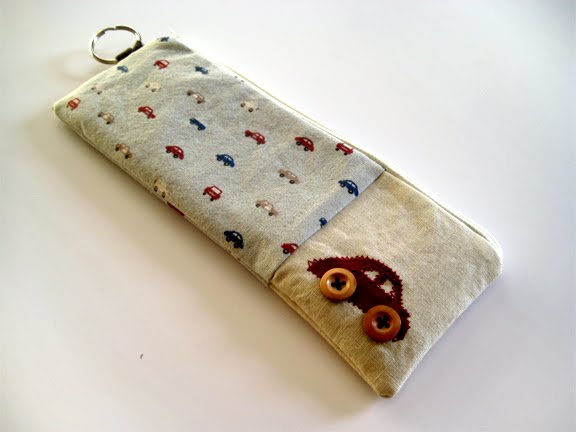
Combine a mini-car print panel with a plain linen end, then add a larger red car appliqué and wooden button wheels. A metal ring at the corner turns the pouch into a clip-on accessory. The mix of print scale—tiny cars plus one big appliqué—is the design lesson; do not match every fabric perfectly.
9. Patchwork stripes with a peace-sign pull
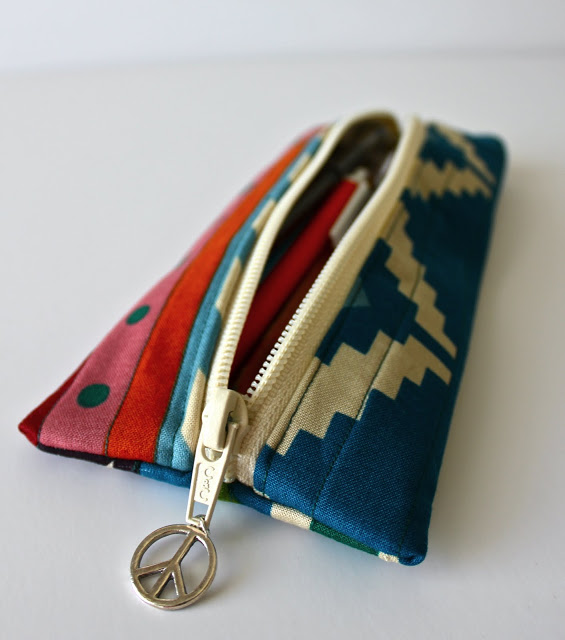
Piece two or three leftover strips—polka, solid, geometric zigzag—into a flat pouch front, add a cream zipper, and hang a metal charm from the slider. Patchwork fronts hide fabric leftovers while still looking planned. Press seams carefully so the zipper installs flat.
10. Hand-stitched felt flap case
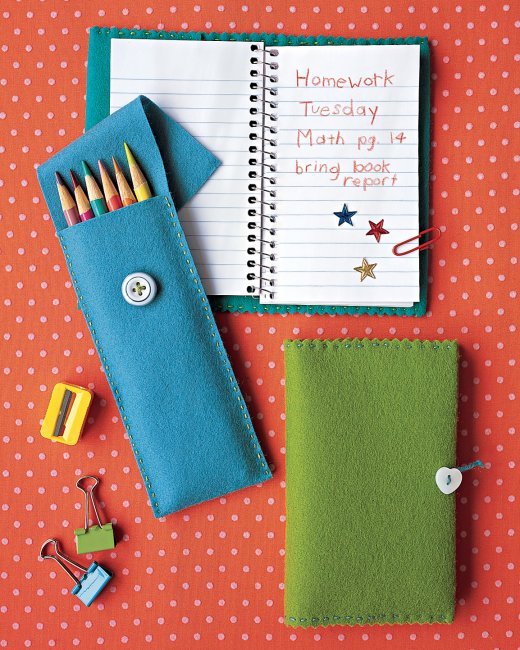
Cut teal felt into a rectangle with a pointed flap, hand-stitch the sides with contrasting thread, and close with a large button and thread loop. No zipper, no machine required. Pair it with matching felt notebook covers if you are making a full stationery set. Colored pencils fit best when you keep the interior shallow and wide.
11. Box-bottom striped pouch
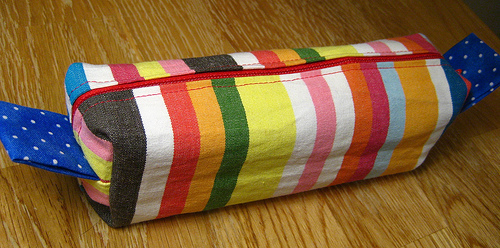
Boxing the corners of a flat pouch creates a rectangular prism that stands on a desk. Use bright striped fabric, a bold zipper, and contrasting end tabs (polka dots work well) as finger grips. The extra depth holds markers and scissors that fight a flat sleeve. Reinforce the boxed corners with a second stitch line for backpack wear.
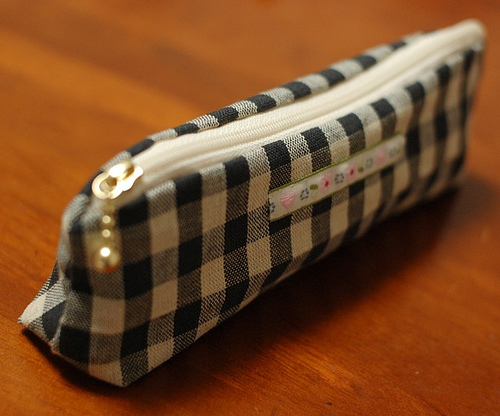
12. Gingham pouch with floral ribbon trim
Black-and-white check fabric stays classic; a floral ribbon sewn parallel to the zipper adds soft color without piecing. Choose a gold or decorative zipper pull for a finished look. Boxed corners give a little capacity while the overall silhouette stays slim for pencil cases that live in laptop bags.
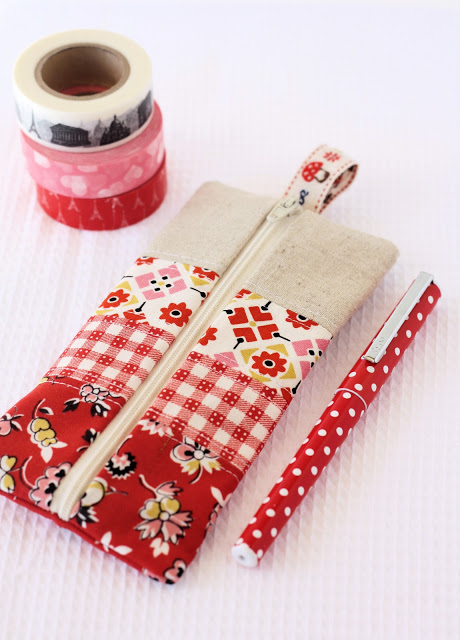
13. Scrappy patchwork zipper case
Stack horizontal bands—linen, gingham, floral, solid red—into a long patchwork body with a center zipper. A ribbon loop at the zipper end doubles as a pull and hanging tab. This is the scrap-bin project: keep seam allowances consistent so the finished rectangle stays true.
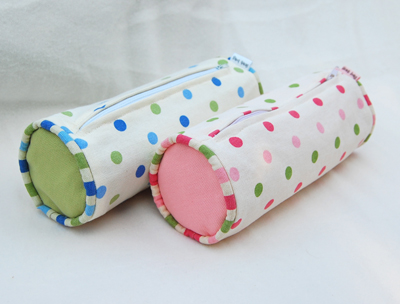
14. Cylindrical polka-dot bolster cases
Sew a fabric tube, add circular end caps with striped binding, and zip along the length. Polka-dot bodies with solid pink or green ends look candy-like and hold a surprising number of pens. Practice sewing the curved binding on a scrap first; the circle is the only tricky step.
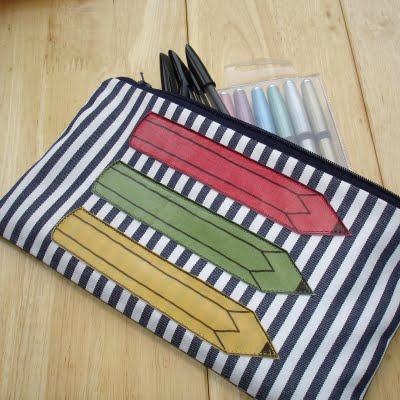
15. Stripe pouch with pencil appliqués
Navy-and-white stripes make a graphic base; three diagonal fabric pencils in red, green, and yellow tell the story of the pouch’s job. Sketchy black stitching defines tips and erasers. Partial-open zippers in the gallery shot show how handy a wide mouth is when you grab one pen without dumping the rest.
16. Triangular felt prism with scrap band
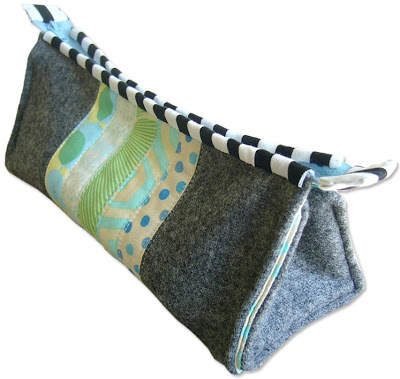
A three-sided gray felt body with a zip along the top ridge feels sculptural on a desk. Insert a center band of pieced prints—dots, sunburst, more dots—and finish the zipper with black-and-white striped binding and a matching pull tab. The triangular end keeps the case from rolling off slanted drafting tables.
17. Linen pouch with center zip and green trim
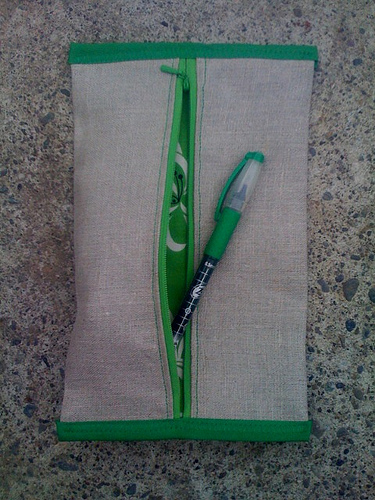
Natural linen (or linen-look cotton) with a bright green center zipper and matching edge binding is quiet enough for adult desks and studio kits. Line with a print so the interior does not feel unfinished. Serrated or pinked trim on the short ends is a fast decorative finish when you want color without piping.
Choosing a first project
If you are new to zippers, start with the flat pouches in ideas 1, 6, or 7 before boxing corners or sewing circles. If you prefer no hardware, the felt sleeve and button-flap cases (5 and 10) get you a usable case in an afternoon. Match fabric weight to use: oilcloth for messy art bags, felt for gentle desk storage, canvas for daily backpack duty.
Whatever style you pick, test-fit the pens you carry most before you topstitch the final seam. A beautiful case that is one inch too short for a favorite fountain pen will live in a drawer. Measure twice, sew once, and let the fabric print do the showing-off.

Comments
Continue reading
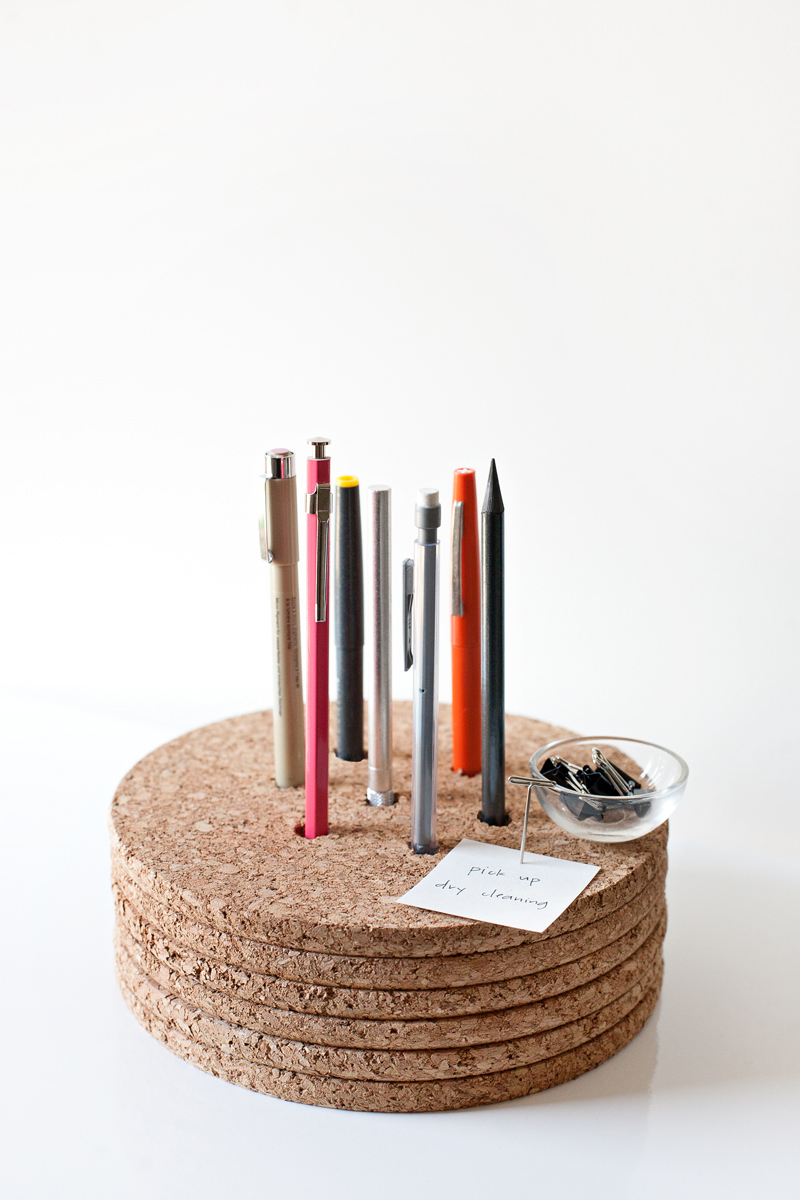
9 DIY Pencil Holder Designs for Desks and Studios
Cork trivets, rubber bands, drilled wood, embroidered jars, tins, cassettes, yarn, burlap, and keyboard keys—nine DIY pencil holders beyond the plastic cup.
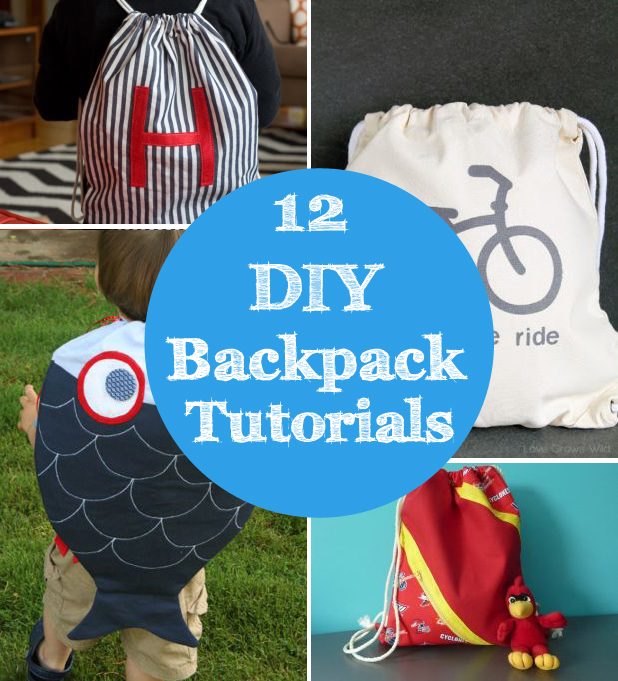
DIY Backpack Projects: Sew School Bags That Hold Up
From drawstring packs to lined kid bags, pick sturdy fabric, reinforce straps, and build a backpack you can decorate after the structure already works.
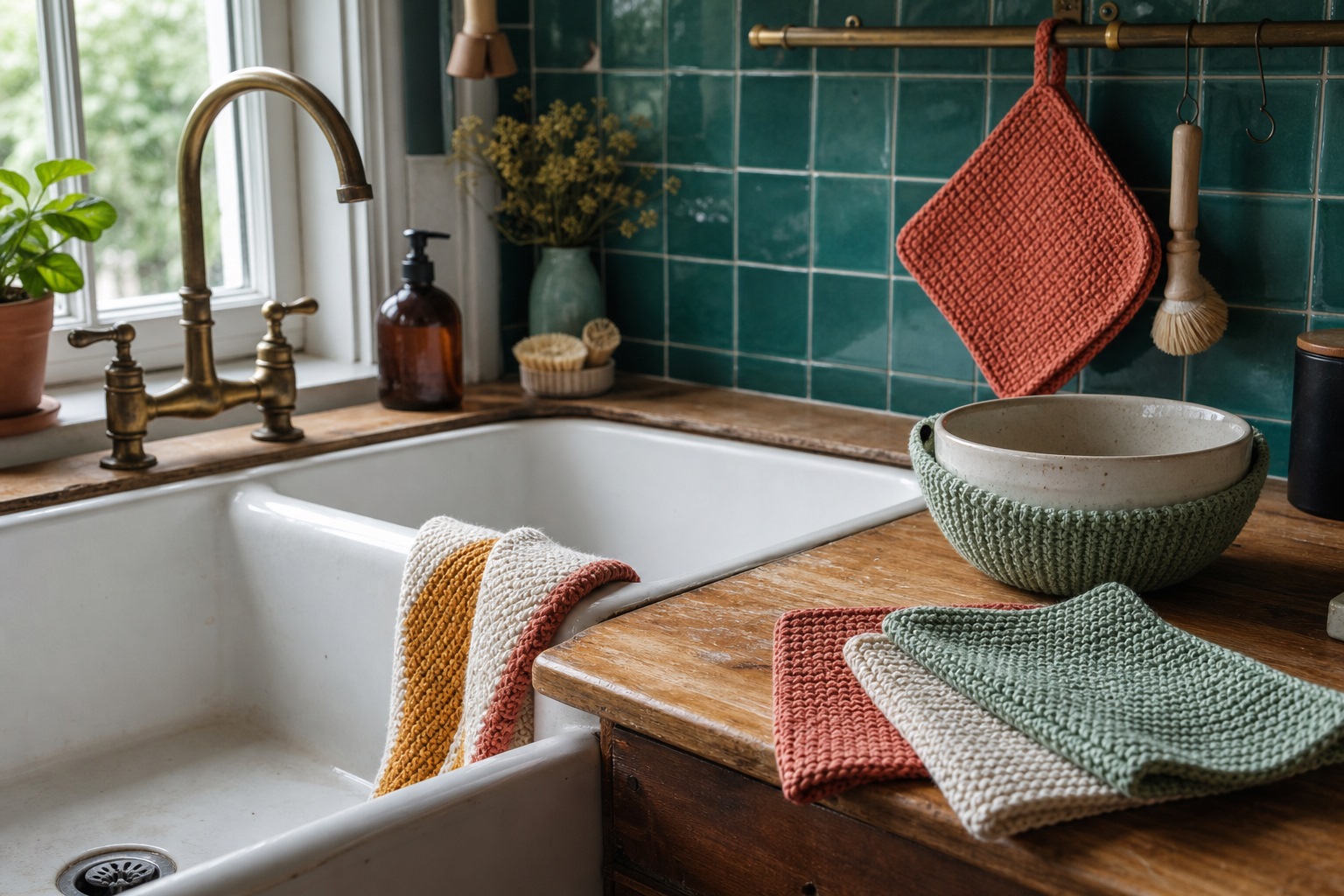
Knit Kitchen Tools You Will Actually Use
Dishcloths, pot holders, bowl cozies, and other small knits for the kitchen—yarn choices, cotton vs wool, and projects that survive heat, water, and daily mess.