
Knit Kitchen Tools You Will Actually Use
Dishcloths, pot holders, bowl cozies, and other small knits for the kitchen—yarn choices, cotton vs wool, and projects that survive heat, water, and daily mess.
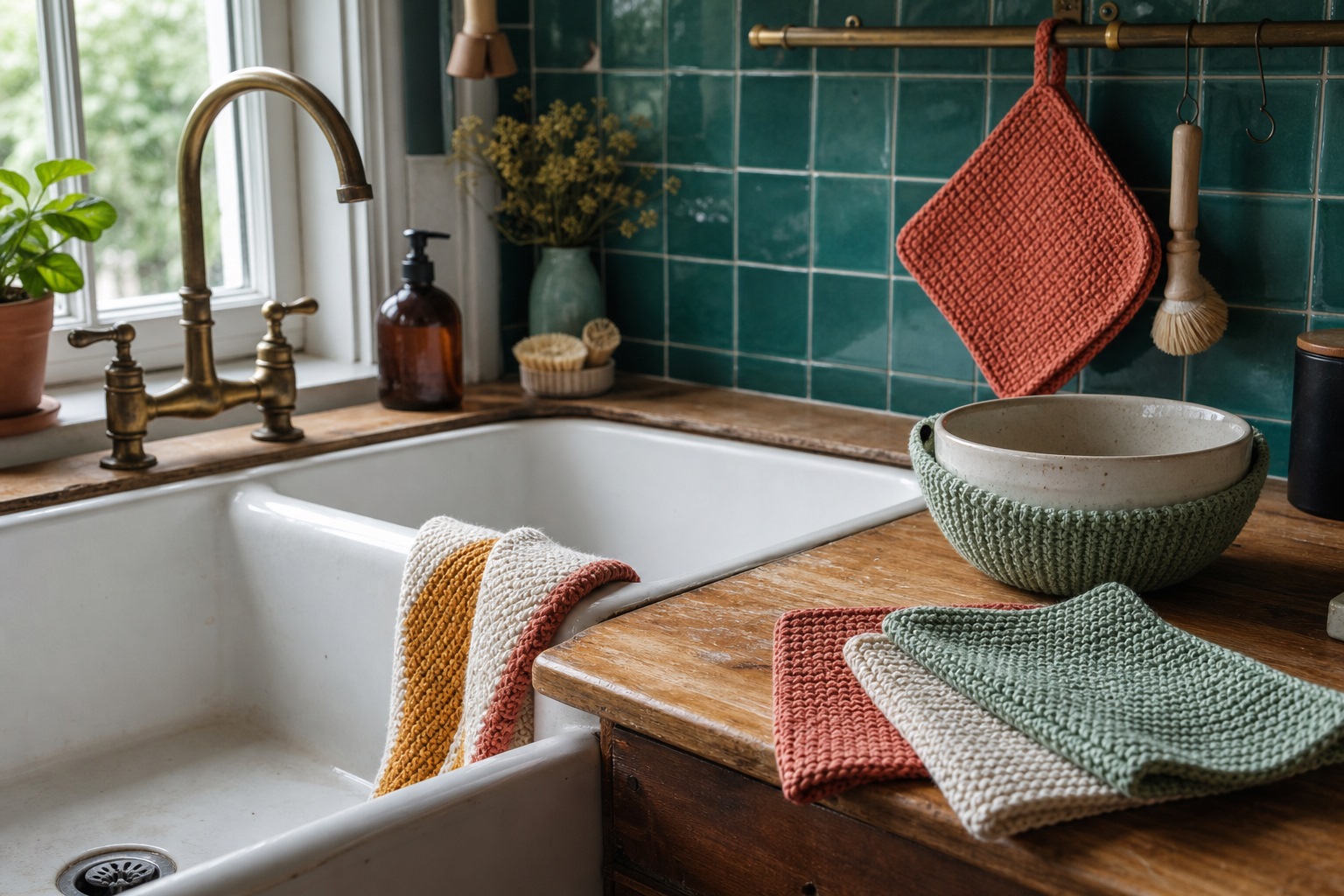
Knitting for the kitchen only pays off if the object meets heat, water, and bleach-level honesty. A scarf can be precious. A dishcloth cannot. This is a short list of knits that earn a hook by the sink—not a roundup of toys, poufs, or “fun projects” for the living room. If you want leftover-skein accessories, the single-skein knits already cover hats and mitts. Stay here for cotton, linen, and heat.
Yarn that survives a kettle
Cotton is the default: it drinks water, it can take a hot wash, and it does not melt onto a pan the way acrylic will. Look for a worsted or DK labeled for dishcloths, or a kitchen cotton with some twist so it does not split into a fuzz halo after three dinners. Mercerized cotton looks smoother and dries a bit faster; unmercerized feels more like a rag, which is a compliment in this room.
Linen and linen blends dry quickly and get less sour. They are harder on the hands to knit. Wool felted thick can make a pot mat, but untreated wool next to a roast pan is a smell experiment. Superwash wool is still protein; it can scorch. Keep wool away from direct burner duty.
Skip eyelash, boucle, and anything with metallic thread. Food catches. Plastic sequins next to a gas flame are a bad joke.
Dishcloths that are not sad squares
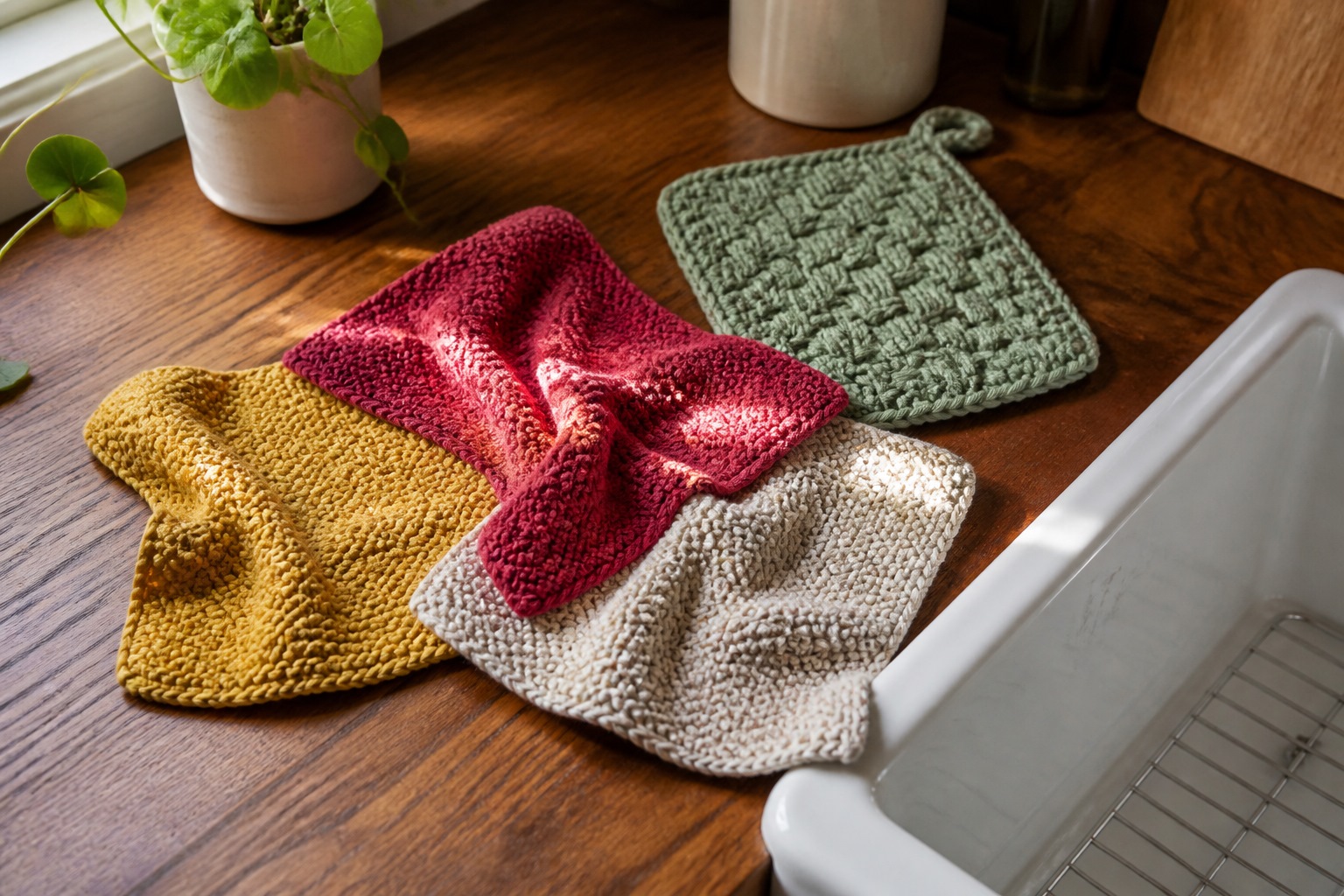
A garter square still works. So does a diagonal increment (the classic grandmother’s dishcloth) because the increase-and-decrease edges sit in the hand like a mitt. Seed stitch scrubs better than stockinette; stockinette curls into a tube unless you border it.
Size: about 18–22 cm. Smaller is a coaster. Larger stays wet in a heap. Knit a hanging loop on one corner so it can dry instead of fermenting on the faucet.
Color: darks hide tomato. Lights show you when to wash. A striped cloth lets you rotate faces so one side is not permanently the onion side.
Pot holders and the heat problem
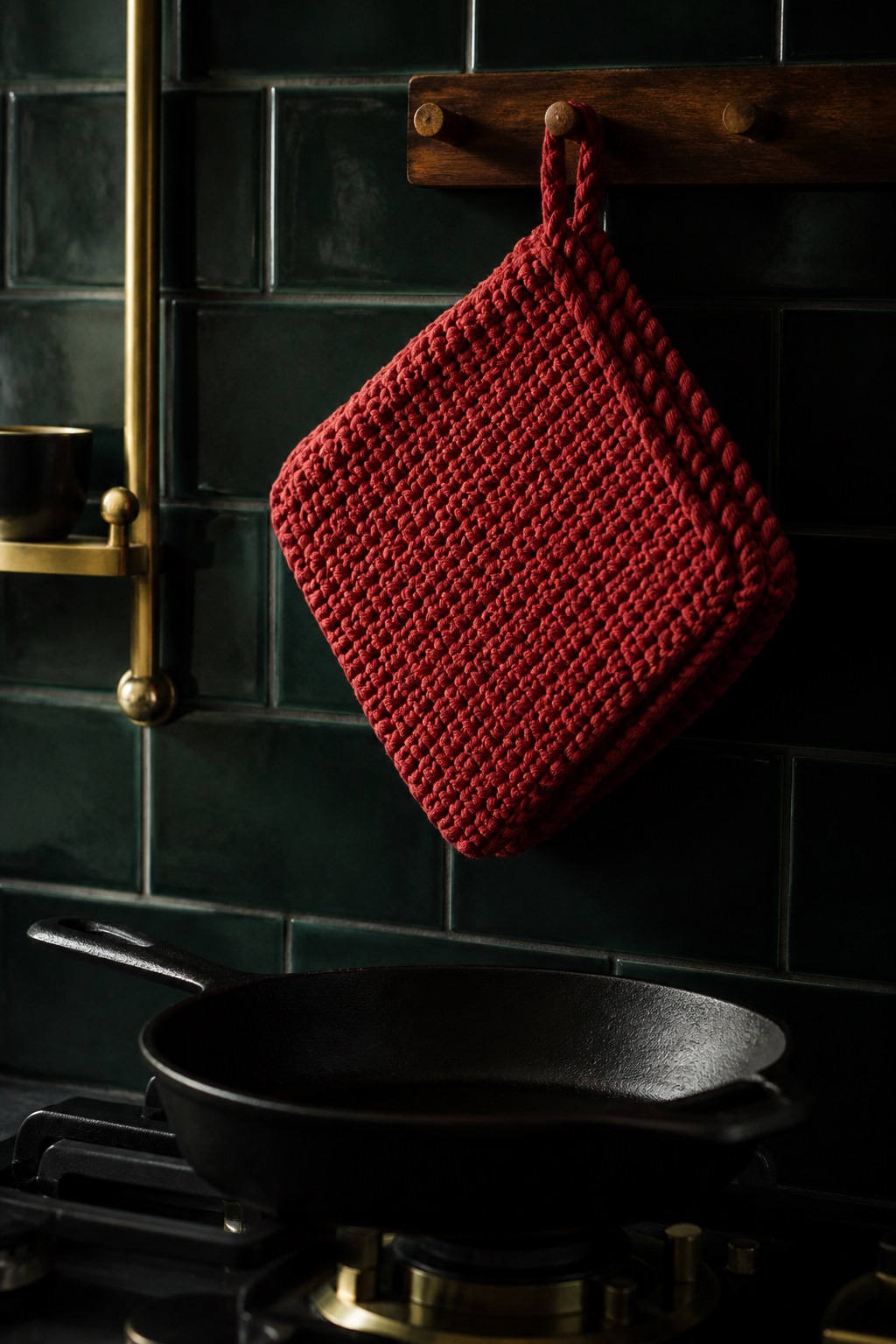
A single layer of cotton is a potholder only in marketing copy. You want thickness: a double-thick square, a folded pocket, or a layer of insulative batting inside a knit shell that you are willing to sew. Even then, treat knit holders as backup for casserole rims, not for grabbing a cast-iron handle off a flame.
I-cord loops should be short so they do not dangle into a burner. A leather or twill hanging tab sewn on after knitting is stronger than a yarn loop that stretches in steam.
Test on a cooled-but-warm pan first. If you flinch, add a layer or retire the piece to trivet duty under a teapot.
Bowl cozies, jar mitts, and the microwave
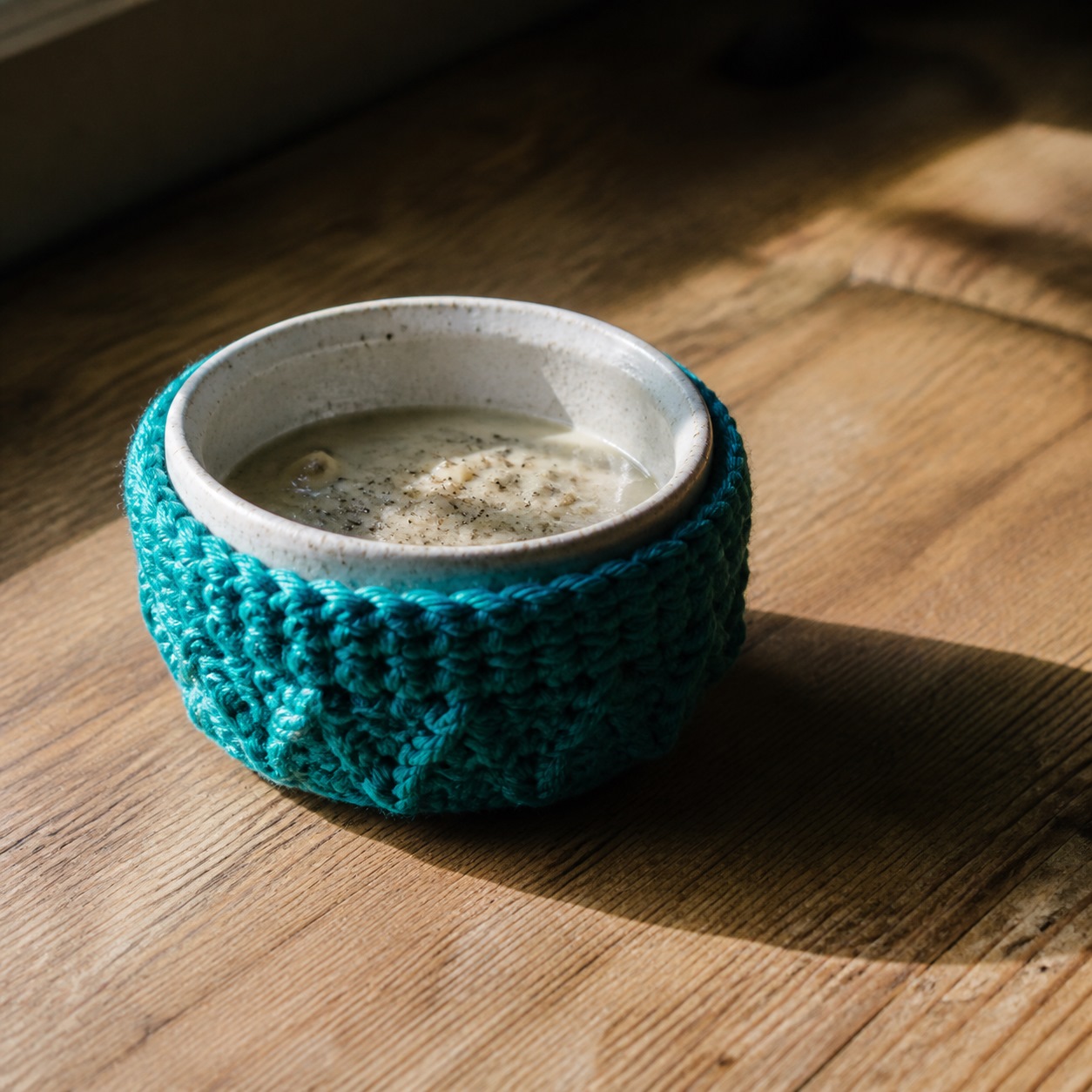
A bowl cozy is a nested square or octagon that lets you lift a hot soup bowl. 100% cotton, no metallic, no polyester fill. If you microwave, read the yarn label twice. Some “kitchen cottons” are blends. Melting plastic in food is not a craft flex.
Jar mitts—short tubes for pulling a jam jar or a cold bottle—are a good scrap project. Ribbing keeps them on. Make the cuff long enough that steam does not hit your knuckles.
Scrubbers, soap sacks, and hygiene
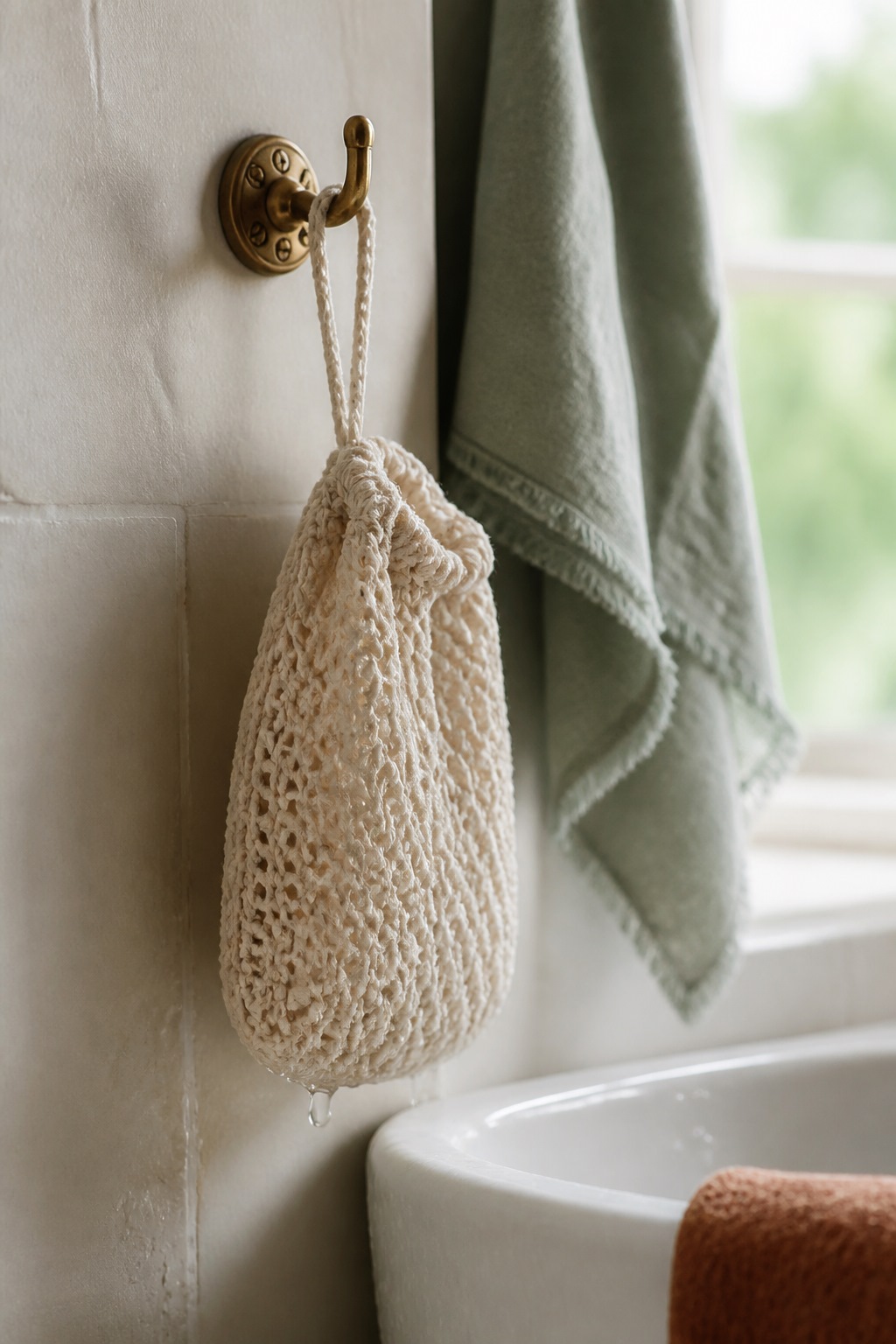
A net-like stitch (yarn-overs, drop stitch) over a sliver of soap makes a wash bag for hands. Hang it to dry. A tightly knit cotton scrubber with a bit of linen can replace a disposable pad for dishes; boil it occasionally or run a hot cycle.
Replace kitchen knits when they smell after washing. Cotton is cheap. Sentiment belongs on a baby blanket, not on a sour rag.
Gauge, needles, and finishing that does not unravel in the wash
Kitchen knits want a firm fabric. If you can see too much daylight through the dishcloth, go down a needle size. A floppy pot holder is a burn. Bind off firmly, weave ends in twice, and consider a machine stitch around a hanging loop if the piece will be yanked by wet hands.
Seams on a pocket potholder should be inside or bound so they do not catch on pan lids. A whipstitch in the same cotton is enough. Fancy grafting is wasted here.
If you use a pattern written for acrylic “dishcloth yarn,” substitute cotton at the same gauge and expect a slightly smaller, heavier cloth. That is an upgrade.
What not to knit for the sink
Wool socks logic does not apply. Anything with a pile that holds meat juice is a hygiene problem. Amigurumi fruit for the counter is décor; it is not a tool. A knit apron is possible and rarely worth the time next to a $15 canvas one. A knit trivet under a succulent is fine; call it a mat so nobody puts a roasting tin on it.
Gifts for people who do not cook: they will thank you and use a sponge. Knit them a hat. Gifts for people who cook every night: three cloths in ugly durable cotton will be used harder than one lace-edged showpiece. Knit to the household, not to the pattern photo.
Care that keeps them in rotation
Wash hot when the fiber allows. Skip fabric softener; it kills absorbency. Wash once before first use if the cotton is a cheap bright—dye can bleed onto pale stoneware. Dry until stiff. A damp cloth in a dark drawer is compost.
Keep a working set of three dishcloths so two can dry. One hero cloth is how you get mildew.
If you are gifting, include a one-line card: “Cotton. Hot wash. Do not use on open flame.” People will still try. You will have warned them.
Cast on a cloth this week with the ugliest leftover cotton you have. If it gets used by Thursday, the pattern is right. If it stays in the project bag, make a hat instead and leave the sink to the terry you already own. The kitchen does not need heirloom lace. It needs a rag that can take Tuesday’s tomatoes and Friday’s wash. If you hate cotton’s lack of drape, you are still thinking like a garment knitter. Change rooms.

Comments
Continue reading
Botanical Christmas Ornaments from Citrus, Herbs, and Dried Flowers
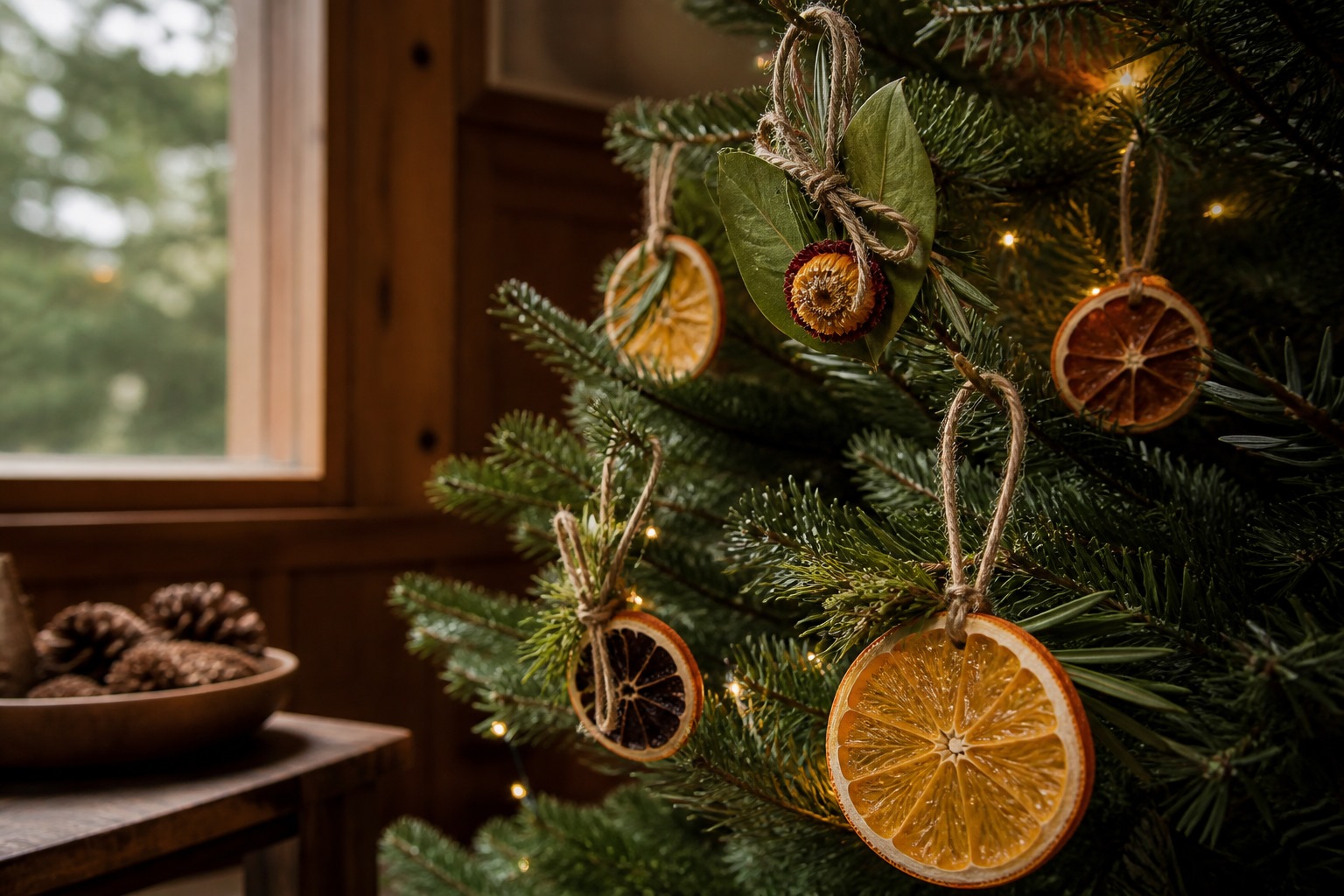
Dried orange slices, rosemary, bay, and pressed flowers as tree ornaments—how to dry, string, and store them so they last the season without going moldy.
How to Wrap Gifts Without Wrapping Paper
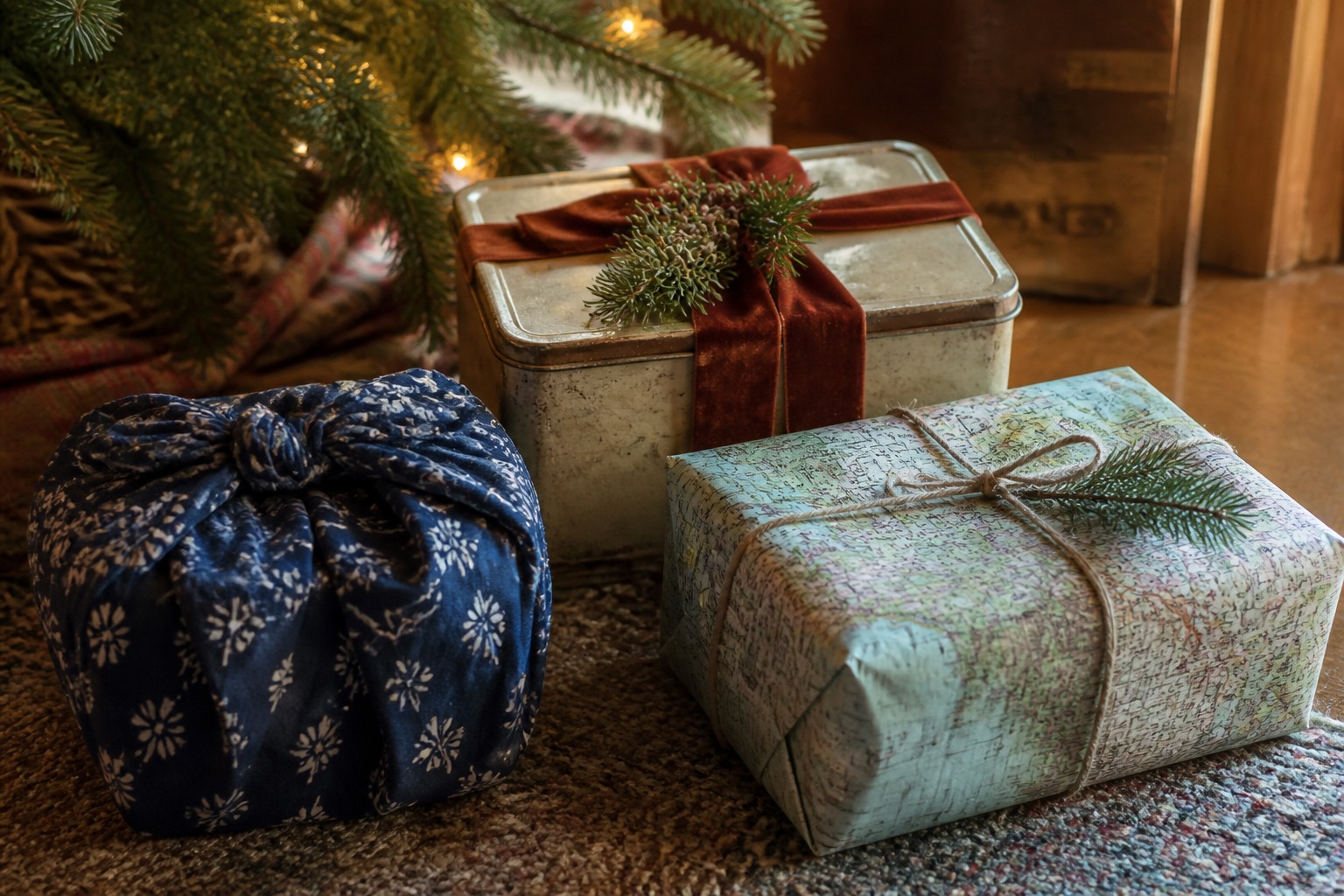
Cloth, boxes, maps, leftover textile, and ribbon-only wraps—practical no-paper methods that still look finished under a tree or on a doorstep.
DIY Ideas for Old Socks: Rugs, Puppets, Mittens, and More
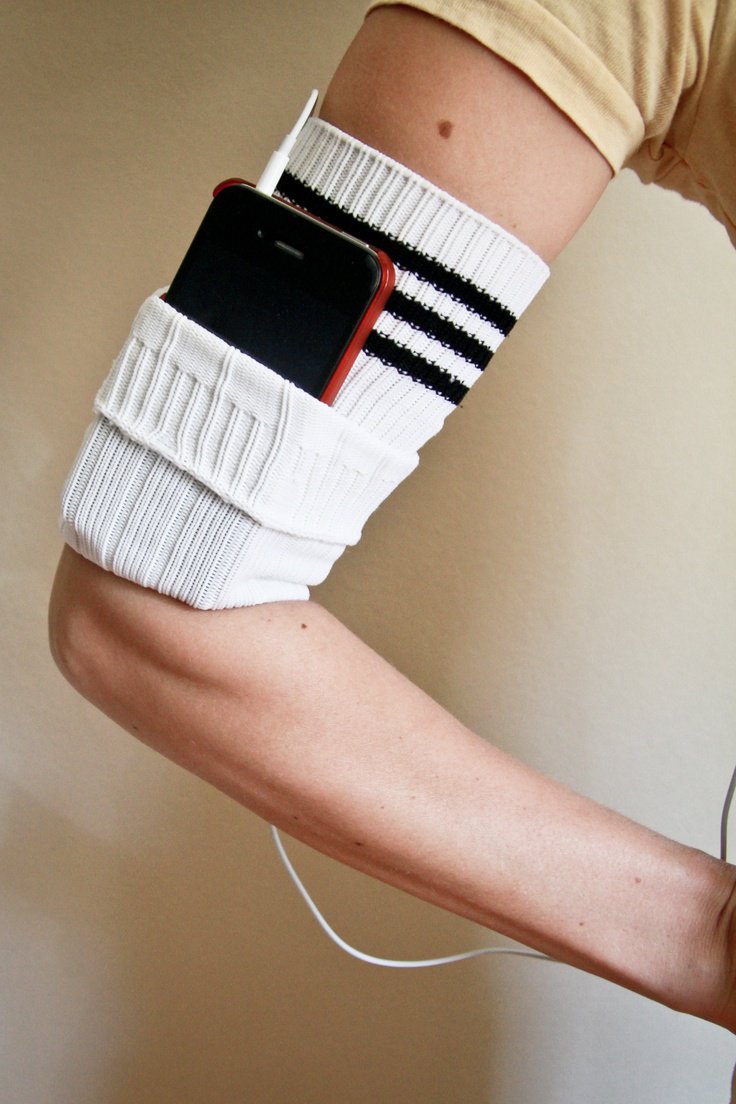
Sort leftover socks by fiber, then turn them into braided rugs, hand puppets, soft toys, mittens, and pin cushions with practical cutting and sewing tips.