
Koen Hauser's Modische Atlas der Anatomie: Fashion Portraits as Elegant Dissection
Dutch artist Koen Hauser's 2000 series Modische Atlas der Anatomie merges fashion photography with anatomical curiosity through early digital manipulation—still unsettling, still elegant.
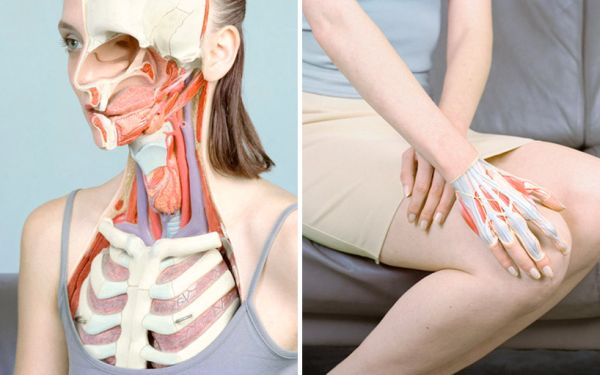
In 2000, while still a second-year art student, Dutch photographer and visual artist Koen Hauser made a series that still circulates with unusual stamina: Modische Atlas der Anatomie—often rendered in English as a modern, or fashionable, atlas of anatomy. The work sits at the crossing of two obsessions that rarely share a studio without friction: the clinical clarity of anatomical study and the seductive surface of fashion photography. Hauser did not choose between them. He forced them into the same frame until elegance and dissection became one visual sentence.
What made the series travel so far, for so long, was not only the concept. It was the timing of the craft. Early digital manipulation was still a novelty in fine-art photography when Hauser used it to stage an “elegant dissection” of the body—opening the portrait without abandoning glamour. Magazines, blogs, and later social feeds kept returning to the images because they look both dated to a specific digital moment and strangely undated in their effect: beautiful, squeamish, and hard to dismiss.
Fashion light, medical curiosity
Fashion photography trains the eye to believe in skin as finish: makeup, fabric, pose, and lighting conspire to present the body as product and fantasy. Anatomical illustration, by contrast, trains the eye to read the body as structure—muscle, vessel, cavity, the architecture under the surface. Hauser’s atlas borrows the manners of the first tradition and the subject matter of the second. Models still inhabit a fashion-adjacent space of composure and polish, yet the image refuses to stop at the epidermis.
That refusal is the series’ quiet argument. Looking at a fashion portrait usually means accepting a sealed surface. Looking at an anatomical plate usually means accepting a didactic cutaway. Modische Atlas der Anatomie asks what happens when the cutaway is styled—when interior form is lit and composed with the same care a magazine would give to a coat collar. The result is neither textbook nor campaign. It is a hybrid that feels luxurious and clinical at once.
Hauser’s own framing has been consistent over the years: the series grew from personal fascination, not from a brief to shock. Shock is available in the work, of course; viewers still describe the portraits as unsettling. But the lasting quality is composure. The figures do not scream. They hold still, as if the body’s interior were simply another wardrobe layer the camera was allowed to reveal.
Digital manipulation before it became invisible
In 2000, digital retouching and compositing were already transforming commercial images, yet they had not yet become the ambient, almost unnoticed grammar of every feed. Hauser’s “groundbreaking” use of digital tools—language he has used when describing the series—matters historically because the manipulations were meant to be seen as inventions, not erased as corrections. The viewer is invited to notice the seam between photographed beauty and constructed anatomy.
That visibility is part of the pleasure. Later decades would normalize skin smoothing, liquify tools, and generative fill until many audiences forgot to ask how an image was built. Hauser’s atlas belongs to an earlier chapter of digital photography in which the software gesture itself carried aesthetic charge. The body becomes a site of editing as much as a site of posing. Flesh, color, and interior form behave like materials that can be arranged.
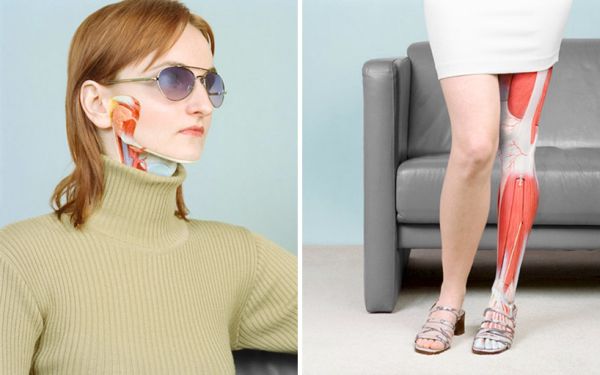
Technically, the work depends on photographic realism to sell the impossible. Shadows, highlights, and surface texture keep the fiction tethered. If the lighting failed, the anatomy would look pasted. If the anatomy looked merely illustrative, the fashion charge would collapse. The series holds because both sides of the bargain are kept: the camera’s persuasive “this was seen,” and the editor’s persuasive “this was made.”
Beauty that does not apologize for unease
Many responses to the series swing between admiration and revulsion—sometimes in the same glance. That double reaction is not a failure of taste; it is the work doing its job. Anatomical curiosity has always lived next to taboo. Historical atlases mixed scientific ambition with theatrical display. Fashion images, meanwhile, routinely aestheticize bodies while pretending the process is effortless. Hauser collapses those histories into a single contemporary portrait language.
The color and finish matter here. The interiors are not muddy or purely gore-coded; they can read as vivid, almost object-like, closer to a designed specimen than to a crime scene. That design sensibility keeps the pictures in art and editorial circulation rather than in shock-content bins. You can feel the student’s experiment and the professional’s eye at the same time: curiosity disciplined by composition.
Unease also comes from the calm of the sitters. Horror cinema often pairs bodily revelation with panic. Hauser’s portraits suggest something colder and more interesting: the body as display case. The model’s poise implies consent to being looked through, which is a different kind of intimacy than fashion’s usual invitation to be looked at. Viewers may feel complicit, fascinated, or both.
From student project to circulating classic
Hauser has noted that he made the series as a student, and that its early digital approach helped it enter popular visual culture. Since first publication it has appeared across magazines and websites; among other placements, it has been associated with contexts such as Maurizio Cattelan’s Permanent Food, a reminder that the work traveled outside pure photography niches into broader art and media ecosystems. Online, the images keep being rediscovered by new audiences who treat them as if they were made last week.
Longevity like that usually signals a clean concept executed with memorable craft. Trends in software age quickly. A strong pictorial idea ages more slowly. “Fashion portrait as anatomical atlas” is easy to summarize and hard to exhaust, which is why the same frames keep being shared with fresh captions of amazement. The series also benefits from Hauser’s wider reputation as an artist who moves between fine art, fashion, and applied photography without settling into a single product line—viewers who find the atlas often go on to find a restless, inventive career behind it.
Gallery contexts have treated individual works from the project as editioned prints, confirming that the student experiment also functions as collectible photographic art. Scale and presentation—large color prints with a formal finish—matter because the images depend on detail. A phone-sized crop can deliver the gag of exposed anatomy; a larger print delivers the slower experience of lighting, texture, and compositional balance that turns the gag into a picture.
How to look at the atlas
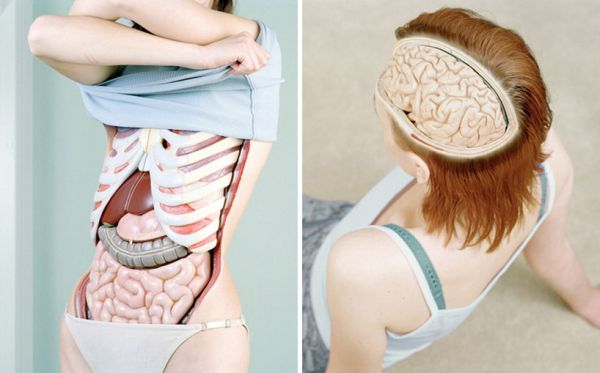
Start with the fashion cues. Where is the light coming from? How is the pose held? What would the image be if the anatomical intervention were removed? That exercise clarifies how much of the power is classical portrait craft. Then read the interior forms as design: color relationships, edges, the way opened areas relate to the silhouette. Ask whether the dissection feels violent, clinical, ornamental, or strangely tender. Different viewers will answer differently; the series can support more than one reading.
Next, consider historical echo without forcing a one-to-one citation. Anatomical theaters, wax models, medical engraving, and surreal collage all haunt the background of any “opened body” image. Hauser’s contribution is not to invent the theme but to restage it through early-2000s digital fashion photography. The pictures feel contemporary because they speak the language of the magazine page, and archaic because they revive the atlas as a mode of looking.
Finally, resist reducing the work to a software demo. Tools change. Taste for certain effects fades. What remains is the decision to treat anatomy as a fashion material and fashion as a scientific theater. That decision still has bite in an era when bodies are endlessly edited for liking and selling. Hauser’s edits are frank about artifice; they do not pretend the surface was simply born perfect. They show the making.
Why the series still matters
Digital culture is saturated with altered faces and impossible physiques, yet few images make the alteration itself into a subject with this much poise. Modische Atlas der Anatomie remains useful as a reminder that photographic beauty can include frank construction—and that the constructed can still be thoughtful rather than merely viral. For students of photography, the series is a case study in concept clarity. For general viewers, it is a set of portraits that refuse the comfort of an intact surface.
Koen Hauser’s atlas also models a productive discomfort: the sense that looking is never neutral when the body is both admired and examined. Fashion wants desire. Anatomy wants knowledge. In these frames, desire and knowledge share a lens, and neither gets the last word. That unresolved tension is why the images keep returning—across magazines, sites, and feeds—long after the software that helped make them has been replaced many times over.
If you come to the series expecting only shock, stay for the craft. If you come for the craft, notice how carefully the shock is staged. Either path leads to the same place: a student project that learned how to behave like a classic, and a Dutch artist whose early experiment still teaches viewers to look under the polish without forgetting that polish was always part of the point.

Comments
Continue reading
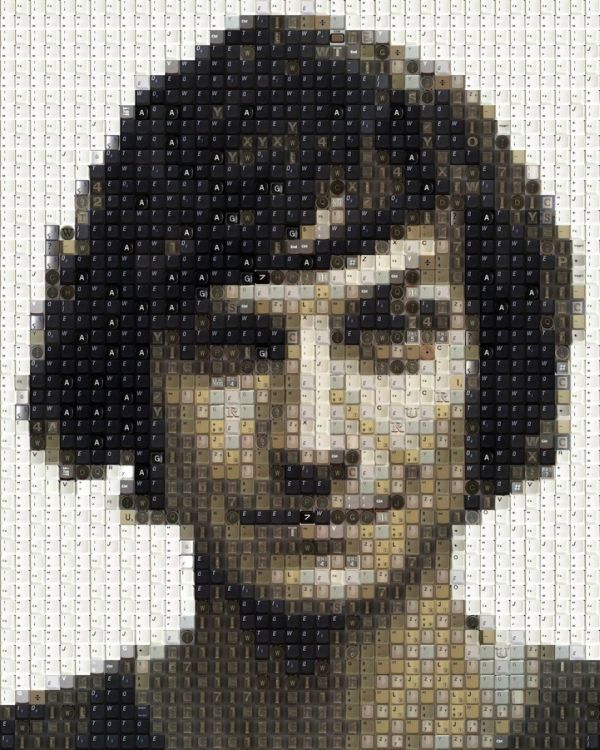
Guy Whitby’s Celebrity Portraits Made of Computer Keys
Australian artist Guy Whitby (WorkByKnight) builds meticulous celebrity mosaics from keyboard keys, calculator pads, and phone buttons—analogue-to-digital faces in tile form.

Alicia Savage’s Surreal Self-Portraits of Travel
Boston photographer Alicia Savage turns road trips into Destinations self-portraits—literal miles and metaphorical journeys layered through curiosity and post-production.
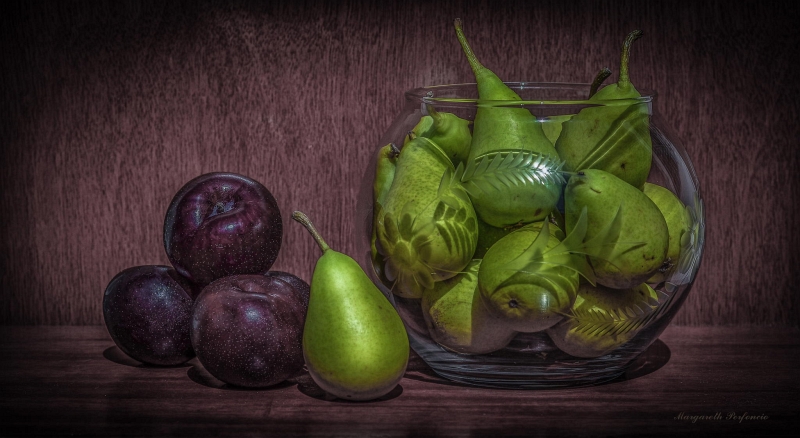
Still-Life Photography by Margareth Perfoncio
São Paulo photographer Margareth Perfoncio’s still lifes of food and flowers—Old Master light, dark wood, and tables that feel inevitable.