
Ways to Arrange Picture Frames Around the House
Gallery walls, ledges, empty frames, and practical hanging rules for displays that look collected—not cluttered.
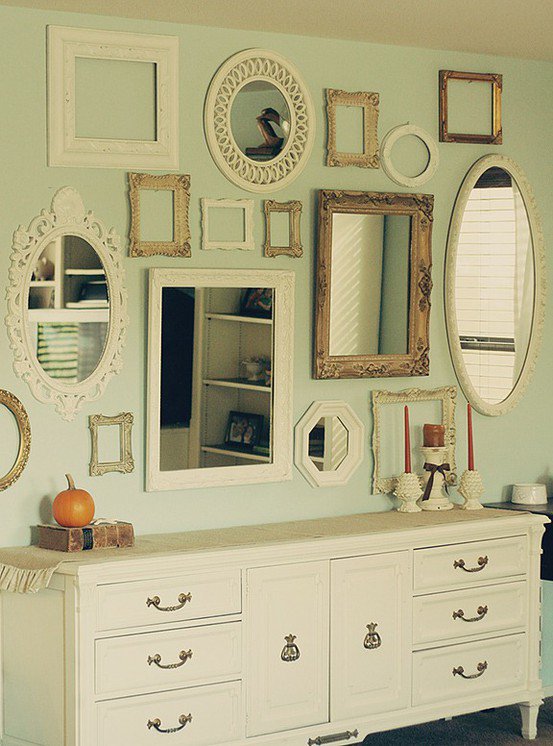
Picture frames do more than protect photos. Lined along a hallway, stacked on a mantel, or scattered across a shelf, they turn flat walls into a personal archive and give a room a finished edge. The trick is not buying more frames—it is arranging the ones you have so scale, spacing, and story feel deliberate.
You can organize frames by color, by era, by subject, or by the architecture of the wall itself. Empty frames can work as sculpture. Mixed materials can look collected rather than chaotic if you repeat one linking element. The ideas below cover gallery walls, shelves, unexpected placements, and the small rules that keep a display from looking like storage.
Decide what the wall is for
Before you hammer, decide whether the display is a single focal point or a quiet background. A living-room wall opposite the sofa often wants one strong composition—a grid, a salon cluster, or a large statement piece surrounded by smaller allies. A corridor can carry a linear sequence that people read while walking. A bedroom wall above the headboard usually needs calm spacing and softer contrast so it does not shout at night.
Gather every frame you might use on the floor first. Include candidates you almost discarded: thrift finds, mismatched woods, ornate golds, slim black metal. Seeing them together reveals whether you should unify finishes or lean into contrast. Photograph the pile; editing is easier in a phone album than with nails already in drywall.
Build a gallery wall that holds together
Classic grids—identical frames in neat rows—suit formal rooms and series of photos printed at the same size. Measure equal gaps (often two to five centimeters) and keep the outer rectangle aligned with furniture below. For a collected look, mix sizes but keep one constant: all black frames, all warm wood, all white mats, or all square formats. That constant is what stops the wall from feeling random.
Salon-style clusters start with a visual center—usually the largest or most colorful piece—then radiate outward. Lay Kraft paper templates on the floor, tape them to the wall, and live with the paper shapes for a day before driving nails. Keep the densest area at eye level for a standing adult; floating too high makes the room feel empty near the furniture.
Leave breathing room around light switches, thermostats, and door casings. A frame that kisses a molding looks accidental. If the wall is wide, consider two related clusters with intentional empty space between them rather than one stretched line that thins out in the middle.
Shelves, ledges, and leanable layers
Picture ledges and floating shelves let you change photos without patching holes every season. Lean larger frames at the back and layer smaller ones in front, overlapping slightly so the composition feels deep. Mix in a small object—a vase, a ceramic, a book stack—so the ledge is not only glass and wood. Keep the front edge clear enough that frames cannot tip when someone brushes past.
Bookshelves accept frames tucked among spines. Place a vertical frame next to a short stack of books, or lay a small frame flat on a stack facing forward. Avoid blocking titles you still want to find. In glass-front cabinets, use frames sparingly; reflections already compete for attention.
Mantels love asymmetry: one taller frame offset by a pair of smaller ones and a candle or branch. Center only if the fireplace surround is strongly symmetrical and you want a formal hotel look. Elsewhere, a slight off-center arrangement usually photographs better and feels more lived-in.
Unexpected places that reward a frame
Stairwells are natural galleries. Follow the rise of the steps with a diagonal line of frames, or keep the bottoms aligned on an invisible sloping guide. Measure from the stair nosing so heights stay consistent as you climb. Hall corners can take a single tall frame that turns the turn into a pause point.
Bathrooms and kitchens work if glass is sealed and humidity is managed. Prefer metal or plastic frames over untreated wood that swells. Keep art away from direct shower steam and from the splash zone of a sink. A small framed print above a towel hook can feel more polished than a bare wall of tile alone.
Doors and window niches sometimes hold narrow frames when wall space is scarce. Use lightweight pieces and hardware rated for the door’s motion—or skip doors that slam. Above a desk, a short row of reference photos or children’s drawings in matching frames keeps inspiration visible without covering the whole wall.
Empty frames, mats, and negative space
Empty frames hung as objects play with shadow and geometry. Cluster three ornate empties on a painted wall, or hang one oversized empty frame around a smaller filled frame for a layered look. This works best when the wall color is strong enough to read through the opening.
Mats enlarge small photos and give cheap frames a gallery feel. A wide white or cream mat calms busy images; a dark mat intensifies portraits. Keep mat widths consistent across a series even if outer frame sizes differ. Float-mounting—where the print sits with a gap inside the mat—suits textured paper and handmade prints.
Negative space is part of the design. Resist the urge to fill every centimeter. A carefully empty stretch beside a dense cluster makes both look intentional. If the room already has patterned wallpaper or bold paint, choose simpler frames and fewer pieces.
Color, subject, and storytelling
Group by theme when you want narrative: travel years on one wall, family faces on another, botanical prints in a quiet reading corner. Mixing subjects in one cluster can still work if tones agree—sepia with warm wood, black-and-white with black metal, saturated color with white frames.
Children’s art deserves the same respect as purchased prints. Use real frames, not only magnets on the fridge, and rotate pieces seasonally so the display stays fresh. Label the back with the date and the child’s age; future you will care.
Digital frames have a place on a nightstand or kitchen counter where you want a rotating album, but a wall of printed frames still reads as architecture. If you use both, keep digital devices off the main gallery wall so the room does not feel like a showroom.
Hanging hardware and safety
Match hardware to weight. Small frames can hang from a single nail or adhesive hook rated for the load; heavier glass needs two hooks or a French cleat so the piece sits level and secure. Hit studs when you can. Use wall anchors appropriate to drywall, plaster, or masonry. In earthquake-prone areas or homes with climbing toddlers, museum putty at the bottom corners reduces swing.
Align with a laser level or a taut string. A one-degree tilt is visible in photos and annoying in person. For rental walls, picture ledges and freestanding easels protect the deposit while still giving you a composed display.
A practical arrangement checklist
- Choose a job for the wall: focal point, corridor sequence, or quiet backdrop
- Unify with at least one repeated trait—finish, mat, size family, or subject
- Mock up with paper templates before nails
- Keep densest art near eye level and relate the bottom edge to furniture
- Leave gaps at moldings, switches, and door swings
- Secure heavy pieces; prefer ledges when you like to rearrange often
Start with one wall and finish it completely before opening another box of frames. A single coherent display teaches you your spacing habits faster than scattering half-finished clusters through the house. When friends walk in and their eyes settle on the story you meant to tell—not on the nail holes—you will know the arrangement is working.

Comments
Continue reading
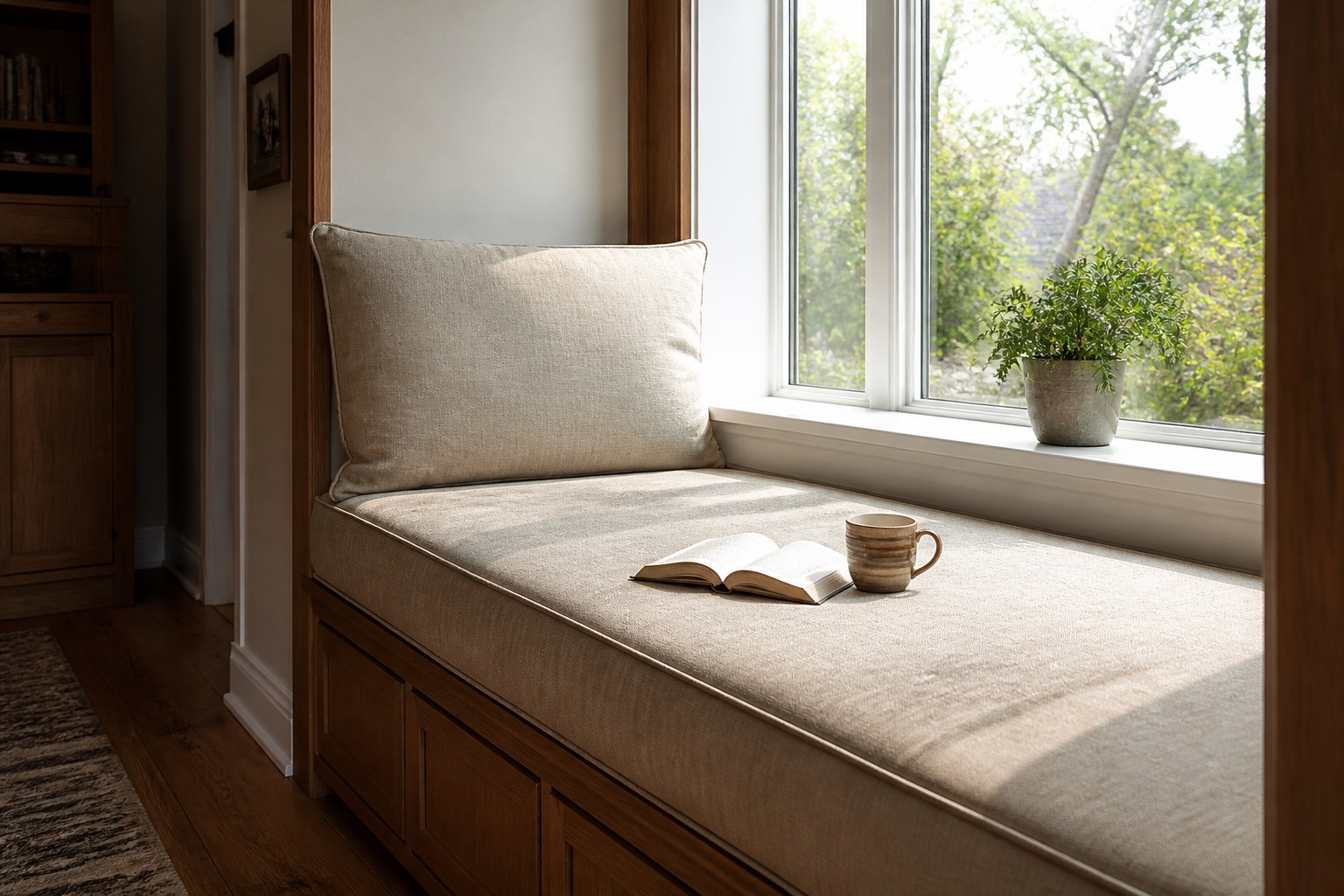
Window Seats That People Actually Sit In
Depth, cushions, storage, and light—how to build or dress a window seat so it becomes a reading spot instead of a dumping ground for laundry.

Garden Decoration Beyond Beds: Lace, Mosaiculture, and Upcycled Yard Art
From dressed topiary and floral cyclists to license-plate dragonflies and lace between trees—garden decorations that give a yard a voice.
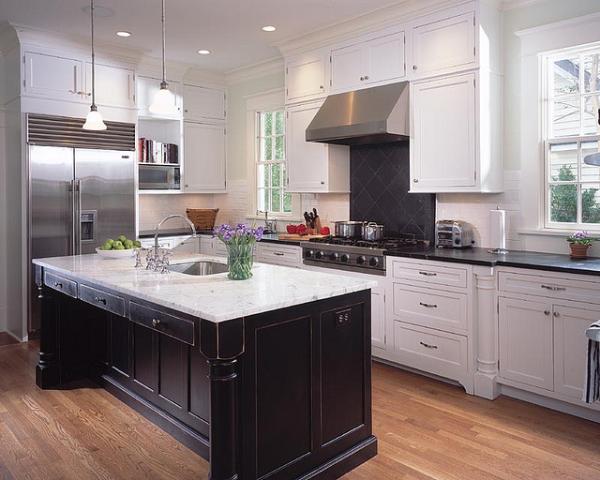
Kitchen Design Ideas: Layout, Storage, Light, and Finishes That Work
Practical kitchen design ideas—work zones, cabinetry, lighting, and durable finishes—so inspiration translates into rooms that cook and gather well.