
Laundry Room Design Ideas That Make Wash Day Easier
Layout, storage, light, and finishes for laundry rooms—from stacked closets to mudroom combos—with practical cues drawn from real room photos.
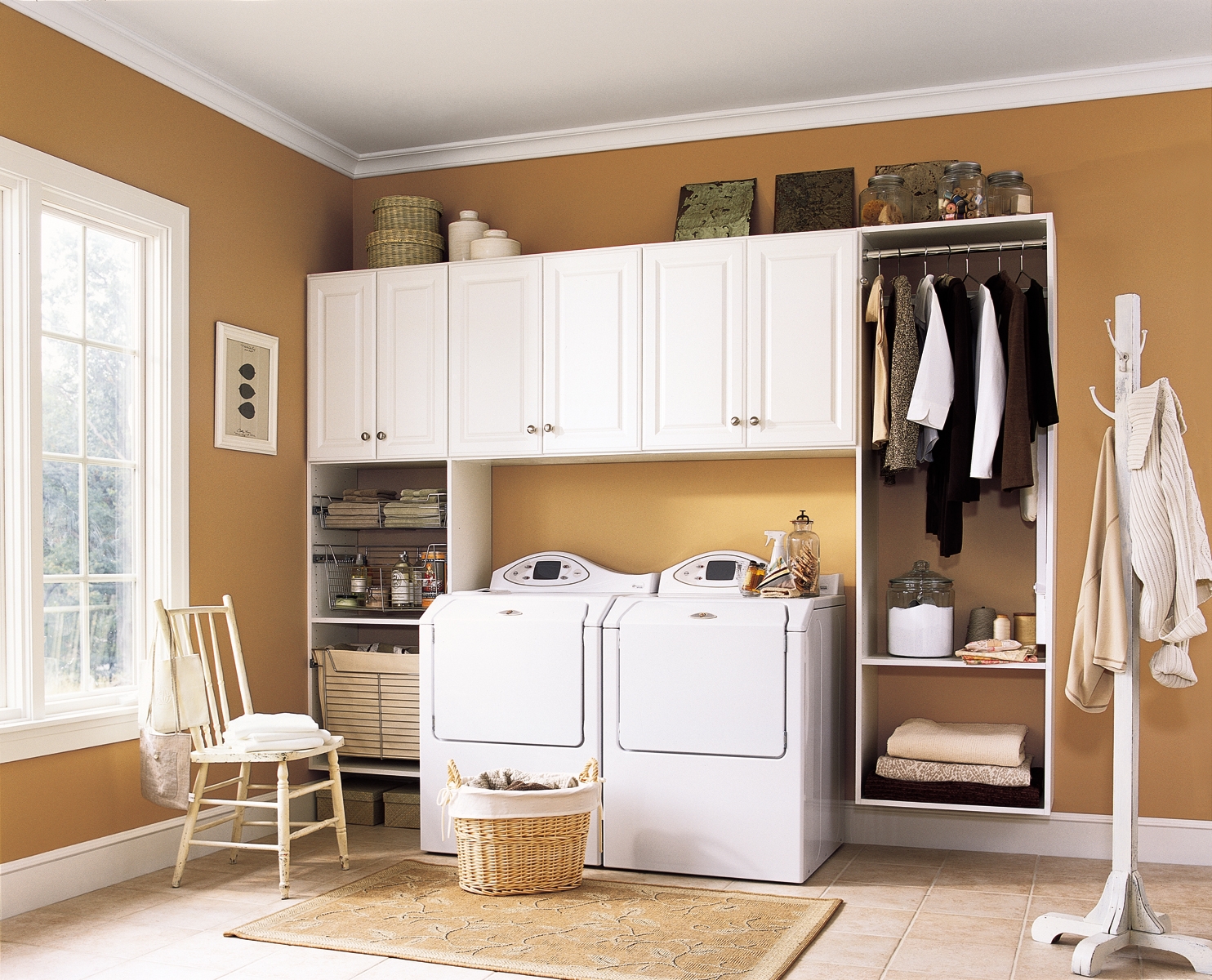
A laundry room does more work than almost any other space in the house, yet it often gets the leftovers of the budget and the least design attention. That is a missed chance. When the room is planned with the same care as a kitchen—zones, surfaces, light, storage—the weekly cycle of wash, dry, fold, and put away stops feeling like a chore performed in a closet and starts feeling like a short, efficient routine.
The ideas below are practical more than fashionable. Styles change; the need for a place to hang wet shirts, store detergent where kids cannot tip it, and keep clean clothes off the floor does not. Use the photos as prompts for layout and finish choices, then adapt them to your square footage and whether you are renovating a basement alcove, a mudroom combo, or a dedicated utility room.
Start with the work triangle you actually use
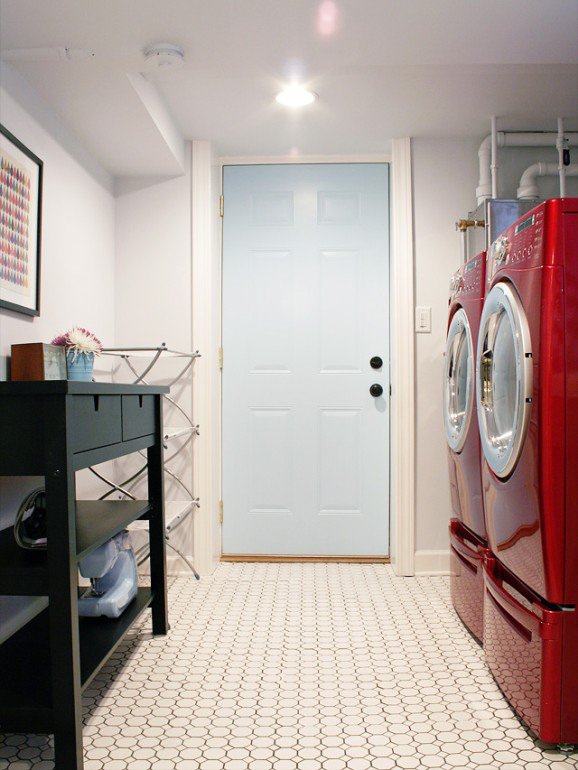
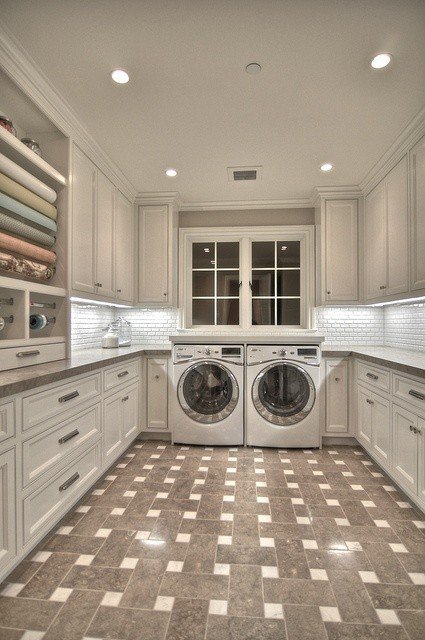
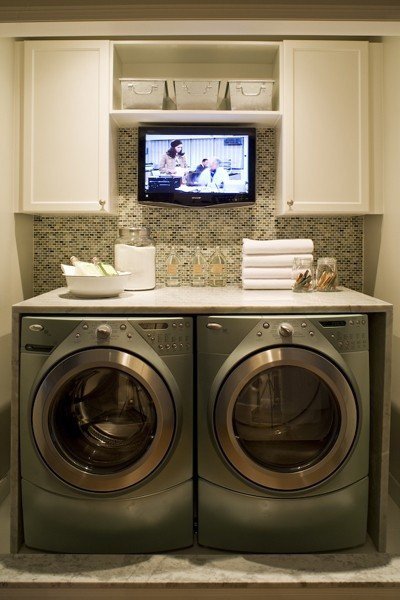
Kitchen designers talk about sink–stove–fridge triangles. Laundry has its own: sort → wash → dry → fold → hang or store. Walk that path in your current room. If you have to backtrack across wet floors with a basket of clean clothes, the layout is fighting you. Side-by-side machines with a counter above a front-loading pair, or a stacking pair with a tall cabinet beside them, usually win because the next step is only a half-turn away.
Leave clearance for doors and for you. Front loaders need space to open fully; top loaders need overhead clearance if you mount cabinets. A folding surface does not have to be a full island—a deep counter spanning the machines, a pull-out shelf, or a narrow wall-mounted table that drops down when needed can be enough.
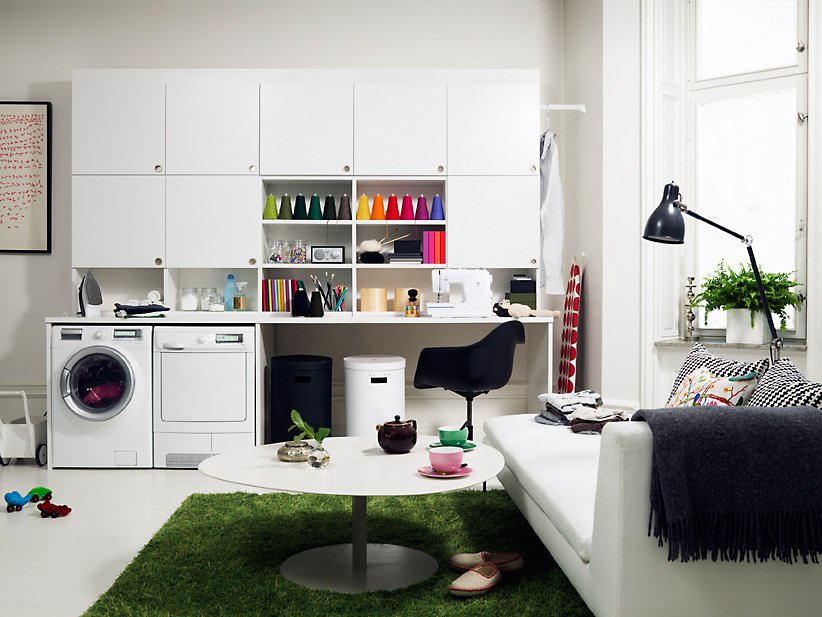
Cabinetry turns a utility corner into a room
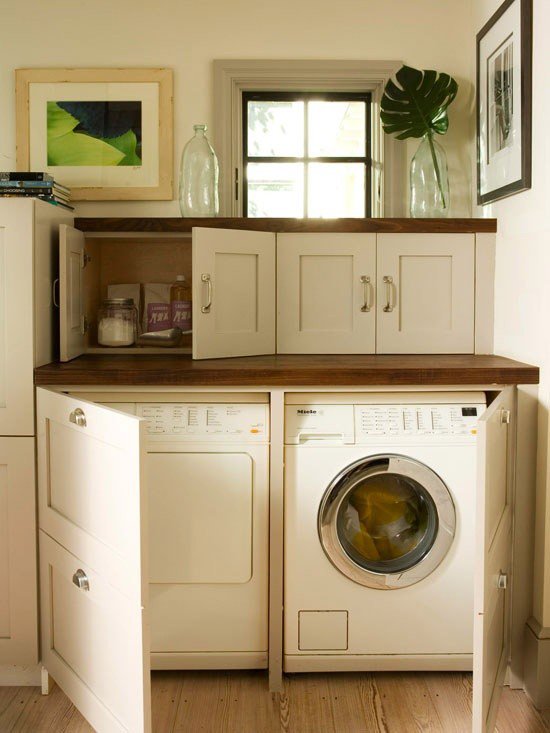
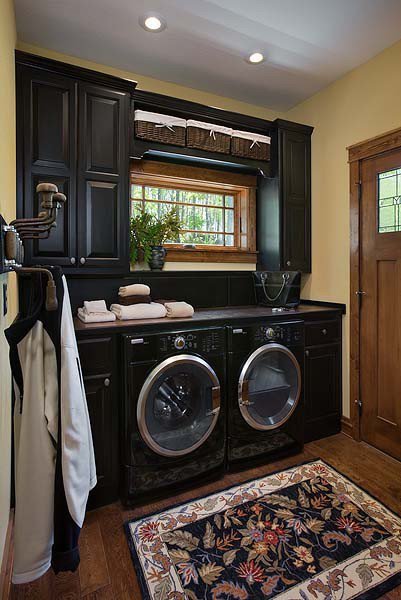
Open shelves look airy in photos and collect dust and bottle clutter in real life. Closed upper cabinets keep detergent, stain removers, and spare bulbs out of sight while still within reach. Lower cabinets or deep drawers hide baskets, spare towels, and pet supplies. If budget is tight, paint existing stock cabinets a calm color and add soft-close hardware; the visual upgrade is larger than the spend.
Think in categories when you assign storage: daily use at waist height, bulk refills higher or lower, hazardous products locked or latched if children use the space. A shallow tray on a counter for today’s pocket change and dryer sheets beats scattering those items across the machines.
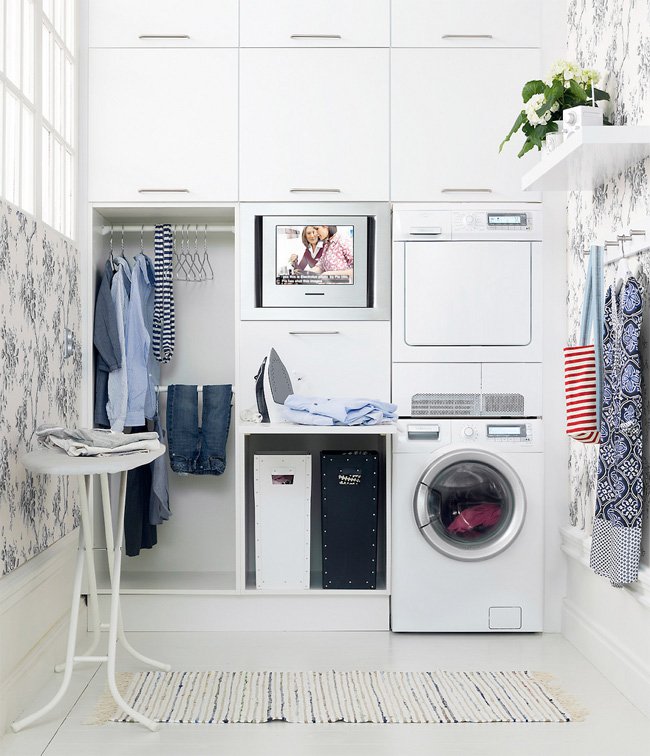
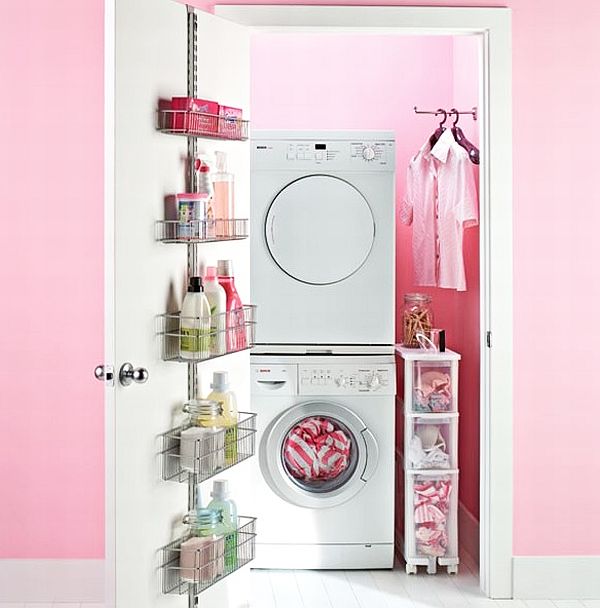
Vertical space is free square footage
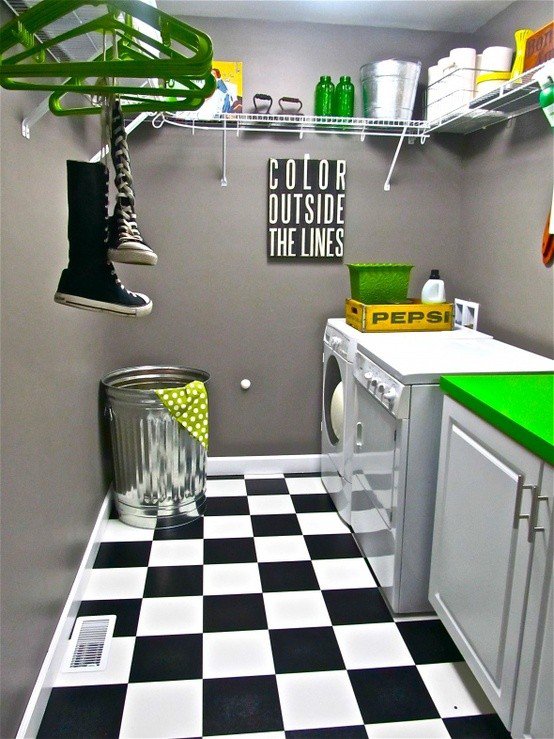
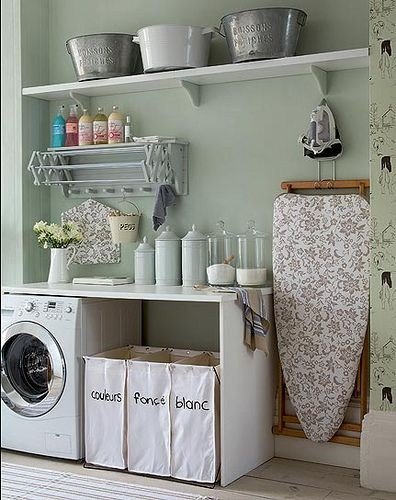
Many laundry rooms are tall and narrow. That is an advantage. Floor-to-ceiling storage, hanging rods for air-drying, and wall-mounted drying racks reclaim inches that a floor drying rack would steal. A rod above the machines or beside a window lets sweaters and delicates drip without claiming the hallway.
Pegboards and rail systems work if you like to rearrange hooks for brushes, lint rollers, and small tools. Keep the wall behind the sink or utility faucet wipeable—tile, sealed paint, or a backsplash panel—so splash marks do not become permanent décor.
Light, color, and finishes that survive humidity
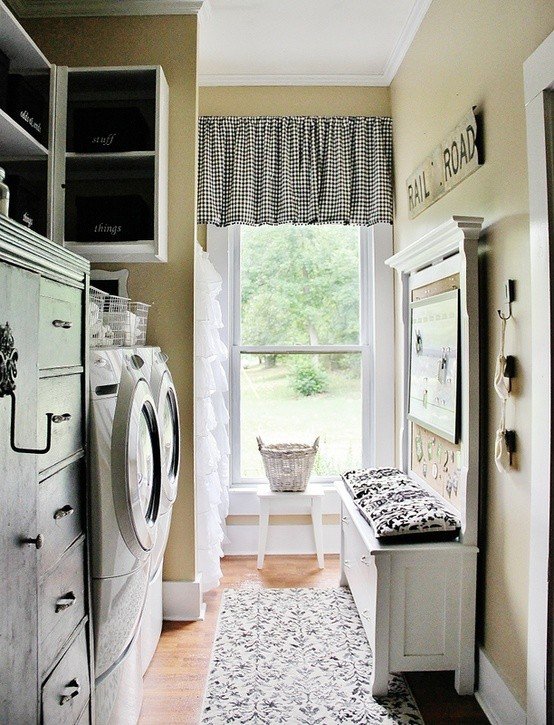
Utility rooms are often windowless. Layer light: a bright ceiling fixture for task work, under-cabinet strips for the counter, and a soft secondary light if you fold late at night. Warm white bulbs make the space feel less like a basement; cool white can help with color-matching stains and whites. If you have a window, keep treatments simple—blinds or a shade that rolls up fully—so daylight does the heavy lifting.
Paint and flooring matter more here than in a guest bedroom. Choose finishes that tolerate moisture and the occasional bleach splash. Mid-tone floors hide lint better than pure white; patterned tile or resilient flooring with a slight texture improves grip when the floor is damp. Countertops should be sealed and easy to wipe—laminate, quartz, or sealed stone all work if they meet your budget.
Color can be quiet or bold. Soft greens, blues, and warm neutrals photograph well and calm a task-oriented room. A single accent wall or colorful cabinet fronts can make a small space feel intentional without turning it into a showroom that is hard to maintain. Patterned wallpaper works if the paper or vinyl is washable and the room has decent ventilation.
Sorting, sinks, and the “dirty zone”
Give dirty laundry a home before it reaches the machines. Three labeled hampers—lights, darks, delicates—or pull-out bins under a counter keep piles from migrating into living areas. A deep utility sink is a luxury that pays for itself when you rinse mud, soak whites, or wash pets. If a sink is not possible, a large basin stored nearby and a nearby faucet still help.
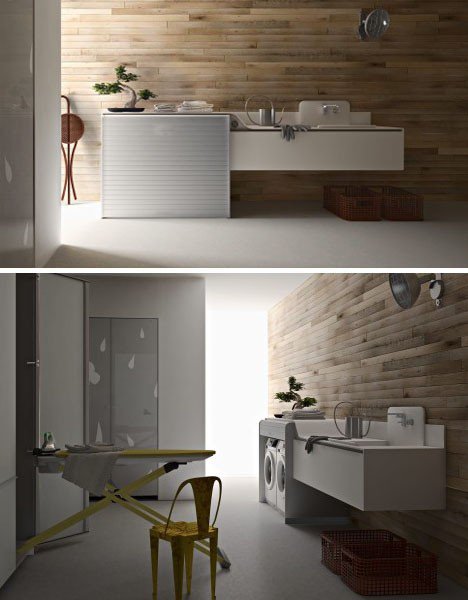
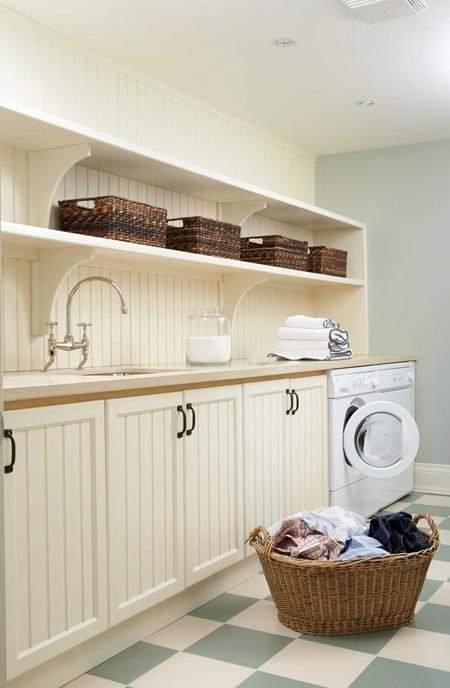
Keep a small caddy of stain treatment near the sink, not buried in a cabinet. The faster you treat a spot, the less heroic the wash cycle needs to be. A wall calendar or simple chalkboard for “who owns this sock” is optional humor; a lint bin and a trash can are not optional.
Small rooms and shared mudrooms
When laundry shares space with coats and shoes, draw a hard line between wet outerwear and clean textiles. A bench with shoe storage on the entry side and a closed laundry cabinet on the machine side prevents muddy boots from leaning on folded towels. Sliding barn doors or pocket doors save swing space that a swinging door would waste in a tight hallway.
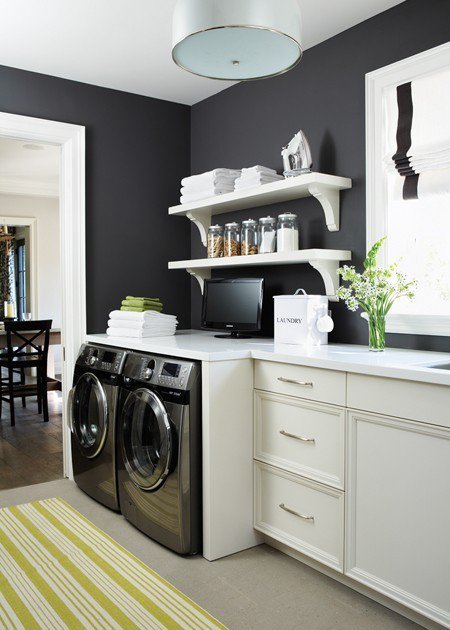
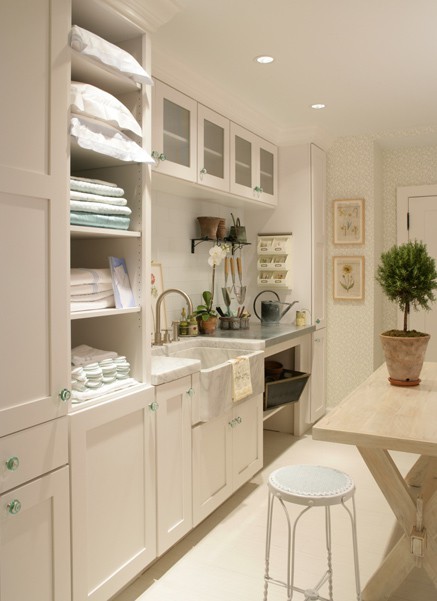
In closets converted to laundry, stacking machines and a bi-fold or pocket door often beat forcing side-by-side units into a space that cannot open both doors at once. Measure hose and vent paths before you buy appliances; the prettiest cabinet run fails if the dryer cannot vent safely or the washer cannot drain.
Details that make folding less miserable
A counter at roughly kitchen-island height reduces back strain. A shelf for folded stacks labeled by person or room speeds put-away. A ironing board that folds into a shallow cabinet, or a tabletop press stored upright, keeps the floor clear. If you sew or mend, a small drawer for needles, spare buttons, and a seam ripper turns “I’ll fix it later” into a two-minute pause between cycles.
Ventilation is the unglamorous hero. A humidity-aware exhaust fan, a cracked door during dryer cycles when safe, and clean dryer vents reduce moisture damage and fire risk. Schedule lint-filter cleaning as part of every load, not an annual surprise.
A short planning checklist
- Map the sort–wash–dry–fold path and remove dead ends.
- Decide stacked vs side-by-side based on door swings and counter goals.
- Prioritize closed storage for bottles and bulk supplies.
- Add a real folding surface and at least one hanging rod.
- Choose moisture-tolerant flooring, paint, and lighting layers.
- Plan venting, drainage, and GFCI outlets before finishing cabinets.
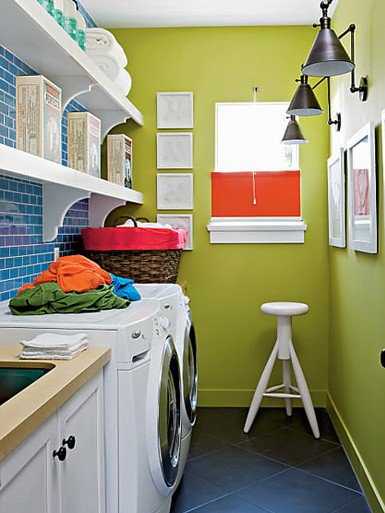
Pick one friction point from your last laundry day—nowhere to fold, nowhere to hang, nowhere to put the basket—and fix that first. One well-placed counter or rod often improves the room more than a full aesthetic overhaul. The photos here show many finished moods; the checklist keeps the remodel honest about how you actually work in the space.

Comments
Continue reading

13 Outdoor Pergola Design Ideas for Backyards, Patios, and Gardens
Thirteen outdoor pergola ideas—from vine-covered walkways and poolside shade to modern dark frames and dining pavilions—to help you plan a backyard structure that fits your home.

Fabulous Fireplace Ideas: Modern, Classic & Rustic Hearths
From flush modern surrounds to classic mantels and textured stone, fireplace ideas that help you choose materials, proportion, and styling for your home.
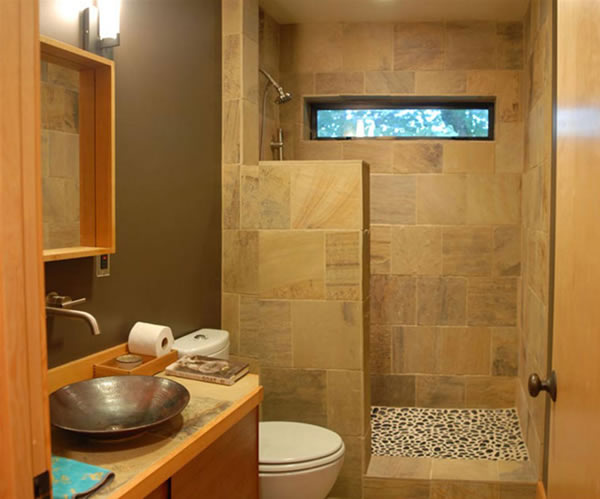
15 Small Bathroom Design Ideas That Make Compact Spaces Feel Larger
Fifteen compact bathroom layouts—floating fixtures, glass showers, continuous tile, and daylight tricks—that stretch a small footprint without looking sparse.