
Functional Attic Office Designs That Actually Work
Turn a quiet top floor into a real workspace—design criteria for light, layout, and storage, plus when structural and safety work needs a pro.
Attics spend years as anonymous storage—holiday boxes, outgrown clothes, and things nobody quite wants to throw away. Some households reclaim that volume as a bedroom or bath. Another strong option is a home office: the highest floor is naturally quieter than the rest of the house, and with the right layout a sloped roof can feel intentional instead of leftover.
The spaces below succeed because furniture, light, and storage respect the architecture. Before you copy a look from a photo, separate design choices you can make yourself from structural and safety work that needs a licensed professional.
Design criteria for a usable attic office
Pretty photos hide hard constraints. Score your attic against these criteria before you buy a desk:
- Headroom where you stand and sit. Place the primary work surface under the highest part of the roof or beside a dormer. Kneeling height is fine for archives; it is not fine for eight hours of typing.
- Daylight without glare. Skylights and roof windows make attic offices feel larger. Orient the screen so bright sky sits beside or behind you, not reflecting straight into the display during video calls.
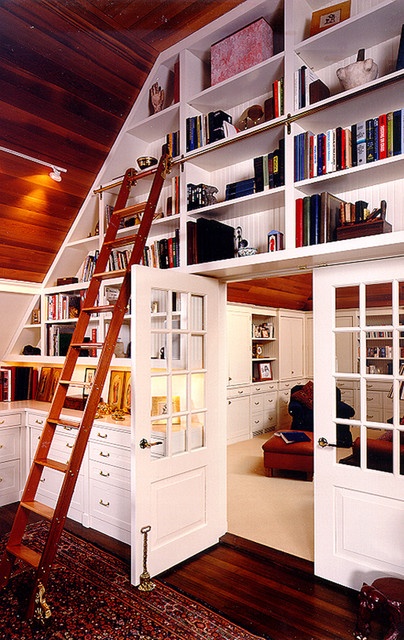
- Built-ins that follow the slope. Custom or modular desks, drawers, and shelves that hug the rake waste less floor than freestanding pieces that leave awkward triangles unused.
- Storage for the attic’s old job. Keep a shallow closet or low cabinets for seasonal items so the office does not become cluttered again within a month.
- Climate you can work in. Attics run hot in summer and cold in winter. Plan insulation, ventilation, and a heat source before you fall in love with a chair online.
- Quiet power and data. Add outlets where the desk will live, and run Ethernet or a strong Wi-Fi access point if roof framing weakens the signal.
- A path that feels like a room. Stairs should land in a clear zone, not into the back of your chair. Leave room for the chair to roll and for someone to walk past with a coffee cup.
If two or more of those fail, fix the building first. Paint and rugs will not solve a sixty-degree afternoon under black shingles.
Layouts that suit the roof
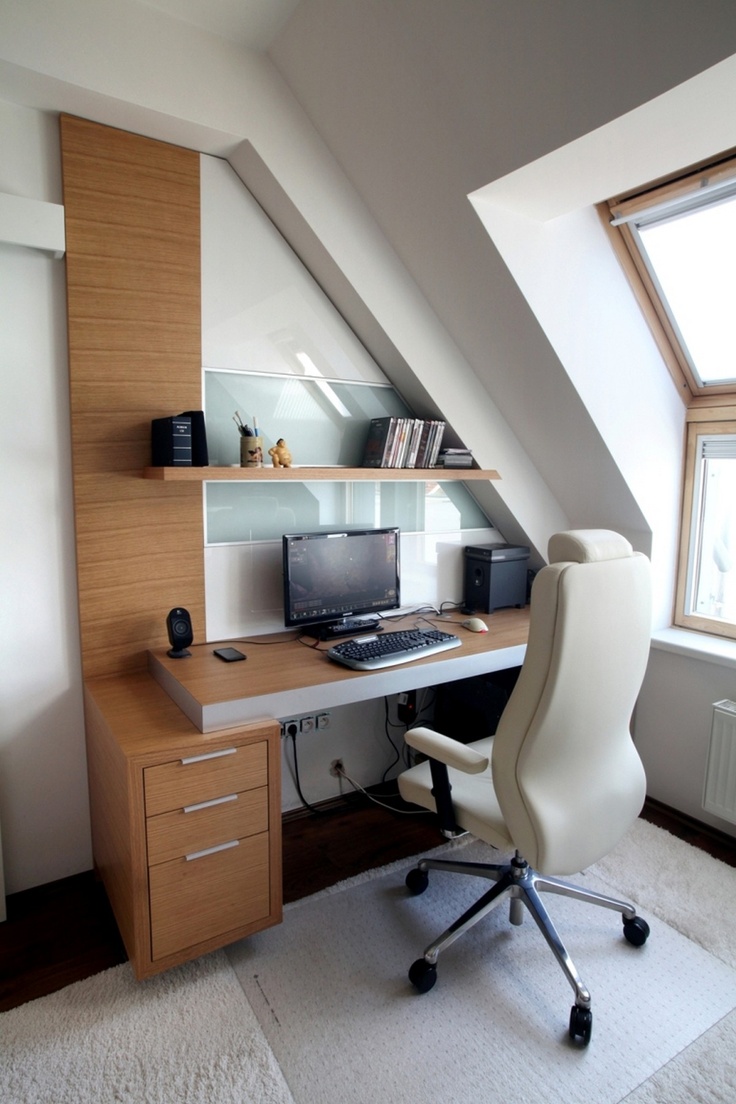
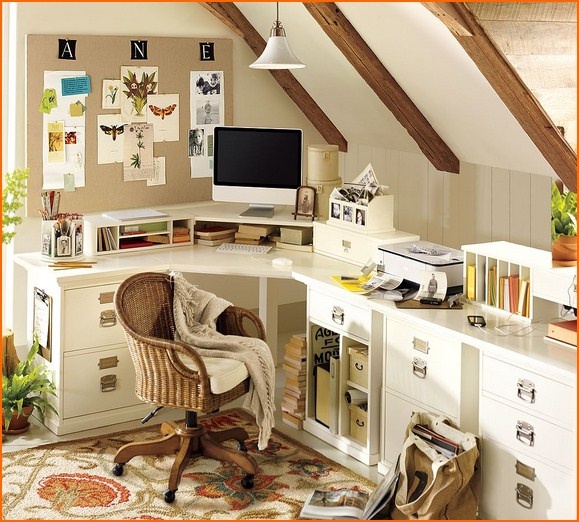
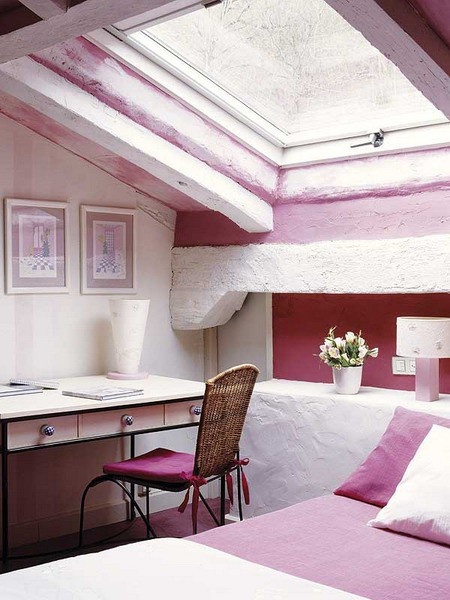
A desk fitted into the corner under a skylight uses the brightest wall and keeps the tall center of the room open for standing and stretching. Light wood, white walls, and a pale rug push the ceiling visually upward. A single floating shelf above the work surface holds references without blocking the window. Cable outlets belong on the desk wall so power bricks are not stranded in the middle of the floor.
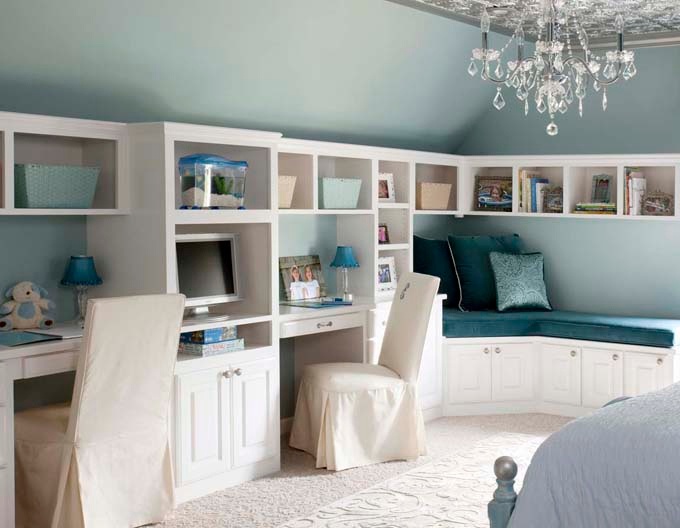
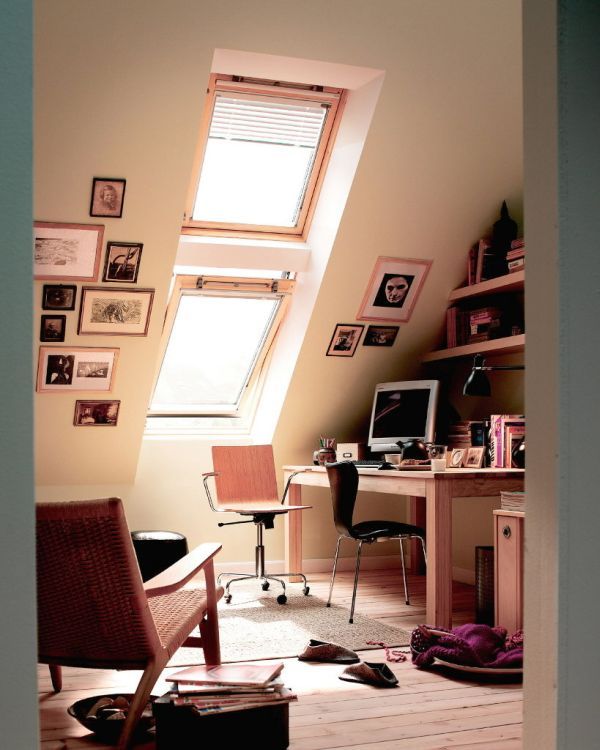
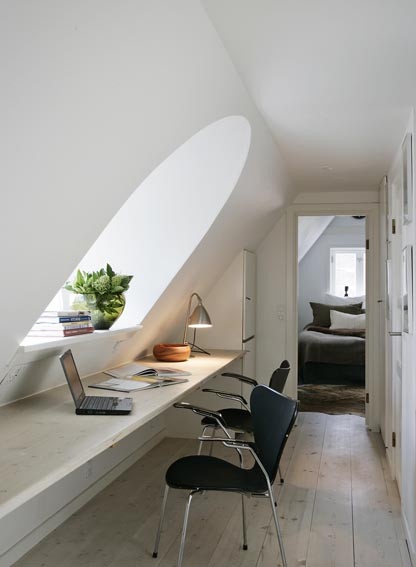
Long, narrow attics often work better with the desk along one eave and a seating or printer zone under the ridge. If both long walls are low, float the desk in the center on the high axis and use the sides for file drawers and closed cabinets. Measure the chair’s recline and roll radius with tape on the floor before you commit—attic geometry punishes optimistic sketches.
Furniture and storage that earn their footprint
Choose a chair with real lumbar support and a base that fits under the desk without hitting the knee wall. A clear chair mat protects carpet and makes rolling easier on thick rugs. Prefer closed storage for cables, paper, and supplies; open shelves look calm only when you edit them often. Built-in drawer pedestals under a continuous desktop keep the visual line clean and give you somewhere to hide the printer paper.
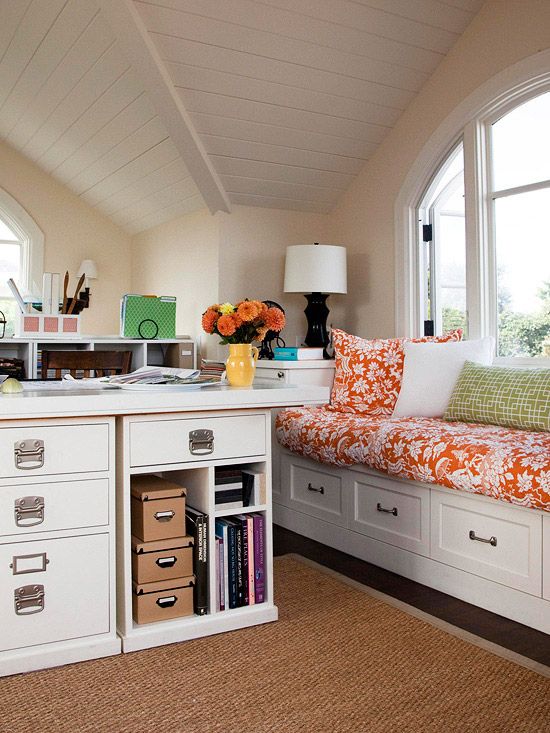
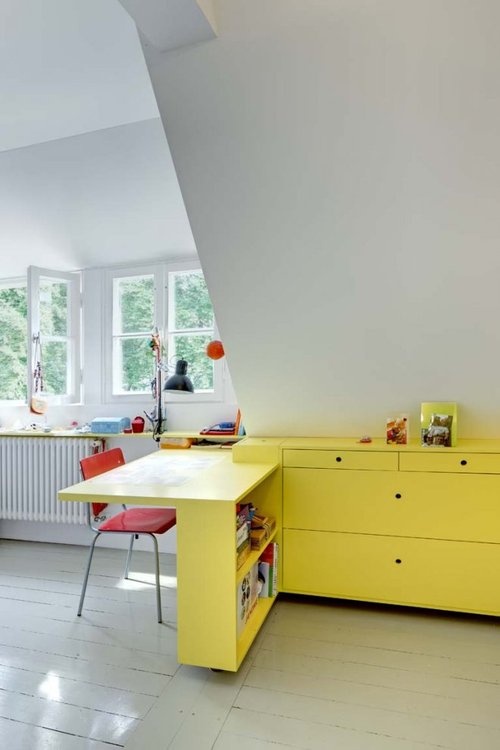
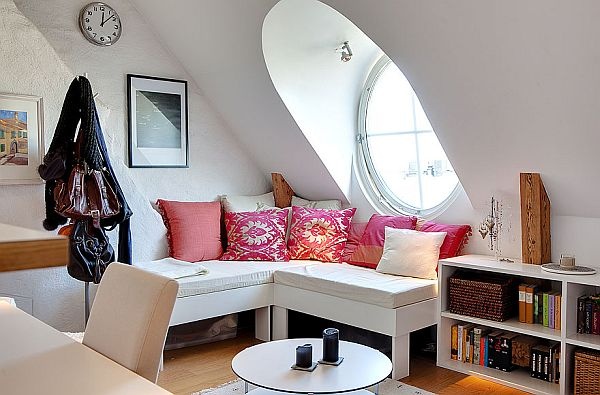
Low bookcases under the slope turn dead volume into a library wall. Tall bookcases belong only where the ceiling allows you to stand and reach safely—never force a tall unit into a crouch zone where a falling binder becomes a headache in more ways than one. If you need archive depth, use pull-out file drawers rather than stacking boxes in the darkest eave where you will forget them.
Light, color, and atmosphere
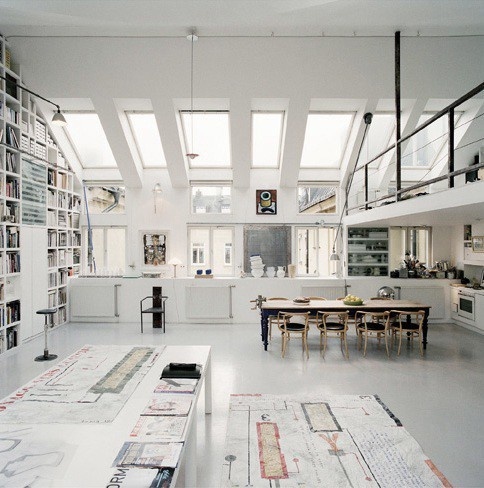
White and pale wood bounce daylight from roof windows. If the space feels stark, warm it with a wood desktop, a soft rug, and one or two lamps for evening work. Task lighting matters: a skylight is wonderful at noon and useless after sunset. Aim a desk lamp at the work surface, not into the camera for video calls.
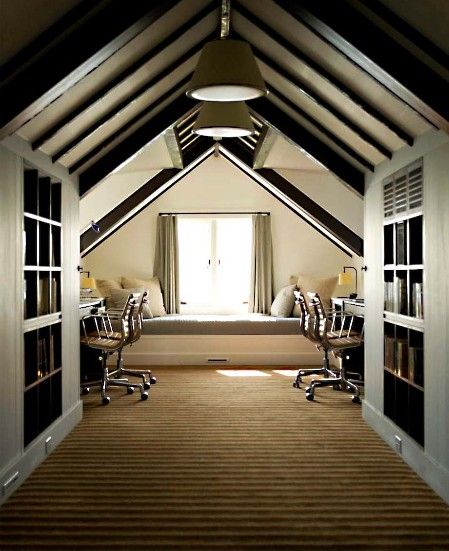
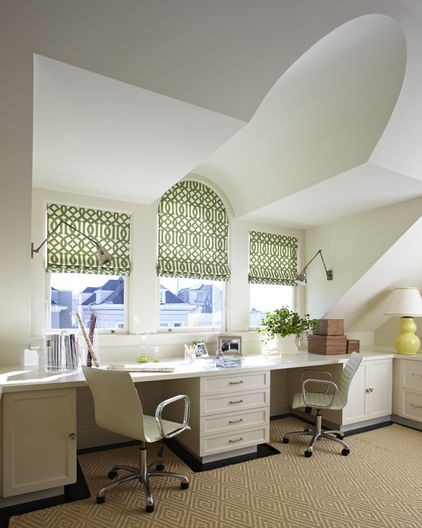
Darker schemes can work in tall, well-windowed attics, but they need strong artificial light and careful cable management so the space does not feel like a cave. Keep window coverings simple—blackout shades for midday glare or privacy, sheer layers if you want glow without full exposure. A small plant that tolerates bright, shifting light softens the architecture without stealing desk space.
When to call a professional (structural and safety)
Decorating and arranging furniture are DIY-friendly. Changing how the attic carries load, exits, or air is not a weekend guess. Bring in a licensed contractor, structural engineer, electrician, or HVAC pro when any of the following apply:
- Floor feels soft, bouncy, or uneven under walking loads—joists may need evaluation before desks, bookcases, and filing cabinets add concentrated weight.
- You plan to add dormers, enlarge openings, or remove rafters or collar ties—roof framing is structural; cutting members without a design can weaken the house.
- Stairs are steep, narrow, or missing a proper guard—egress and fall safety may need code-compliant rebuilding, not a coat of paint on the existing stringers.
- You need new electrical circuits, recessed lights in the roof plane, or HVAC supply—attic wiring and insulation interact; improper work is a fire and moisture risk.
- You see stains, soft wood, mold, or active leaks—fix the roof and flashing before finishing walls and buying furniture.
- Headroom or window sizes must meet local code for a legal office or habitable room—rules vary by jurisdiction; a designer or permit office can confirm before you invest.
- Insulation and vapor control are missing or patchy—comfort, condensation, and ice-dam risk often need a building-science approach, not a space heater alone.
A short consult before demolition is cheaper than rebuilding a ceiling you opened the wrong way. If your municipality requires permits for changing use or adding living space, treat that paperwork as part of the design process, not an afterthought.
A practical order of work
- Confirm the floor and roof can support an office; repair leaks first.
- Plan insulation, ventilation, and heat or cooling.
- Rough in power, lighting, and data at the future desk wall.
- Finish surfaces in light, cleanable materials.
- Install built-ins or place furniture using a headroom map you sketched with real measurements.
- Add task lamps, cable routes, and only the storage you will actually refill.
Map the ceiling height every two feet along the floor—mark “stand,” “sit,” and “crawl/storage” zones with painter’s tape. That one afternoon prevents the classic mistake of centering a beautiful desk where you cannot stand up behind the chair.
If you take one idea from the gallery, make it this: put the work surface where the ceiling and the light are generous, and let the low edges become drawers and archives. The attic stops being a forgotten floor and starts earning its keep as the quietest office in the house—provided the structure, egress, and climate pieces are handled by people who know how roofs and floors behave.

Comments
Continue reading
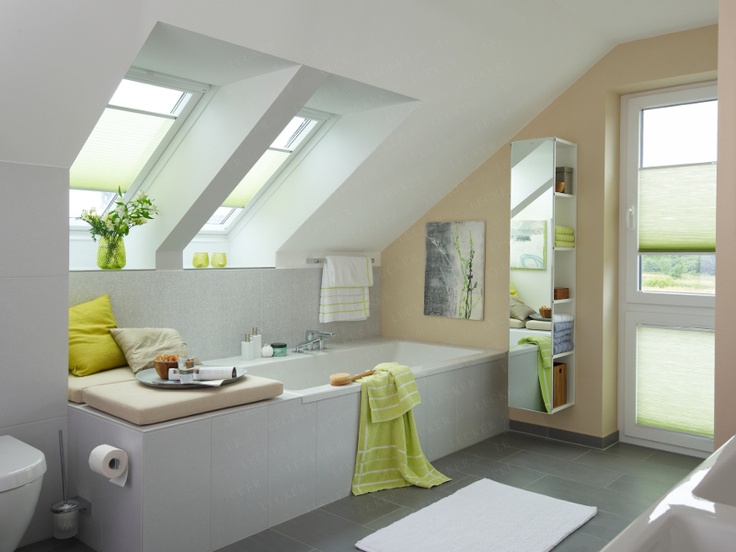
Attic Bathroom Design Ideas: Light, Layout, and Roof-Friendly Fixtures
Design ideas for converting an attic into an extra bathroom—working with slopes, skylights, wet-zone materials, eaves storage, and fixture placement.
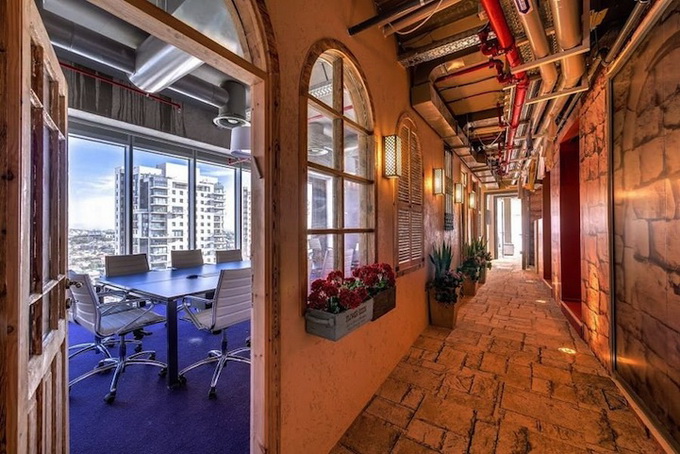
Google’s Tel Aviv Offices: Workspace Design in Electra Tower
A period design reading of Google’s late-2012 Tel Aviv workplace by Camenzind Evolution with Setter Architects and Studio Yaron Tal—themes, collaboration landscapes, and the photo record.
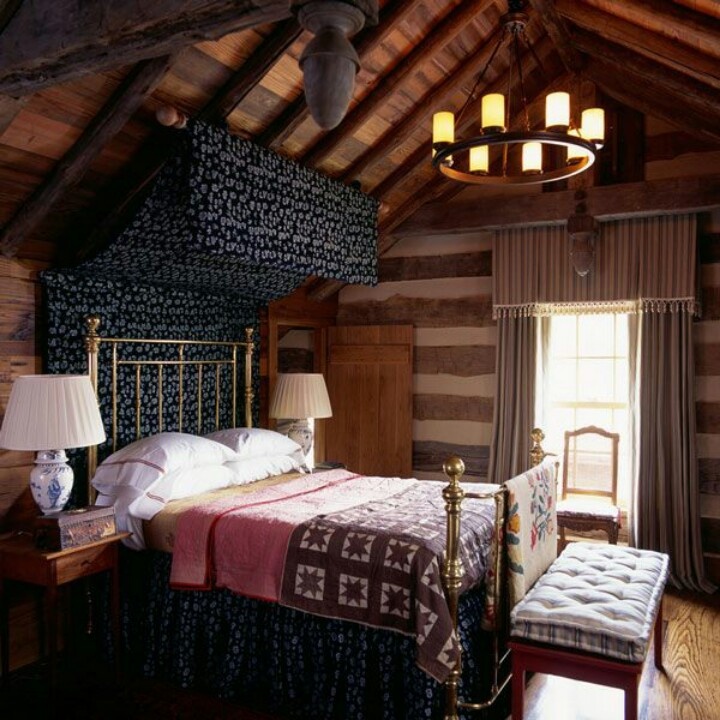
Attic Bedroom Design Ideas: Light, Layout, and Cozy Roof-Space Living
How to turn an attic into a private bedroom—head-height mapping, skylights, eaves storage, comfort details, and layouts for couples, kids, and guests.