
Stunning Female Celebrity Photos: A Craft Gallery
A period-aware gallery essay on staged celebrity portraiture—light schools, wardrobe quotation, and designed intimacy from the supermodel era into the early 2000s.
These photographs were never meant to behave like gossip. They belong to the long craft tradition of staged celebrity portraiture—the kind built in studios, on location sets, and in editorial rooms where light, wardrobe, and pose are negotiated before a shutter ever fires. Collected here as a gallery first published in 2012, the images read less like a ranking of fame and more like a short course in how public faces were sculpted for magazines, calendars, and campaign books from the late twentieth century into the early digital decade.
What holds the set together is not a single photographer’s signature but a shared vocabulary: high-contrast black and white, deliberate props, shallow depth of field, and styling that borrows freely from mid-century glamour while remaining unmistakably of its own moment. Look for craft before biography. Ask what the light is doing, what the costume is quoting, and how stillness is being performed.
Color as climate, black and white as architecture
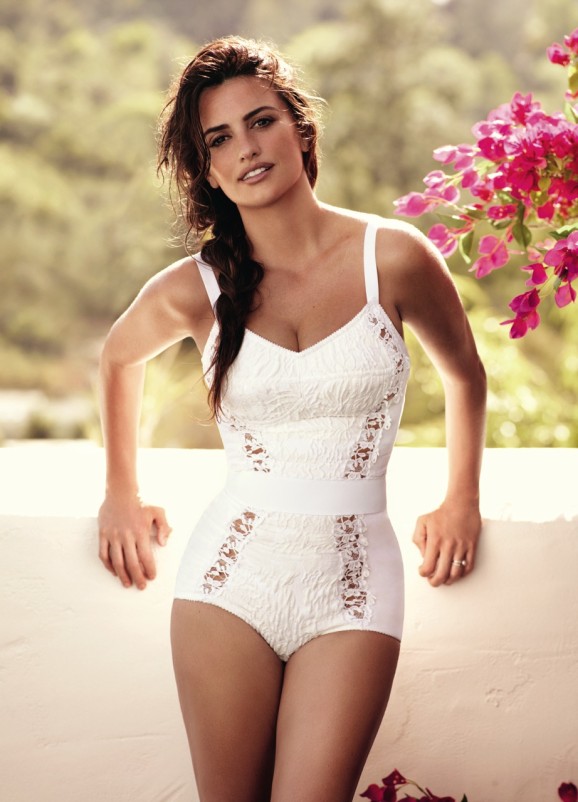
The opening frame works through climate rather than celebrity trivia. Warm late-day light, a white plaster ledge, and magenta bougainvillea set a Mediterranean temperature. The swimsuit’s high waist, lace-up side panels, and floral texture deliberately quote mid-century resort glamour, yet the photograph’s saturation and softness belong to contemporary fashion editorial practice. Color here is atmosphere: it tells you the temperature of the fantasy before you register who is standing in it.
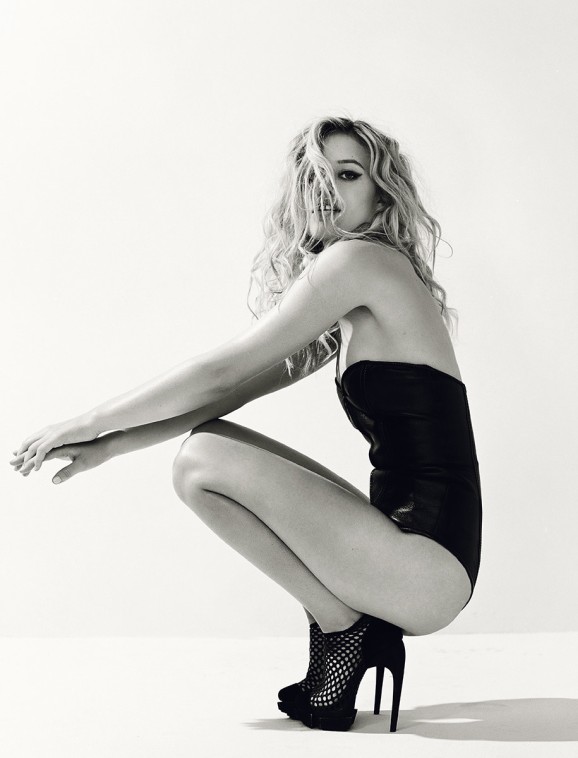
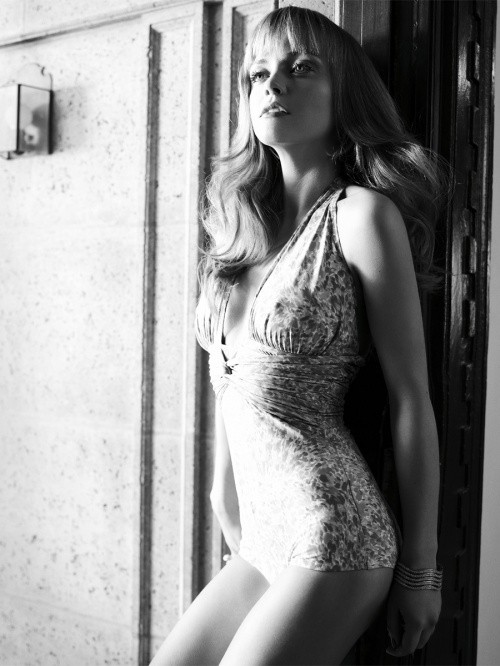
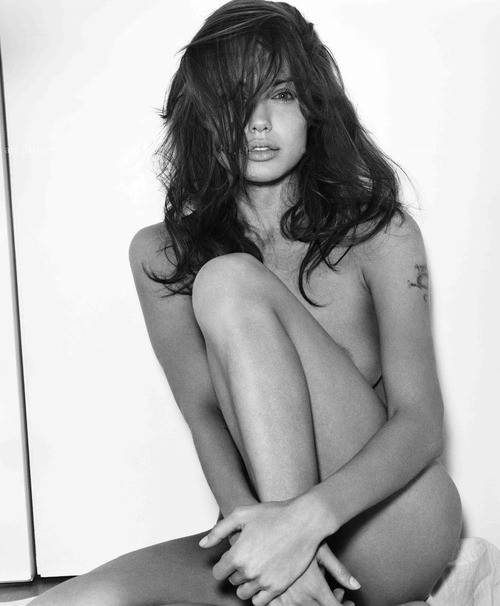
Elsewhere the gallery switches to monochrome, and the craft problem changes. Without hue, the photograph must carry meaning through line, grain, and the geometry of shadow. A crouched studio figure against a high-key ground becomes almost calligraphic—knees, elbows, and platform heels drawing dark strokes on white. A beach portrait of a supermodel era icon reduces ocean, sand, and body to interlocking triangles of value. Monochrome does not make these images “timeless” in a vague sense; it makes them architectural.
The 1990s and early 2000s as a lighting school
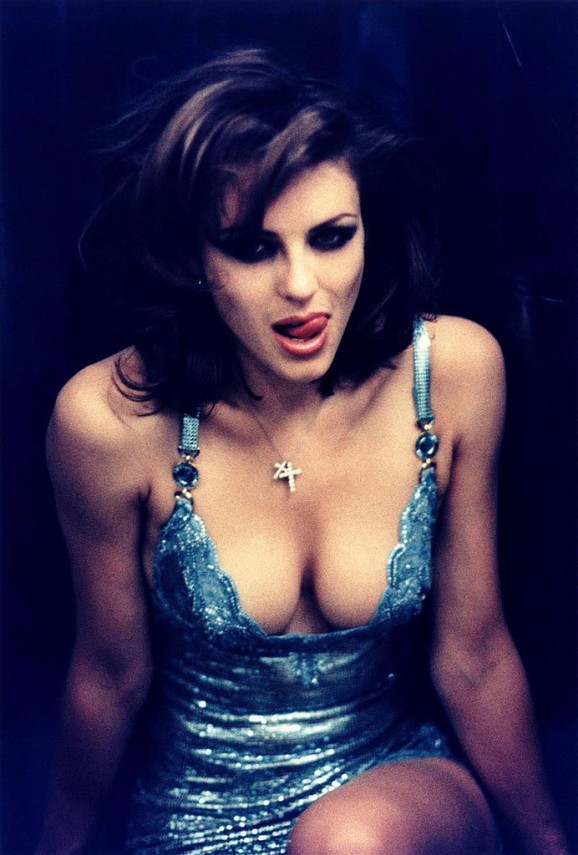
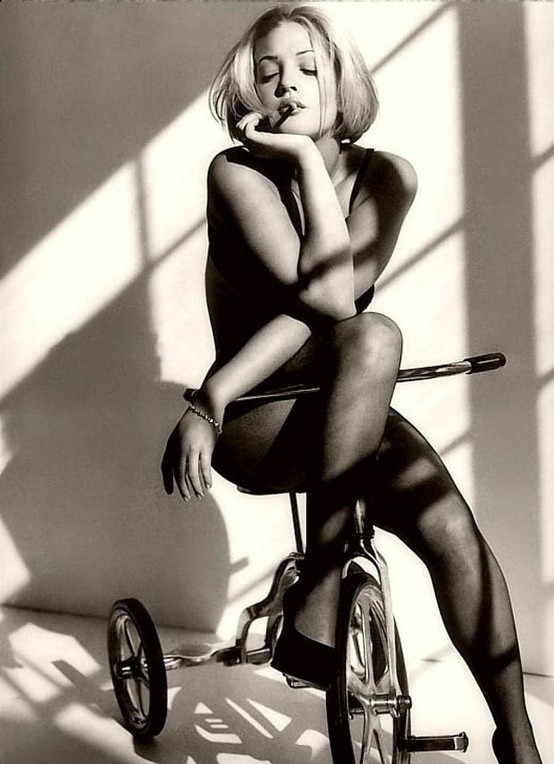
Several frames in this set are period-stamped by light alone. Hard side light cutting diagonal bars across a subject on a child’s tricycle is pure early-nineties editorial bravado—window-blind drama turned into graphic design. Moody studio key light on a metallic mini-dress and a playful tongue belongs to the same decade’s nightclub-adjacent glamour: cool sequins, smoky eyes, and a background allowed to fall into near-black. These are not paparazzi accidents. They are controlled rooms.
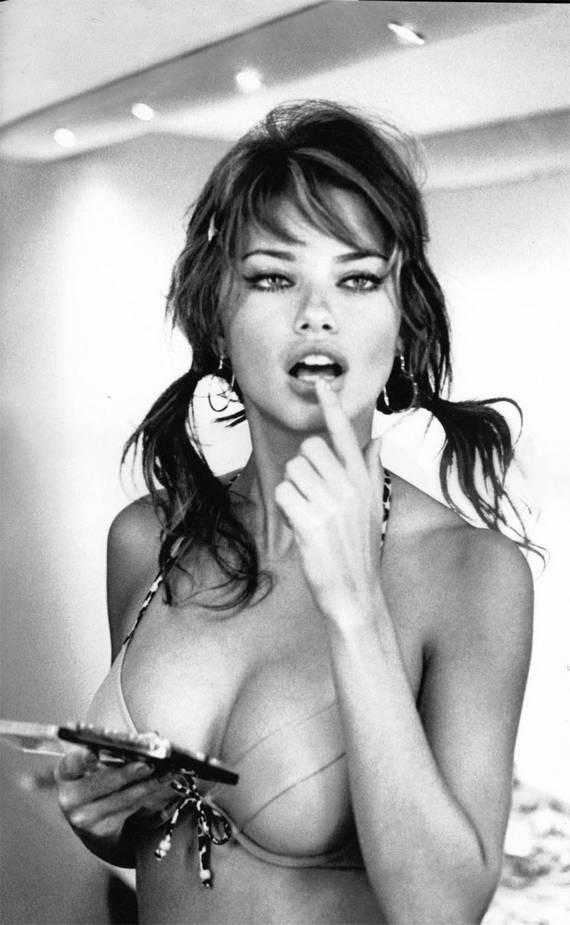
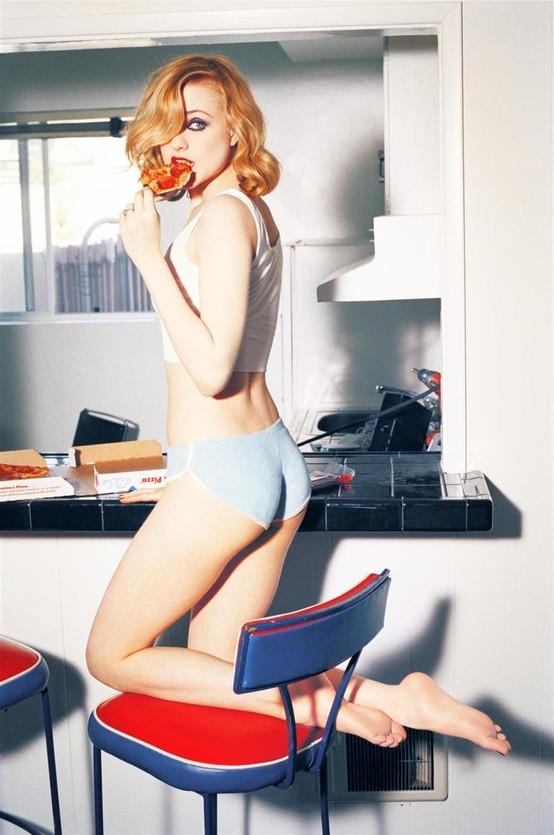
Other images mark the mid-2000s with props that have since become historical objects. A black-and-white close-up with pigtails and a handheld gaming console is fashion photography flirting with lifestyle reportage—the gadget as a time capsule, the expression as commercial flirtation. Direct-flash kitchen scenes with retro stools and casual loungewear push the same period’s interest in staged intimacy: the set looks domestic, the lighting looks magazine.
Wardrobe as quotation
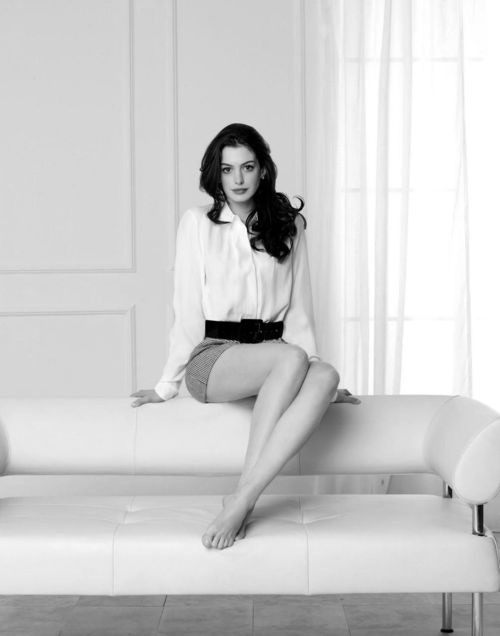
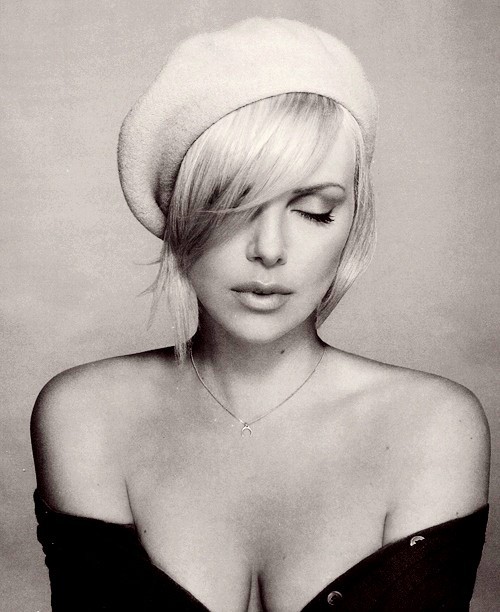
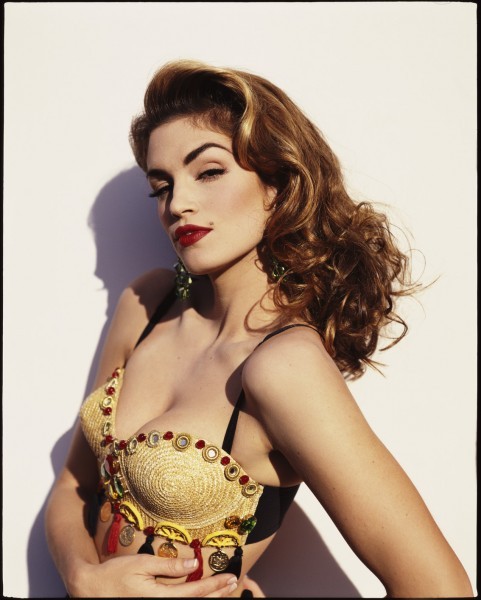
Costume in celebrity portraiture rarely invents from nothing. It quotes. A beret and off-shoulder knit lean toward Parisian mid-century chic; a woven, mirrored, tasseled top turns the torso into an artisanal object under studio light; a white shirt, belt, and patterned shorts staged on a modern sofa borrow from clean American fashion catalogs while the black-and-white treatment softens the commerce. Swimwear and lingerie appear often not as biography but as silhouette tools—ways to clarify the body’s line for the lens.
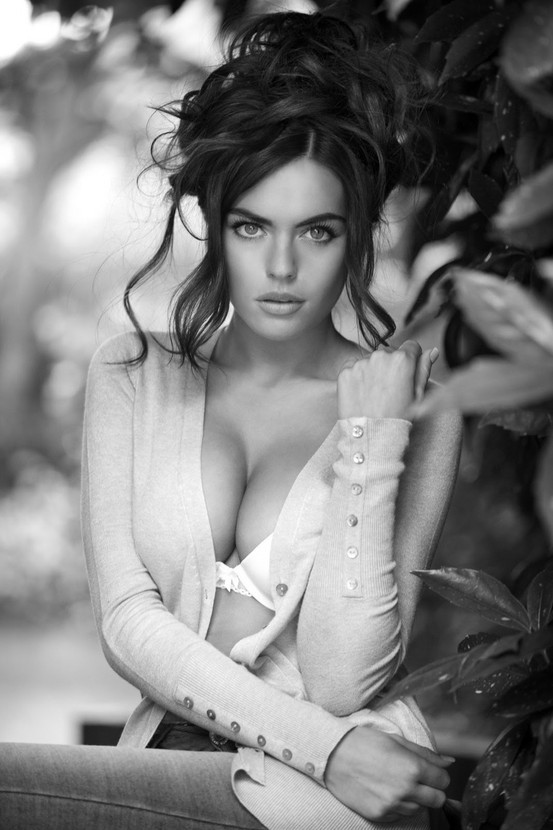
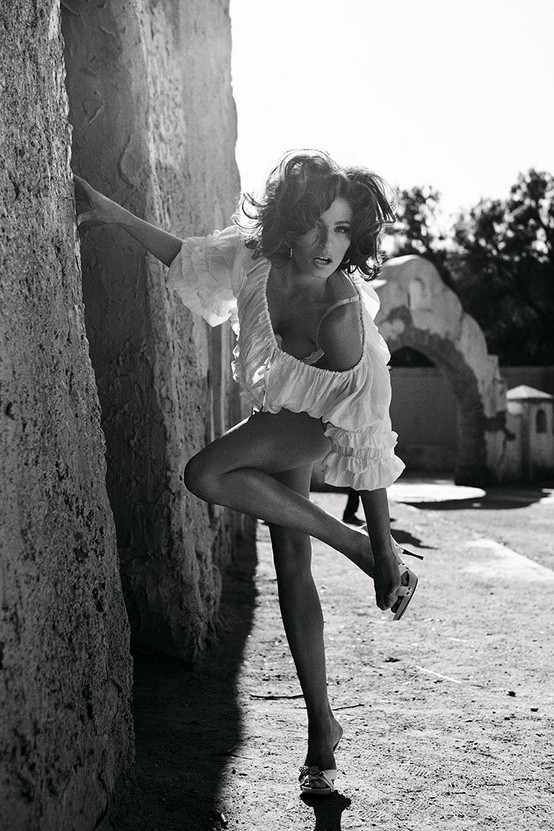
Outdoor European locations deepen the quotation. Stone walls, arches, and harsh sun create a cinema of texture: ruffled sleeves catching light, a sandal being adjusted mid-pose, dust and architecture doing as much work as makeup. A bicycle in a rural blur behind an Italianate close-up is less transportation than motif—Dolce Vita grammar restated for a later fashion decade. The craft question is always the same: which past is being borrowed, and how loudly?
Sets that pretend to be ordinary
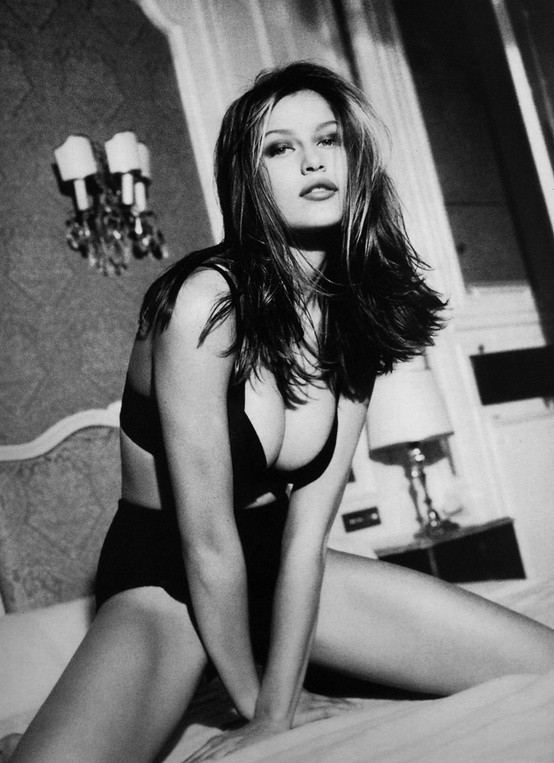
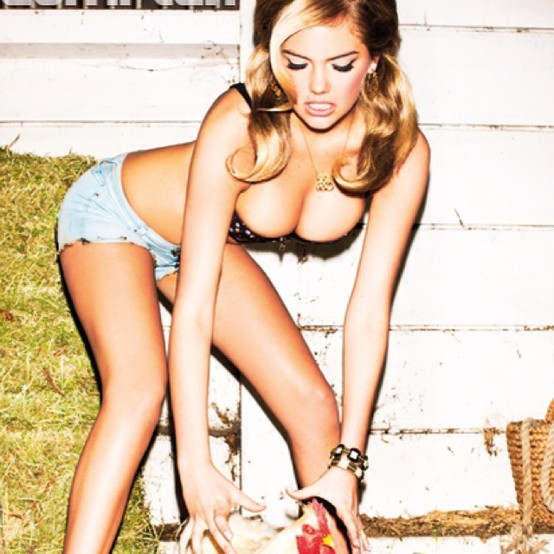
Some of the strongest frames here invent rooms that feel lived-in and then light them like theaters. A bedroom with sconces, patterned wallpaper, and a formal headboard becomes a stage for a kneeling pose. A kitchen with red vinyl stools and a pizza box becomes a comedy of casual glamour. A barn wall, hay bale, and chicken turn pin-up grammar into a contemporary fashion gag—rural Americana as costume, not documentary.
These sets matter because celebrity photography of this era often sold proximity. Viewers were invited to believe they had entered a private hour. The craft, paradoxically, is how thoroughly that privacy is designed: every prop placed, every shadow cut, every “casual” gesture repeated until it photographs cleanly. Ordinary objects—game consoles, bicycles, pizza—function as period anchors and as alibis for looking.
Stillness, performance, and the closed eye
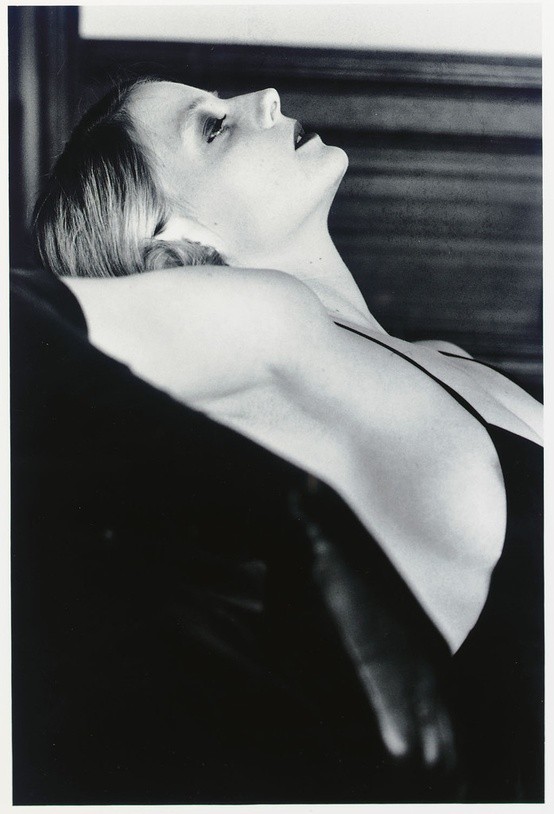
Not every portrait asks for a social smile. A reclined profile with the head thrown back treats the neck as a sculptural line and the mouth as a dark accent against pale skin. A beret portrait with closed eyes withdraws the gaze entirely, converting the face into a study of texture—knit wool, bangs, a thin pendant. Closed or averted eyes interrupt the celebrity contract of recognition; they force the viewer to notice craft instead of status.
When eyes do meet the lens, the performance is usually calibrated: soft pout, half-smile, tongue tip, finger at the lip. These are not spontaneous moods so much as reusable codes from fashion’s repertoire. The gallery’s value, revisited years later, is that those codes remain readable even as the surrounding media culture has changed. You can still parse the lighting school, the wardrobe quotation, and the set’s pretended ordinariness.
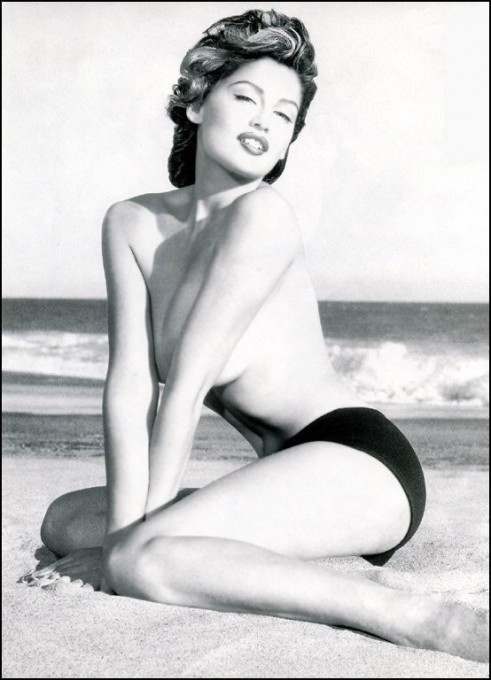
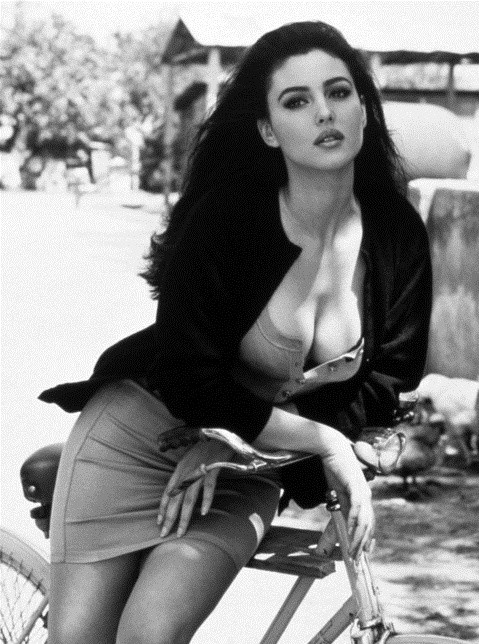
How to read the gallery now
Return to any single image and try a three-step reading. First, name the light: hard side, soft front, golden outdoor, direct flash. Second, name the quotation: resort 1950s, Paris beret chic, barn pin-up, hotel-room lingerie editorial, Italian village cinema. Third, name the performance: closed eyes, playful tongue, sculptural profile, casual domestic bite of pizza. Those three notes usually explain more than a list of roles or headlines ever could.
Celebrity photography of this vintage sat between fine-art portraiture and advertising. It borrowed seriousness from one and polish from the other. Looking at the set as craft history keeps that middle ground visible. The faces remain famous; the more durable lesson is how thoroughly fame was designed—frame by frame, shadow by shadow—before it reached the page.

Comments
Continue reading
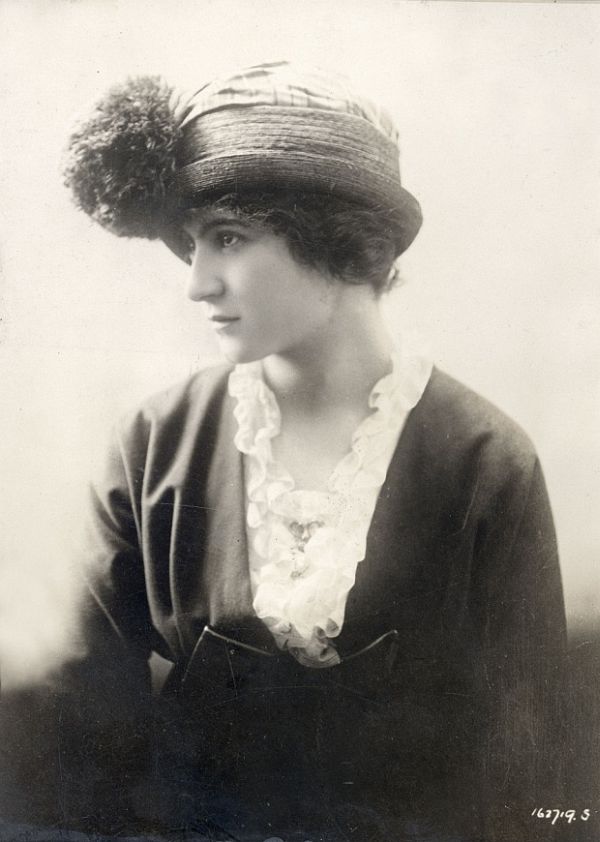
Women’s Hats, 1913–1915
A historical look at women’s millinery from 1913 to 1915—when Edwardian picture hats narrowed toward wartime angles—told through a gallery of period portraits.
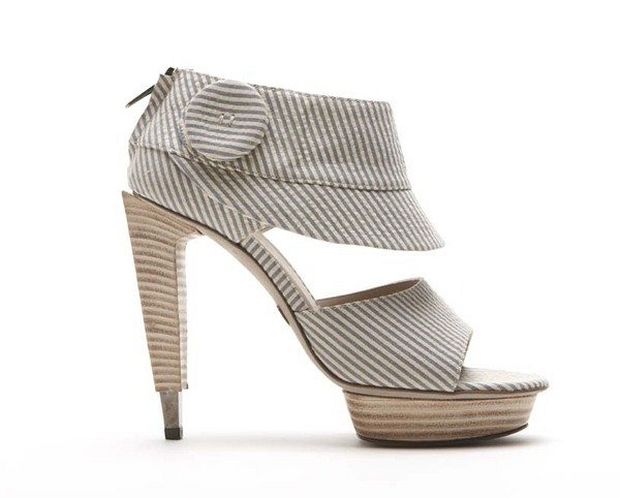
15 Unique Shoe Designs That Treat Footwear Like Sculpture
Fifteen experimental shoes—from origami heels and slingshot wood to keyboard-key boots and continuous-band mules—where concept outruns convention.
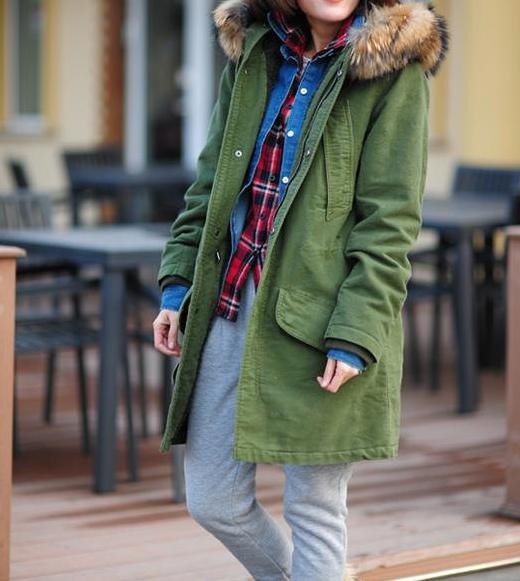
Chic Women’s Coats: Silhouettes That Finish a Winter Outfit
A wardrobe-first look at chic women’s coats—lengths, fabrics, colors, fit checks, and how to wear outerwear so the whole outfit looks decided.