
Photos From India: Faces Along River, Rail, and Work
A human-centered gallery from India—ghats, trains, laundry yards, meals, and shrines—fifteen frames that favor people and daily labor over postcard monuments.
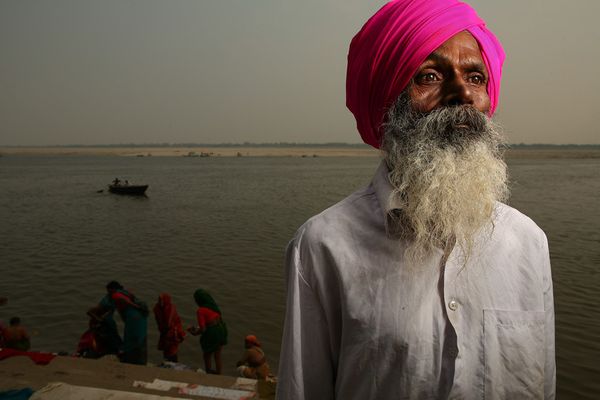
India does not fit inside a single postcard, and this gallery never tries. It is a sequence of people first: riverbanks and trains, laundry yards and shrines, meals on packed earth and meals on terracotta plates. Soft haze, terracotta steps, and saturated cloth recur, but the through-line is attention—portraits that treat daily life as worthy of the same seriousness usually reserved for monuments.
Originally circulated as a web collection (with a since-removed outbound credit), the set still reads as a travel essay told in faces. Walk it slowly. Let each frame keep its local weather.
Pink turban over the river
An older man occupies the right third of the frame, fuchsia turban blazing against a muted river and pale sky. His beard fans white at the tips; his gaze travels past the lens toward open water. Far left, women in red, green, and blue work the shallows; a small boat cuts the middle distance. The composition is classic documentary balance: one vivid human anchor, a living ghat behind it, color used as punctuation rather than decoration.
Companions on the stone
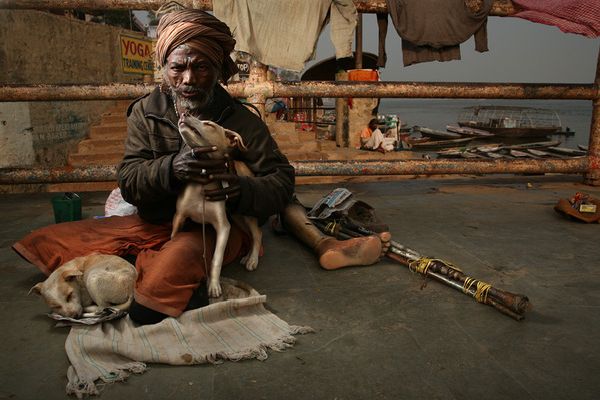
On a pier-like ledge, a man in a striped brown turban cradles a small pale dog while another sleeps on striped cloth. A prosthetic lower leg and bound wooden crutches rest beside him; a yellow “YOGA TRAINING CENTRE” sign and river boats sketch the place without needing a caption. Affection and difficulty share the same square of stone. The photograph refuses pity as its only register—it records care as plainly as it records equipment.
Barefoot on terracotta steps
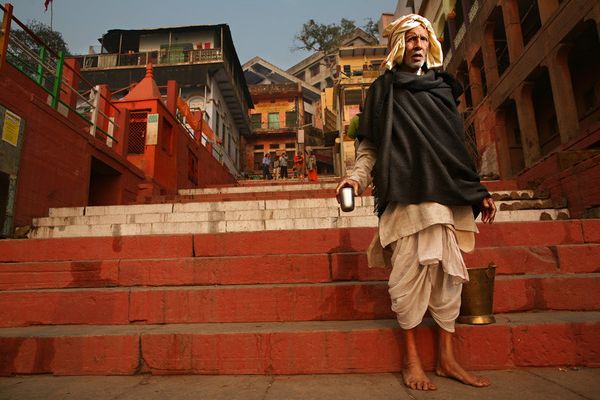
Low angle, looking up: cream turban, dark shawl, white lower cloth, bare feet on wide red-orange steps. A small metal cup sits in one hand; a brass bucket waits by the other foot. Packed buildings and a small orange shrine rise behind. The low viewpoint lends dignity without theatrical hero lighting. Ritual tools stay ordinary—cup, bucket, stone—so the portrait feels inhabited rather than staged for tourists.
Light in a train berth
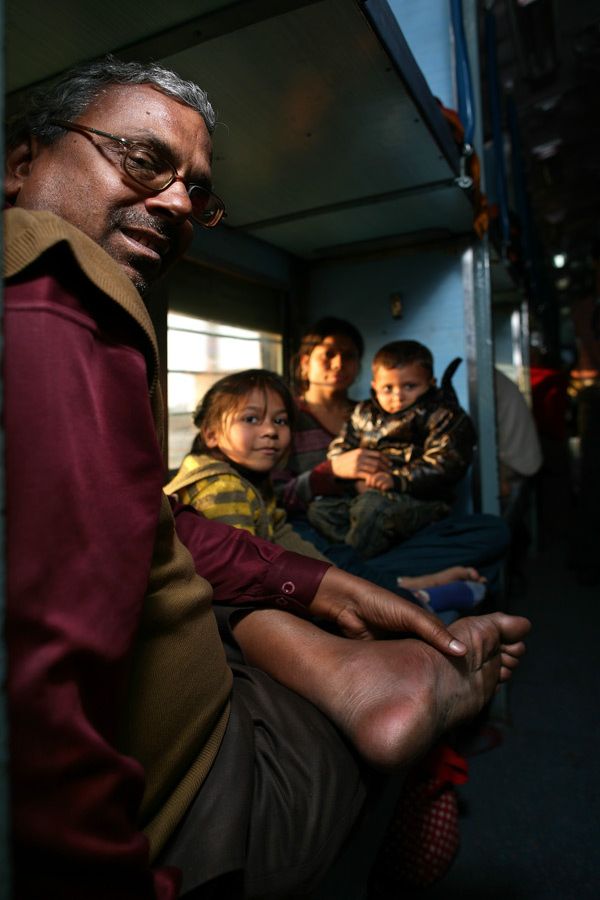
Hard window light cuts a maroon-vested man, a girl in a yellow-black hoodie, and a woman with a toddler deeper in the berth. Blue bunk underside, barred window, receding aisle: the grammar of Indian rail travel. Vertical framing suits the cramped stack of bodies. Eye contact from the nearest sitters turns the carriage into a shared room for a second, then the train—implied—keeps moving.
Green sari, drying silk
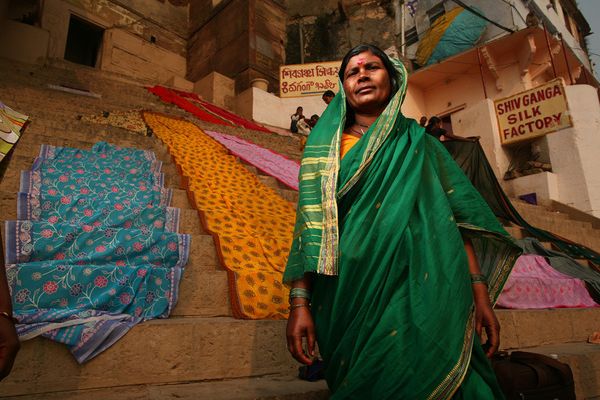
Emerald sari with gold border, red bindi, bangles, steady face. Behind her, blue floral, yellow geometric, and pink cloths stretch across ghat steps to dry. A sign for “SHIV GANGA SILK FACTORY” pins labor to place. Diagonal stairs pull the eye from textile color to architecture. Portrait and industry share one exposure—the woman is not an accessory to the cloth, and the cloth is not mere backdrop.
Roti and pressure cooker
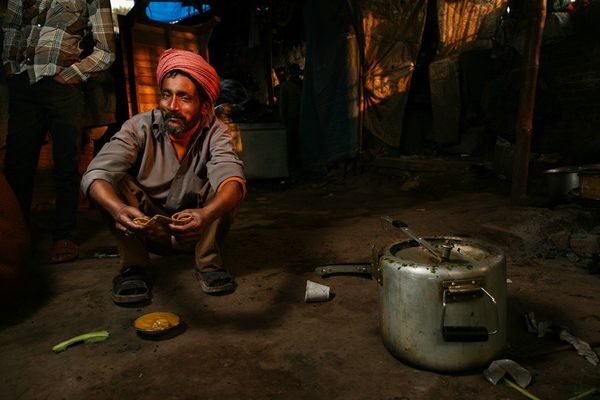
Warm side light finds a man squatting on packed earth, orange-red turban bright in the dark of a makeshift shelter. Chapati in both hands, yellow dal or sabzi in a small thali, aluminum pressure cooker gleaming at right. Blue tarp and cloth walls swallow the rest of the room. The smile is slight, weary, unperformed. Food photography here is not styling; it is survival made visible without spectacle.
Dhobi work under towers
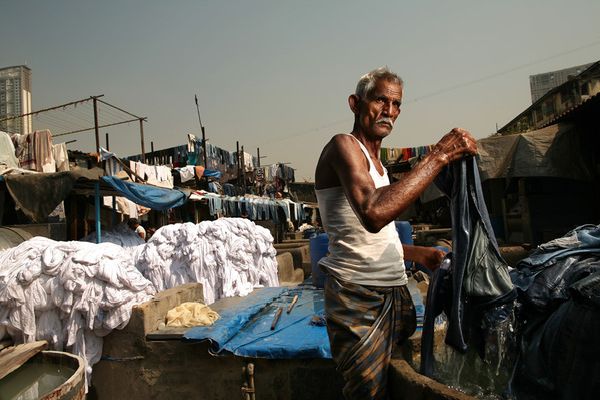
At what reads as a vast open-air laundry, an older washerman in a white undershirt and striped lungi hauls dripping dark fabric from a concrete trough. Mountains of bundled whites rise left; clotheslines and tin roofs fill the middle; high-rises haze on the horizon. Harsh sun chisels wet cloth and working arms. The contrast is structural, not rhetorical: manual washing continues in the shadow of vertical glass.
Saffron and a winter jacket
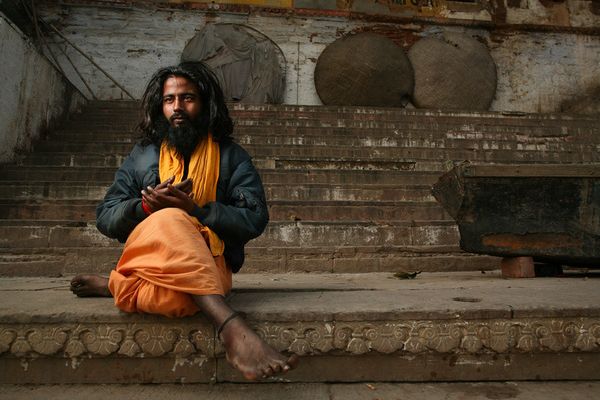
Matted hair, full beard, saffron lower cloth and scarf, dark quilted jacket zipped against chill—tradition and practical polyester in one sit. Hands clasp near the chest on a carved stone ledge; woven discs lean on a wall above; weathered wood waits at right. The mix of sacred color and modern outerwear is the photograph’s quiet thesis: spiritual life in India is not a costume drama sealed from weather.
Oarsman in the haze
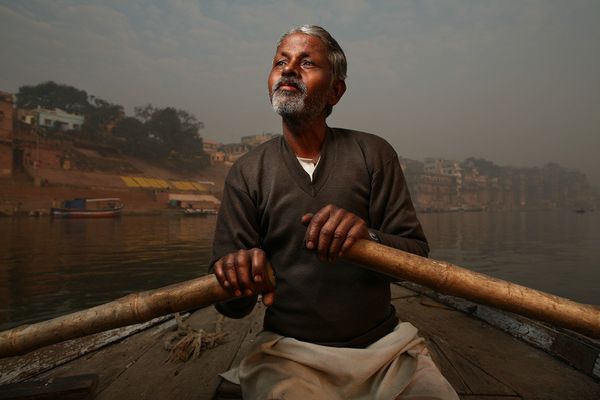
From inside the boat, looking up: salt-and-pepper beard, charcoal sweater, thick oars gripped in working hands. Ghats dissolve into mist behind him. Low angle monumentalizes labor without erasing softness in the light. Another craft ghosts left on the water. River portraits in this set keep returning to the same ethic—earn the face by showing the work that places it there.
Two plates at golden hour
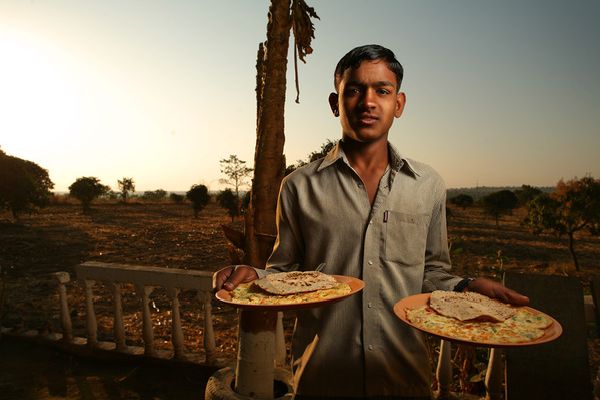
A young man stands behind a white balustrade with two terracotta plates: folded omelet or cheela, herbs, roti on each. Low sun rakes dry fields and sparse trees. Hospitality becomes a portrait prop without turning into advertisement. Warm backlight and calm eye contact shift the gallery briefly inland, away from river stone, into open country evening.
Scarf and river sun
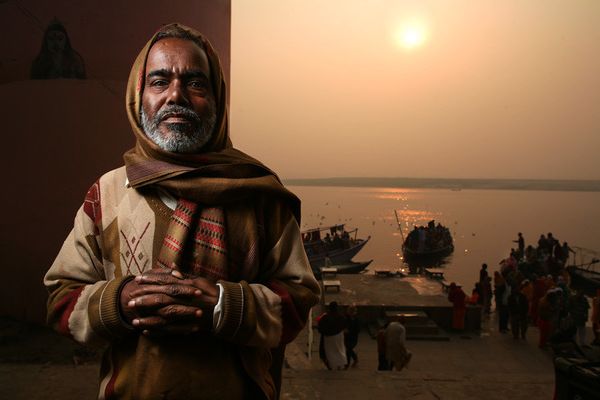
Diamond-pattern sweater, striped scarf wrapped as head covering, hands clasped, direct gaze. Behind him the sun is a softened disc; boats carry passengers; figures in orange and red gather on the shore. Shallow focus keeps the man crisp and the ghat atmospheric. Backlight outlines the crowd while still lighting the face—technical care in service of a quiet meeting with the camera.
Teal sari over small fire
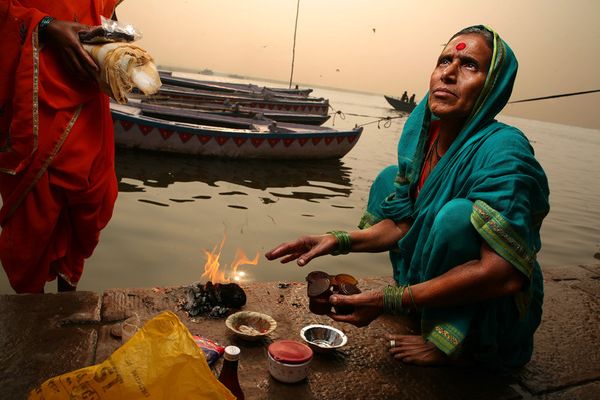
From above: teal sari over the head, large red bindi, green bangles, eyes lifted. One hand hovers above a small flame; the other holds dark cups or vessels. Plastic bag, bowls, and a bottle litter the stone with ordinary life. Blue-trimmed boats wait at the waterline under an orange-haze sky. Ritual warmth and practical warmth occupy the same fire.
Marigolds and a Ganesha likeness
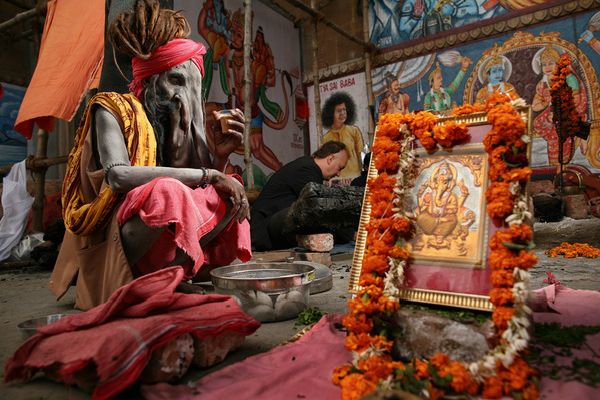
Ash-dusted skin, high dreadlocked bun, elephant-trunk likeness, saffron and yellow cloth—an ascetic presentation beside a framed Ganesha buried in orange marigolds. Offerings, posters (including a Sathya Sai Baba image), bamboo, and dusty ground complete a street-level shrine denser than any clean temple brochure. Devotion here is layered, improvised, and brightly specific.
Sadhu, monkey, and Kali on the wall
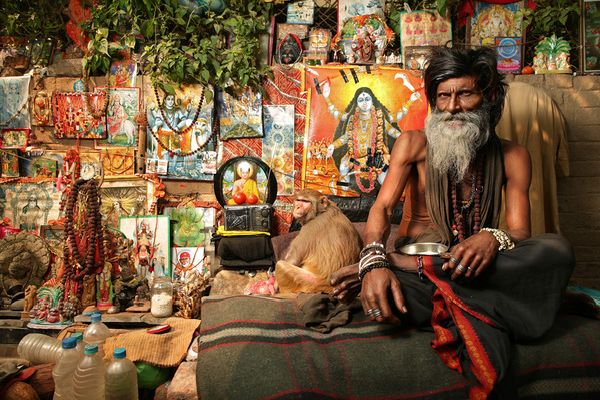
Cross-legged on a striped blanket, rudraksha strands stacked at neck and wrist, metal bowl in hand, a macaque seated calmly beside him. Behind: Kali and Shiva posters, garlanded statues, a small old television, hanging plants, water bottles in the corner. The shrine is also a room. Sacred image and household clutter refuse to sort themselves for the foreign eye—and that refusal is part of the picture’s honesty.
Open hoodie by the tank
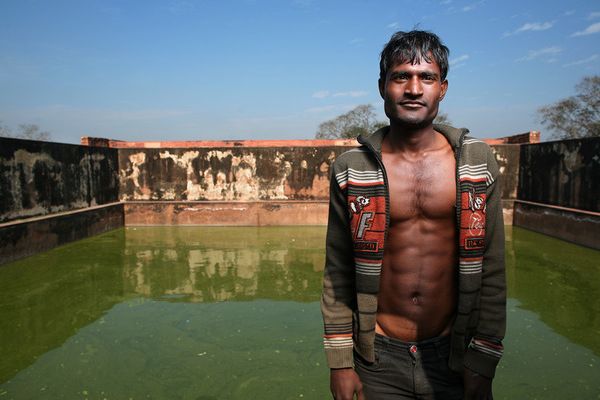
Midday blue sky, rectangular tank of opaque green water, weathered walls. A lean man faces the lens in an open olive hoodie with red-white stripes and dark jeans—body confident, setting austere. After so many river soft-edges, this harder light and modern casual wear widen the collection’s claim: India in photographs is not only mist and marigold. It is also a pool edge, a brand mark on a chest, and a stare that meets the camera without performing heritage on demand.
What the set teaches about looking
Taken together, these frames favor proximity over panorama. Temples appear as haze or poster, not as checklist monuments. Work appears as washing, rowing, drying silk, eating. Faith appears as fire, beads, marigolds, and mixed clothing. Animals appear as companions, not mascots. The photographer’s recurring tools—side light, low angles, patient faces—matter less than the ethic underneath them: do not flatten a country into one mood.
If you make pictures in places this dense, carry that ethic forward. Ask before you linger. Leave room in the frame for labor and weather. Resist the urge to correct every “imperfect” plastic bag out of a sacred scene. And when you edit a collection, keep the train berth beside the ghat, the pressure cooker beside the oar, the green tank beside the pink turban—because the country you met was already doing that mixing without waiting for your album to approve.

Comments
Continue reading
Still-Life Photography at Home with One Window
A table, north or side light, and a handful of objects—how to shoot still lifes in a small room without a studio, softboxes, or a prop closet.
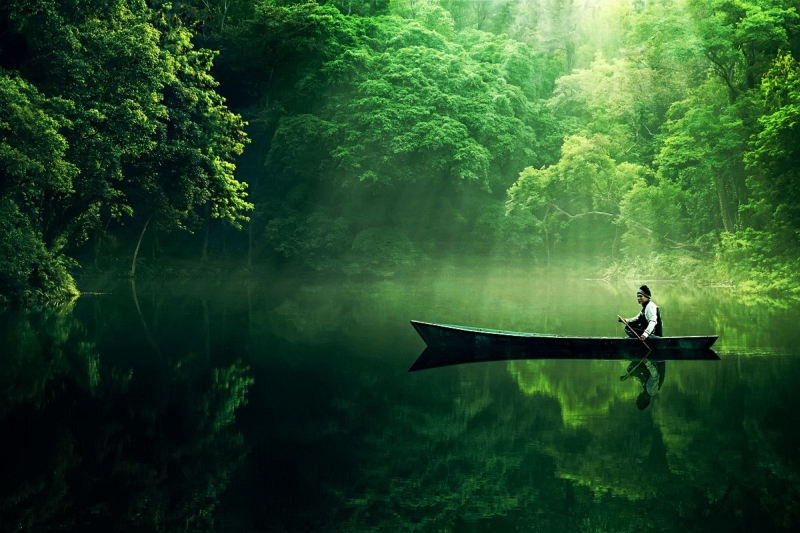
Dramatic Photo Art by Sukron Ma’mun (Ipoenk Graphic)
Cirebon, Indonesia photographer Sukron Ma’mun uses theatrical natural light to frame village life, play, and place in lyrical photo art.
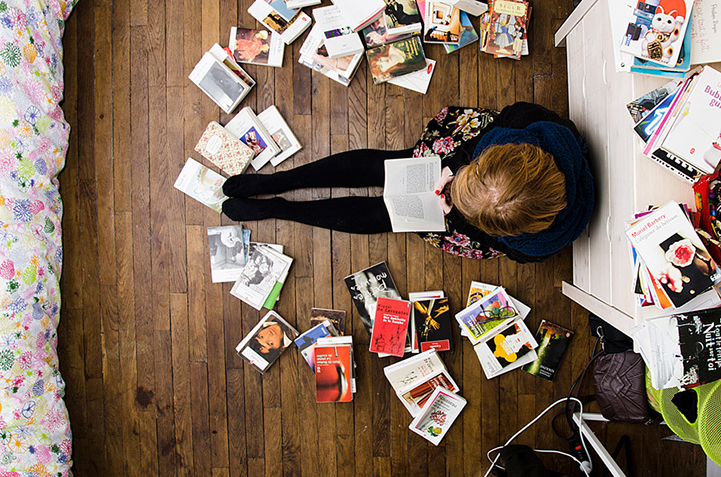
Bird’s-Eye Views: Florian Beaudenon’s Instant Life
Paris photographer Florian Beaudenon’s Instant Life series captures people in their rooms from above—intimate, collaborative overhead portraits of everyday joy.