
Bird’s-Eye Views: Florian Beaudenon’s Instant Life
Paris photographer Florian Beaudenon’s Instant Life series captures people in their rooms from above—intimate, collaborative overhead portraits of everyday joy.
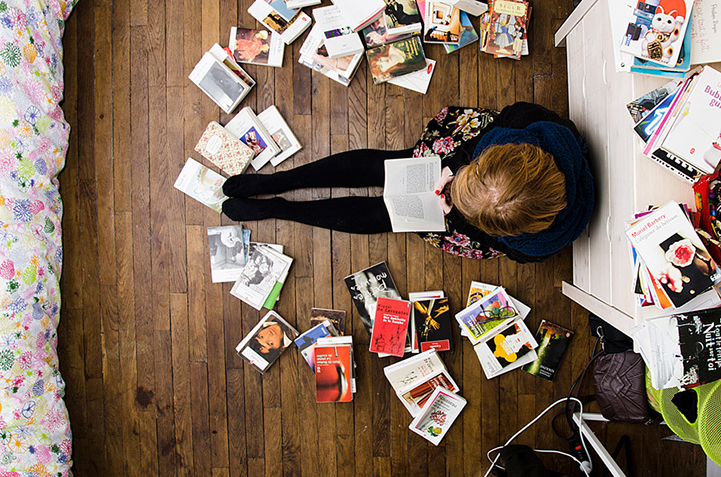
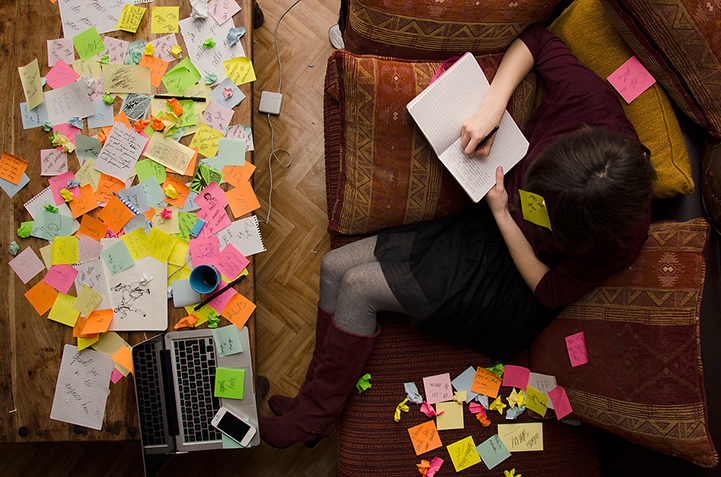
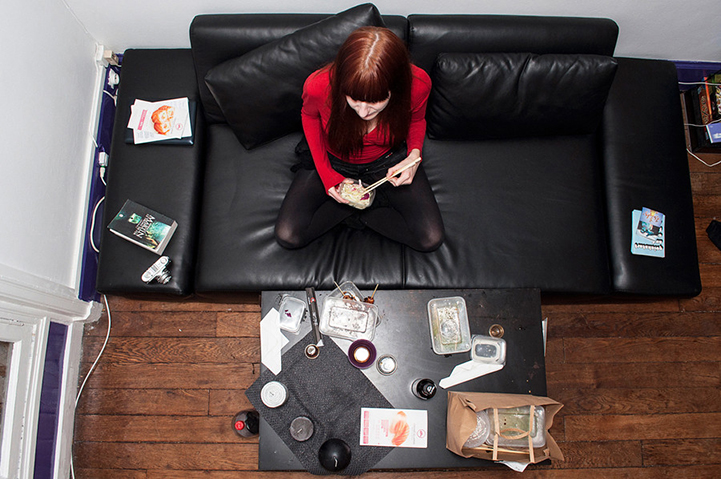
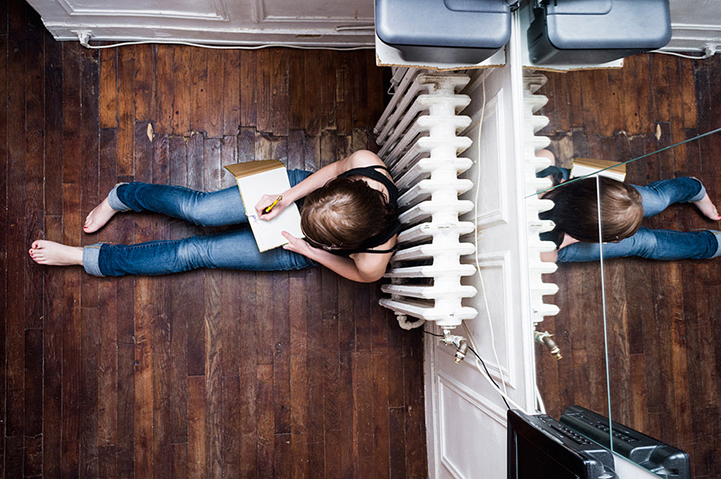
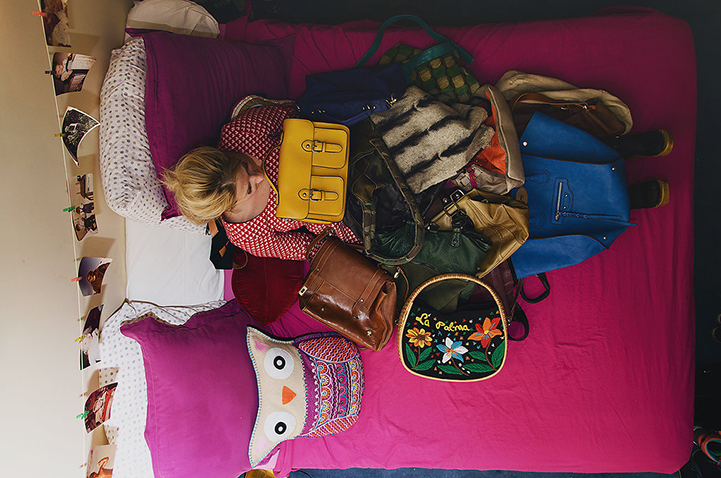
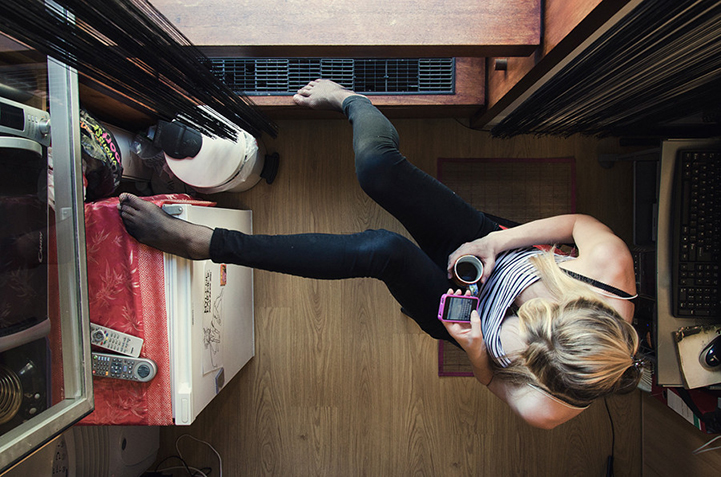
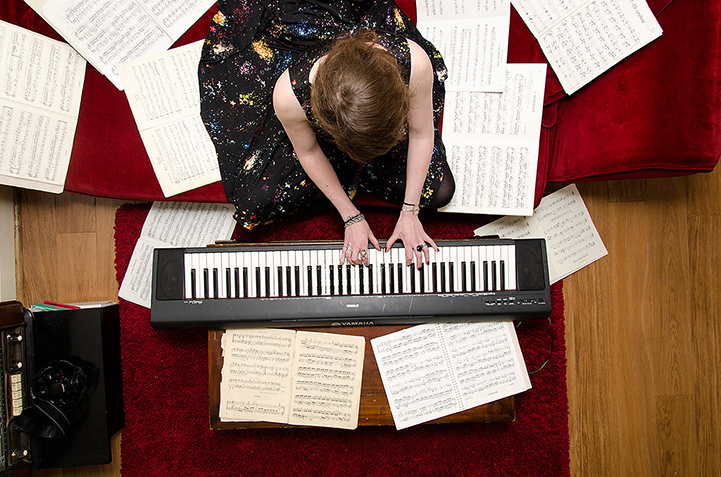
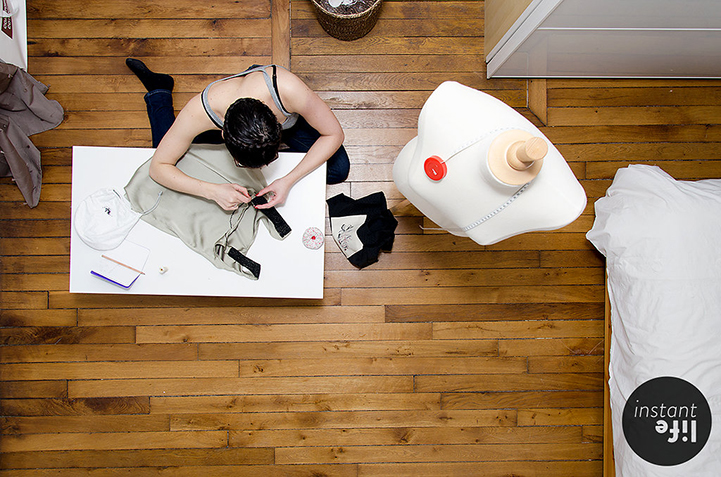
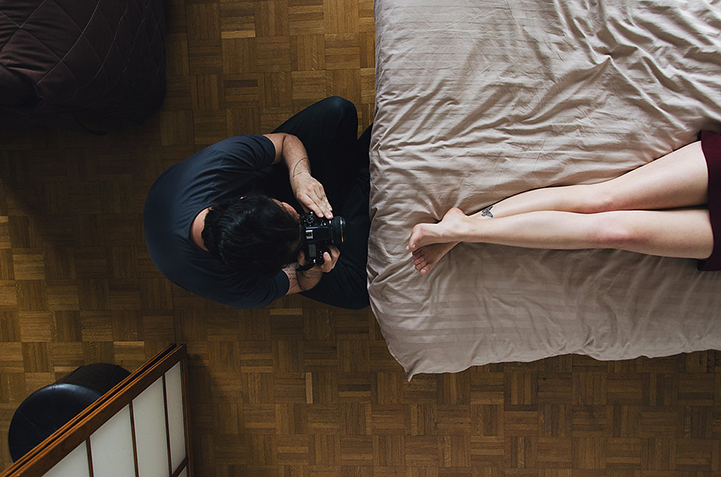
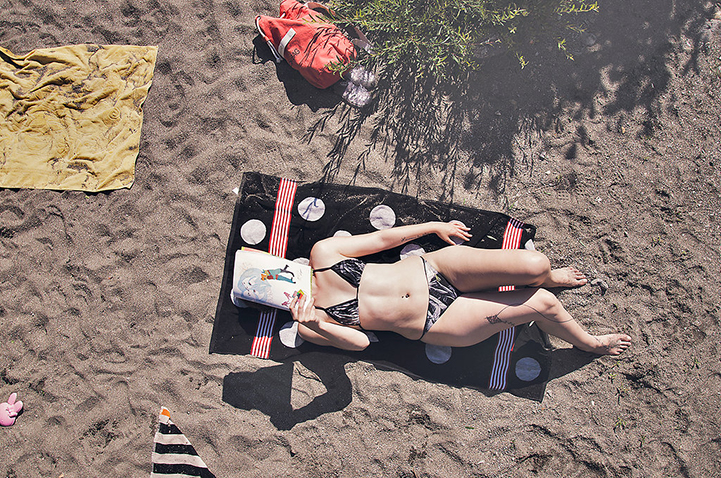
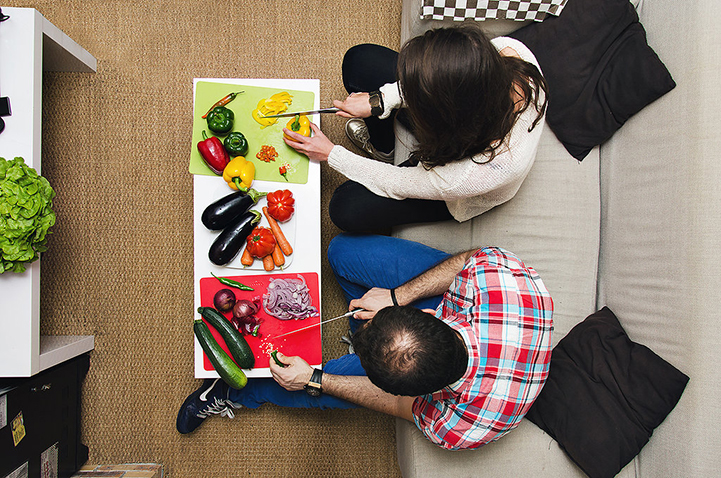
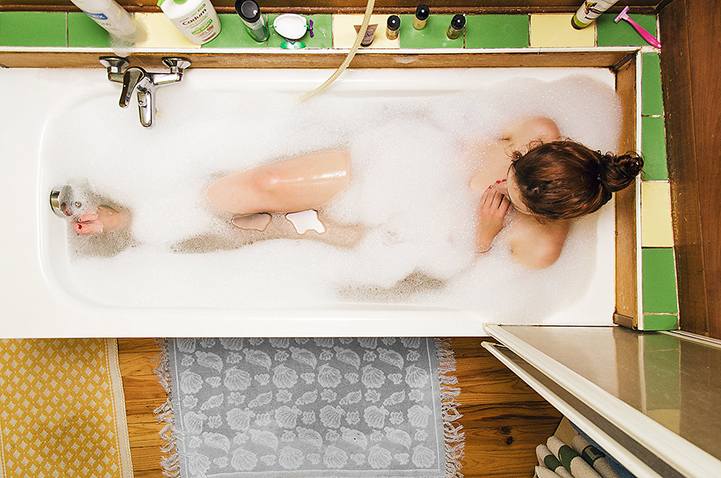
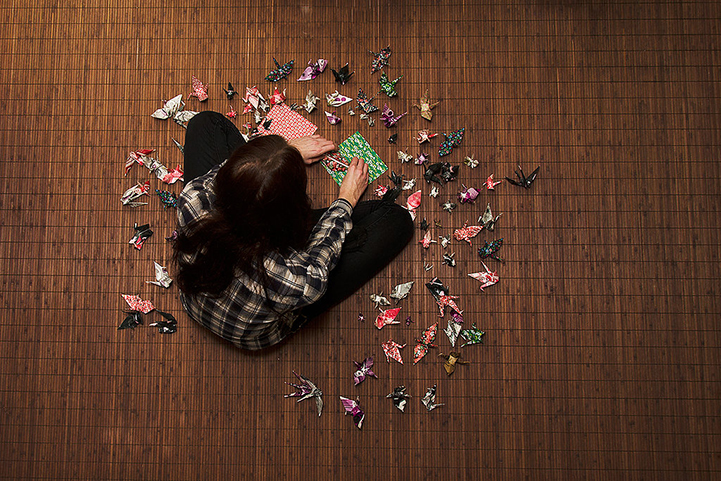
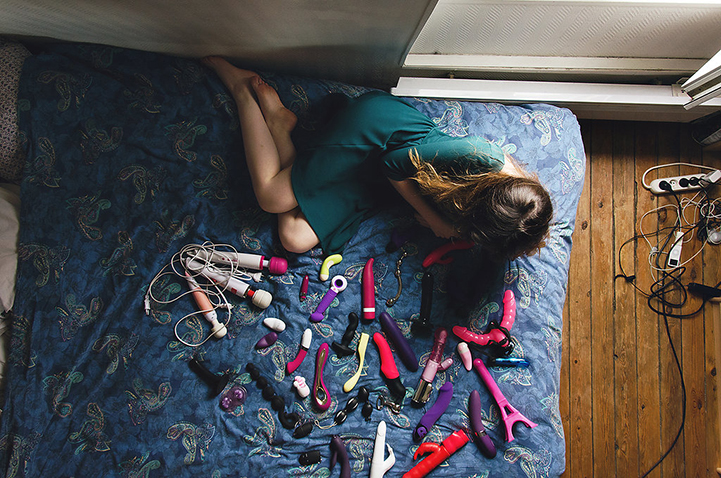
Paris-based fashion and editorial photographer Florian Beaudenon is known for conceptual work that treats ordinary moments as carefully staged scenes. In his series Instant Life, he photographs people in their rooms from directly above—an overhead, bird’s-eye vantage that turns beds, rugs, and coffee tables into flat graphic stages. Faces are often hidden or cropped away. What remains is gesture, habit, and the private clutter of a life being lived.
The series circulated widely in the early 2010s among photography and design blogs because it feels both intimate and strangely anonymous. You are looking into someone’s room, yet the person could almost be anyone. That tension—voyeurism balanced by consent and recognition—is central to how the pictures work.
The idea behind Instant Life
Beaudenon has described the project as a reminder to enjoy small moments: waking slowly, cooking for friends, settling into a hobby that matters only to you. The photographs “intrude,” in his wording, with a bit of voyeurism—but the subjects have agreed to share a scene of intimacy in which viewers might recognize themselves.
According to interviews around the series’ wider coverage, the overhead idea began during a fashion shoot when he noticed how a model looked from above while resting and eating. The elevated angle made the person less a celebrity face and more a figure in a domestic landscape. He later moved away from fashion models alone and invited friends, family, and volunteers to choose moments they actually enjoyed. That choice matters: the scenes are not candid thefts. They are collaborations staged to look unguarded.
Height helped. Beaudenon is tall, and looking down is part of how he already sees rooms. In Instant Life, that natural perspective becomes a formal device—closer to a diagram of living than to a conventional portrait. The title itself is a small manifesto: live the instant you are in, and notice it before it dissolves into habit.
Why the bird’s-eye view changes everything
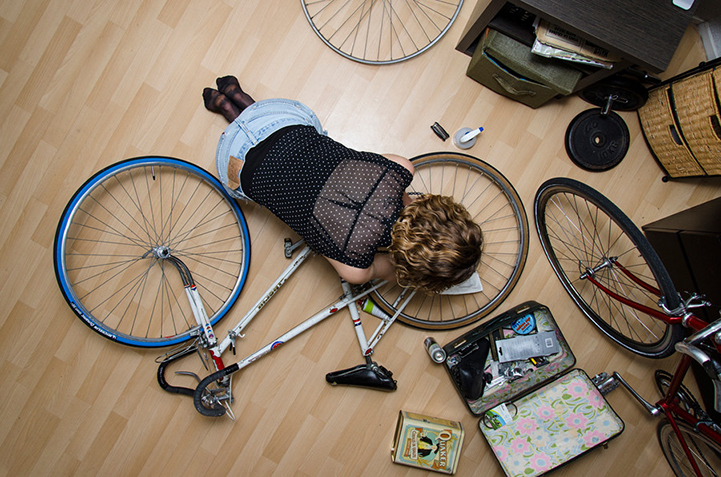
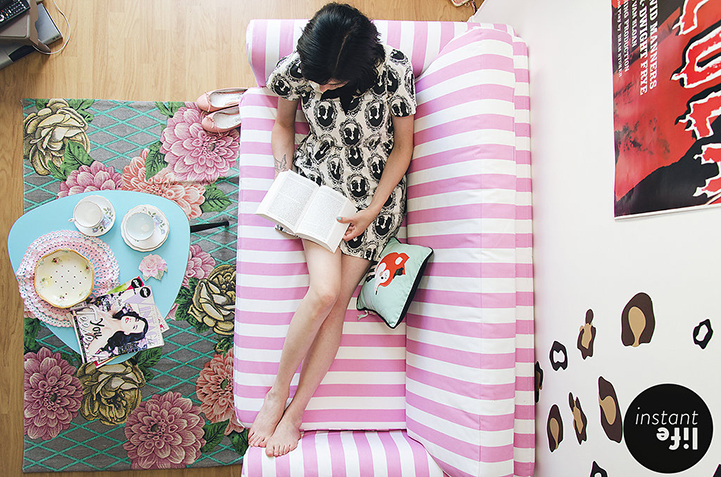
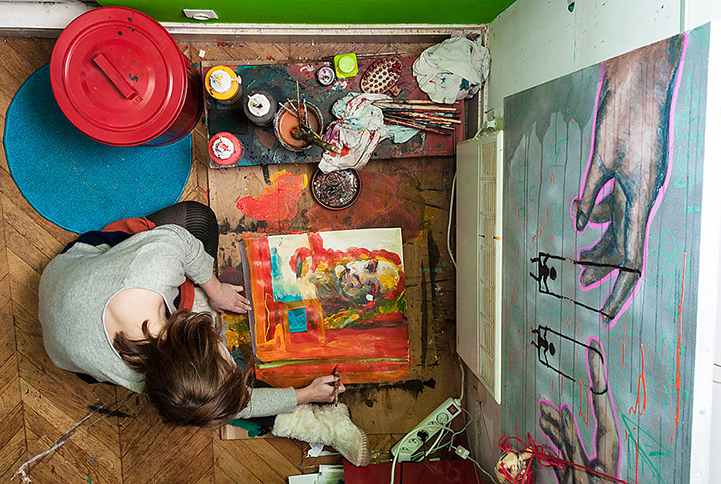
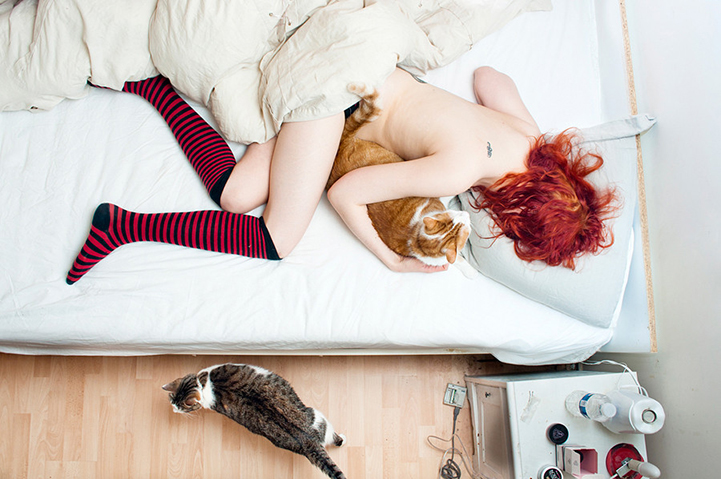
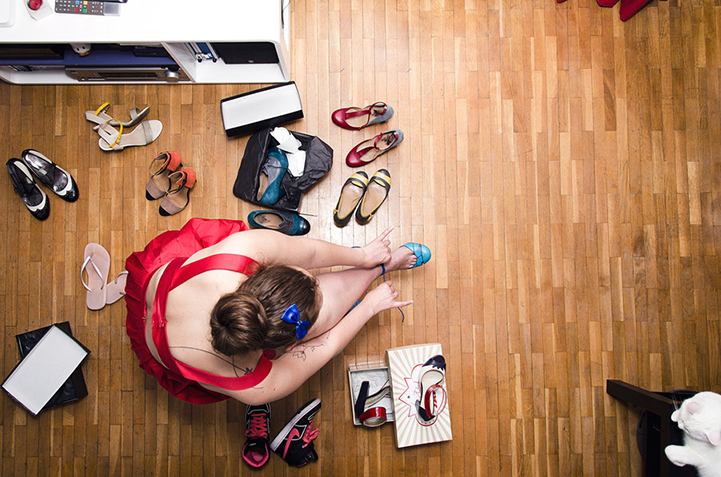
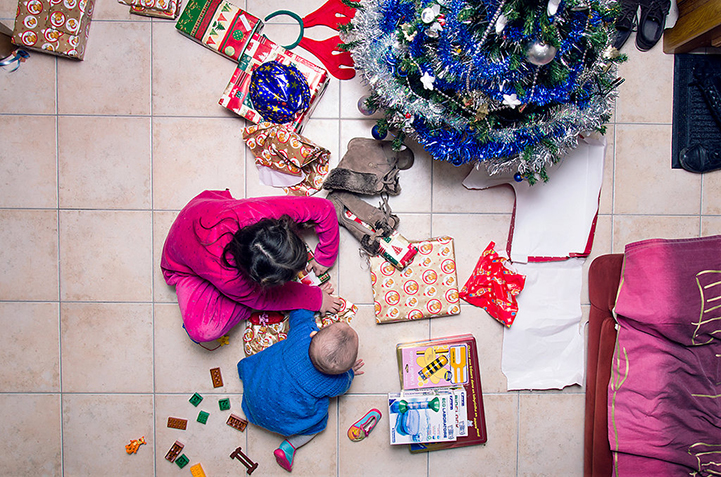
Most portraits negotiate eye contact. Here, eyes are often unavailable. Without a face to read as identity, viewers scan props instead: shoes lined up for trying on, books open on a bed, a bath, a pet, clothes scattered in a way that still feels personal. The room becomes a character. Floor patterns, bedding, and the geometry of furniture turn into composition tools as strong as pose.
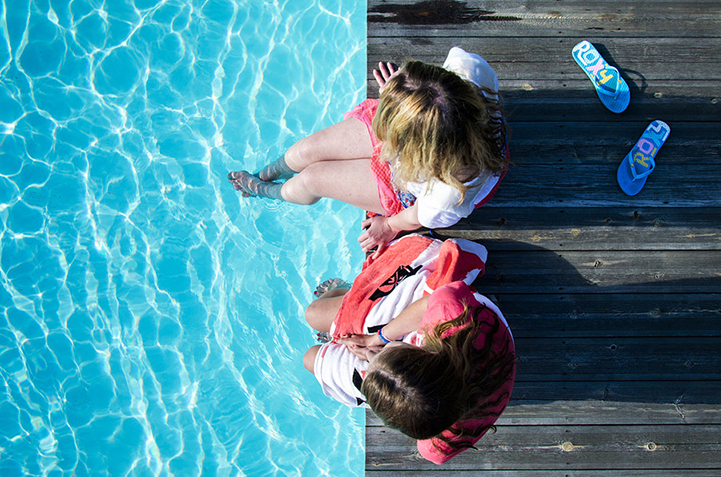
The overhead camera also flattens depth. Bodies become shapes. Arms and legs read as lines. A person curled with a cat or stretching across a couch becomes almost map-like. That flattening is why the pictures feel conceptual even when the activities are ordinary. They sit between documentary and still life—closer to a carefully arranged tabletop than to a snatched street frame.
There is also a quiet humor. Everyday rituals—trying on shoes, writing, lounging—look slightly theatrical when viewed from the ceiling. The viewer is cast as a polite spy: close enough to invent a story, far enough to remain a guest. That double position is part of the series’ charm and part of its slight unease.
Color and pattern do unusual work from this height. A loud rug can swallow a figure; a pale bedspread can turn a body into calligraphy. Beaudenon’s stronger frames usually keep enough empty field that the person and their chosen activity stay readable at a glance, then reward a slower inventory of objects.
Consent, anonymity, and recognition
Beaudenon has said he wants viewers to believe the person could be anybody. Seeing eyes would make identification easier and projection harder. Anonymity, in this case, is not erasure; it is an invitation. If you cannot lock onto a specific stranger’s face, you are freer to say, “That could be me.”
That is also why consent is central to reading the work fairly. The pictures flirt with the language of surveillance, but they are not stolen phone snaps. Participants select hobbies and private pleasures worth sharing. The “voyeurism” is a stylistic charge inside an ethical frame. Misreading the series as pure peeking misses Beaudenon’s stated aim: attention to small happinesses rather than exposure for its own sake.
Some coverage framed the work as a commentary on public versus private selves. Beaudenon has pushed back on over-intellectualizing that angle. The simpler thesis—enjoy good ordinary moments—is sincere, and the overhead trick is a way to make sincerity look fresh rather than sentimental.
What photographers can learn from the series
You do not need Beaudenon’s exact setup to borrow his lessons. A few practical takeaways travel well:
- Change the default height. Most phone photos are made at standing eye level. Even a stepladder, loft railing, or carefully secured overhead rig (used safely and legally) can rewrite a familiar room.
- Build the frame with objects. Rugs, bedspreads, and tabletops become your background. Arrange them as deliberately as you would studio paper.
- Let faces go sometimes. Hands, posture, and surroundings can carry narrative without a direct gaze.
- Ask people what matters to them. Beaudenon’s subjects chose scenes they enjoyed. Collaboration often produces warmer pictures than directing strangers into “interesting” poses.
- Watch color and pattern. From above, busy floors and loud bedding fight the subject. Simpler grounds help bodies and gestures stay readable.
- Keep safety and privacy first. Overhead shooting at home is one thing; attempting ceiling views in shared buildings or with drones without permission is another. The series’ elegance depends on willing participants in controlled spaces.
Technically, overhead work rewards even lighting and careful styling. Hard overhead shadow can carve strange shapes across a face-down figure; soft, even light keeps the map of the room legible. A slightly wider lens includes more context; too wide, and edges distort in ways that feel accidental rather than intentional. If you are converting phone snaps, crop tightly enough that the rectangle feels designed, not merely elevated.
Where Instant Life sits in Beaudenon’s work
Beaudenon’s broader practice includes fashion and editorial photography. Instant Life stands out because it uses fashion-trained control—styling, color, pose—on non-commercial tenderness. Later he has spoken about wanting other projects so he would not repeat one successful formula forever. That restlessness is useful context: the series is a completed chapter with a clear thesis, not an infinite content stream.
As a historical artifact of online photography culture around 2014, the work also shows how a strong formal gimmick (ceiling view) can carry a sincere theme (pay attention to ordinary joy) without collapsing into empty novelty. The gimmick opens the door; the domestic specificity keeps people looking. In a feed full of tricks, that balance is rarer than it sounds.
Browse the gallery as a set of variations, not as isolated curiosities. Soft bedding, personal objects, and bodies arranged like punctuation on a floor plan recur; hobby, wardrobe, and room color change. The series is less a catalog of strangers than a repeated question: if someone mapped your happiest ordinary hour from the ceiling, what would the picture contain?

Comments
Continue reading
Still-Life Photography at Home with One Window
A table, north or side light, and a handful of objects—how to shoot still lifes in a small room without a studio, softboxes, or a prop closet.

Dramatic Photo Art by Sukron Ma’mun (Ipoenk Graphic)
Cirebon, Indonesia photographer Sukron Ma’mun uses theatrical natural light to frame village life, play, and place in lyrical photo art.

Abandoned Cars Reclaimed by Nature: Rust, Growth, and Quiet Ruin
When neglected vehicles are left outdoors long enough, rust, moss, and trees rewrite them into strange still lifes—sad, photogenic, and slowly returning to the ground.