
Basement Laundry Remodel Ideas
Practical basement laundry layouts, storage, surfaces, and budget-friendly upgrades that make wash day easier downstairs.
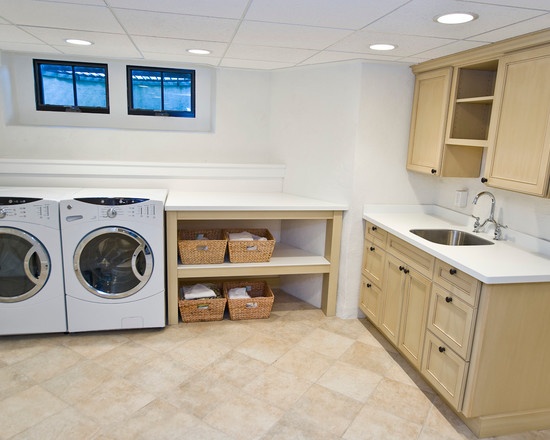
Not every basement remodel needs stadium seating or a kids’ mural wall. Often the most valuable below-grade project is quietly practical: a laundry room with space for machines, folding, sorting, hanging, and storage—without turning the main floor into a parade of hampers. A basement laundry can be a full build-out or a careful reorganization of what you already have. Either way, success means wash day gets shorter, calmer, and less visually chaotic.
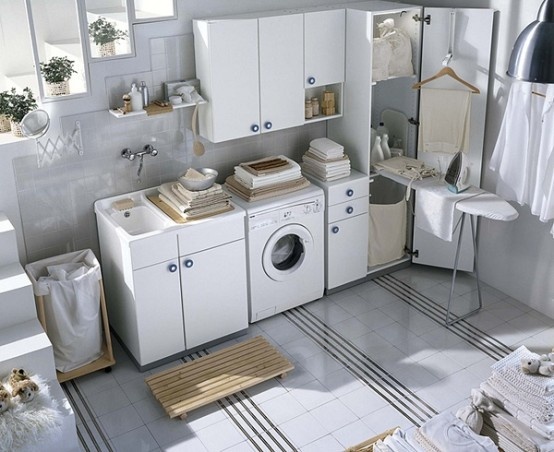
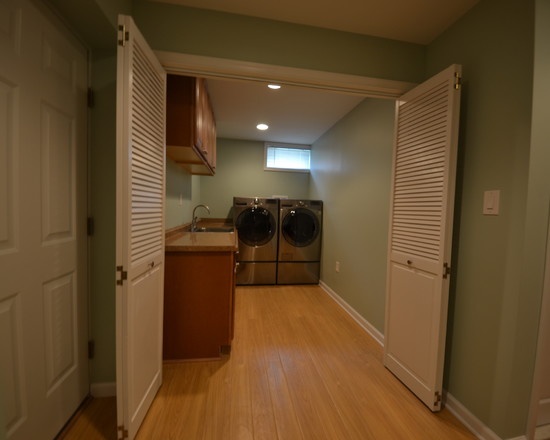
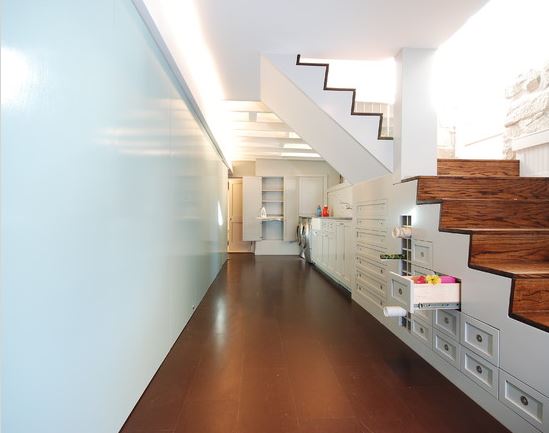
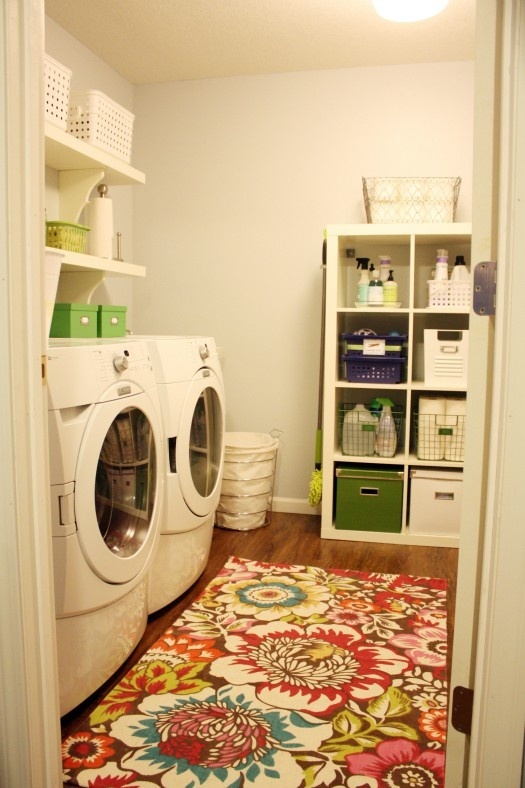
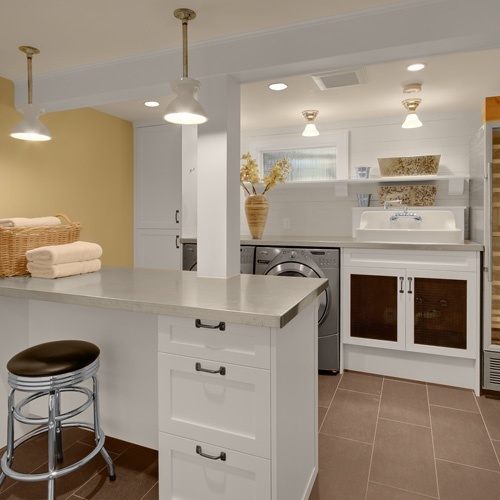
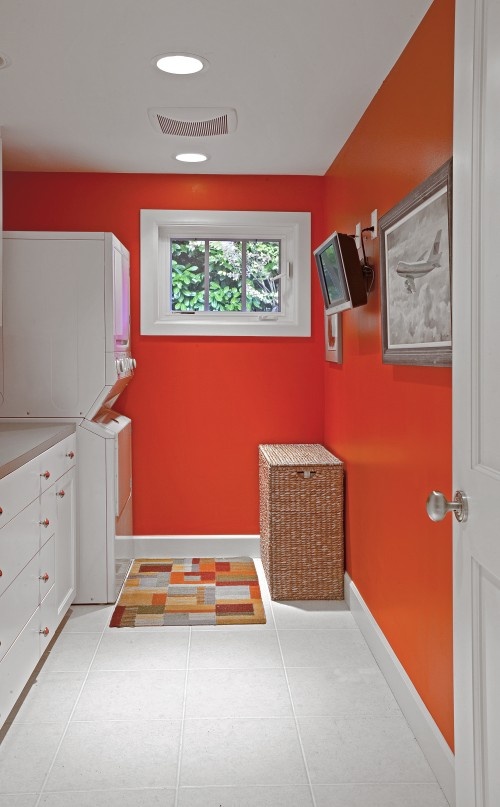
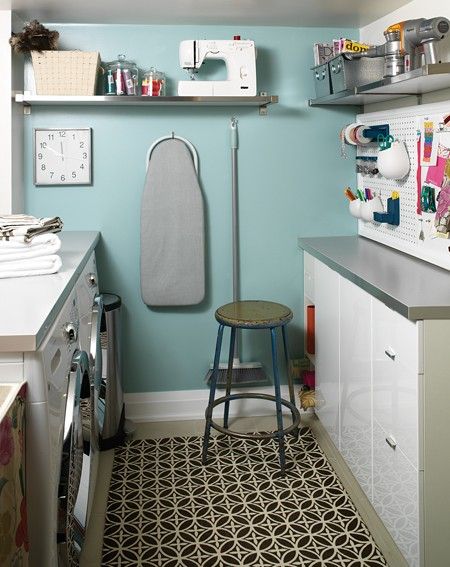
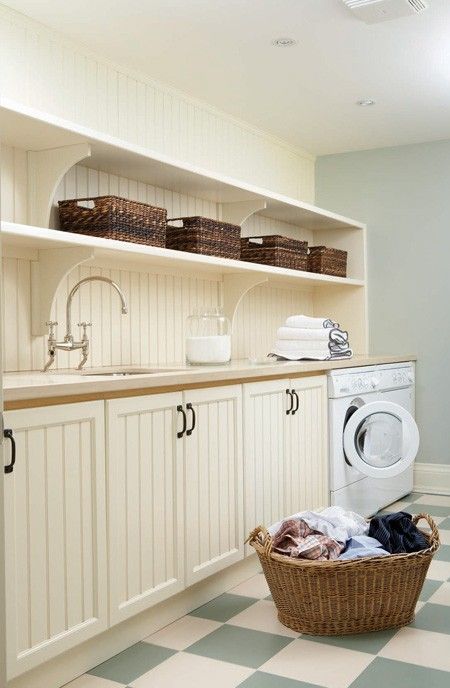
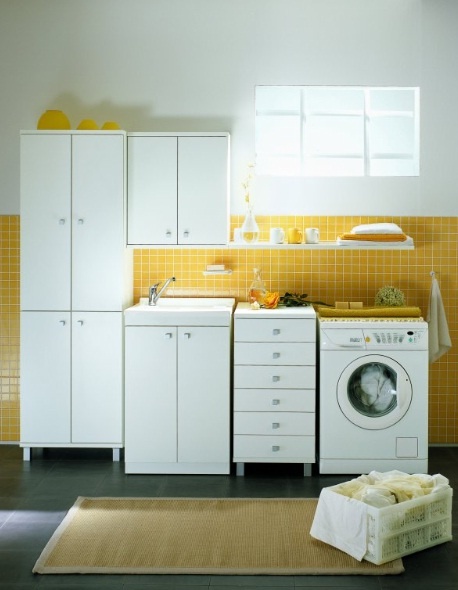
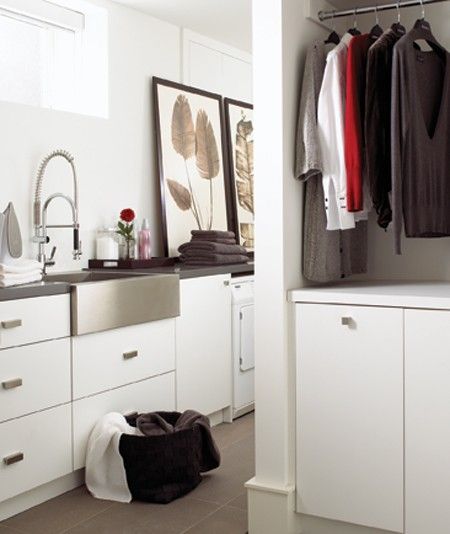
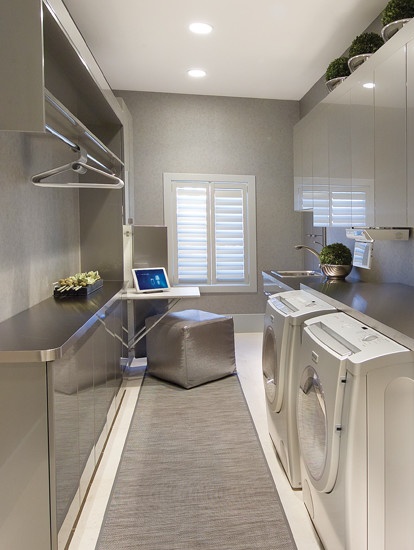
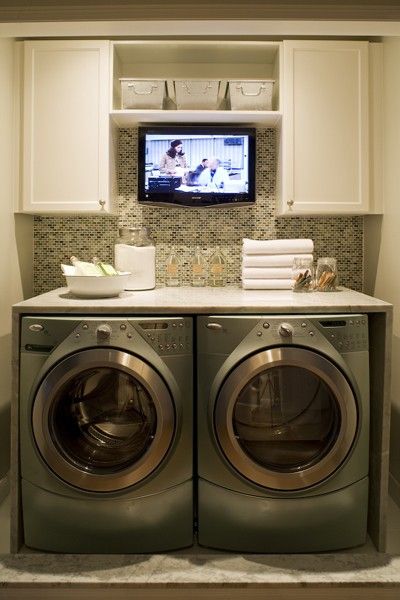
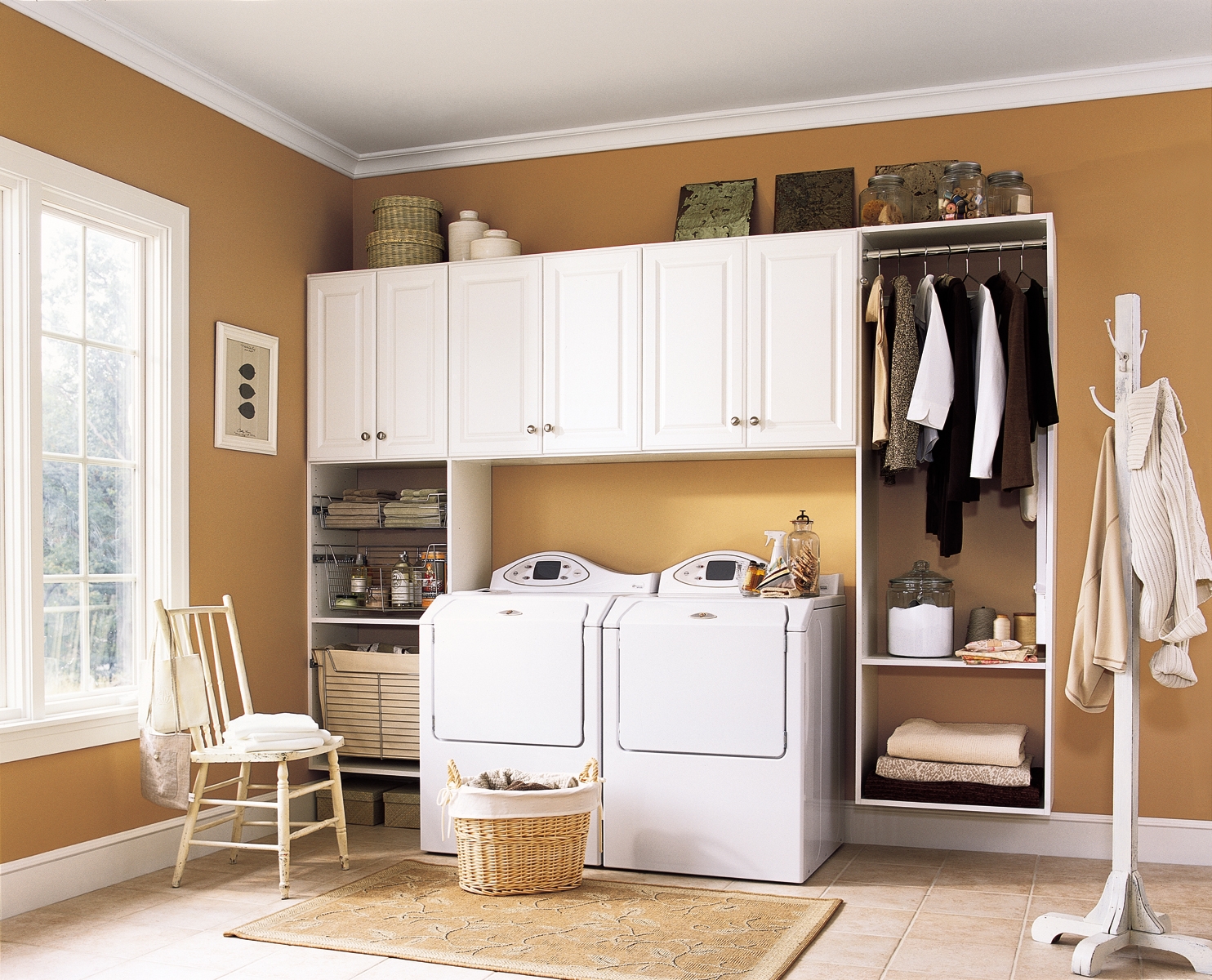
The photographs collected here show basement laundry rooms from compact utility corners to cabinetry-rich suites. Read them as a checklist of working details as much as a style gallery: where machines sit, how counters land, what lighting does downstairs, which floors survive spills, and how baskets and cabinets keep detergents from becoming the room’s main decoration.
Utilities first, personality second
Pretty paint fails if the room cannot handle water. Before choosing wallpaper or a cute laundry sign, confirm supply lines, drains, dryer venting or an approved ventless setup, and electrical capacity for modern washers and dryers. Basements add moisture risk, so waterproofing and a floor that tolerates drips are non-negotiable. A beautiful cabinet run over a damp slab is a future mold story, not a remodel win.
Measure appliance depth including hoses and door swing. Leave clearance to pull machines forward for service. If you can add a deep utility sink, do it—muddy shoes, hand-washables, and spill cleanup become far easier. A folding counter, even a simple laminate top over base cabinets, is the difference between “two machines in a corner” and a real workspace. Ironing boards that fold out of cabinets are luxury only after counters and light are solved.
Layouts that respect beams and stairs
Side-by-side machines under a continuous counter remain the classic efficient plan. Stacked units free floor area for a folding table or hanging rod when the footprint is narrow. An L-shaped run can put a sink on the short leg and keep the long wall for appliances and storage. If basement stairs dump traffic through the laundry, protect a clear aisle. Nobody should have to sideways-shuffle past an open dryer door with a full basket.
Ceiling height and ductwork often decide more than Pinterest. Work with beams instead of pretending they are invisible. Hang rods parallel to the lowest obstruction, or place a folding table where headroom is highest. Downstairs light needs to work harder than upstairs light: bright, even task illumination over counters and machines, with a color temperature that lets you sort whites accurately. A single dingy bulb is why basement laundry rooms feel like punishment.
Storage that keeps rhythm, not clutter
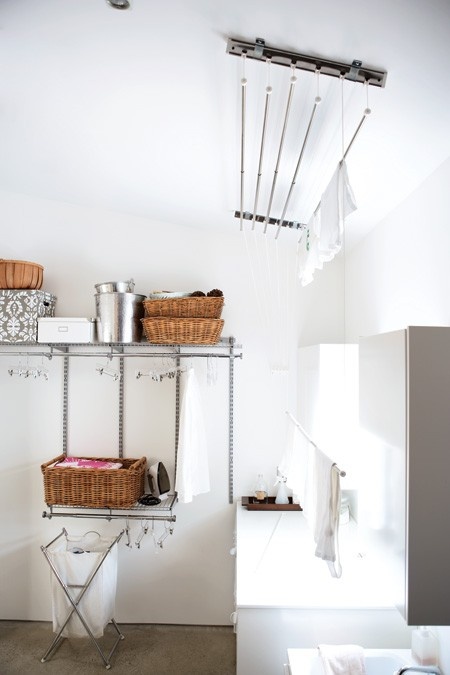
Open shelves photograph well until bottles multiply. A mix of closed cabinets and a few open baskets usually ages better. Give detergent, stain treatments, dryer supplies, spare hangers, and seasonal textiles assigned homes. Wall-mounted drying racks and retractable lines help when you want air-dry capacity without a permanent clothesline look. Pegboards or rail systems can hold brushes and lint tools if your household likes everything visible.
Hampers are part of the architecture. Separate lights, darks, and delicates at the source if people will actually use the system. Rolling bins help when laundry is gathered upstairs and rolled down. Labels are not childish in shared houses; they are how the room avoids becoming a dumping ground for everything that does not belong upstairs.
Surfaces that survive soap, water, and boredom
Choose flooring for wet-grip and easy cleanup: porcelain tile, luxury vinyl, and sealed concrete are frequent basement winners. Avoid materials that swell or stain easily. Counters should tolerate detergent drips; laminate, quartz, and butcher block each trade cost against maintenance. Backsplashes protect drywall behind sinks and machines—tile, paneling, or a well-sealed paint strategy depending on budget.
Wallpaper and murals show up often in laundry galleries because they add personality cheaply. They work best on dry walls away from splash zones. If you prefer paint, a cheerful mid-tone can make a basement feel less cave-like without showing every scuff. Laundry-themed art is optional. Clear counters and good light already signal that someone cares about the room.
Budget refresh versus full remodel
A low-cost refresh can transform an existing basement laundry without moving plumbing. Place machines thoughtfully, add a freestanding or wall-mounted folding surface, upgrade lighting, introduce matching baskets, and paint. A waterproof runner or temporary floor covering can hide tired concrete while you save for a permanent finish. Matching containers alone can make a chaotic shelf look intentional overnight.
A fuller remodel relocates machines for better flow, runs cabinetry toward the ceiling, installs a sink, improves ventilation, and finishes the space like any other room in the house. That path costs more and pays back every week in time and order. Decide which upgrade removes the most friction for your household: more counter, better light, a hanging zone, acoustic separation from a nearby family room, or simply doors that hide the mess.
If the laundry shares the basement with storage or a workshop, define the laundry bay with a flooring change, a painted zone, or cabinetry that stops the eye. Boundaries keep tools out of detergent territory and keep laundry from colonizing the whole lower level.
Details worth copying from the gallery
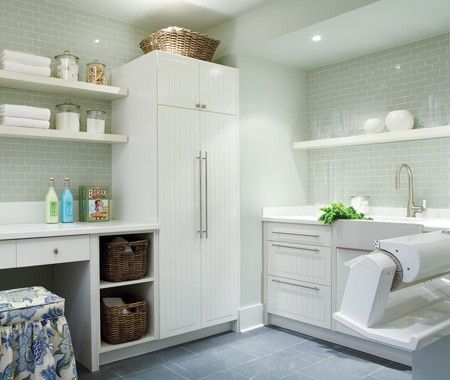
Strong laundry rooms repeat a few moves: a rod above or beside machines for hanging shirts fresh from the dryer; matching open baskets that calm visual noise; a narrow shelf of everyday products at eye level; a stool or pull-out for high cabinets; a dry landing spot for a phone so it never sits on a wet counter. Curtains or sliding doors can hide laundry from a finished lounge without building a full wall. Outlet placement near folding counters prevents extension-cord habits.
Ventilation deserves a hard look in finished basements. Humidity from dryers and damp loads will find drywall and carpet if the room cannot breathe. Follow local code for dryer exhaust, and do not treat a closed basement as a free moisture dump. A dehumidifier in the wider basement can support the laundry zone when climate and construction demand it.
Pick the single worst friction in your current setup—no folding space, bad light, nowhere to hang, bottles everywhere, or a treacherous floor—and fix that first. Then use these images to choose the next upgrade. A basement laundry does not need to win a design contest. It needs to make the next load easier than the last one, in a room you do not dread walking into on a Tuesday night with a basket of towels.

Comments
Continue reading
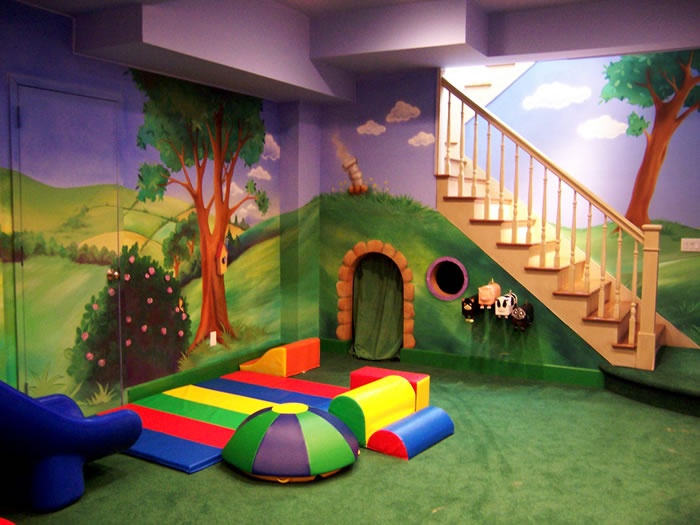
Fun Ideas for a Kids’ Basement Playroom
Turn a finished basement into a kids’ playroom with zones, storage, light—and safety notes on moisture, egress, stairs, and anchored furniture.
Laundry Room Design Ideas That Make Wash Day Easier
Layout, storage, light, and finishes for laundry rooms—from stacked closets to mudroom combos—with practical cues drawn from real room photos.
Window Seats That People Actually Sit In
Depth, cushions, storage, and light—how to build or dress a window seat so it becomes a reading spot instead of a dumping ground for laundry.