
Cardboard Ladies (Dame di Cartone) by Christian Tagliavini
Christian Tagliavini’s Dame di Cartone portraits dress women in handmade cardboard couture—baroque, fifties, and cubist echoes built as craft photography.
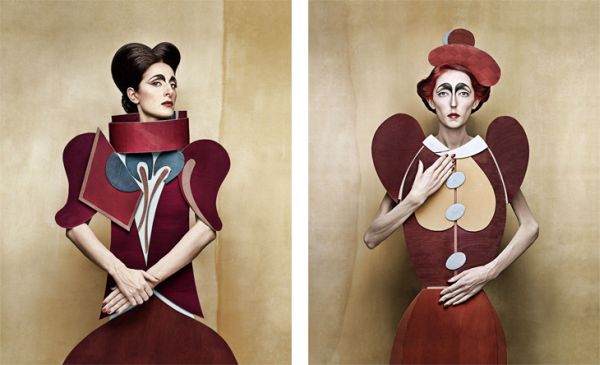
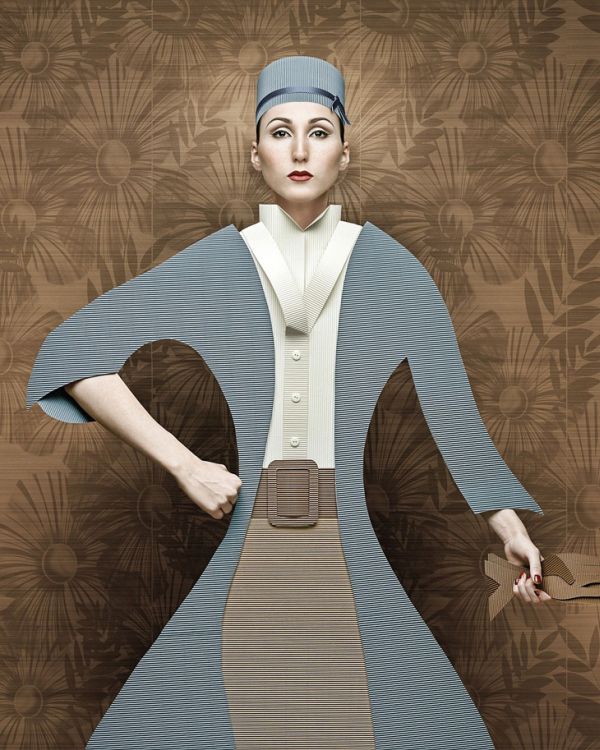
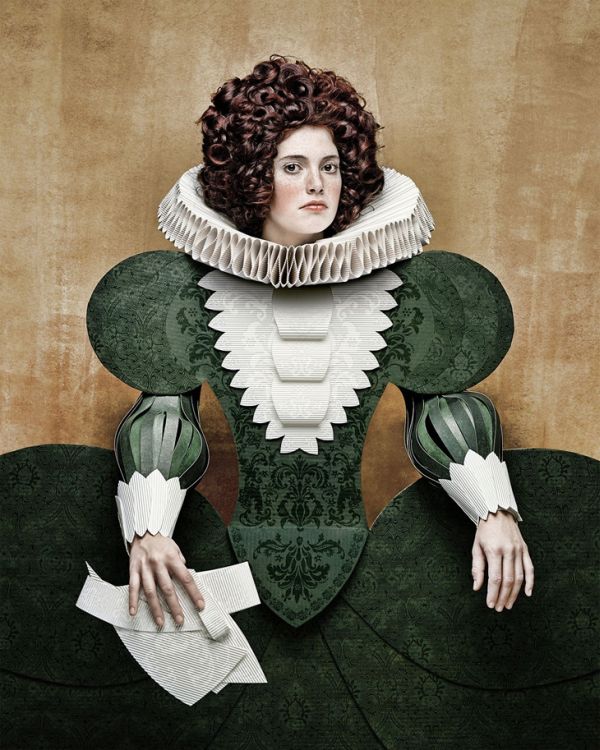
Christian Tagliavini’s series Dame di Cartone—Cardboard Ladies—turns portraiture into a craft workshop. Swiss-Italian and describing himself as a craftsman of photography, Tagliavini designs, patterns, and builds elaborate costumes from cardboard and paper, then photographs women wearing them so the finished pictures recall historical painting, fashion illustration, and paper-doll fantasy at once. The clothes are not fabric stand-ins. They are constructed objects whose flatness is part of the joke and part of the beauty.
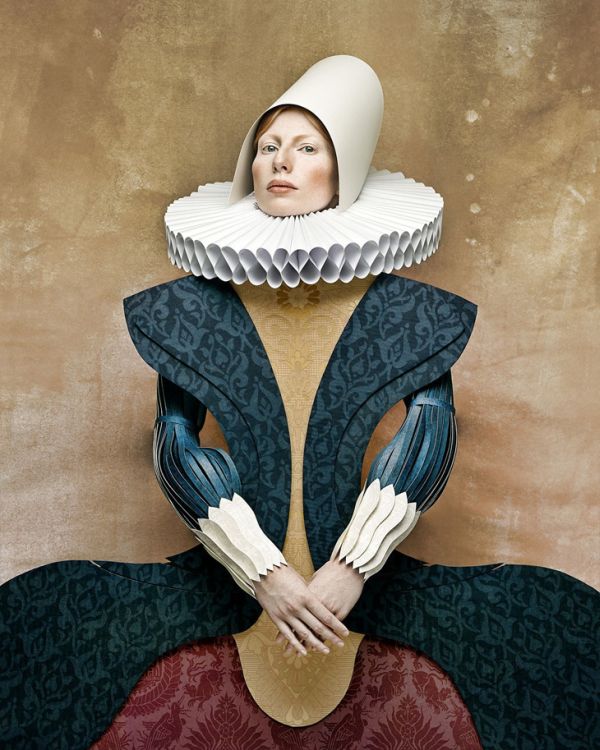
Completed as a body of work around 2008 and widely shared in design and photography circles in the early 2010s, the series samples eras the way a careful collector samples references: seventeenth-century formality, 1950s silhouette (including nods toward Christian Dior’s New Look), and cubist geometry. The faces, necks, and arms stay fully dimensional. The finery stays almost diagrammatic. That collision—living skin against ruled edge—is the hook that still makes the gallery stop a scroll.
Paper, pattern, and total creative control
Tagliavini does not outsource the wardrobe. He enjoys the process as much as the resulting photograph: inventing the garment, cutting and constructing it, casting the model, directing the pose, and making the exposure with as much done in situ as possible. Using cardboard and paper instead of cloth lets him control form from the first pattern line to the final volume. Seams can be graphic. Collars can become planes. Skirts can open into architectural wings that fabric would collapse under its own weight or soften into folds.
The costumes are fantasy—nothing anyone would wear to a party—and he is open about that artifice. Reducing post-production keeps a sense of immediacy. Illusory lengthening of the neck and other small on-set adjustments belong to the mise-en-scène rather than to heavy digital invention. The photographs retain the feeling of a stage production caught cleanly: costume, casting, lighting, and posture locked together before the file leaves the studio. Labor is not hidden; it is the subject’s silent partner.
That control also explains why the pictures feel authored rather than found. Many fashion photographs begin with a rack of clothes and a rented location. Dame di Cartone begins with scissors, glue, and a drawing. By the time the shutter fires, Tagliavini has already been designer, pattern-maker, costume builder, casting director, and photographer. The portrait is the last step of a longer craft chain.
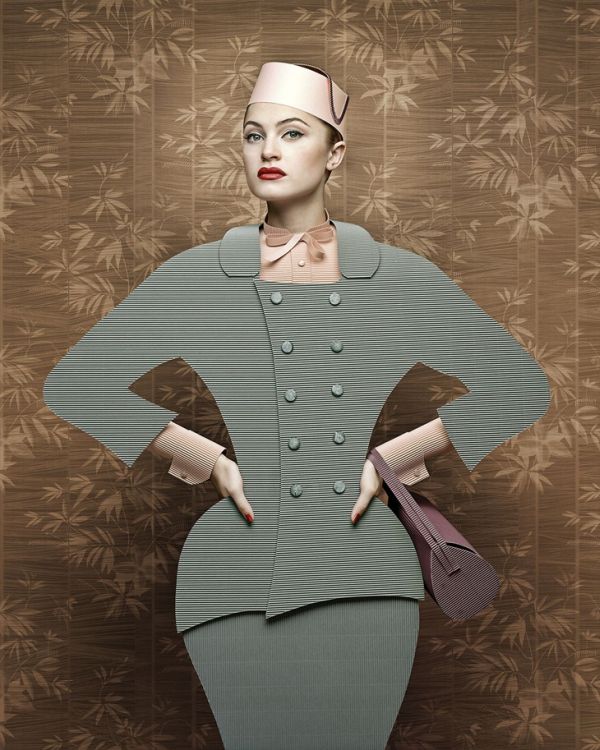
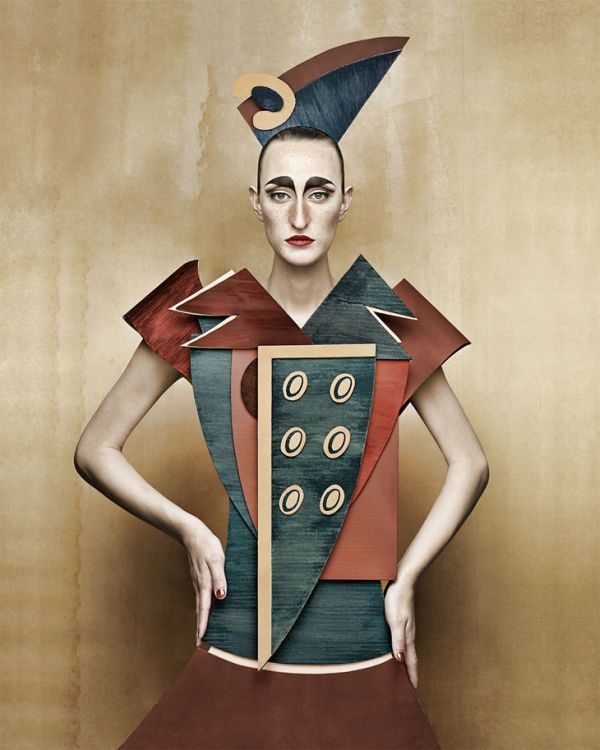
Historical echoes without costume-drama literalism
Viewers often say the portraits mimic historical paintings. That is fair as a first impression—formal poses, careful hands, ornamental silhouettes—but Tagliavini is not reconstructing a single museum room. He samples. Baroque volume sits beside modernist flat planes. A mid-century waistline can share a gallery wall with cubist facets. The series behaves less like historical reenactment and more like fashion sketches that somehow stood up and learned to breathe.
Critics have compared the large prints to grown-up paper dolls, to children’s-book illustrations, and to the experimental costume spirit associated with artists such as Sonia Delaunay for theatrical modernism. The fairytale quality is real: human skin against cardboard armor creates a mild uncanny pause, as if a figure were caught halfway between drawing and person. One reading likens that halfway state to a puppet mid-transformation—alive enough to look back, still built enough to remind you of the workshop.
Tagliavini also understands the irony. Fashion’s permanence is a myth; cardboard makes impermanence visible while still delivering grandeur. A dress that cannot survive rain becomes, in the photograph, more immortal than many real garments of its referenced decade. The material argues with the genre: portraiture promises lasting likeness; paper promises temporary structure. Holding both ideas in one frame is part of the series’ quiet intelligence.
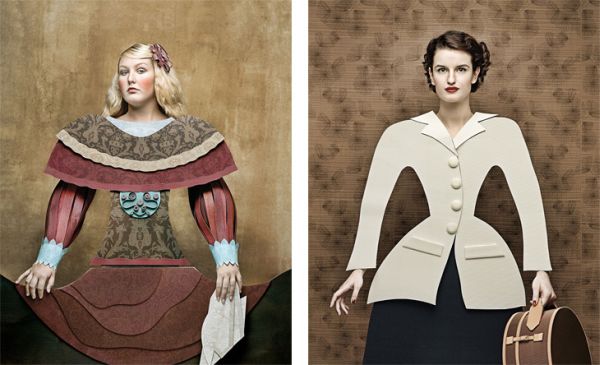
How to look at the gallery
Move through the images slowly enough to separate face from garment. Notice where cardboard edges catch light like painted contour lines. Notice how hair and makeup stay refined so the contrast with paper does not tip into parody. Watch the hands: many historical portrait conventions live in gesture, and Tagliavini uses that vocabulary without burying the models under props. A turned wrist or a resting finger can carry as much period memory as a ruff or a peplum.
Compare vertical portraits that emphasize column-like presence with wider frames that let ornamental wings or skirts expand. In some pictures the costume dominates almost like architecture; in others the gaze holds equal weight. Neither is accidental. Craft photography of this kind succeeds when every surface—skin, paper, background—has been decided rather than found. Backgrounds tend to stay disciplined so the costume’s geometry remains readable. Busy sets would fight the cardboard’s graphic clarity.
It also helps to ask what material substitutes are doing psychologically. Cardboard is humble, recyclable, associated with packaging and children’s projects. Here it performs aristocracy. That class joke never needs a caption; the eye feels it. The models are not mocked. They are elevated by absurd means, which is a gentler satire of fashion’s theater than a sneer would be.
Craftsman of photography, and what came after
Dame di Cartone sits at the beginning of a longer Tagliavini path that later includes meticulously built series such as 1503, Carte, and other historical-fantasy projects. The cardboard ladies already contain the method those later works expand: research, handmade construction, controlled studio theater, and a portrait that feels both contemporary and cited. Exhibitions that call him a photographic craftsman are naming the labor that casual viewers might miss if they only scroll the final files. Sketches, hats, dresses, and room fragments shown beside prints in later shows make the workshop visible; Dame di Cartone is where that ethic announces itself in public.
For artists and photographers, the series is a useful argument against outsourcing every specialized skill. Pattern-making, set discipline, and photographic direction reinforce one another. Learning to build changes how you light edges; learning to light changes how you design folds that must catch a key light cleanly. For fashion-interested viewers, it is a reminder that silhouette can be studied in materials that refuse to behave like cloth. For everyone else, it is simply a memorable gallery: women held in poses of painted dignity while wearing architecture made of paper.
The early-2010s web wave that carried these images—design blogs, photography sites, curious lifestyle posts—sometimes treated them as a one-day novelty: “look, dresses made of cardboard.” That pitch undersells the work. Novelty gets a click; craft rewards a second visit. Returning to the set years later, what holds is not the material stunt alone but the consistency of authorship across faces, eras, and constructions.
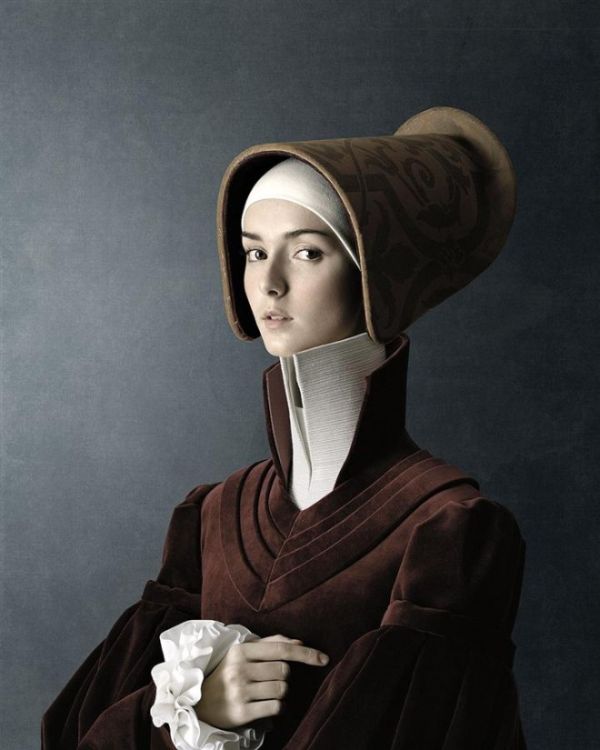
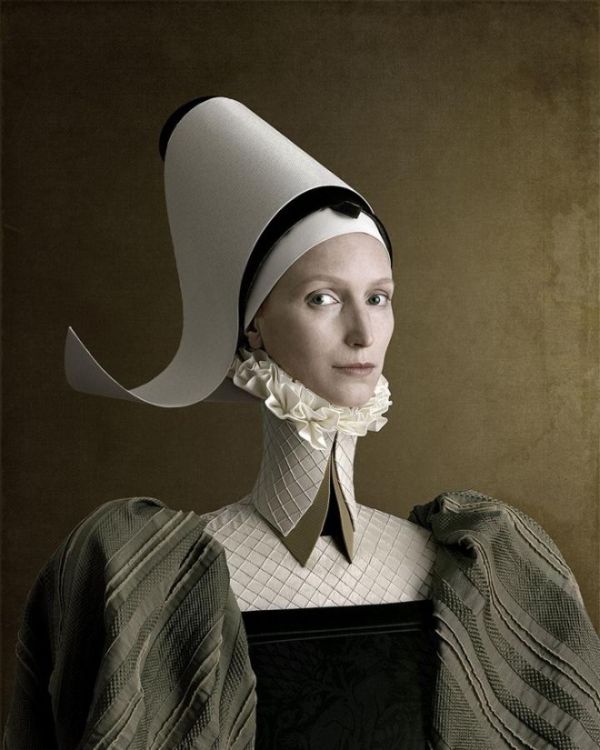
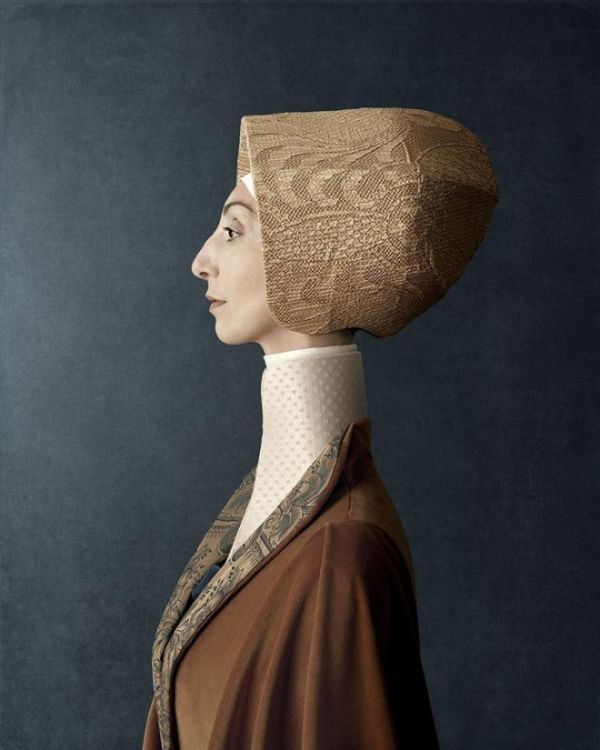
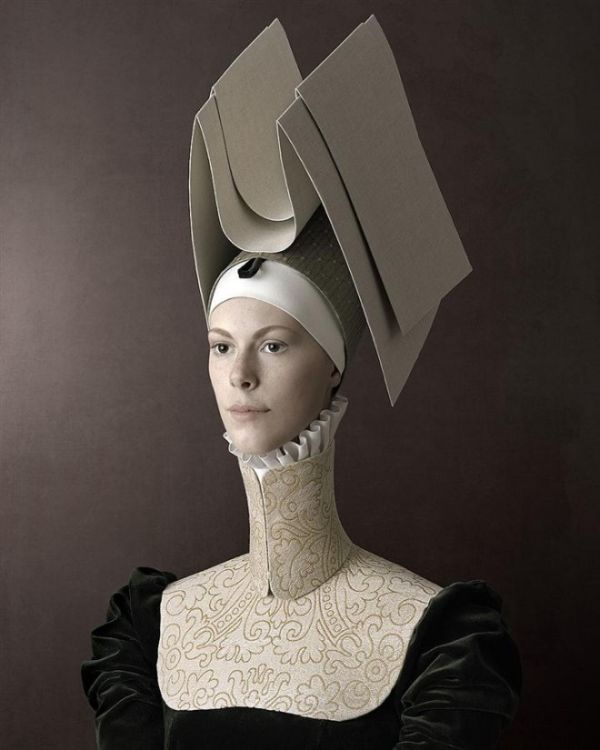
If one portrait in the set stops you, stay with its edges. Trace the cardboard seam the way you would trace a brushstroke in a painting, then return to the eyes. Ask whether the costume is quoting a century or inventing one. Ask whether the model looks costumed or crowned. That back-and-forth—between handmade surface and living presence—is where Dame di Cartone still works, long after cardboard couture first looked like a viral curiosity.

Comments
Continue reading
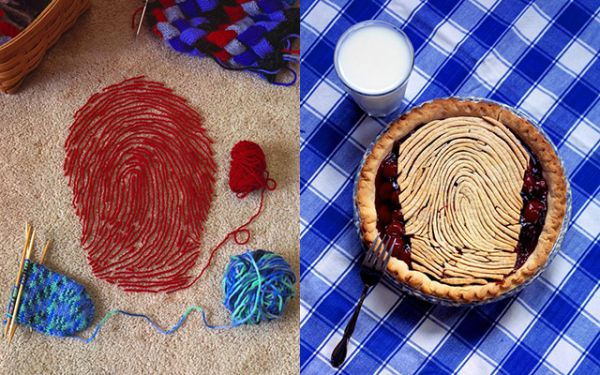
Fingerprint Art by Kevin Van Aelst: Autobiography in Ridges
Connecticut photographer Kevin Van Aelst rebuilds each of his ten fingerprints from mustard, wool, snacks, and other memory-laden materials—turning biometrics into still-life self-portraiture.
Luzinterruptus: Plastic Garbage Bags Lighting Installation in Winterthur
Luzinterruptus’s 2012 Winterthur installation Plastic Garbage Guarding the Museum—5,000+ illuminated bags left outdoors for four months.
Guy Whitby’s Celebrity Portraits Made of Computer Keys
Australian artist Guy Whitby (WorkByKnight) builds meticulous celebrity mosaics from keyboard keys, calculator pads, and phone buttons—analogue-to-digital faces in tile form.