
Miniature Garden Models: Tabletop Landscapes You Can Plant and Redesign
Build dish and fairy-style miniature gardens with drainage, scale-aware plants, hardscape paths, polymer-clay accents, clear themes, and a simple care checklist.
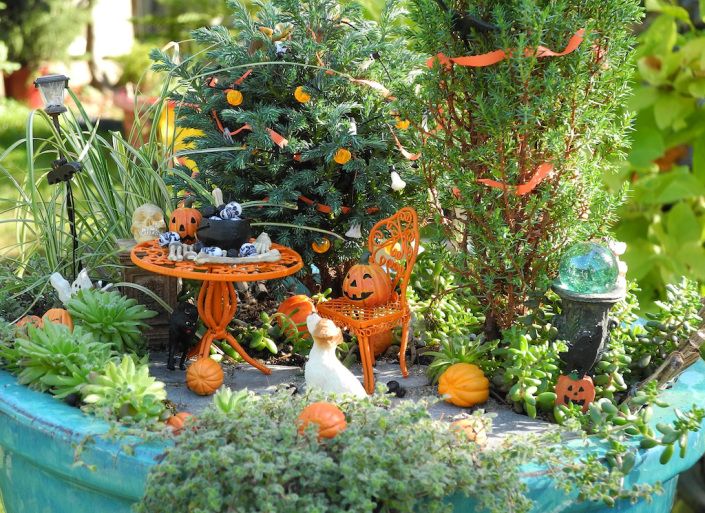
When outdoor beds sleep under frost or you simply lack a yard, a miniature garden keeps the habit of planting, arranging, and rearranging alive on a tabletop. These small landscapes—sometimes called fairy gardens, dish gardens, or miniature scenes—combine real plants with tiny paths, fences, and figures at a scale you can redesign in an evening. Some setups are simple bowls of moss and stone. Others become elaborate model worlds with polymer-clay accessories and layered terrain. Both count, as long as the plants can live in the container you choose.
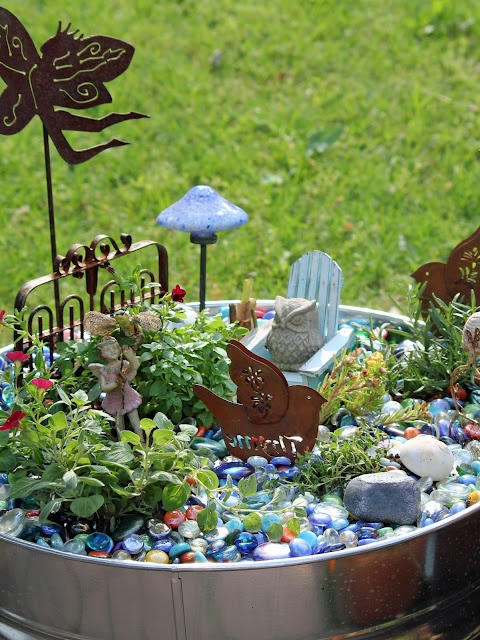
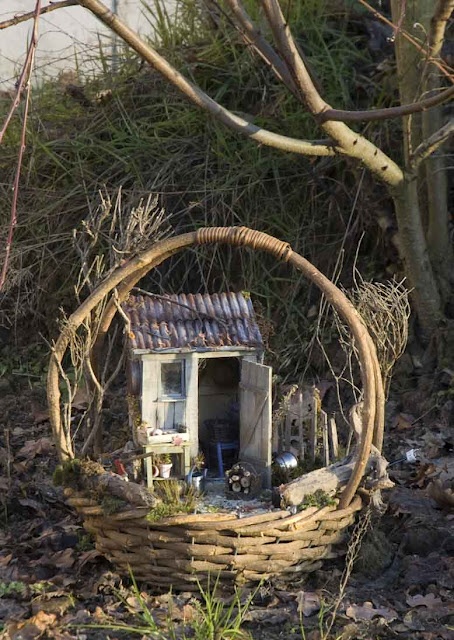
Winter is a natural season for this craft because the outdoor garden asks less of you, but miniature landscapes work year-round on bright windowsills and shaded porches. The photos that inspired this kind of modeling reward close looking: scale, texture, and a clear “story” in a small footprint. Before you buy every miniature bench in the craft aisle, decide whether you want a living planted dish, a mostly decorative scene with few plants, or a hybrid you can refresh seasonally.
Containers, drainage, and soil
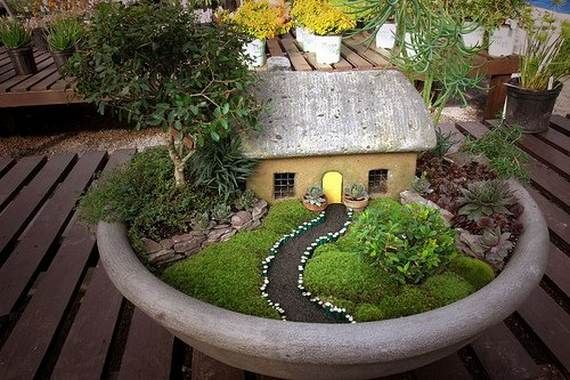
Wide shallow bowls, hypertufa troughs, wooden crates lined with plastic, old drawers, and classic terracotta saucers all work if drainage exists or you water with extreme care. Drill holes when you can. Without drainage, use a gravel layer and water sparingly, or keep plants in nursery pots nested into the display so you can lift them to empty standing water. Succulent mixes suit arid miniature deserts; moisture-retentive potting mix suits mosses, baby tears, and small ferns. Do not mix desert and bog plants in one dish unless you enjoy watching half the cast fail.
Elevate the container on feet or a cachepot tray so overflow does not ruin furniture. Indoor scenes near heaters dry out fast; outdoor miniature gardens need wind-stable ornaments so tiny chairs do not migrate across the patio.
Scale is the whole game
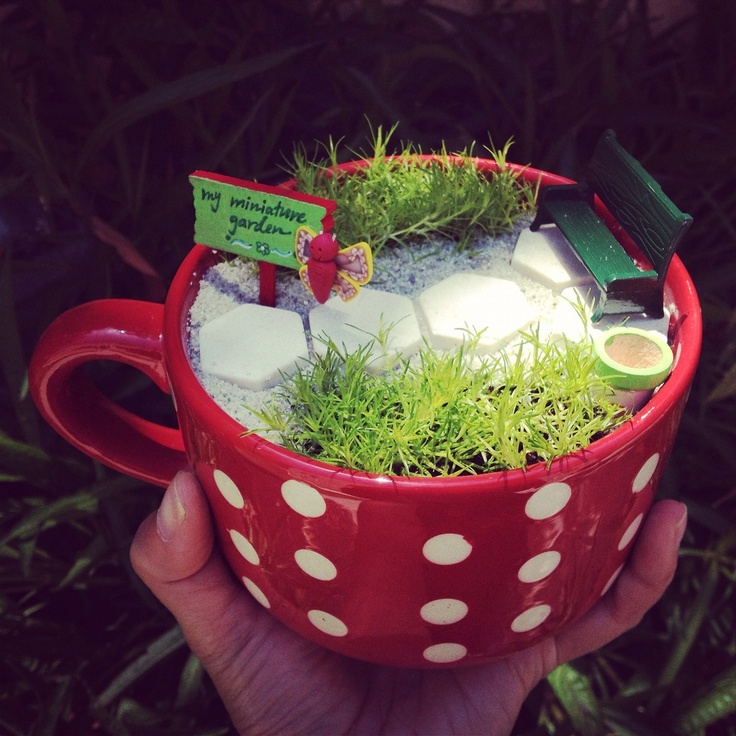
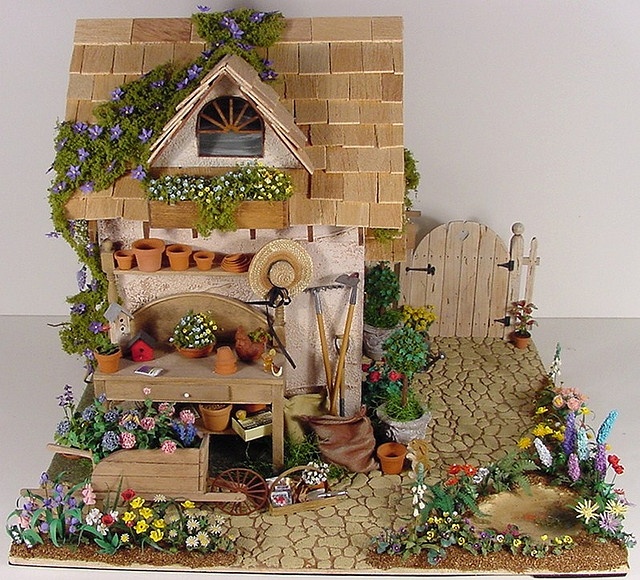
Pick a scale and defend it. If your cottage door is two inches tall, a “tree” should not be a full grocery-store herb that dwarfs the roof by next month. Slow-growing miniatures, cuttings of thyme, small sedums, Irish moss, and carefully pruned boxwood cuttings keep proportions honest. Paths made from fine gravel, crushed terracotta, or sand read better than large river rocks that look like boulders next to a pea-sized bench.
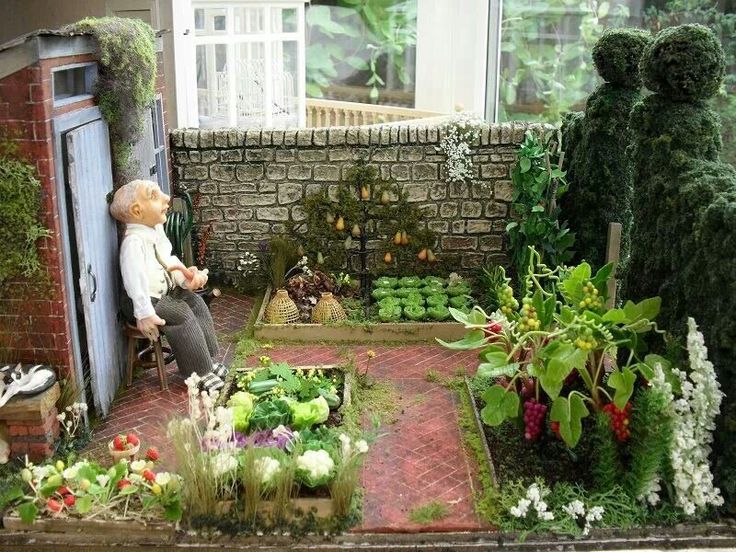
Sketch a simple plan: entrance, focal structure, planting masses, and empty “lawn” or courtyard so the eye can rest. Crowding every inch with accessories makes a junk drawer, not a garden. Leave negative space the way a real landscape leaves sky and open ground.
Hardscape: paths, walls, and water suggestions
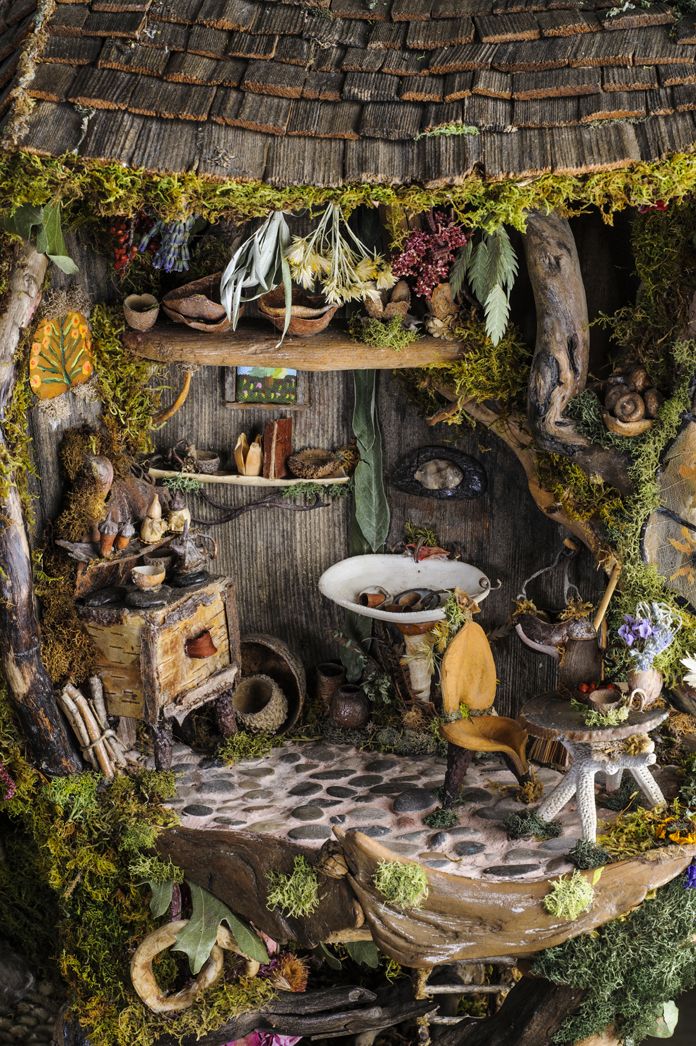
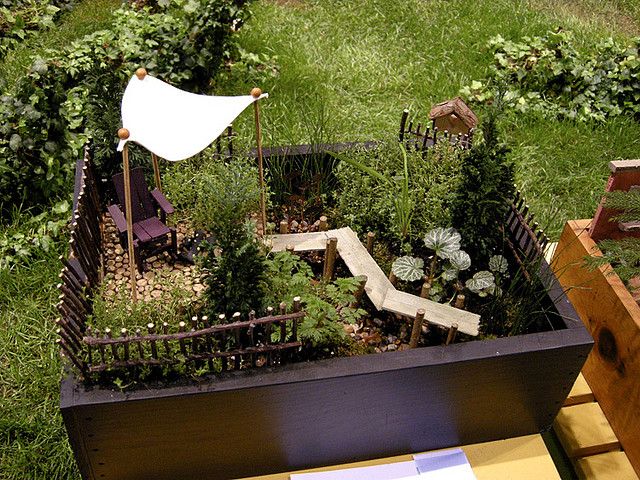
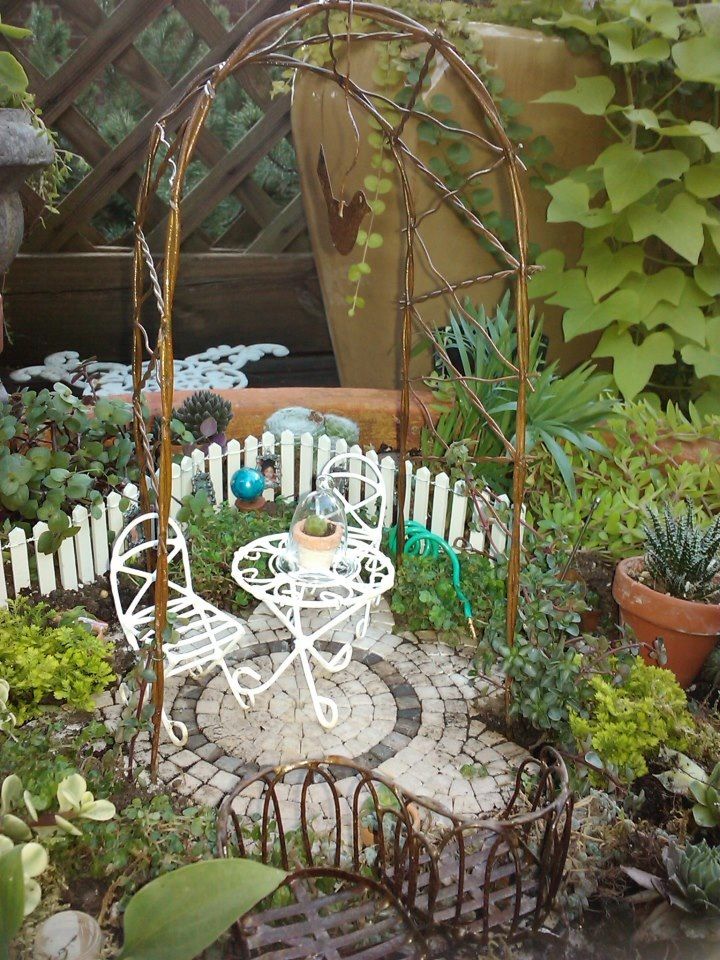
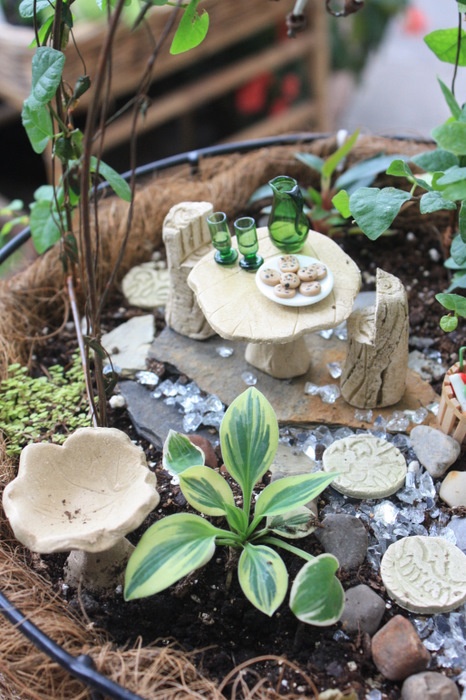
Hardscape anchors the fantasy. Stack slate chips for steps, press pebbles into a mortar of diluted glue for dry-looking walls, or use twigs bound with fine wire for rustic fences. A mirror shard or clear resin pour can suggest a pond if edges are disguised with moss and stone—smooth sharp edges first if children will handle the scene. Twig arbors and wire trellises give climbing vines a job even when the “vine” is a trailing sedum.
Raise small hills with mounded soil over buried foam or crumpled mesh so terrain is not a flat pancake. Cover structures with mix and plants so the under-support disappears. Removable features help when you need to dig for roots later.
Living plants that stay in scale
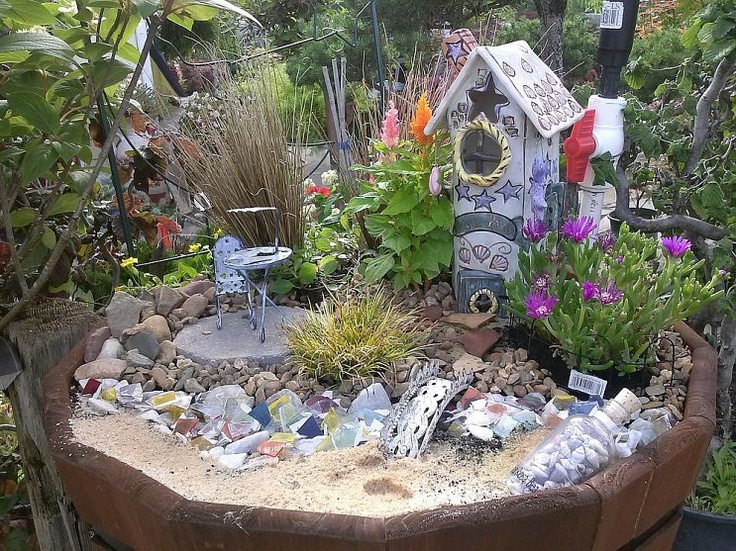
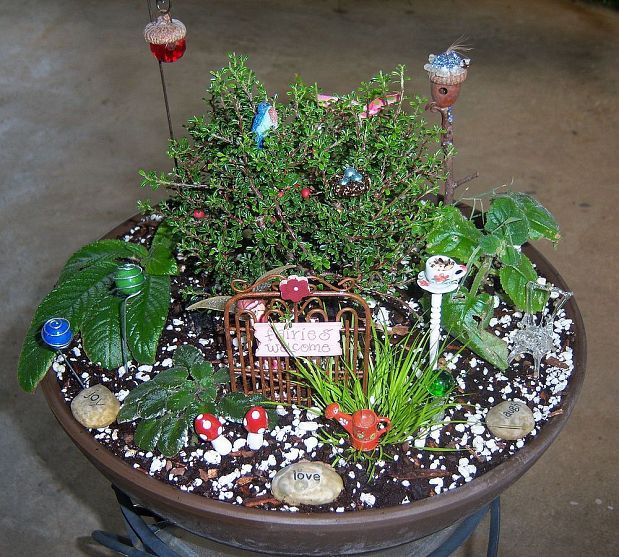
Choose plants for mature size, not the cute four-inch pot they arrive in. Succulents like miniature hens-and-chicks, low sedums, and haworthia fit arid themes. For woodland looks, try miniature ferns, saxifrages, and moss gathered responsibly or bought as sheet moss. Herbs such as creeping thyme double as groundcover and release scent when brushed.
Pinch and prune regularly. Miniature gardens fail when one vigorous plant eats the composition. Rotate the container for even light, and accept that you will replace plants seasonally—the modeling is ongoing, like a real garden. Mist mosses; water succulents deeply but infrequently. Remove fallen leaves so they do not smother tiny groundcovers.
Polymer clay and handmade accessories
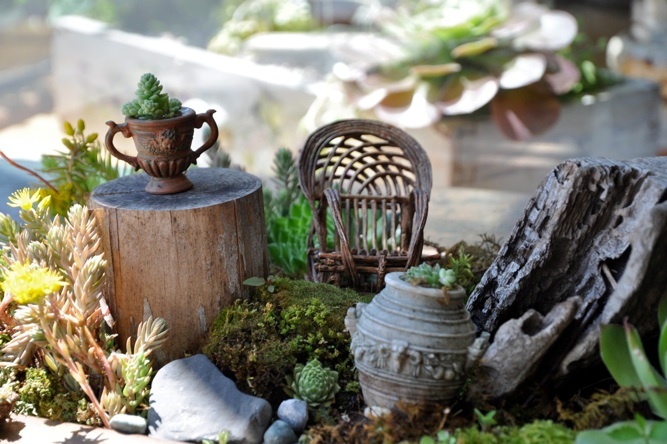
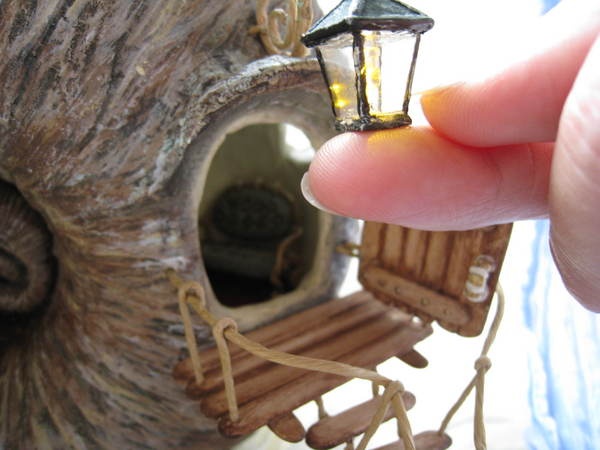
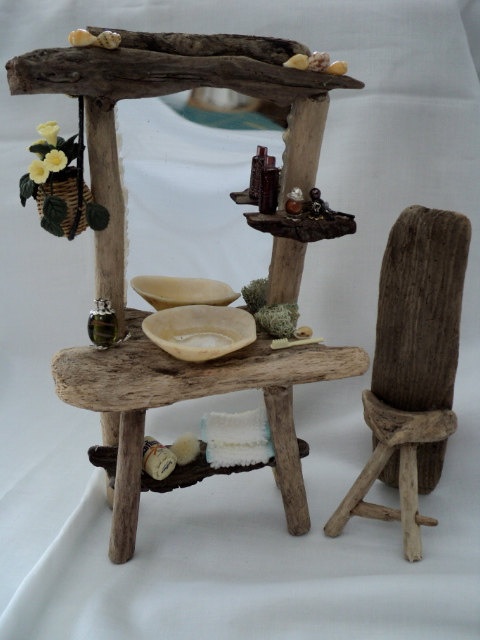
If you enjoy polymer clay, you can sculpt planters, mushrooms, stepping stones, food for a picnic table, and characters that match your exact scale. Condition clay well, bake on a dedicated tray, and seal pieces that will sit on damp soil so colors do not soften. Wire armatures inside thin legs keep figures from snapping. Mix handmade pieces with a few found objects—buttons as plates, thimbles as pots—so the scene does not feel like a store display.
Paint wood scraps for sheds, and use sandpaper grit as gravel texture on clay paths before baking when the brand allows inclusions. Keep a small parts box labeled by scale so a 1:24 bench does not accidentally join a coarser scene later.
Themes that keep decisions easy
A theme prevents random collecting. Cottage gardens lean toward roses in miniature form (or pink sedum stand-ins), picket fences, and warm-toned gravel. Zen trays use raked sand, one stone group, and almost no figurines. Desert dishes favor terracotta, bone-dry accents, and sparse planting. Beach scenes use pale sand, driftwood, and blue glass; keep salt air and true seawater off metal findings that rust.
Seasonal overlays—tiny pumpkins in fall, evergreen sprigs in winter—let you refresh without rebuilding the bones of the landscape. Photograph each version; miniature gardens are easy to over-edit until you forget what worked.
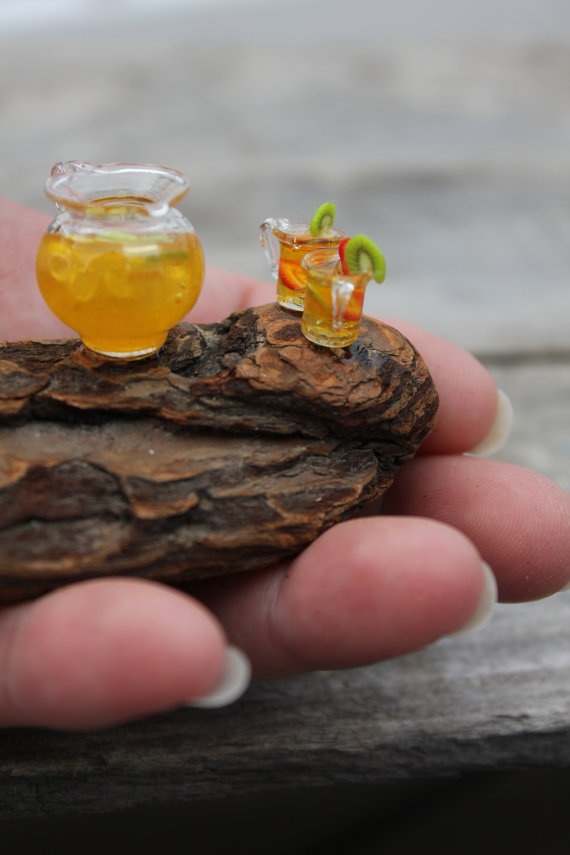
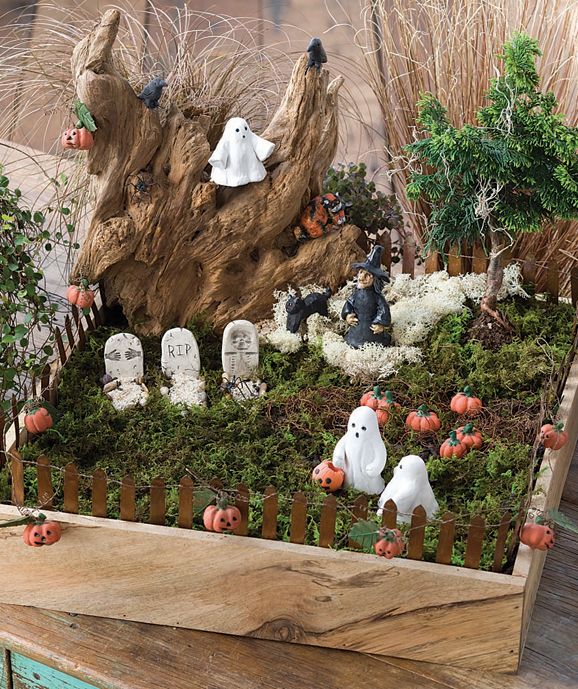
Lighting, placement, and daily care
Most miniature plantings want bright indirect light indoors. Direct midday sun through glass can cook shallow soil. Outdoor tables need a site with appropriate sun for your plant list. Small clip-on grow lights help winter windowsills without heating the clay accessories.
Water with a dropper, syringe, or mini watering can so you do not flatten gravel paths. Groom weekly: trim, sweep debris, reset figures that tipping plants have shoved aside. Check for fungus gnats in rich indoor mixes and let the top layer dry when appropriate for your plants.
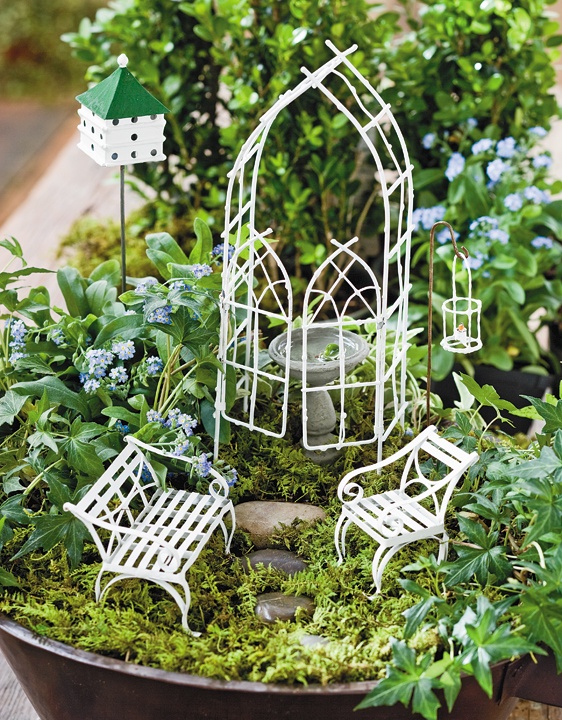
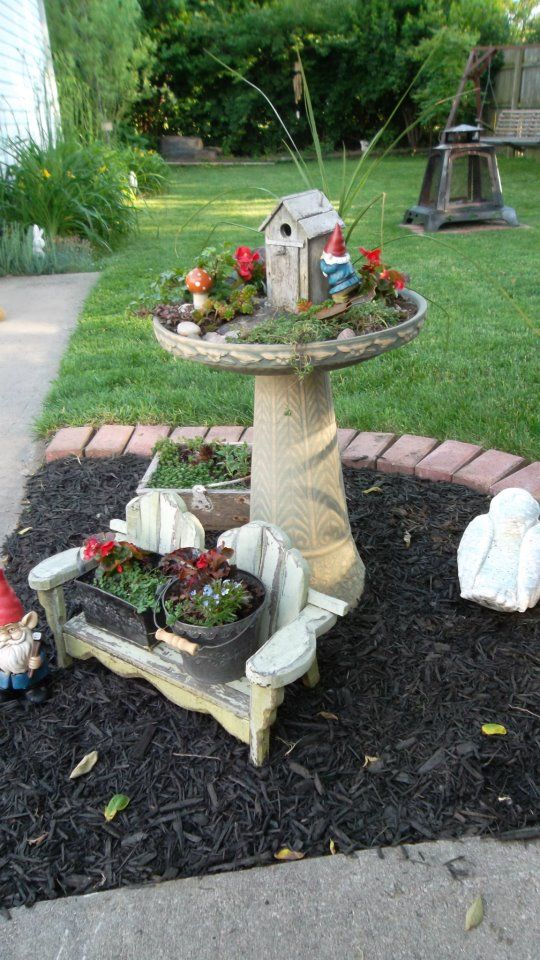
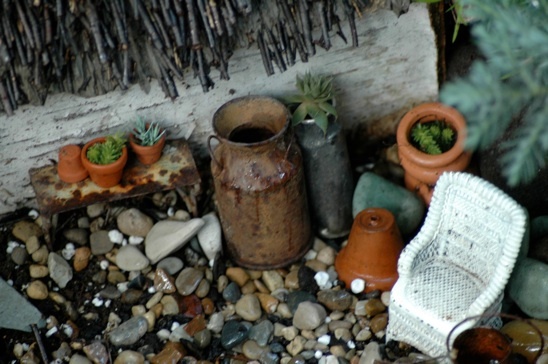
Easy starter versus challenge build
Beginners can succeed with one shallow bowl, three compatible plants, a gravel path, and two accessories. Challenge builds add elevation changes, handmade clay villages, working-looking wells, and layered plant communities. Neither is morally better; the hard version simply needs more pruning time and a willingness to rebuild when a plant outgrows its role.
If you share the hobby with kids, assign them movable figures and seasonal décor while adults handle sharp tools, clay baking, and fertilizer. Keep small magnets and beads away from toddlers who still mouth objects.
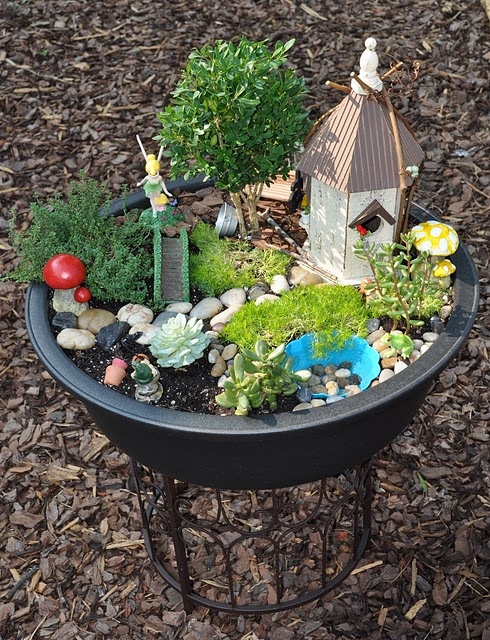
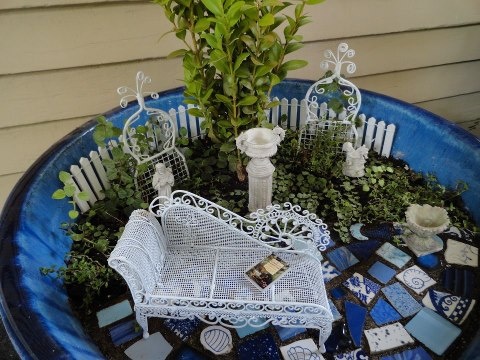
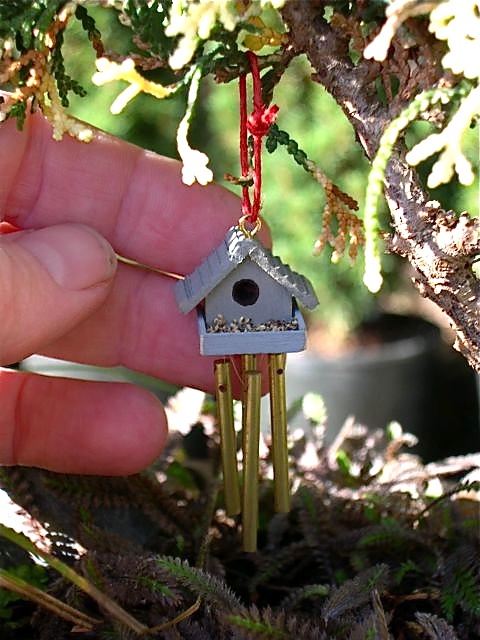
Checklist before you call it done
- Drainage plan decided and tray in place.
- Plant list shares water and light needs.
- Scale consistent from door to tree to path width.
- Focal point visible from the main viewing angle.
- Accessories sealed or chosen for damp soil contact.
- Room to prune without demolishing the hardscape.
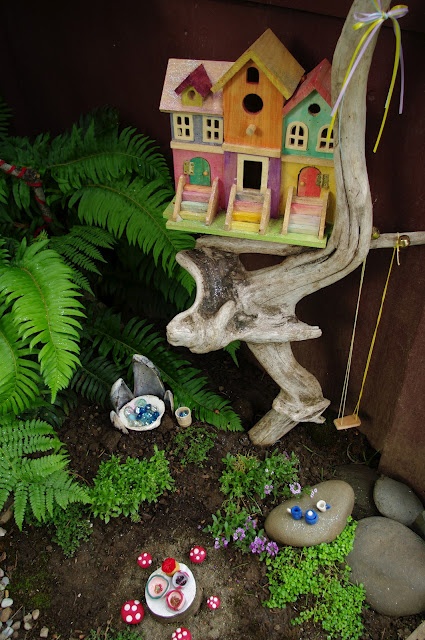
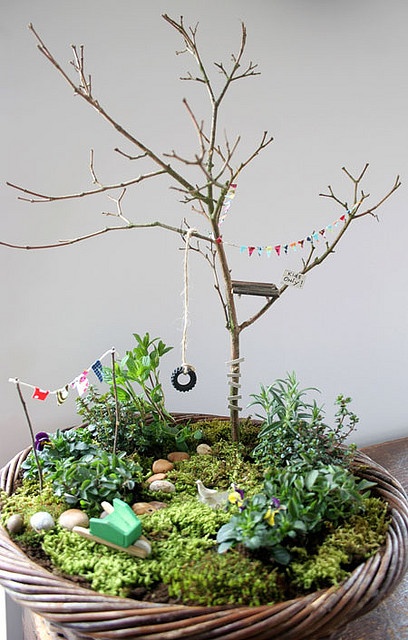
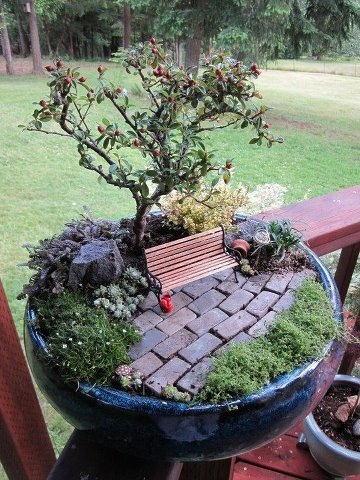
Which corner of your home gets the best gentle light in the late afternoon? Set the finished dish there for a week before you add another accessory. If the plants hold and the path still reads clearly from your chair, the model is doing its job—whether the outdoor garden is buried in snow or simply too far from the kettle.

Comments
Continue reading
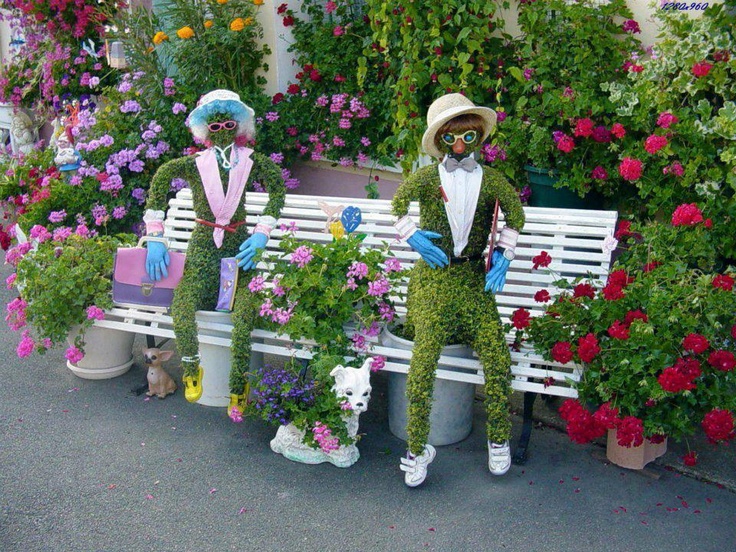
Garden Decoration Beyond Beds: Lace, Mosaiculture, and Upcycled Yard Art
From dressed topiary and floral cyclists to license-plate dragonflies and lace between trees—garden decorations that give a yard a voice.
Garden Walkway Designs: Materials, Width, Edges, and Planting Ideas
Pathway design ideas for stone, brick, gravel, concrete, and wood—plus width, drainage, edges, and planting that make a walkway work day to day.
How to Create an Indoor Herb Garden at Home
Grow rosemary, thyme, parsley, mint, and dill indoors with the right light, drainage, and planters—from window boxes and wall mounts to simple DIY pots.