
How to Decorate Wedding Chairs Without Overdoing It
Sashes, florals, and simple accents that pull ceremony and reception seating into the same design story—matched to the chairs you actually have.
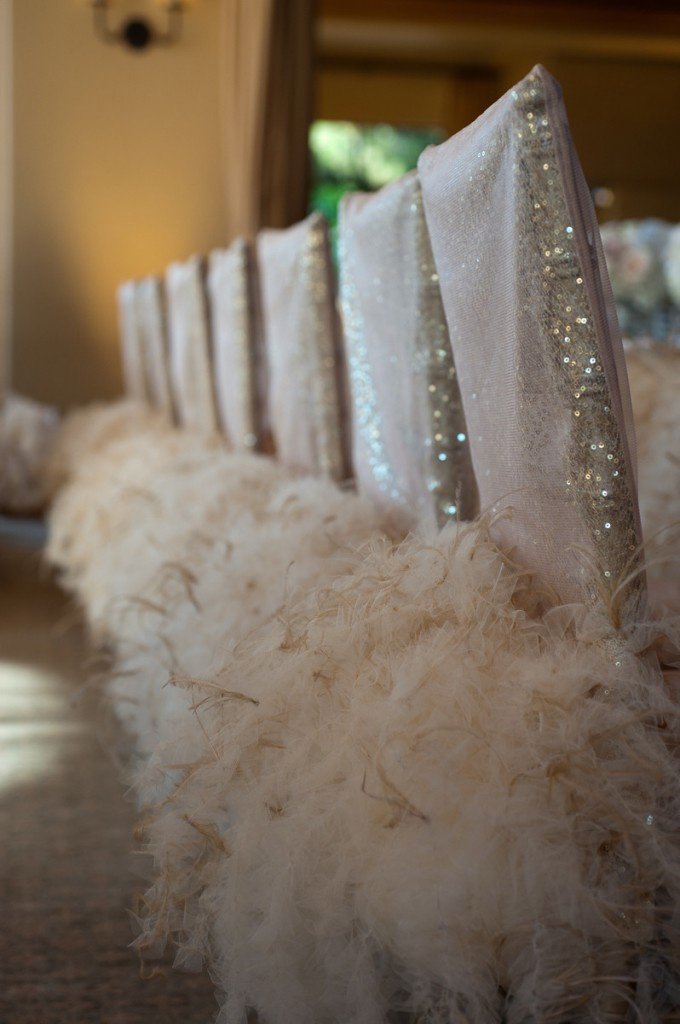
Guests notice chairs before they notice the cake. Rows of bare folding seats can make a carefully planned ceremony feel unfinished, while a simple sash, a small bouquet, or a ribbon trail can pull the seating into the same story as the aisle and the tables. Chair décor does not need to be expensive or complicated. It needs a clear style, materials that hold through photos and dancing, and enough repetition that the room feels intentional rather than patched together.
Whether the chairs are Chiavari rentals, wooden fold-outs from a village hall, garden benches, or mismatched thrift finds, the same principles apply: pick one or two decorative moves, match them to the color story, and leave guests enough space to sit and stand without snagging silk or knocking petals into the grass.
Start with the chair you actually have
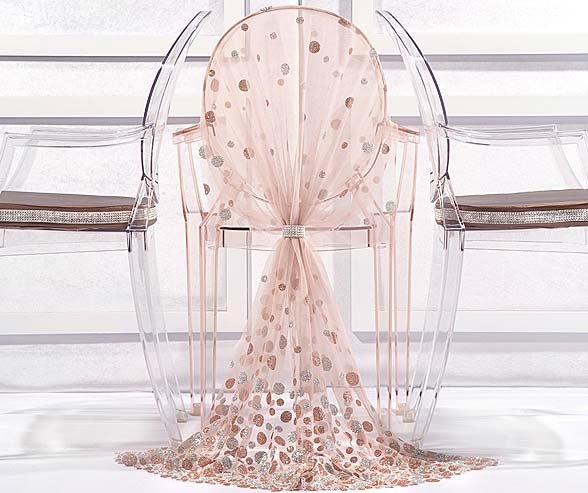
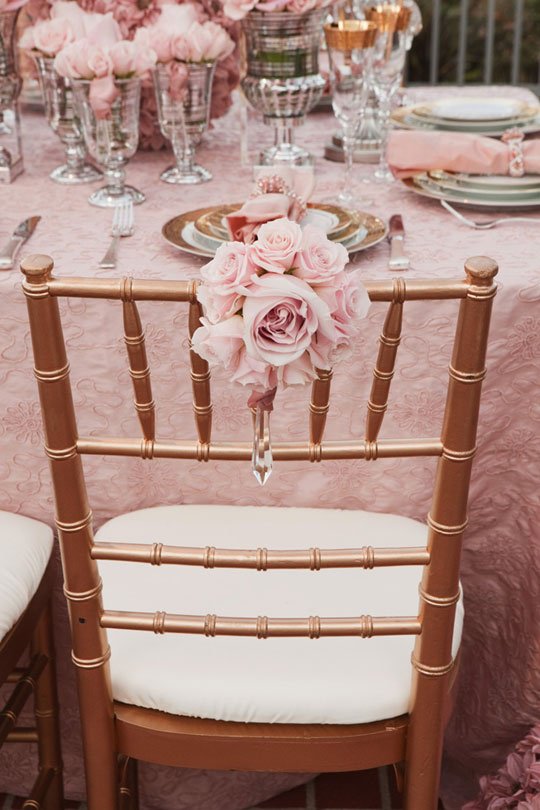
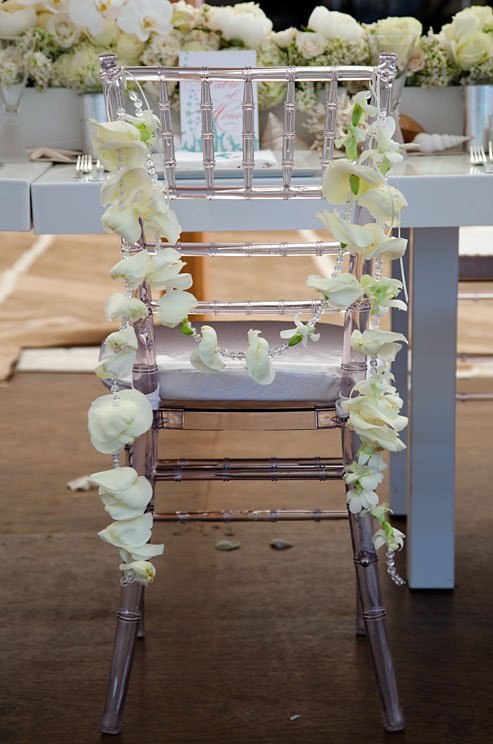
Decorate for the silhouette in front of you, not the chair in a magazine. A round-backed Chiavari looks refined with a slim sash tied low and a small floral cluster on the bow. A square banquet chair can take a fuller fabric wrap. A rustic wooden fold-out loves raw linen, jute, kraft paper, or a single stem tucked into twine. Transparent ghost chairs already feel modern; overload them and they disappear under fluff.
Count how many chairs need full treatment. Many couples decorate every seat for the ceremony and only the sweetheart or head table for the reception, or reverse that plan if dinner is the visual focus. Decide early so you do not buy eighty matching bows when twenty will do the job. Note which chairs face the camera during vows; those backs get the highest level of finish.
Sashes, tulle, and fabric that behave
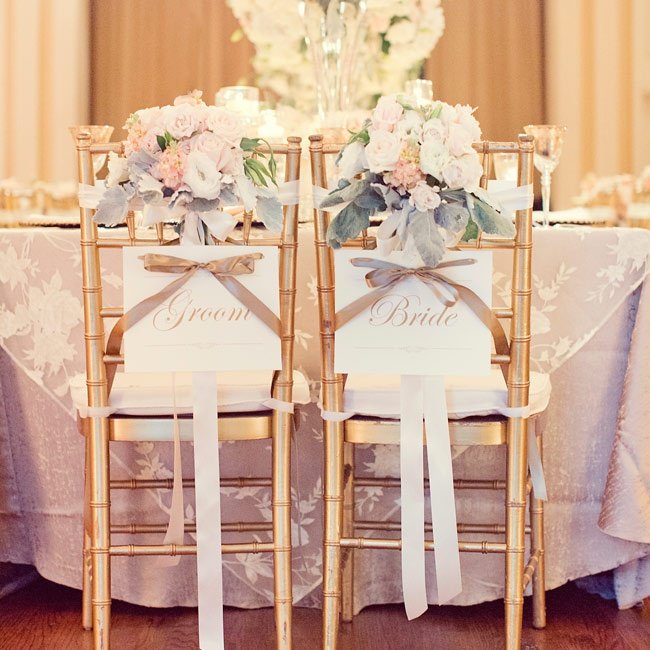
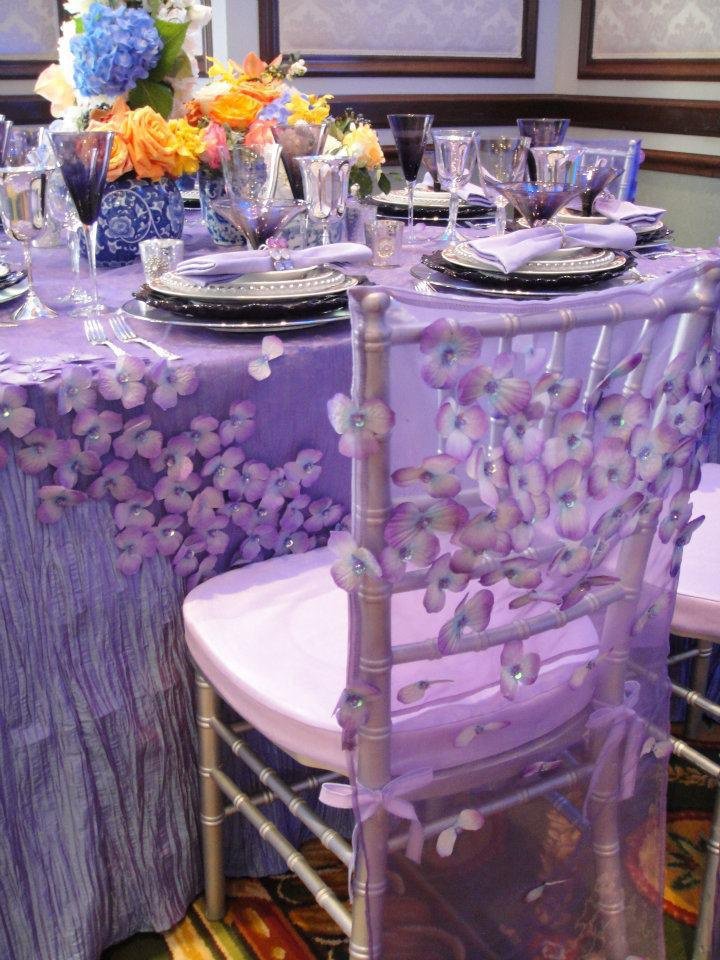
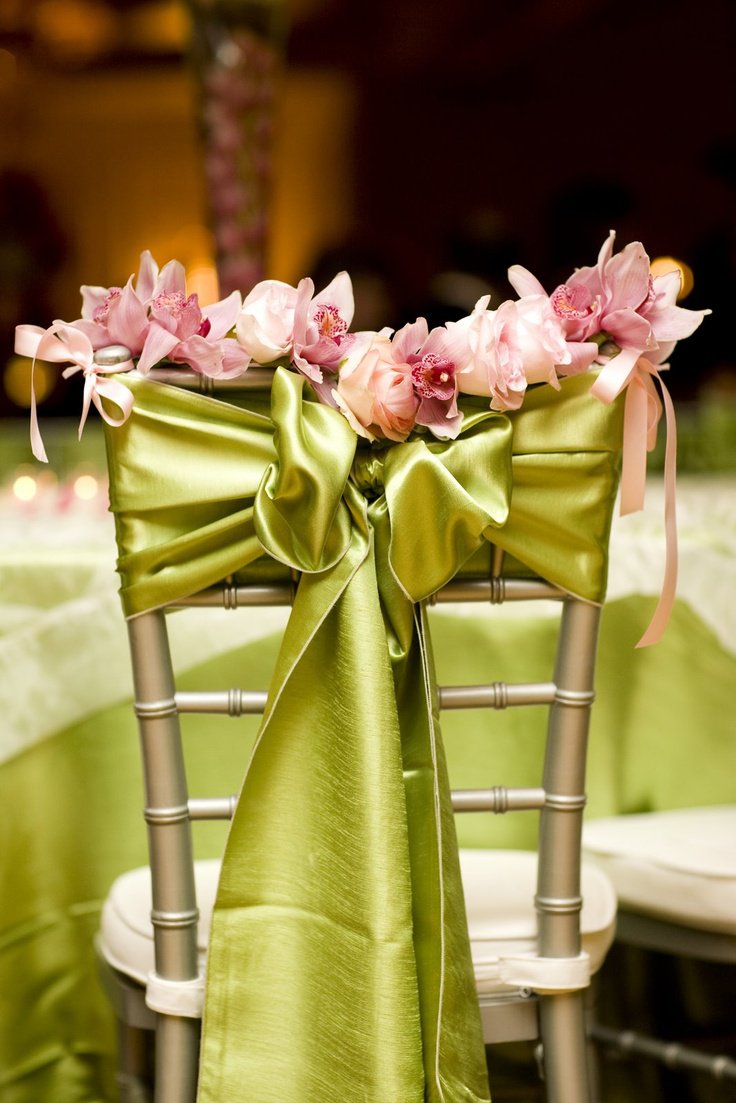
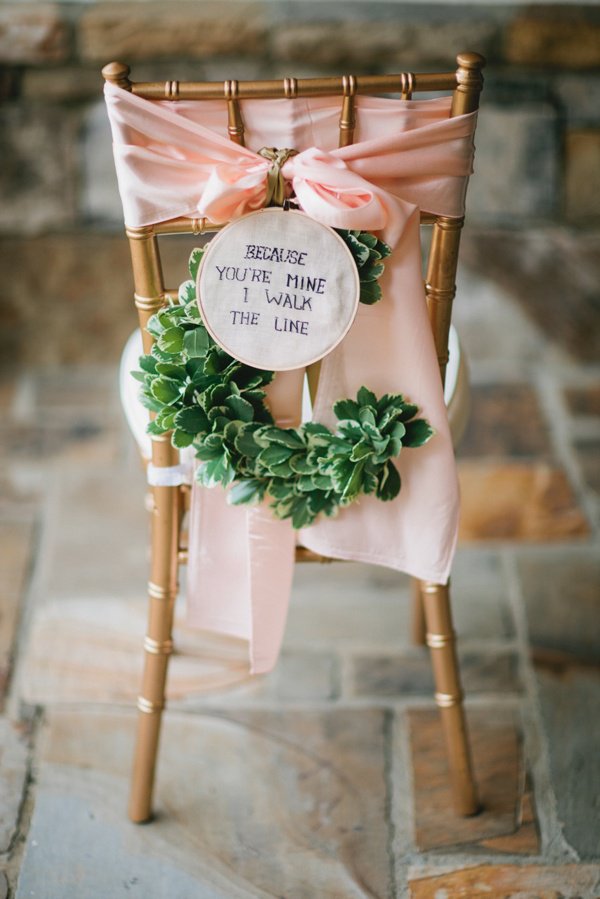
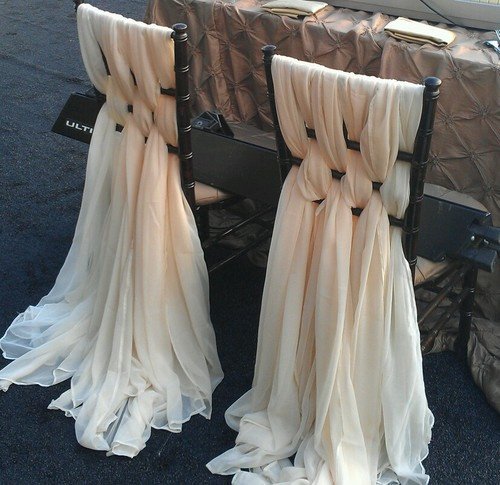
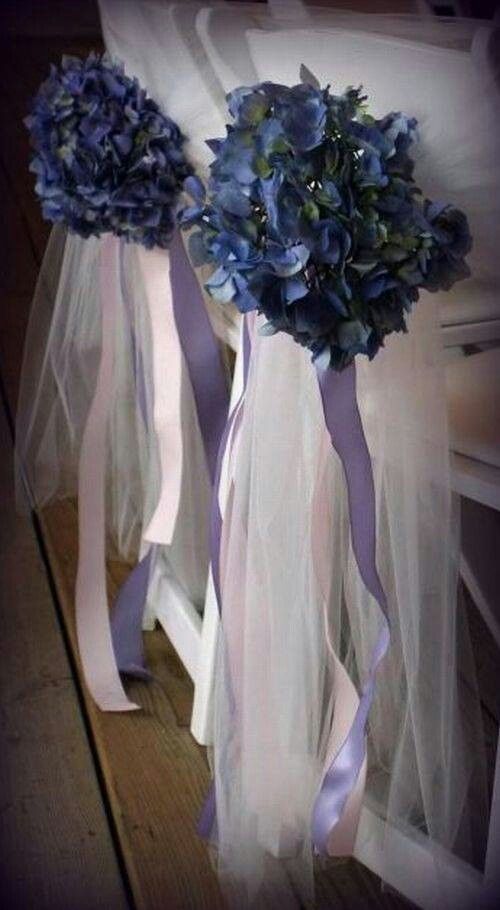
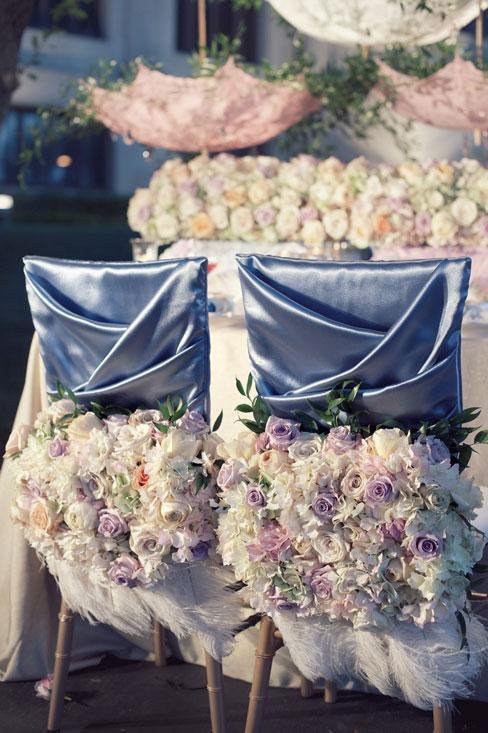
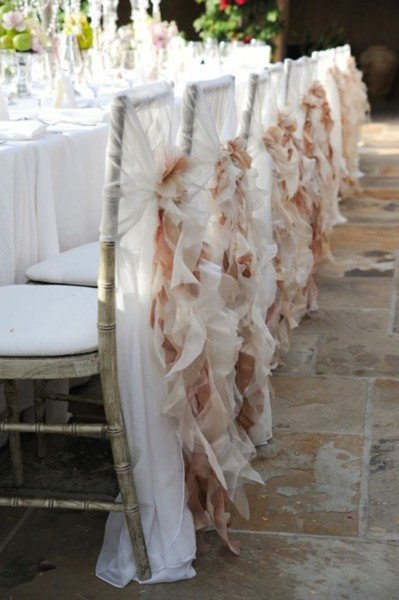
Fabric remains the fastest way to unify a mismatched fleet. Wide satin or chiffon sashes in the wedding palette wrap the back and tie in a bow or knot at the center. Tulle creates soft volume without much weight; use it sparingly outdoors if wind is likely. Linen and cheesecloth suit barn and garden settings. Velvet works for cool-season evenings when chairs need a richer note.
Cut lengths generously so bows look intentional rather than pinched. Secure ends with a discreet pin or florist wire so the knot does not migrate during the processional. If children will sit in the front rows, avoid long trailing ends that become toys. For outdoor grass, keep fabric off the ground so dew and mud do not climb the ribbon before the ceremony starts.
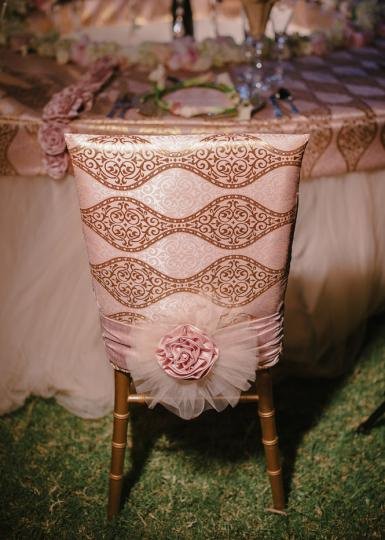
A full chair cover can hide ugly rental seats, but fitted covers need steaming and careful sizing. A half-cover or back-only drape often looks fresher and costs less. Test one chair in daylight and under evening lights; some whites go blue under LEDs, and some blushes disappear in shade.
Florals, greenery, and paper accents
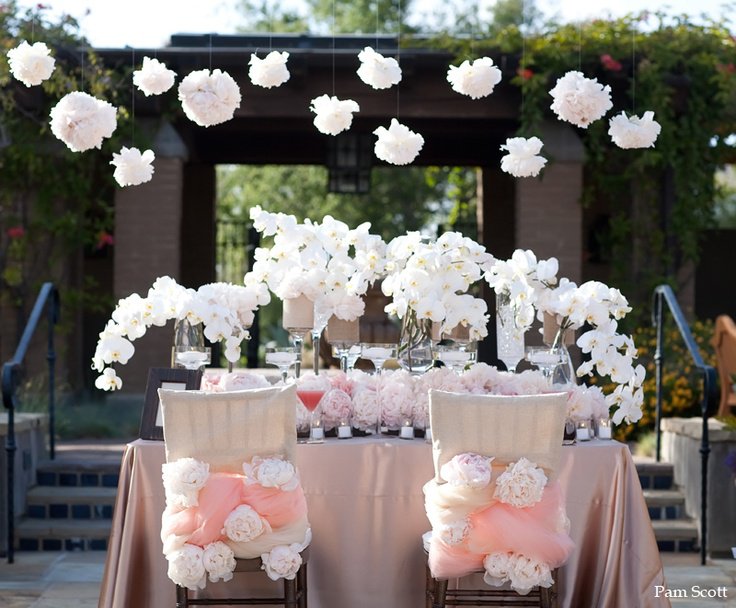
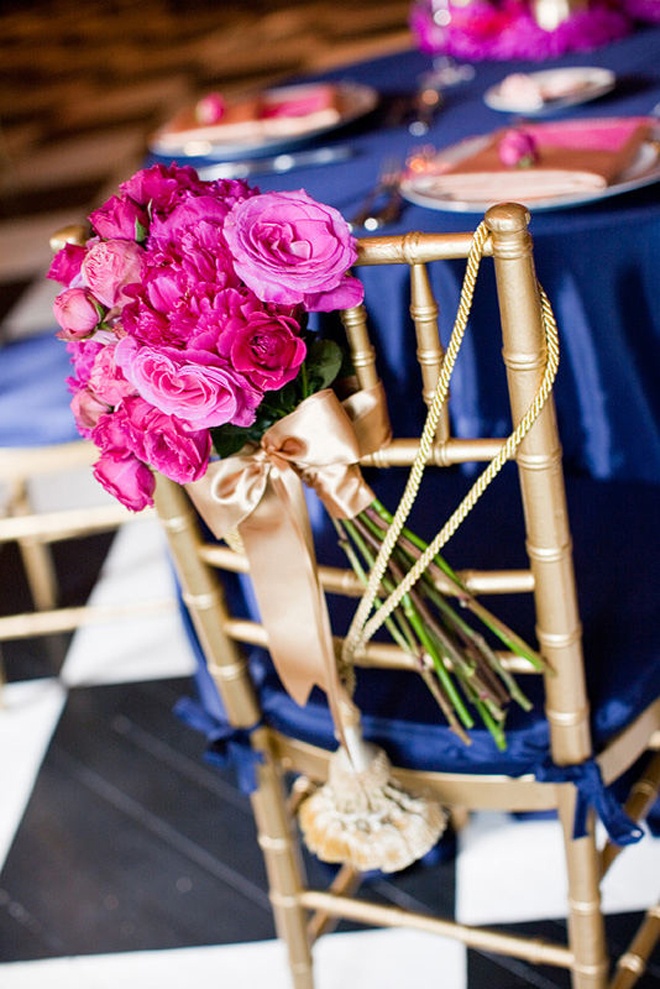
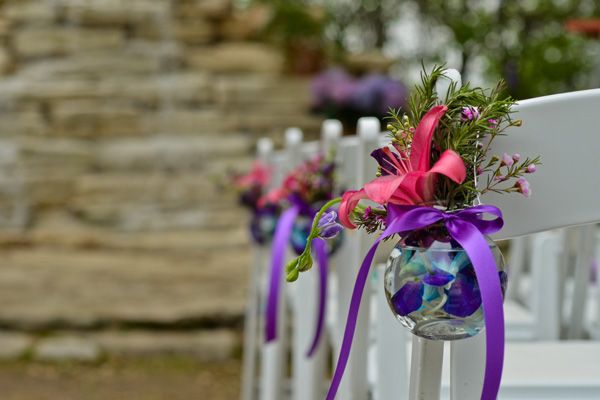
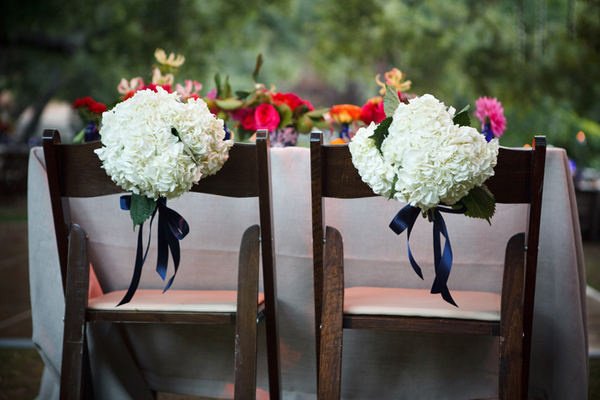
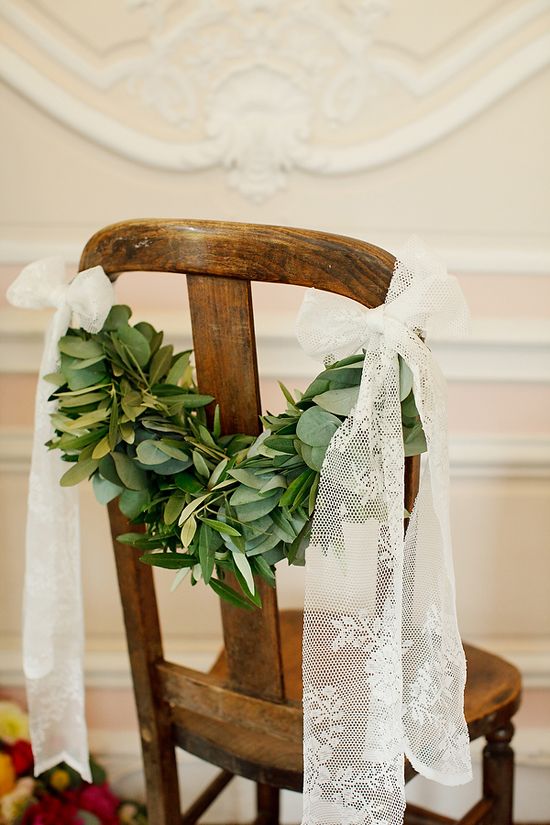
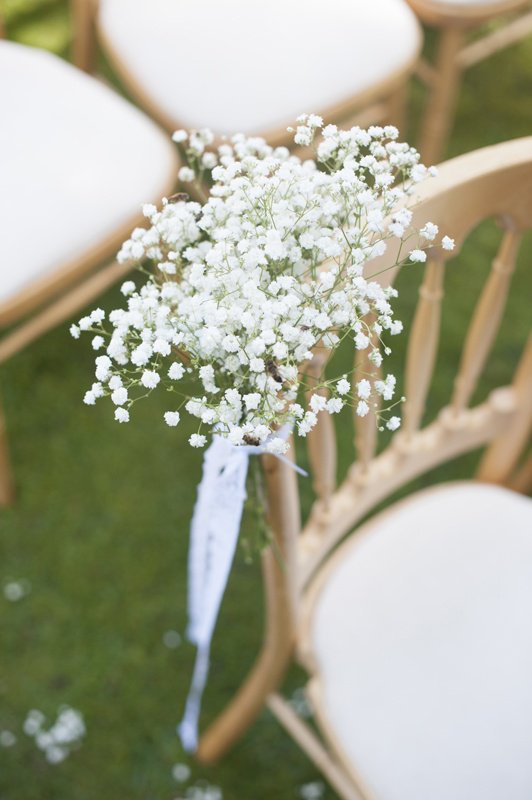
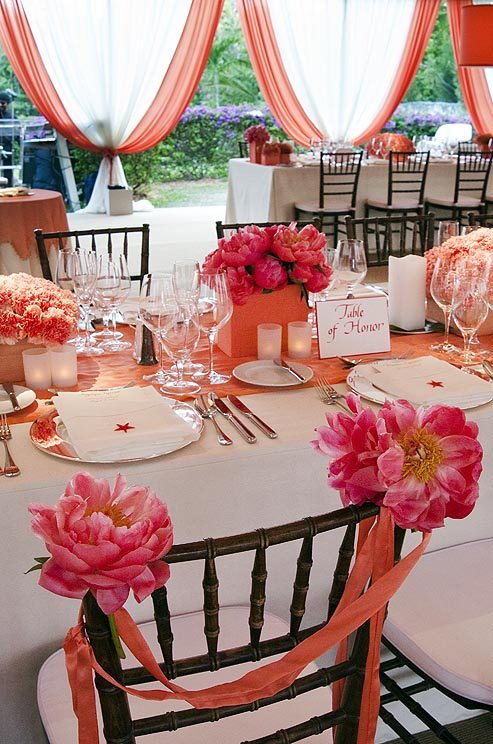
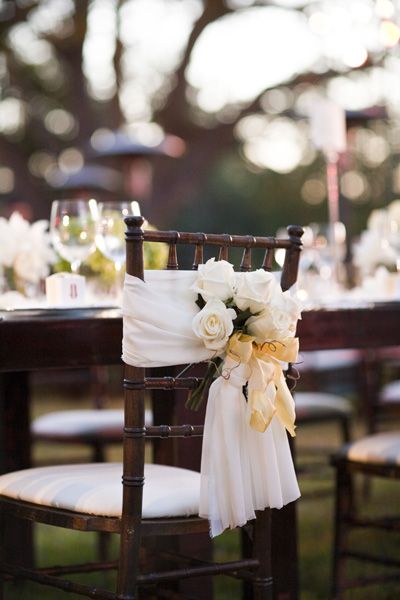
A small bouquet or posy attached to the chair back is classic for a reason: it photographs well and echoes the bridal bouquet. Keep stems short and the attachment firm—floral wire wrapped through the sash, or a water tube clipped where it will not poke a shoulder. Greenery alone—eucalyptus, olive, fern—reads modern and lasts longer in heat than soft petals.
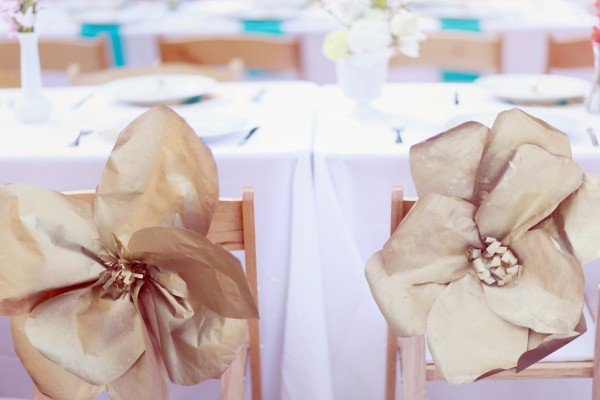
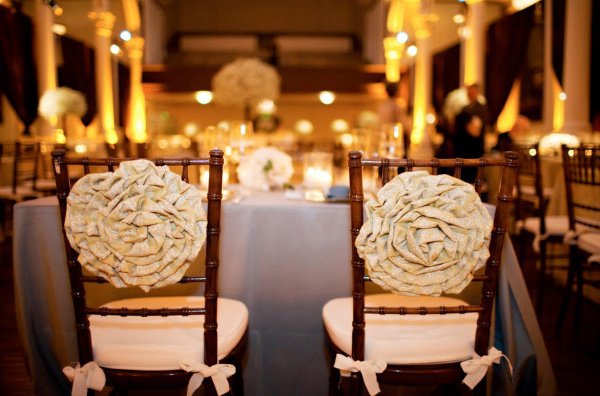
Paper flowers, origami birds, and printed escort tags can replace fresh blooms on a budget. Hang them from the top rail so they do not crumple when guests sit. For a vintage mood, lace remnants and pearl-headed pins work with soft pastels. For a modern wedding, try a single oversized bloom or a geometric paper shape in one accent color only.
Reserve the fullest arrangements for aisle ends, family rows, or the couple’s seats. Filling every chair with a heavy cluster can feel busy and slows breakdown. Alternating decorated and plain chairs down a long aisle often looks calmer than identical treatment on every back.
Style directions that stay coherent
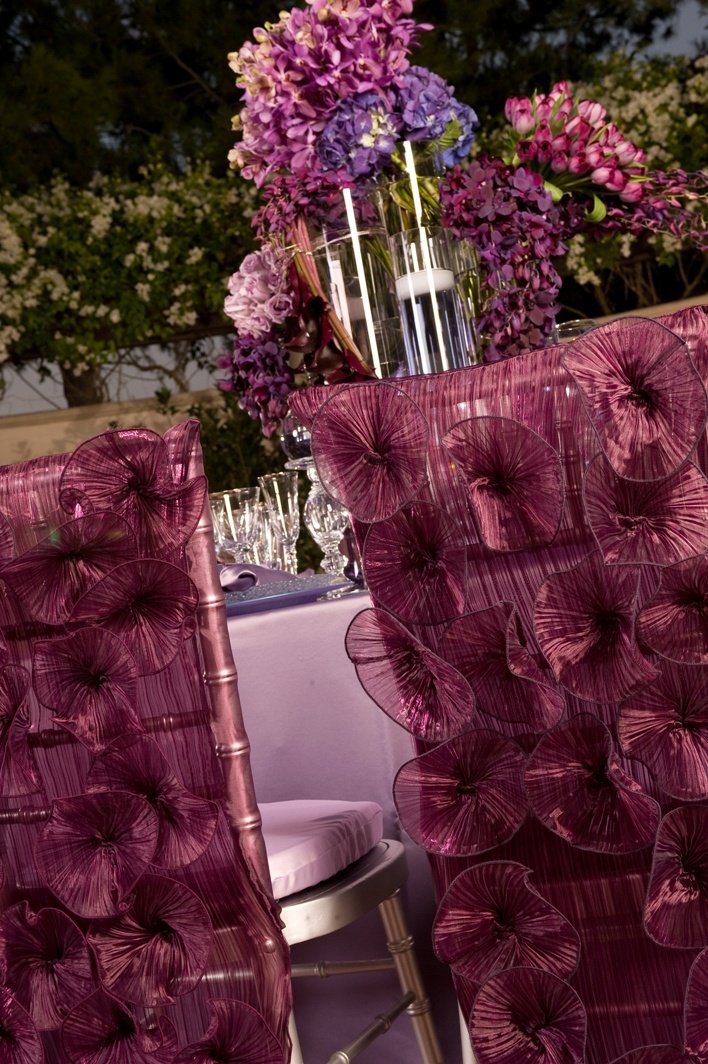
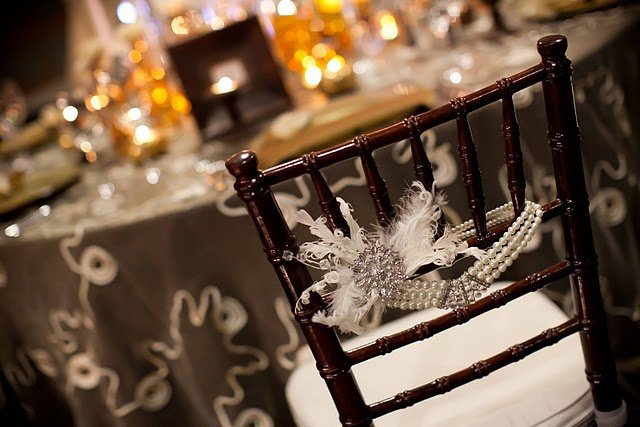
Modern weddings favor clean lines: a narrow ribbon, one stem, maybe a monogram tag. Traditional rooms can take fuller bows, classic roses, and satin in ivory or soft gold. Vintage and rustic settings welcome burlap, lace overlays, wildflowers, and handwritten kraft tags. Casual beach or backyard parties look right with cotton tape, shells, citrus leaves, or simple herb bundles.
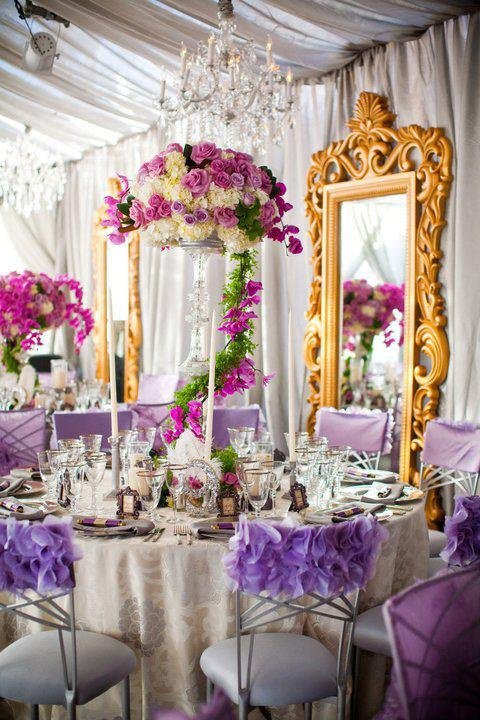
Borrow colors from the tablescape so chairs do not introduce a third palette. If centerpieces are peach and sage, chair ribbons should echo one of those tones rather than introduce navy at the last minute. Metallic accents—gold clips, copper wire, silver charms—should appear elsewhere on the table or stationery so they feel planned.
Season matters. Spring invites pastel ribbons and light greenery. Summer heat asks for sturdy blooms and fabrics that do not wilt into limp shreds by cocktail hour. Autumn pairs well with deeper berries, dried florals, and velvet. Winter ceremonies can use evergreen sprigs, ribbon with a soft sheen, and battery fairy lights woven carefully through the back—never near open flame.
Practical assembly on the day
Build a sample chair a week ahead with the actual rental model if possible. Photograph it from the aisle view and the guest’s seated view. Time how long one chair takes, then multiply by the count and add a buffer for wind, missing pins, and last-minute color changes. Pack a kit: extra ribbon, scissors, wire, clips, spare blooms, steamer or spray bottle, and a trash bag for scraps.
Assign a small team and work in rows so density stays even. Label boxes by section—ceremony left, ceremony right, sweetheart table—so nothing migrates to the wrong room. If the venue flips chairs between ceremony and dinner, choose décor that can move quickly or plan a lighter reception look from the start.
Check sightlines. Tall arrangements behind seats can block photos of the couple. Low ties and compact posies usually read better on camera. Confirm with the photographer which rows need to stay clear for processional shots.
Budget without looking sparse
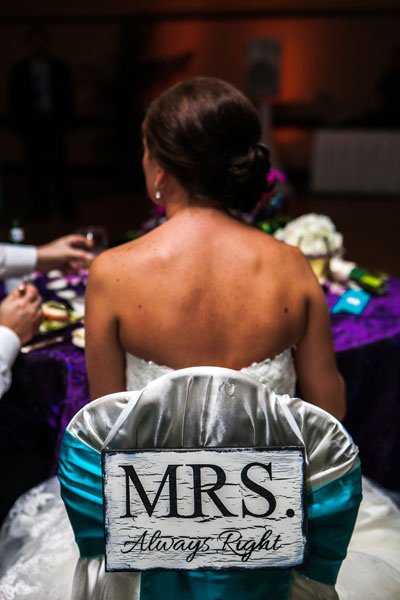
Spend on the chairs guests stare at longest: aisle ends, front family rows, and the couple’s seats. Use identical inexpensive ribbon on the rest so the room still feels finished. Greenery and paper accents stretch farther than rare blooms. Renting pre-tied sashes can cost less than buying fabric you will never reuse, especially for large guest counts.
DIY works if you enjoy craft nights and have helpers who finish what they start. Buy one spool more of ribbon than the spreadsheet says. Choose flowers that forgive a few hours without water. Skip glitter that sheds onto dark suits and into the grass forever.
A short list before you order supplies
- Chair type and count confirmed with the venue or rental house
- One primary material (ribbon, tulle, linen) and one accent (flower, greenery, tag)
- Colors pulled from the tablescape, not invented at the craft store
- Sample chair photographed and approved
- Weather plan for wind, heat, and damp grass
- Breakdown plan so décor does not vanish into the night with guests
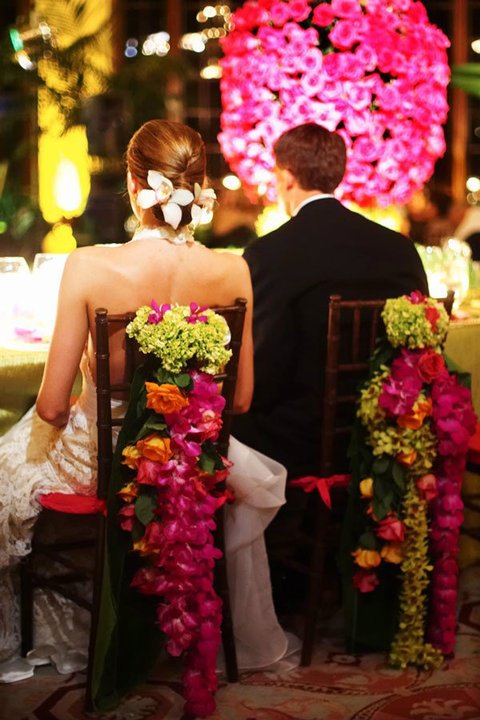
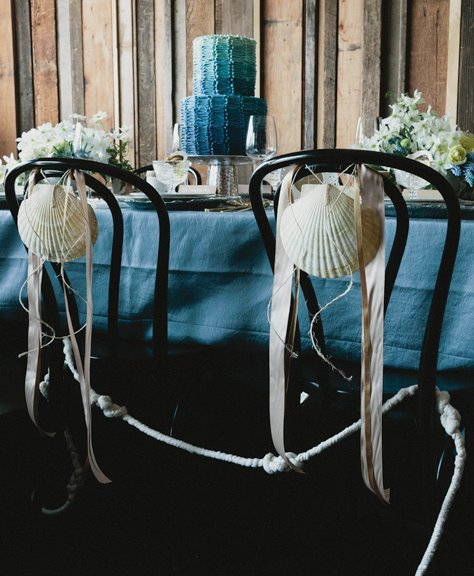
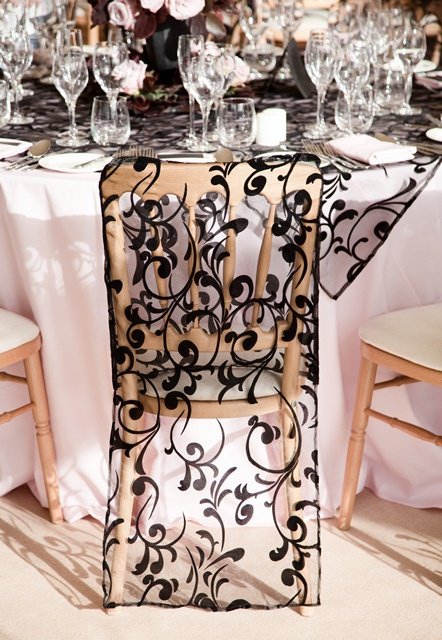
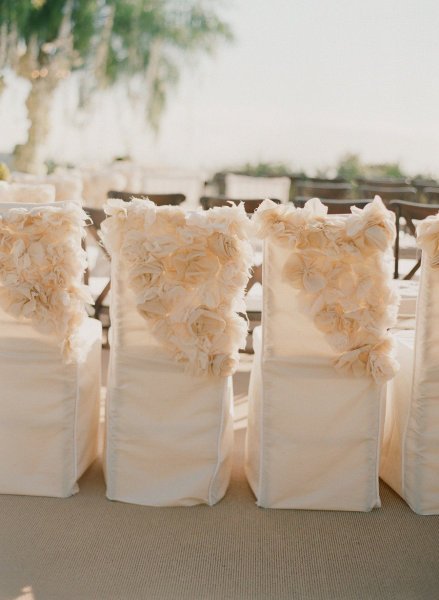
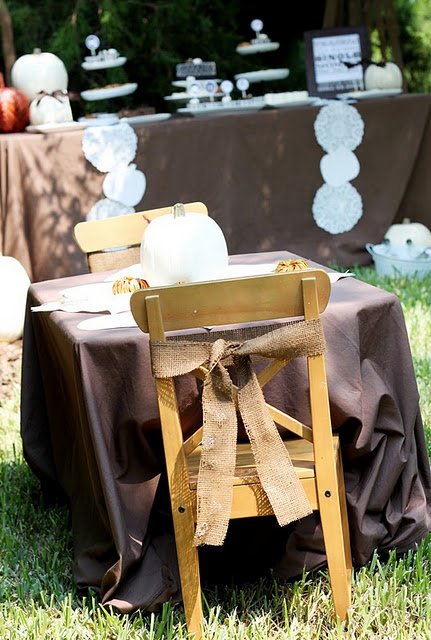
If time runs short on the morning of the wedding, finish the aisle ends and the couple’s chairs first, then fill the middle rows with matching ribbon alone. Guests will still feel the design, and the photographer will still have something beautiful to frame behind the vows.

Comments
Continue reading
Photo vs Illustrated Save-the-Dates: How to Choose a Format
A practical comparison of photographic and illustrated save-the-dates—when a portrait earns the stamp, when a drawing carries the date, and how to match format to venue, guests, and printing.
Escort-Card Displays That Aren’t a Table of Tiny Cards
Walls, branches, envelopes, mirrors, and numbered installations—how to stage escort cards so guests find their tables without a crowded lobby table.

Berry, Brick, and Brown Lipsticks That Still Read as Color
A guide to berry, brick, and brown lipsticks—undertones, finishes, and light—when classic fire-engine red is not the shade you want to wear.