
Escort-Card Displays That Aren’t a Table of Tiny Cards
Walls, branches, envelopes, mirrors, and numbered installations—how to stage escort cards so guests find their tables without a crowded lobby table.
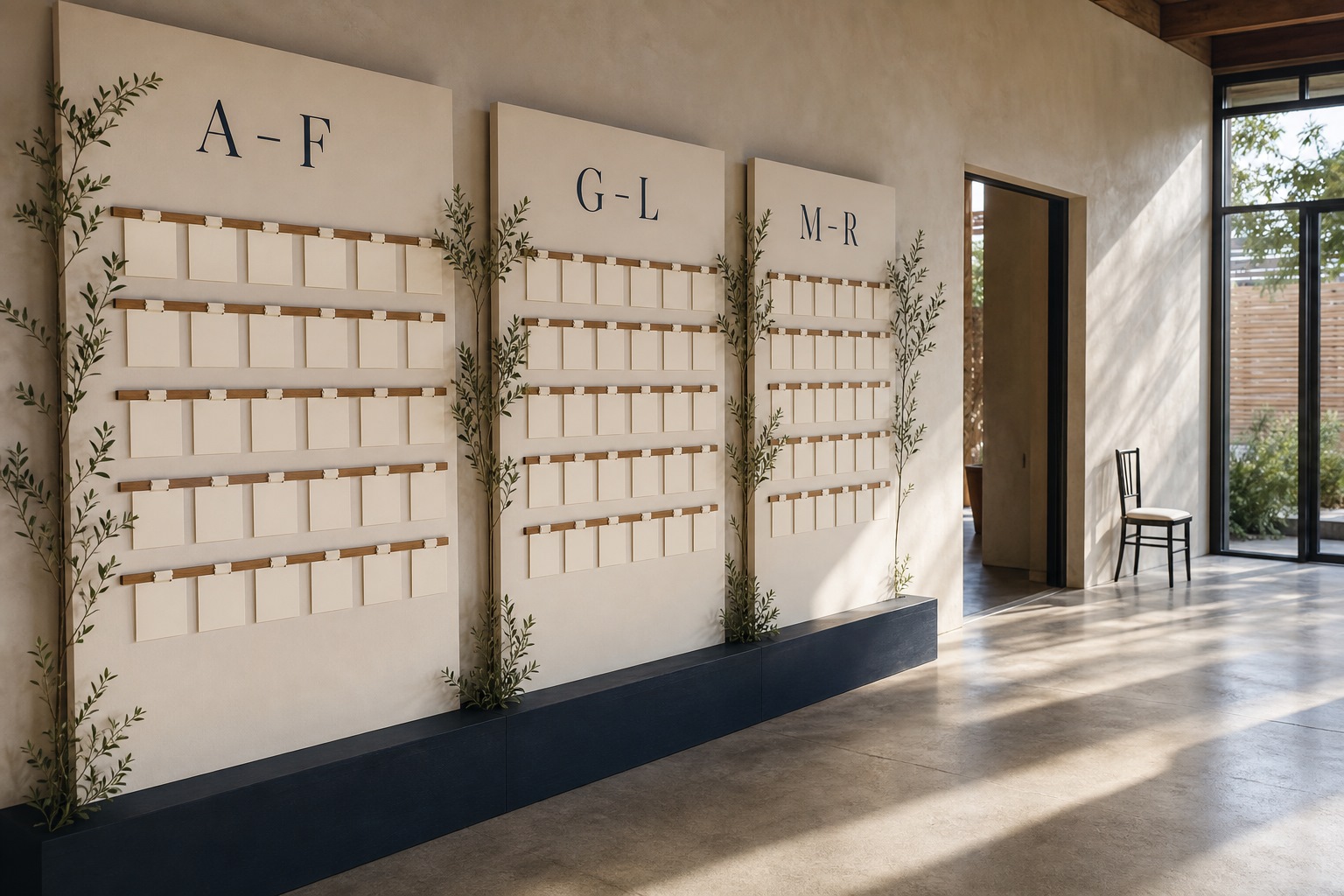
Escort cards fail in hotel lobbies for a boring reason: a hundred small rectangles on a draped table, guests clustered three-deep, the alphabet lost in candlelight. The card itself can be perfect. The display is the bottleneck. This piece is about staging—where the name lives in the room—not about wording or table maps. For the cards and the seating logic, use the place-card ideas and the seating-card planning guide; then build a display guests can actually walk through.
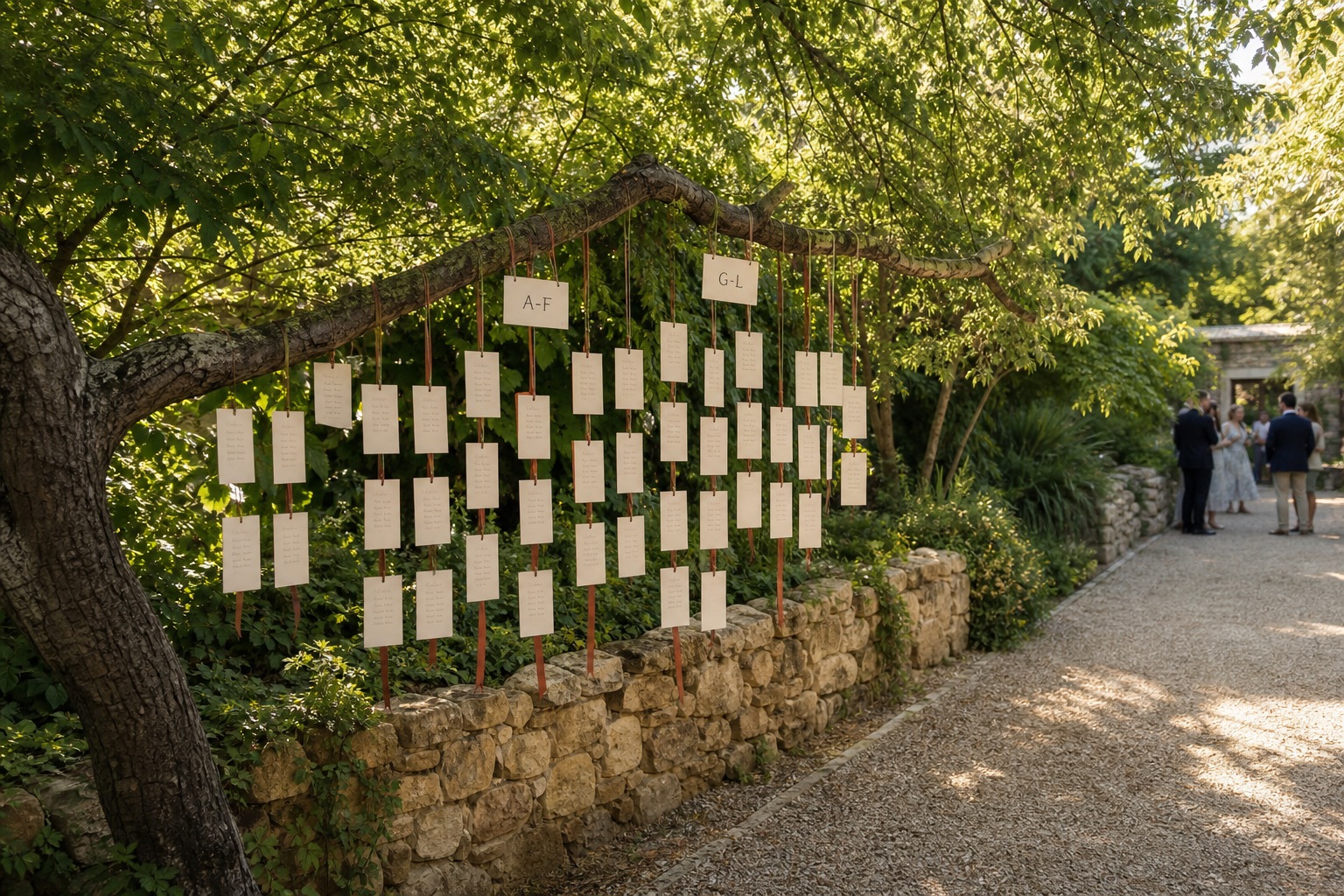
Table versus wall versus object
A table display needs a wide apron of floor and light from above. If the cocktail hour is in a corridor, skip the table. A wall, a folding screen, or a freestanding frame turns the task into a line, not a huddle. Guests approach, find a letter, take a card, move on. You can still put flowers nearby; just do not make the flowers the only reason to stop in the choke point.
Object displays—a tree, a boat oar, a grid of envelopes on a wire—photograph well and can feel like décor. They also hide cards. If a name is tucked behind a bloom, you have built an Easter egg, not a wayfinding system. Every card’s first line (last name, or first name if you are a first-name wedding) must be readable from a step back.
Alphabet, numbers, and how people actually search
Most guests hunt by last name. Cluster A–F, G–L, and so on with a large letter they can see from the entrance. Couples who share a table but not a last name need a rule you print once: “Look up the name on the envelope you received.” Mixed families will invent their own search if you do not.
Number-first displays (cards ordered by table) only work if guests already know their number. They do not. That order is for the planner packing boxes, not for the room.
Lighting: warm bulbs make cream stock look dirty and gold foil disappear. A dedicated picture light, a battery lantern inside a cloche, or a nearby sconce with a white shade will save more names than a prettier font.
Five display types that scale
The grid. Foam core or plywood, covered in linen, cards clipped or slipped into horizontal ribbons. Cheap, fast to set, easy to alphabetize the night before. Works in tents and lofts. Looks severe if you skip one large heading: “Find your table.”
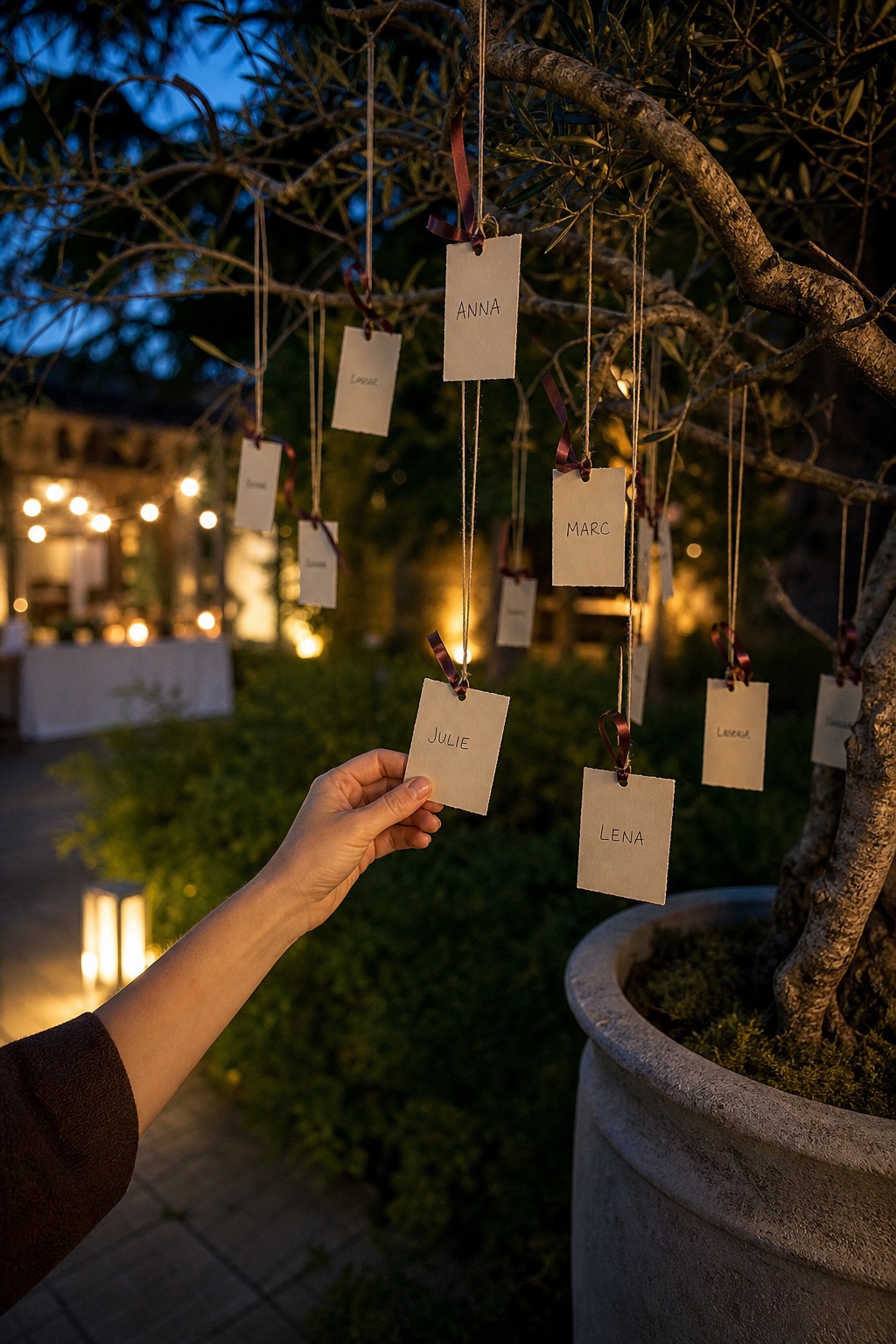
The branch or living hedge. Cards hung with linen thread. Beautiful in gardens. Terrible in wind. Assign someone to restock fallen cards during cocktail hour. Keep hanging heights between shoulder and eye for most guests; do not decorate the top two meters nobody can reach.
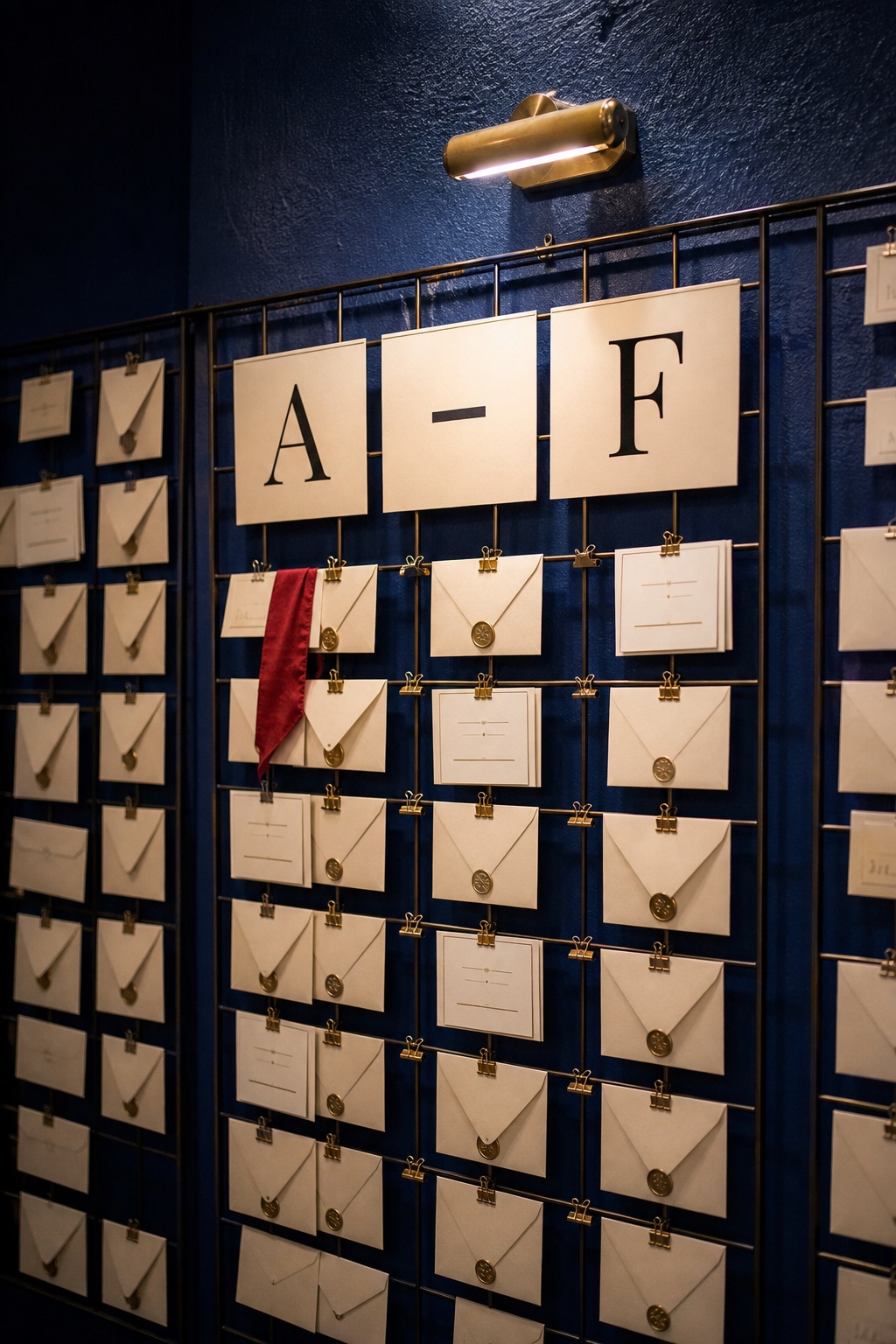
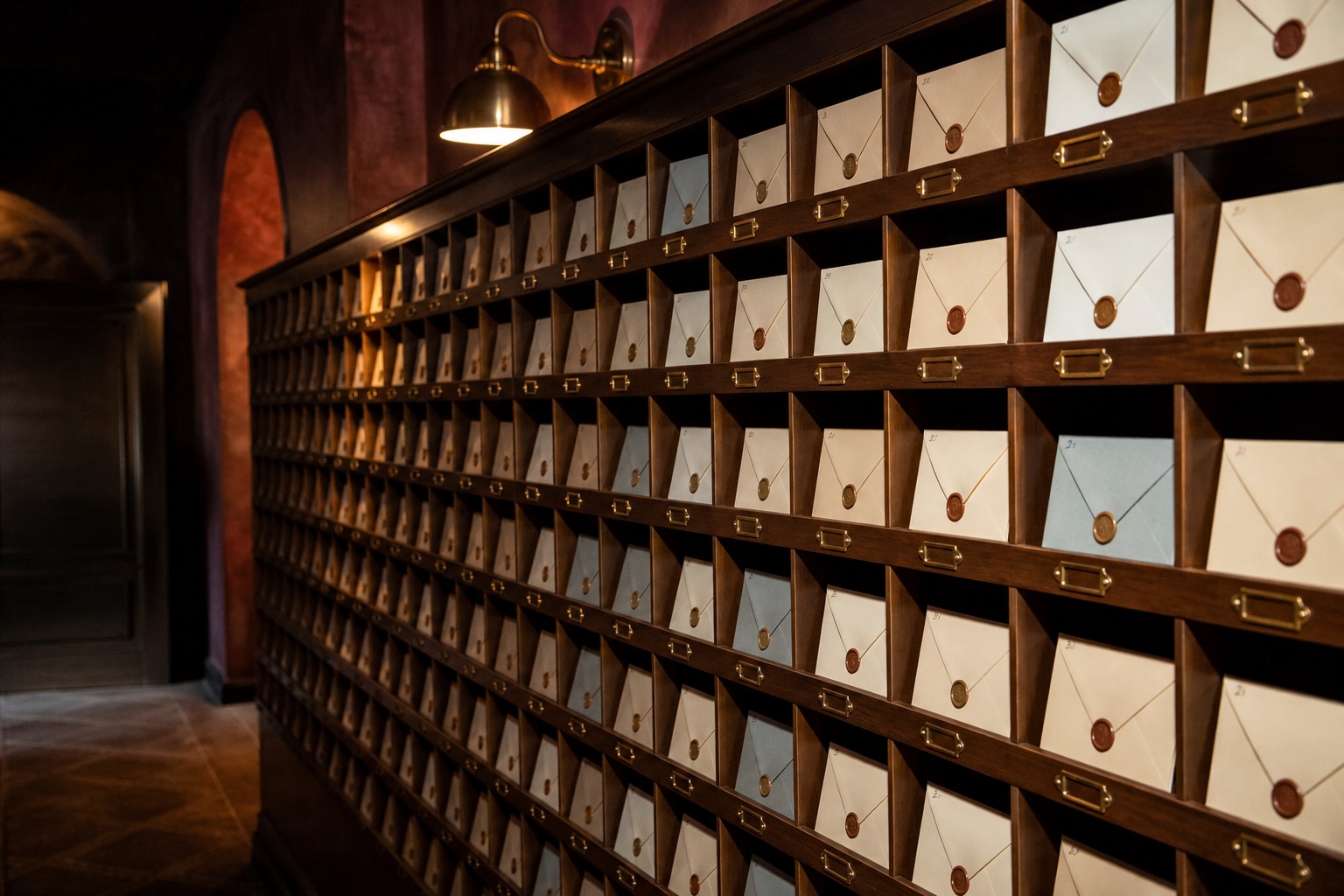
The envelope wall. Sealed or unsealed envelopes in a honeycomb or pigeonhole. Guests take the whole envelope, which can hold a meal choice or a note. Budget the extra paper. Test that envelopes do not all look identical; a small index letter on the flap saves the search.
The mirror or window. Names in paint pen or vinyl, table numbers beside them. Zero cards to lose. Bad for last-minute seating changes unless you have a backup printed list. Wipe tests on the actual glass; some pens ghost.
The numbered installation. One sculptural number per table, escort cards in a shallow tray at the base of each number. Guests still need an index (“Martinez — 7”) on a nearby board, or they wander the sculpture garden guessing.
Weather, kids, and the planner’s kit
Outdoor displays need weights, clips that do not tear stock, and a plan for rain: a porch, a clear bin, or a move indoors at first drop. Ink that runs is not charming.
Children rearrange anything within reach. Put the lowest row at adult hip height or accept that the A’s will migrate.
Pack extras: ten blank cards, a pen that matches, double-sided tape, extra clips, a printed master list in a folio for the coordinator. When Uncle David brings a date, you do not want to redesign the hedge.
Materials that survive a cocktail hour
Clips: metal bulldog clips read industrial and hold thick stock. Wooden pegs look softer and slip on glossy cards. Ribbon slots need cards cut to a consistent height or the line looks drunk. Magnets on a steel sheet are fast to alphabetize the morning of; test that the stock is not so thick the magnet fails when someone tugs.
Adhesives: foam dots are clean until you have to move a name. A reusable putty is kinder for last-minute table switches. Hot glue on a living branch is how you build a display you cannot reuse and cannot compost honestly.
Typography at display scale is not the same as typography on a place card. The section letters (A, G, M) should be bigger than you think—closer to a shop sign than to a monogram. Guests are holding drinks. They are not proofreading.
Where it sits in the evening’s traffic
Best: a wall you pass between ceremony exit and first drink, with space to queue two-abreast. Worst: the only path to the bathroom, or a dark corner behind the gift table. If the venue forces a lobby table, make it long and thin against a wall, not a round island in the center. Islands create orbits of lost people.
Coordinate with the photographer. A beautiful display that sits in a black hallway will not exist in the album. Ask for one frame with the heading readable. That photo is also how you answer the midnight text asking which table someone was at.
After dinner, the display is dead weight. Assign strike: cards leftover go in a box with the master list, flowers get water, the grid comes off the wall before the DJ’s load-out hits it. A display that stays up as décor past the first course is usually in someone’s way.
How it should feel from the door
Stand at the entrance and time yourself finding a fake name. If it takes more than twenty seconds, the display is décor. Tighten the alphabet, raise the contrast, kill the competing centerpiece. Guests should leave the installation with a card in hand and a drink still cold. That is the whole assignment.

Comments
Continue reading
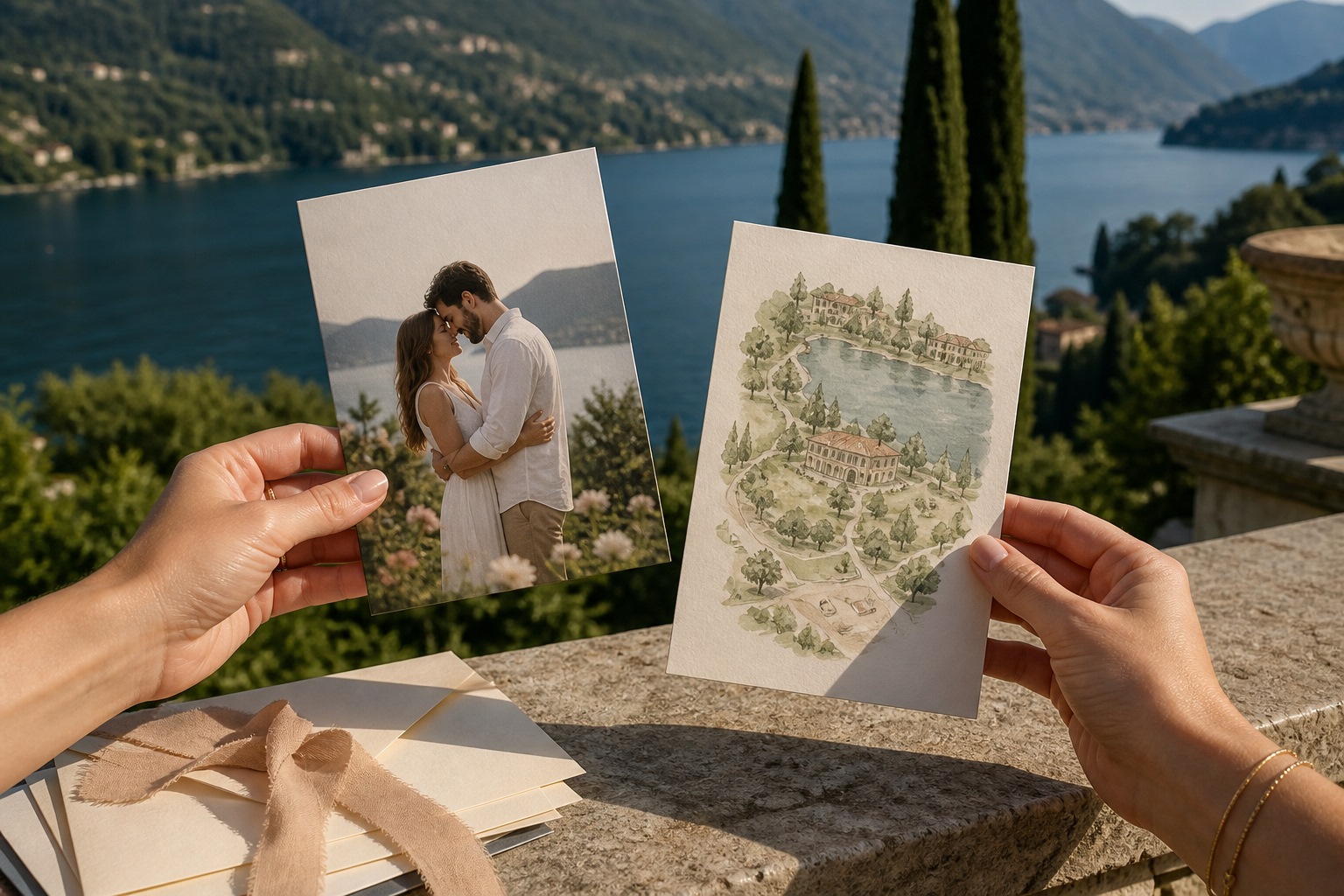
Photo vs Illustrated Save-the-Dates: How to Choose a Format
A practical comparison of photographic and illustrated save-the-dates—when a portrait earns the stamp, when a drawing carries the date, and how to match format to venue, guests, and printing.

Berry, Brick, and Brown Lipsticks That Still Read as Color
A guide to berry, brick, and brown lipsticks—undertones, finishes, and light—when classic fire-engine red is not the shade you want to wear.
Funny Animal Signs That Warn People (While Animals Ignore Them)
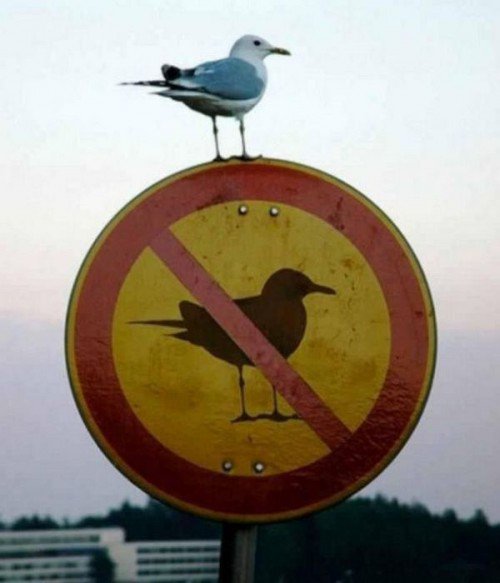
From a seagull on a no-birds disc to classic zoo and park ironies—why animal warning signs get funny, and what the rules are still for.