
Floral Crowns for Brides: Fairy-Tale Looks and Matching Bouquets
A first-gallery tour of bridal flower crowns—silhouettes, colour, hair, and pairing the circlet with a fresh bouquet so the look reads as one fairy-tale story.
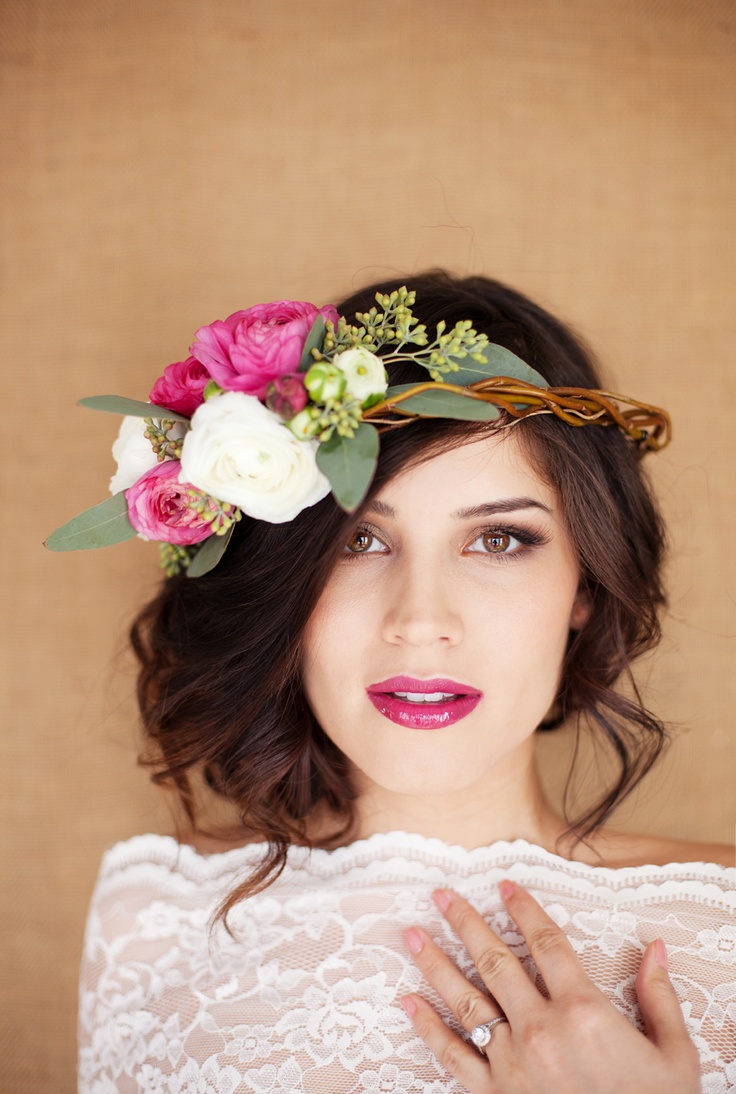
A bridal floral crown does something a veil and a tiara rarely manage at once: it softens the formal silhouette and still announces ceremony. Fresh blooms around the head turn the bride into the fairy of her own tale—especially when the crown and the hand bouquet speak the same floral language. This first gallery gathers bridal flower crowns in that fairy-tale register: loose petals, leafy bands, garden-scale blooms, and portraits where hair, face, and flowers share one calm story.
Think of this page as a mood board you can walk through. The companion spring-focused chapter covers seasonal choices and outdoor practicalities; here the job is visual range—how crowns look when they are generous, sparse, pale, saturated, or almost wild.
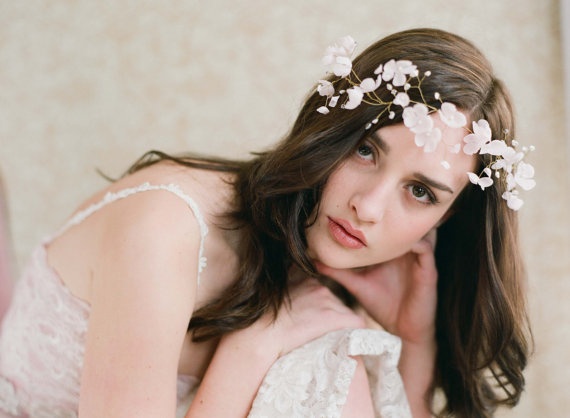
The opening look sets the rule that runs through many of these images: crown and bouquet as a pair, not two unrelated shopping decisions. When the same petals and greens appear in both places, the portrait reads intentional. When they fight—one cold white, one hot coral—the eye splits. Matching does not mean cloning every stem; it means sharing a temperature, a petal size, and a leaf character so the headpiece and the hands feel related.
Why floral crowns suit bridal portraits
Classic headpieces often sit above the hairstyle like jewelry. A flower crown sits inside the hairstyle. It borrows the softness of garden texture and the intimacy of something you could have gathered that morning. That intimacy photographs well. Soft focus backgrounds, open meadows, wooden porches, and candlelit rooms all forgive a living wreath more easily than they forgive a rigid metal tiara.
Floral crowns also solve a common bridal problem: how to look special without looking armored. Many gowns already carry lace, beading, or volume. A full crystal headpiece can tip the whole figure into costume. A ring of blooms keeps ornamentation organic. The fairy-tale note arrives through petals and light, not through costume hardware.
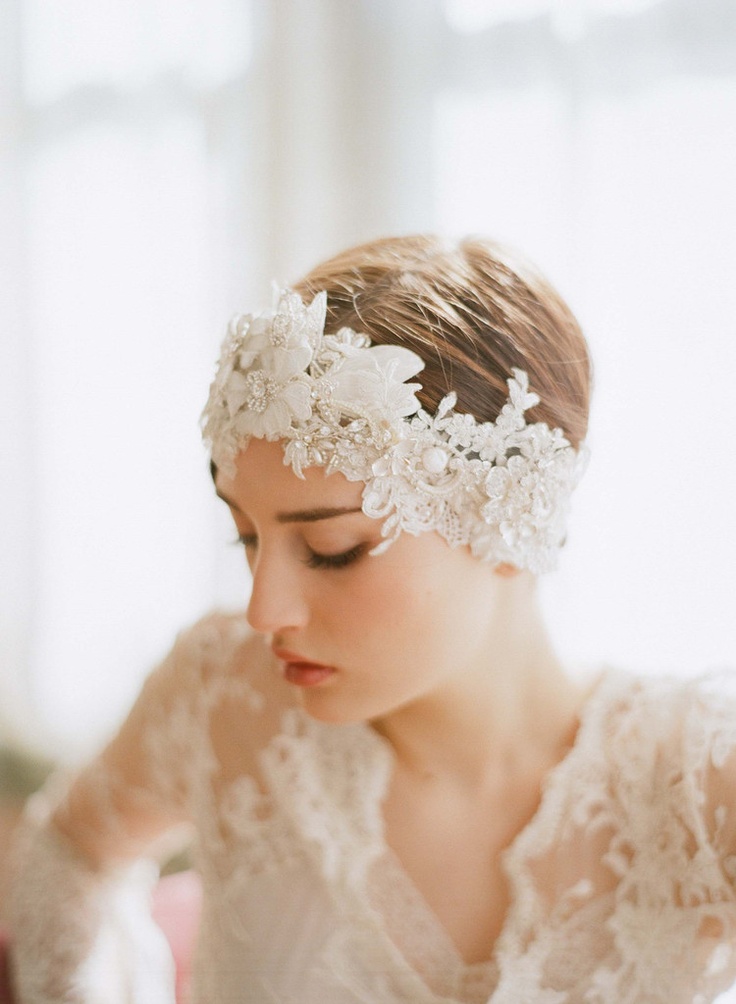
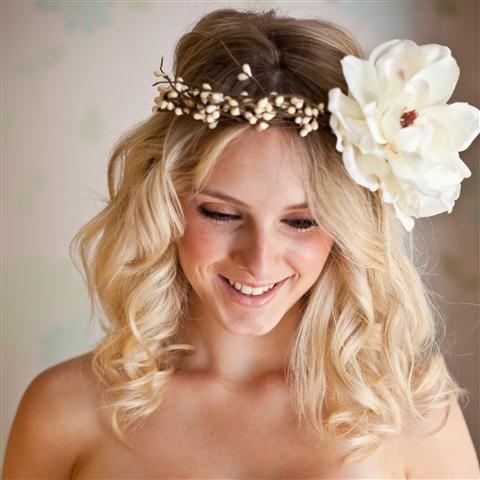
Loose waves and a low side glance favor crowns that follow the hairline rather than tower above it. The flowers should interrupt the hair, not replace it. When too much scalp is covered, the piece starts to read as a hat. When the band is too thin and flowerless, it disappears in photographs. The sweet spot in these portraits is a continuous but airy ring: enough bloom to catch light, enough hair visible to keep the face framed.
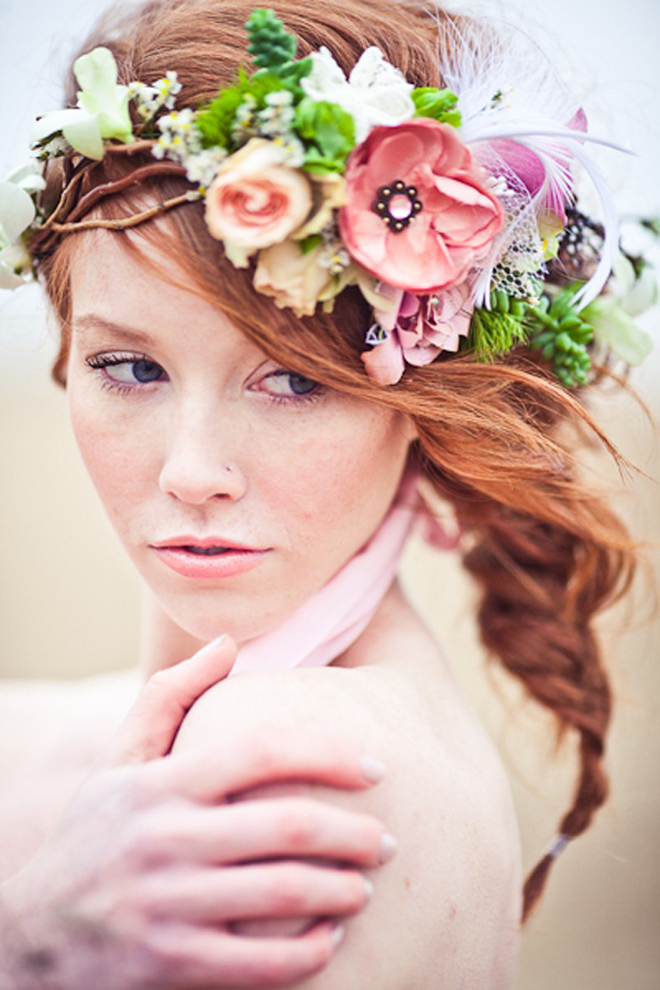
Photo credit: jfyphotography
Outdoor light rewards texture. Leaves, seed heads, and mixed petal sizes catch sun differently than a single polished bloom. If your ceremony or portraits happen outside, look for crowns that include more than one scale of flower—tiny fillers plus a few hero blooms—so the silhouette stays interesting when the camera steps back.
Silhouette types you will see again and again
Across bridal galleries, floral crowns tend to fall into a few readable shapes. Naming them helps you shop and brief a florist without relying on vague words like “boho” or “romantic.”
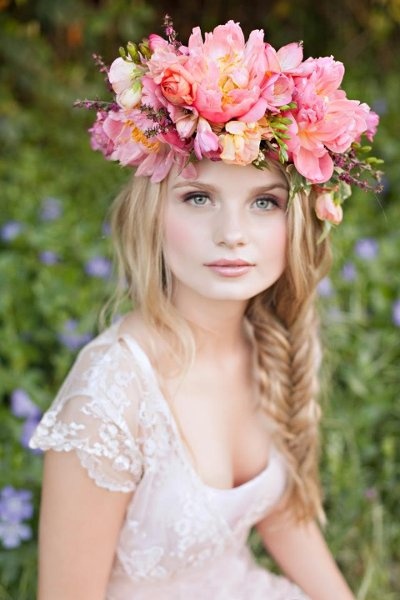
- Full circlet. Blooms travel all the way around. Strongest fairy-tale signal; best with simple necklines and open hair.
- Front-weighted crescent. Density at the forehead or temples, lighter at the back. Friendly to veils and updos.
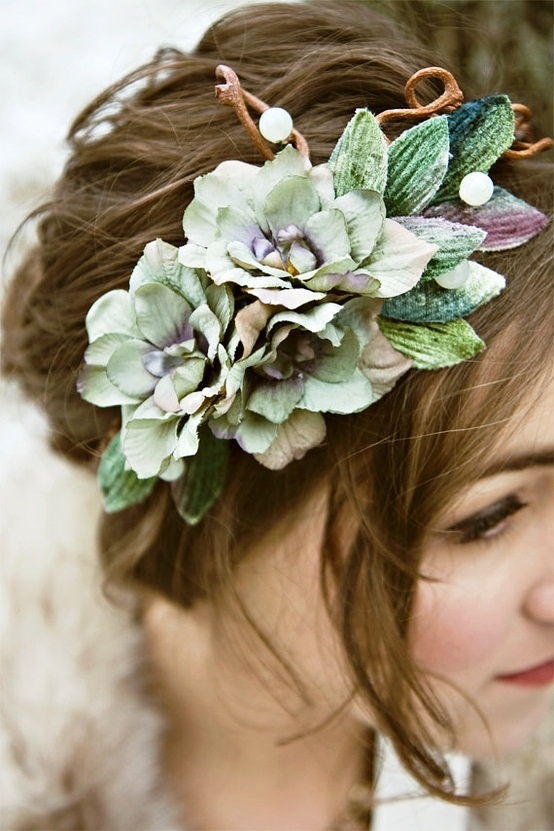
- Side cluster on a green band. Almost a corsage for the head. Works when you want flowers without a full halo.
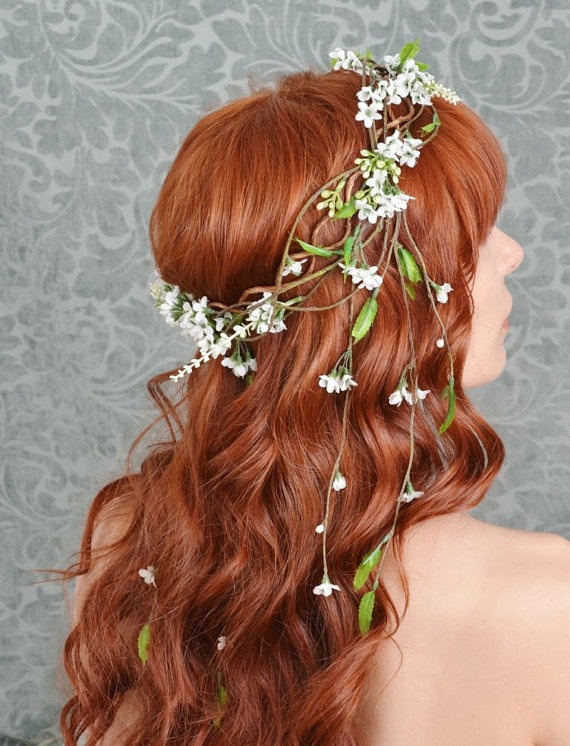
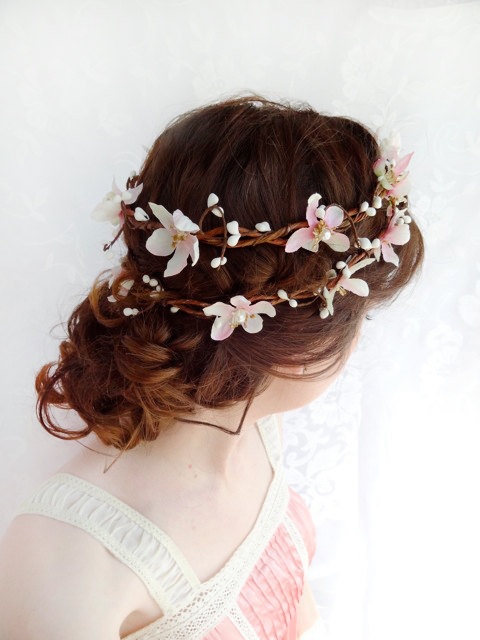
- Vine and leaf ring. Greenery leads; flowers punctuate. Ideal when the gown is already floral-printed or heavily textured.
- Scattered pins instead of a continuous crown. Technically not a full crown, but often styled in the same galleries; useful if you want less weight.
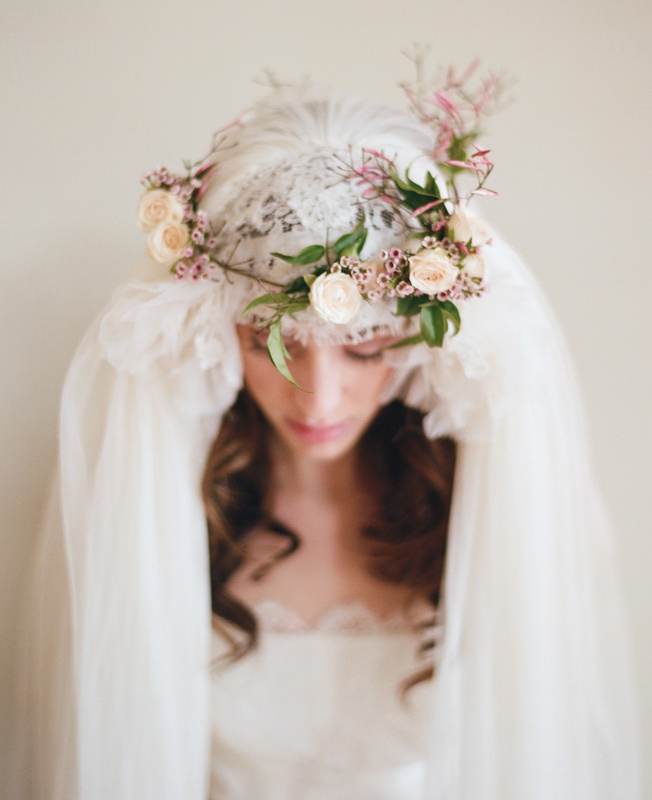
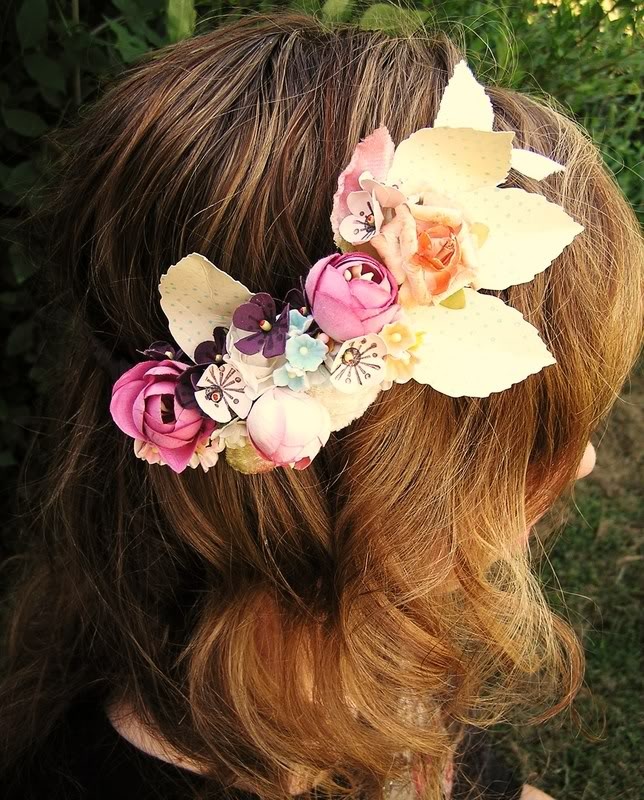
Notice how some crowns sit high like a soft tiara while others hug the brow. Height changes personality. A higher placement feels ceremonial and slightly fairy-queen. A lower placement feels intimate and meadow-like. Try both in a mirror with your planned hairstyle before you order; the same flowers can look bridal or festival depending on that one inch of vertical shift.
Color stories: pale magic versus garden color
White, ivory, blush, and soft green dominate bridal crowns for good reason. They photograph as glow, bounce light toward skin, and rarely clash with gown fabric. But not every fairy-tale crown is monochrome. Soft lavender, dusty rose, peach, and butter yellow can still feel bridal if the saturation stays muted and the greens stay soft rather than neon.
What usually fails is a sudden hot accent that belongs to a different party—bright orange next to stark white, or a single red rose that reads Valentine rather than wedding. If you want color, spread it. Two or three related hues across the whole circlet look deliberate; one loud bloom looks like an accident.
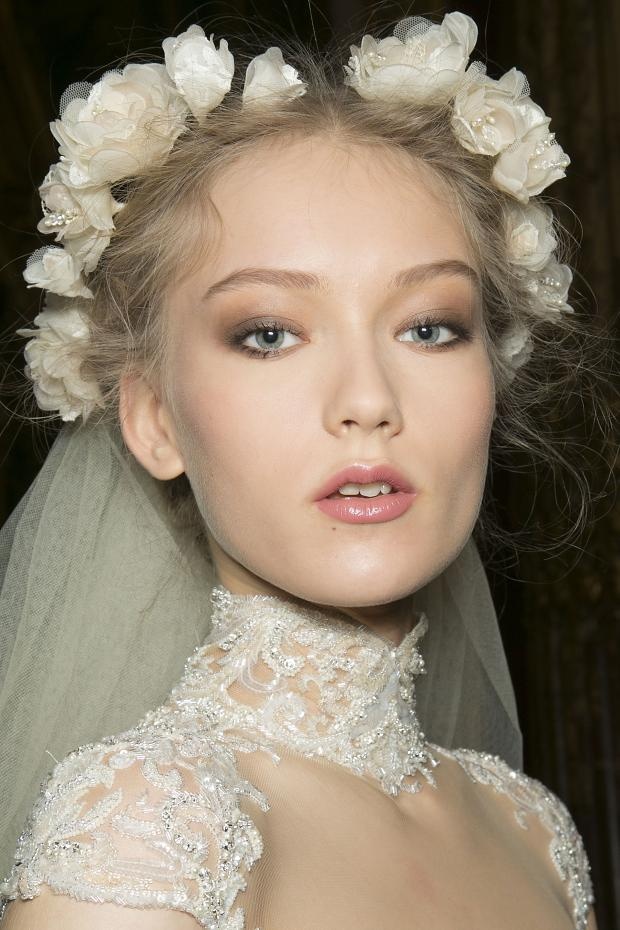
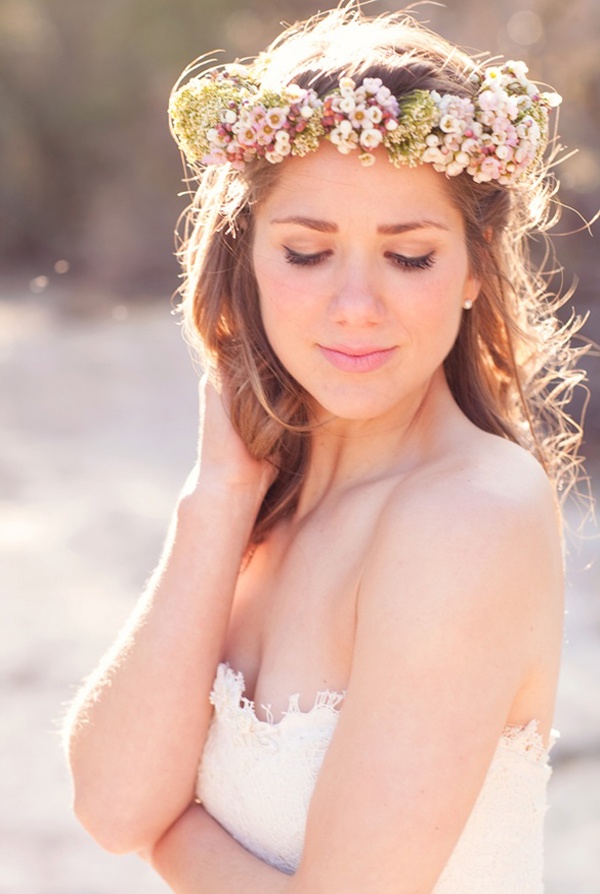
Makeup should follow the same temperature rule. Warm peach crowns want warm lip and cheek tones. Cool white-and-silver leaf looks prefer cooler pinks or soft berry. When makeup and petals disagree, photographs look oddly “off” even if every object is pretty in isolation.
Hair as the mounting surface
No crown survives a hairstyle that fights it. Dense updos give florists a firm place to pin; loose waves ask for lighter construction and more hidden wire. Center parts can look severe under a full circlet unless the flowers soften the forehead generously. Deep side parts create a natural nest for a crescent of blooms on the heavier side.
Bring the actual crown—or a close sample—to the hair trial. Photos lie about weight and catch points. A crown that looks ethereal on a mannequin can slip on fine hair or dig into a tight bun. The trial is where you learn whether you need extra pins, a ribbon underlayer, or a slightly smaller circumference.
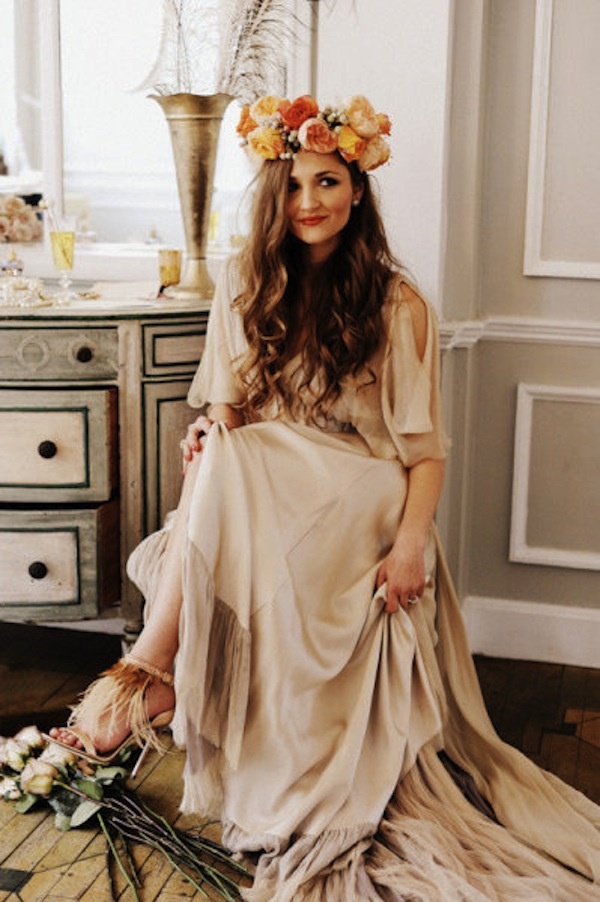
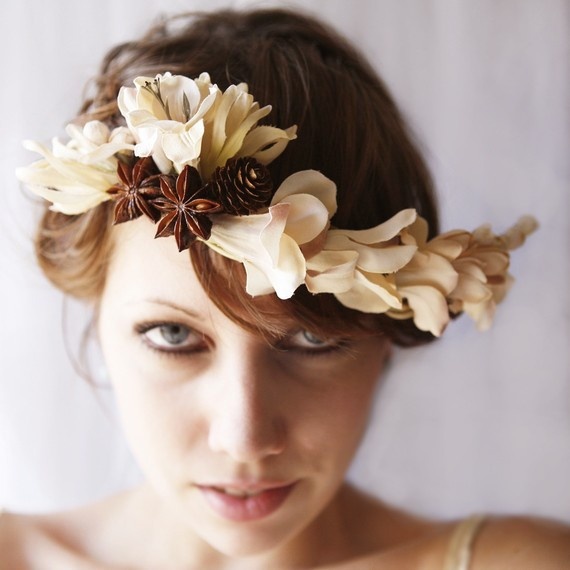
Wide shots matter as much as close-ups. A crown that looks lush at arm’s length can vanish in a full-length aisle photo if the flowers are tiny and the dress is dramatic. Ask your florist for a silhouette check: hold the crown against the gown from across the room. If you can barely see it, scale up a few blooms or add more leaf volume.
Matching the bouquet without twinning
Having a floral crown and a matching hand bouquet with fresh flowers is the classic fairy-tale pairing—but “matching” should mean related, not identical. Echo the hero flower and one green. Change the proportion. The bouquet can be denser; the crown can be airier. Or reverse that if your neckline is plain and your hands will hold a smaller posy.
Also consider scent. A crown sits near your face for hours. Heavily fragrant lilies or dense stock can overwhelm during vows. Save the strongest perfume for the bouquet or table arrangements, and keep the headpiece milder.
Fresh, dried, or mixed
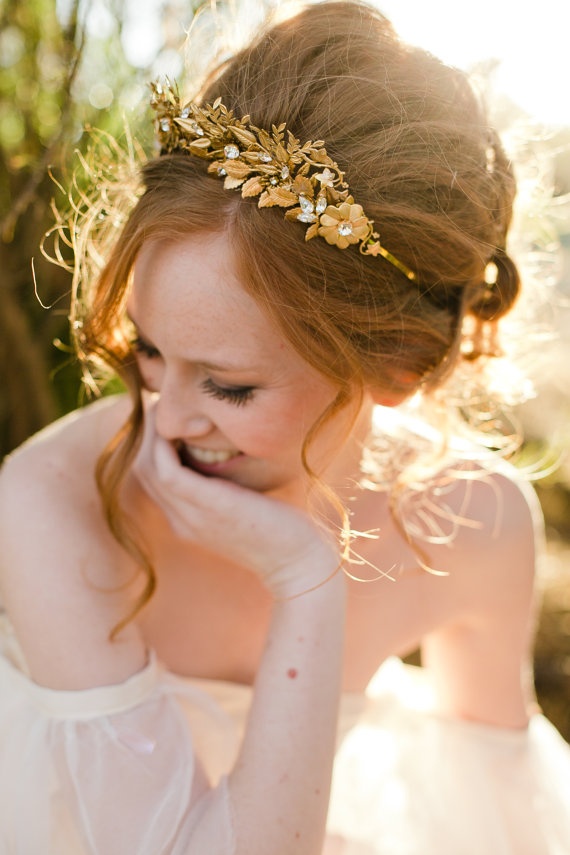
These gallery images lean fresh: petals look hydrated, leaves look alive. Fresh crowns photograph with a living translucency that silk often cannot fake. They also wilt. If your day is long and hot, ask for flower choices that hold—spray roses, waxflower, hardy greens—or a hybrid crown with a few dried elements that keep structure when soft petals tire.
Silk and preserved options belong in the conversation when travel, heat, or allergies make fresh impractical. The visual goal stays the same: soft silhouette, believable scale, and a finish that does not shine like plastic under flash. In daylight portraits especially, matte petals beat glossy ones.
A short viewing checklist
When you scroll this gallery again—or any bridal flower-crown board—ask four quick questions of each image you love:
- Is the crown a full circlet, a crescent, or a side cluster?
- Does the bouquet (if present) share temperature and petal scale?
- Would this silhouette survive my neckline, veil plan, and venue light?
- Is the fairy-tale feeling coming from softness and proportion—or from costume excess?
Keep the answers beside fabric swatches and a venue photo. The crown that wins on a screen is not always the crown that wins against your actual dress. For spring-specific flower choices, weather durability, and princess-energy styling for outdoor ceremonies, continue with the next chapter: Floral Crowns for Brides – Part 2.

Comments
Continue reading
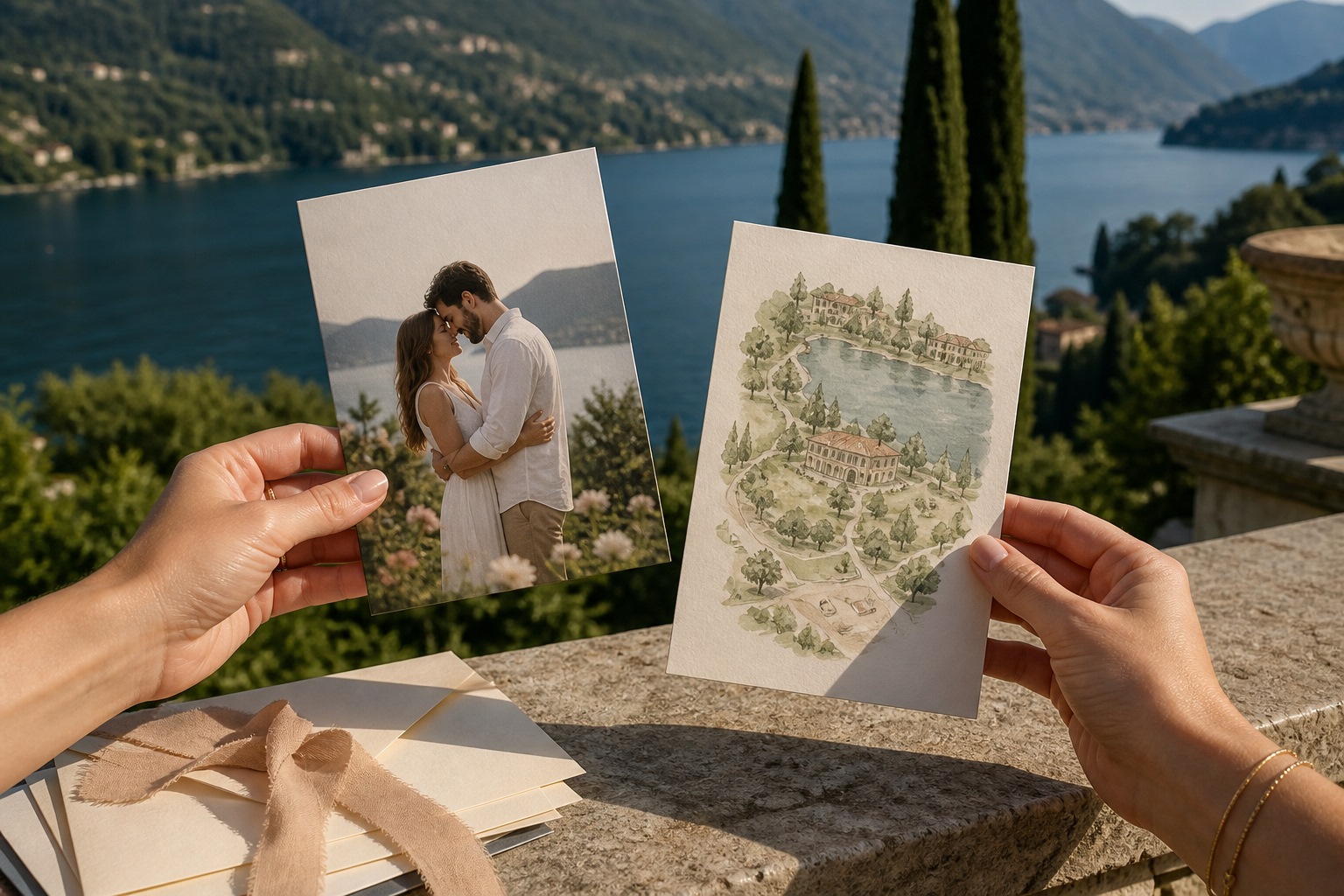
Photo vs Illustrated Save-the-Dates: How to Choose a Format
A practical comparison of photographic and illustrated save-the-dates—when a portrait earns the stamp, when a drawing carries the date, and how to match format to venue, guests, and printing.
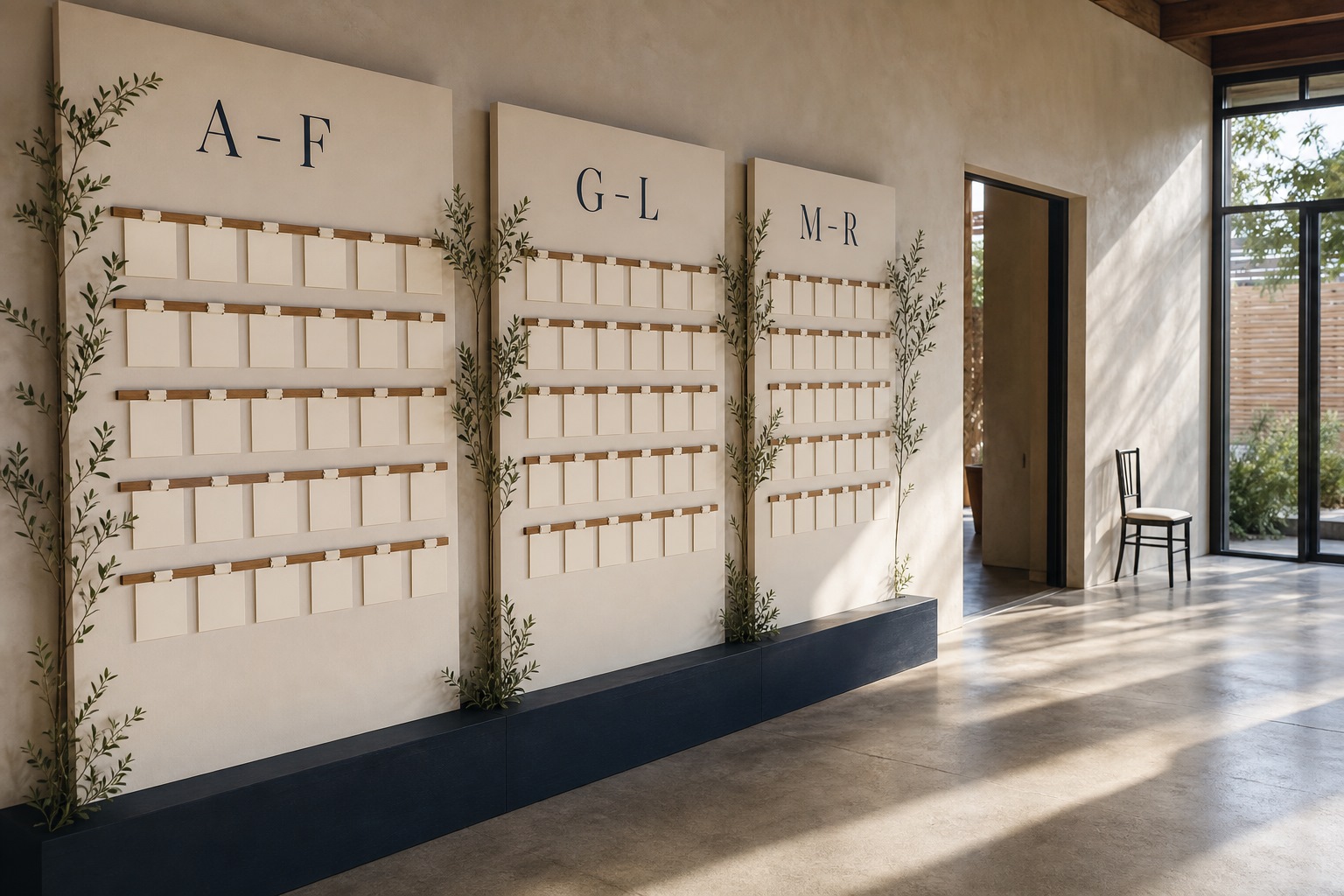
Escort-Card Displays That Aren’t a Table of Tiny Cards
Walls, branches, envelopes, mirrors, and numbered installations—how to stage escort cards so guests find their tables without a crowded lobby table.
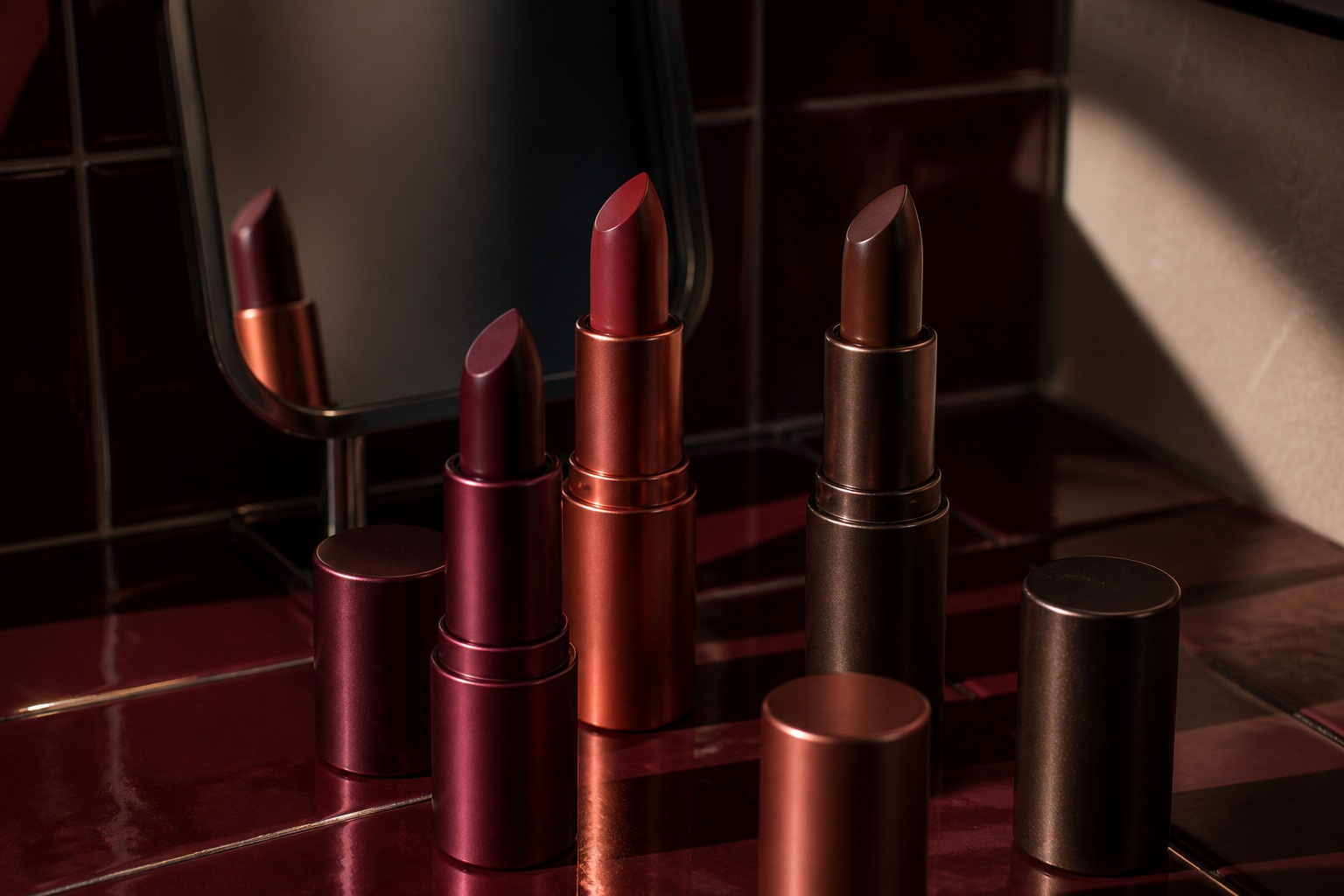
Berry, Brick, and Brown Lipsticks That Still Read as Color
A guide to berry, brick, and brown lipsticks—undertones, finishes, and light—when classic fire-engine red is not the shade you want to wear.