
Give Old T-Shirts New Life: Practical Upcycle Projects
Sort fabric, match projects to skill and time, and turn tees into totes, accessories, pillows, rugs, and pet toys with clear done criteria.
Most wardrobes hide a quiet pile of soft, faded, slightly stretched T-shirts that are too sentimental—or too comfortable—to trash. Upcycling them is less about craft trends and more about matching fabric condition to a project that will actually get used. Thin jersey frays, thick cotton holds knots, and graphics either become a feature or something you hide inside a seam.
Below are practical ways to give old tees new jobs—accessories, home textiles, pet toys, and bags—with criteria for which shirts to choose, how hard each project is, and what “done” should look like. Start with the tote if you want a quick win; save the rug for when you have patience and a mountain of fabric.
Sort before you cut
Dump the pile and sort by usefulness, not nostalgia alone:
- Strong body fabric: good for totes, pillows, rugs, and skirts.
- Thin or holey shirts: fine for braided pet toys, stuffing, or scrap yarn—not for load-bearing straps.
- Favorite graphics: frame them on a tote front or pillow face; do not bury them in a twisted rug unless you want them gone.
- Color families: group neutrals, brights, and black separately if you care about the finished palette.
Wash and dry everything first. Shrink now, not after you sew. Cut off hems and side seams when you need continuous strips; keep hems when you want a finished edge without sewing.
Headband: fast, low stakes
A jersey headband is the easiest soft accessory. Cut a long rectangle or a continuous loop from the body of the shirt, stretch-test it around your head, and adjust width so it does not dig in. Twisted or braided versions use two or three strips knotted or woven, then stitched or tied at the join.
Criteria: pick a shirt with a little stretch left; avoid scratchy prints against the forehead; finish the join so it sits at the nape, not the temple. Skill level: beginner. Time: under an hour.
Phone / armband holder for workouts
Older tutorials talked about iPod holders; the same idea works for a slim phone. Use a stretchy sleeve or a tube of jersey with a pocket sized to your device, plus an arm band that stays put without cutting circulation. Reinforce the pocket mouth so the phone does not bounce out.
Criteria: fabric must recover after stretch; seams should not rub; test with the phone you actually carry, not a cardboard stand-in. This is a medium project if you sew a clean pocket; a simple wrap pouch is easier but less secure.
Rosebud bracelet and knot ring
Strip jersey into narrow ribbons, then roll or knot them into a rosebud bracelet or a small knot ring. These projects shine when colors contrast—cream buds on charcoal, or black knots on a pale band.
Criteria: strips should be even; ends need securing (tiny stitches or fabric glue sparingly); size for real wrists and fingers before you lock the shape. Difficulty is low for a bracelet, slightly higher for a neat ring. Expect fraying on very thin shirts—thicker cotton looks cleaner.
Pet toy: safe and replaceable
Braided or knotted T-shirt toys are classic for dogs and cats that destroy store toys. Cut strips, braid or tie firmly, and leave no long loose threads that can be swallowed in quantity. Supervise play; discard when the toy shreds into risky pieces.
Criteria: no metal, buttons, or plastic left on the fabric; skip shirts with questionable dyes if a pet chews constantly; make several so you can retire one without guilt. Skill level: beginner. Best use for shirts you would never wear again.
Scarf: no-sew or minimal sew
A T-shirt scarf can be a single stretched loop, a braided infinity scarf, or fringe strips left attached at one end. Stretching cut jersey makes the edges curl and look intentional.
Criteria: soft hand-feel matters more than graphic quality; avoid scratchy plastisol prints against the neck; length should wrap once comfortably without strangling. Beginner-friendly and quick.
Skirt: more fabric, more fitting
Ombre fringe skirts and panel skirts from multiple tees look striking when you plan color order. You will need enough shirts for circumference and length, plus a waistband that stays up—elastic in a casing is more reliable than a hope and a knot.
Criteria: measure hips and desired length before cutting; pre-wash; finish the waistband firmly; accept that jersey grows with wear, so do not cut skimpy. This is intermediate: fitting and volume take patience.
Pillow: soft stash for scraps
A shaggy or patch pillow turns leftovers into something useful on a sofa or reading chair. Cut squares, strips, or “petals,” attach them to a pillow base, and stuff with polyfill or clean fabric scraps.
Criteria: cover density matters—sparse strips look sad, overcrowded ones shed; washable covers are kinder in real homes; keep a zipper or envelope back if you want to launder. Skill level: beginner to intermediate depending on construction.
Rug: the patience project
Braided or woven T-shirt rugs are beautiful and durable underfoot when made from strong strips, but they consume many shirts and real hours. Work in a consistent strip width, keep tension even, and stitch or lace coils firmly so the rug does not cup.
Criteria: choose similar fabric weights; plan a color spiral or stripes before you braid; use a non-slip pad underneath; expect this to be the hardest project on the list. Do not start a room-size rug with your only free weekend.
Tote bag: the best first “real” project
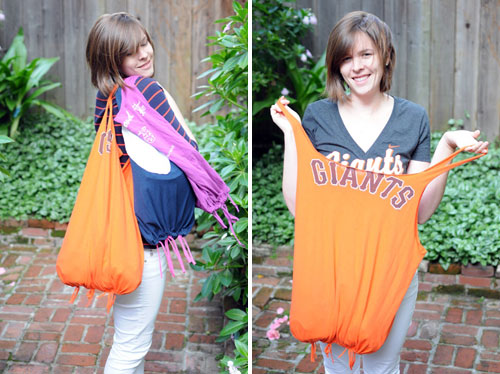
A no-sew or lightly sewn tote from a graphic tee is the project most people finish and keep using. Typical method: cut off sleeves and neckline to form a bag opening, seam or knot the bottom closed, and leave shoulder straps from the remaining shoulder fabric—or cut longer straps from another shirt if you need more strength.
Criteria for a tote that lasts:
- Shirt body large enough for your usual load (books, groceries, beach towel).
- Bottom seam doubled or knotted tightly—single thin knots fail first.
- Straps wide enough not to cut into shoulders; reinforce if you carry weight.
- Graphic placed where you want it seen; inside-out construction if the print is cracked and ugly.
Skill level: beginner. Time: often under an hour. If you only try one idea from this page, make the tote from a shirt you already like looking at.
Project chooser
- Thirty minutes, almost no skill: headband, scarf loop, pet toy.
- One evening: tote, bracelet, simple pillow.
- Weekend commitment: skirt with waistband, multi-shirt pillow, small rug.
- Long haul: room rug from dozens of tees.
Keep a small bin of “cutters” separate from shirts you might still wear. Once the scissors come out, the decision is made—and that is usually when the pile finally shrinks.
If a project frustrates you halfway, pause and switch to a smaller one rather than abandoning the whole upcycling habit. A finished headband on a hook beats a half-braided rug in a guilt pile. Match ambition to the fabric you have, finish one useful object, then decide whether the next tee becomes another tote—or finally earns its place in the rag bag without apology.

Comments
Continue reading
Chair to Bench DIY: How to Turn Old Chairs into Real Seating
Choose matching frames, bridge them with a solid seat subframe, finish for indoor or outdoor use, and build a bench that actually holds weight.
Pool Noodle DIY Ideas Kids Actually Use
Turn leftover foam noodles into rockets, counters, bed bumpers, soft swords, and outdoor course markers—with safety notes and a short project checklist.
32 Ways to Repurpose Old Sweaters Into Wearables and Home Goods
From knotted headbands and coffee sleeves to stockings, skirts, softies, and wine bags—thirty-two projects that give stretched-out knits a second life.