
Kate Upton in Vogue Italia November 2012: Meisel’s Seductive
Steven Meisel and Carlyne Cerf de Dudzeele’s Vogue Italia November 2012 story—Newton-cited latex urban eroticism for Franca Sozzani’s title.
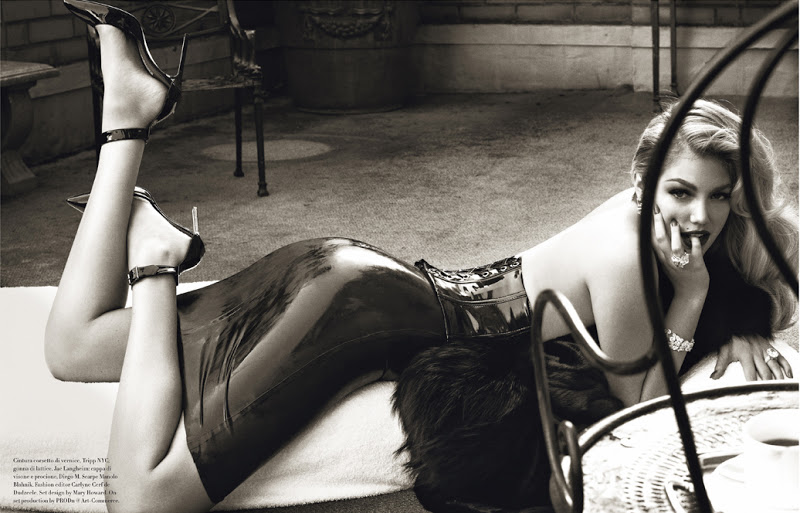
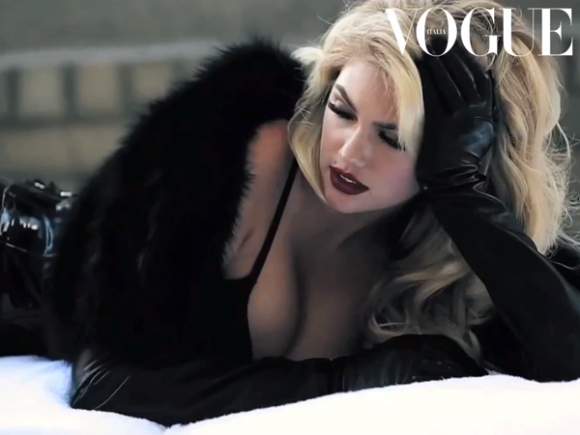
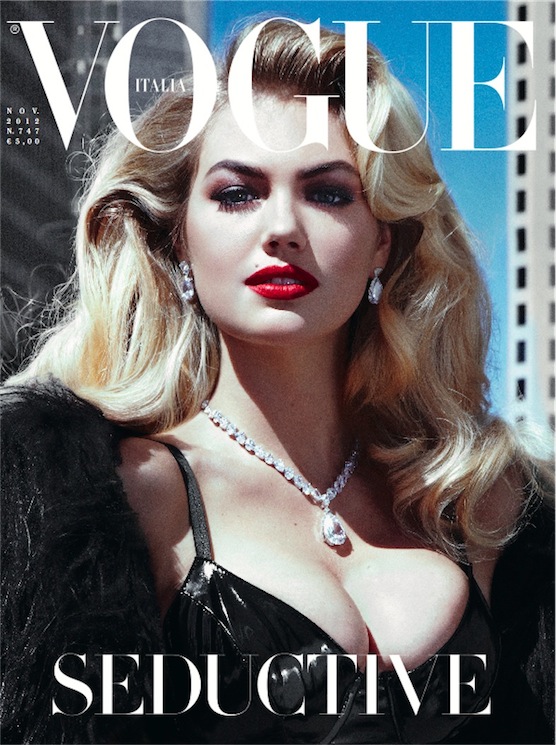
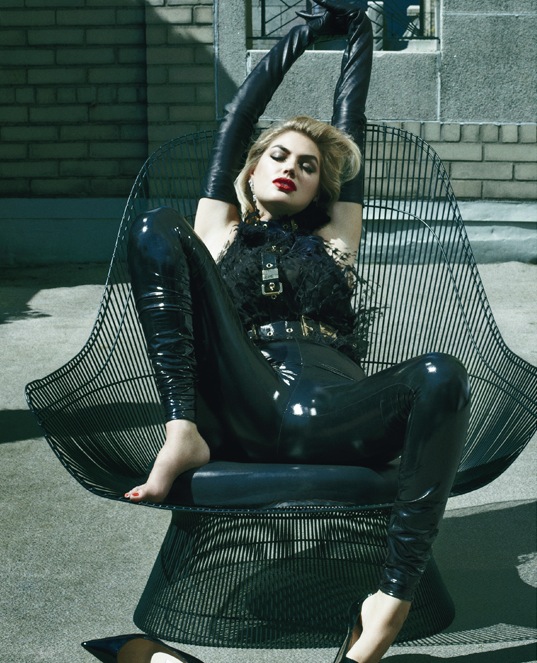
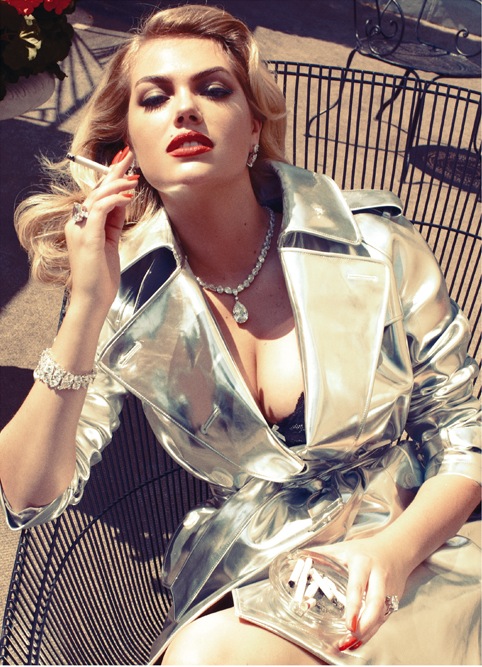
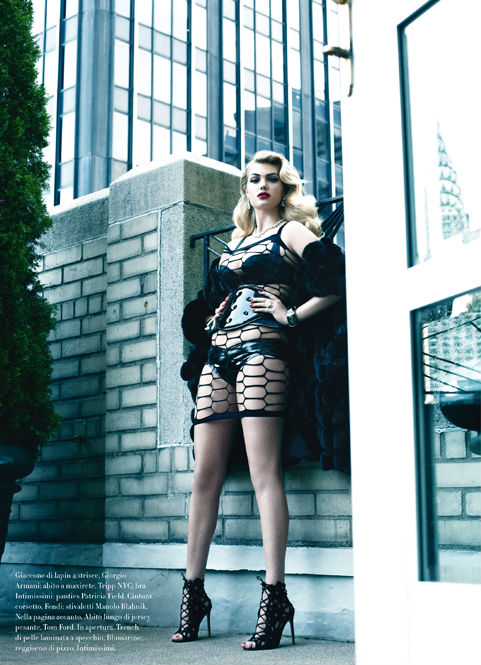
Vogue Italia’s November 2012 issue cast Kate Upton as the star of a Steven Meisel cover story titled Seductive—a deliberate turn from viral swimsuit fame toward Milanese fashion mythology. Styled by Carlyne Cerf de Dudzeele, with hair by Oribe, makeup by Pat McGrath, and set design by Mary Howard, the chapter squeezed Upton into latex and high-gloss urban eroticism as a tribute to Helmut Newton’s 1980s street-power photography. Vogue Italia under Franca Sozzani treated that lineage as serious fashion speech, not tabloid decoration.
Upton was twenty. She had already been discussed as an internet-made star and body-of-the-year phenomenon; Meisel’s assignment marked a different kind of approval. Italian Vogue’s November book did not ask her to sell Antarctica, play ironic housewife, or define “the new sexy” for a Brazilian newsstand. It asked her to inhabit Newton-coded mistress architecture: patent shine, shearling volume, jewelry punctuation, controlled poses against city and interior sets. This gallery gathers those frames as a dated editorial package—the Meisel / Cerf de Dudzeele / Italia sentence—without emptying into gossip about anyone’s private life.
Why Meisel and Italia matter in late 2012
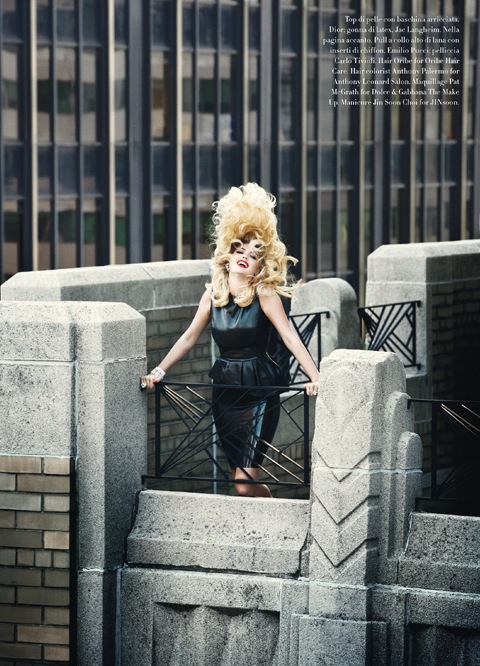
Steven Meisel’s relationship with Vogue Italia was one of fashion publishing’s central engines. A Meisel cover story in Sozzani’s magazine conferred a kind of institutional temperature check: the model was being written into a lineage of highly constructed, often erotic, always clothes-forward image-making. Cerf de Dudzeele’s styling—famous for graphic clarity and fearless sensuality—pushed Upton toward latex mistress codes rather than soft California ease. Pat McGrath’s makeup and Oribe’s hair finish the A-team signal. When those names stack on one story, the magazine is not dabbling; it is making a claim about where a face belongs in fashion history’s citation system.
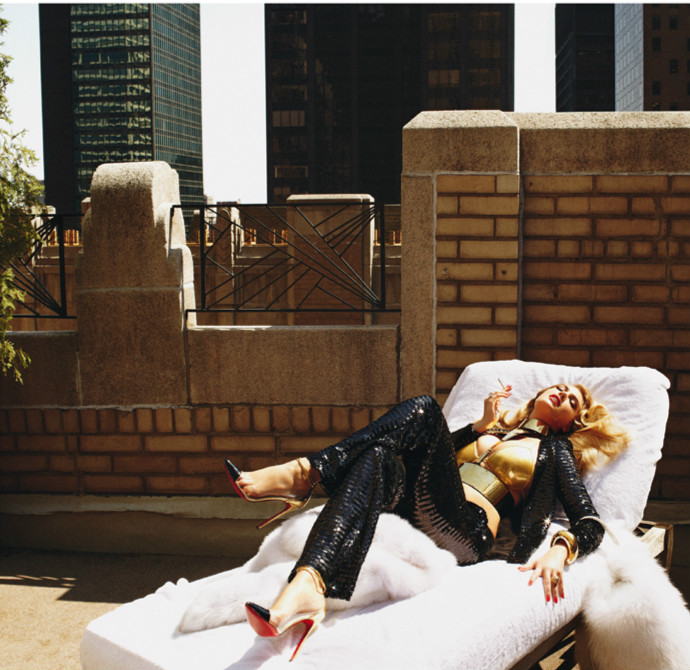
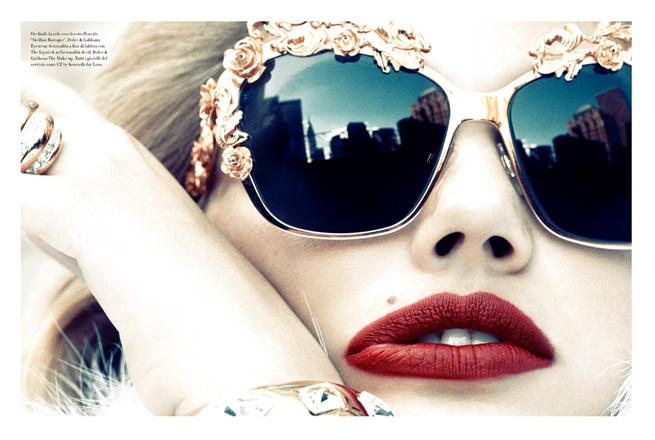
Period text around the issue described a turning point: from webcam-era self-promotion and calendar-adjacent fame toward “masters of the lens.” That framing is historical fashion discourse of 2012, not a personality roast. It explains the wardrobe choices—Fendi shearling and Mongolia textures against patent tops, Kenneth Jay Lane jewelry flash, body-conscious shine that cites Newton’s urban eroticism. New York locations noted in contemporary galleries keep the story geographically American while the logo remains Italian. Milan’s magazine; Newton’s ghost; Meisel’s control. That triangle is the page’s real geography.
For readers who only knew Upton through Sports Illustrated previews or viral clips, Italia’s November issue was a re-schooling. The magazine did not soften her; it rerouted her. Seduction became a styled system with references, credits, and set design—Mary Howard’s environments included—rather than a candid accident. That is how serious fashion titles metabolize a mass-famous body: they give it a citation and a team.
Seductive as fashion speech, not gossip fuel
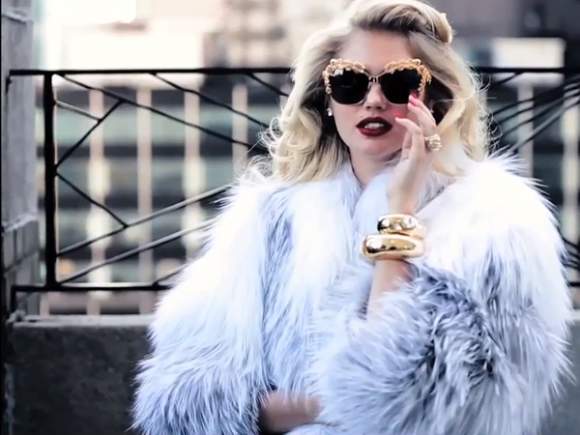
The story title Seductive is a thesis. It announces that Italia will treat sexuality as a styled system—poses, materials, references—rather than as paparazzi accident. Newton’s 1980s urban erotic style supplies the citation: power heels, hard shine, controlled confrontation with the camera. Meisel updates that citation for 2012 without turning the pages into a nostalgia costume parade. The result is fashion mythology: Upton as sophisticated mistress figure inside a Condé Nast Italia narrative.
That job differs sharply from the magazines that follow in her early-2010s calendar. Vogue Germany’s Weber chapter seeks outdoor romance and wardrobe ease for a German edition. V Magazine’s Faena preview seeks ironic hotel fiction for an indie luxury spring book. SI’s 2013 Antarctica cover seeks destination extremity and franchise cover energy. Vogue Brasil’s July Gendre cover seeks a Brazilian definition of “the new sexy” in structured glamour. Italia’s November 2012 Meisel story seeks seduction as high-fashion citation. Confusing those assignments flattens five different markets into one mood board and wastes the reason each URL exists.
Even the empty “Video” stub that once trailed some blog mirrors of this gallery belongs in the discard pile. The usable artifact is stills with credits: Meisel’s framing, Cerf de Dudzeele’s material clashes, McGrath’s face architecture, Oribe’s hair as silhouette. Fashion history lives in those craft decisions, not in orphaned media placeholders.
How to read the materials and poses
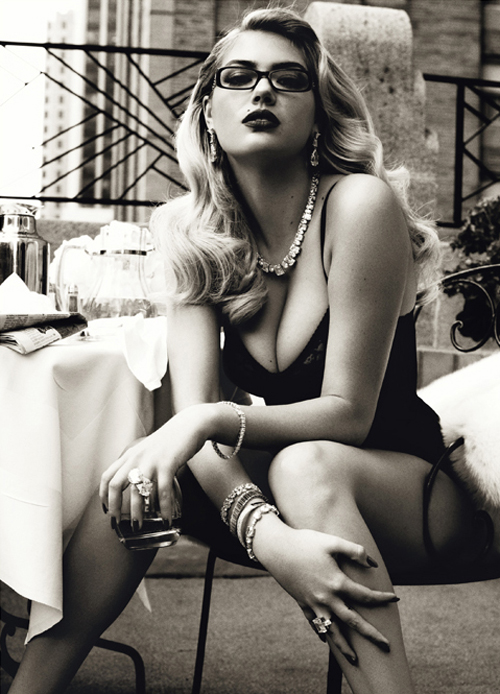
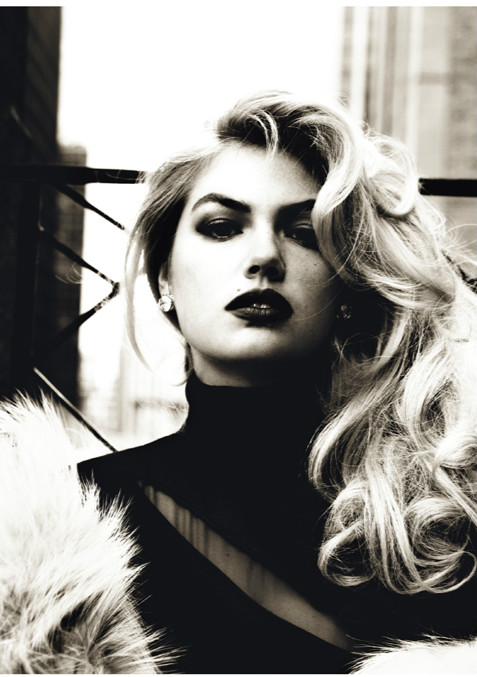
Latex and patent read as armor and invitation at once—Newton’s favorite contradiction. Shearling and Mongolia textures add animal volume against that shine, a Cerf de Dudzeele kind of clash. Jewelry is punctuation, not softness. Poses often hold confrontation: chin, hip, direct gaze, body arranged for architecture rather than candid smile. Mary Howard’s set design supports that control; nothing in a Meisel Italia story is accidental clutter. When a frame feels severe, that severity is the point of the citation.
Compare scale and temperature with Upton’s other 2012–2013 chapters. SI Antarctica is cold light and expedition awe under Derek Kettela. V Magazine is warm hotel irony under Sebastian Faena. Vogue Germany is outdoor Weber air with Anne Christensen’s house curriculum. Vogue Brasil is newsstand glamour for a Latin American edition under Henrique Gendre. Vogue Italia is constructed erotic fashion speech for Milan’s most reference-heavy Vogue. The face is continuous; the editorial climate is not. Keeping climate attached to image is the historical task.
Vertical dominance in much of this gallery also differs from V’s horizontal couple scenes. Italia often wants a towering single figure—icon more than scene—because the citation is about power and confrontation. V wants a room with two people and a joke. SI wants landscape co-starring with a cover body. Form follows market fantasy.
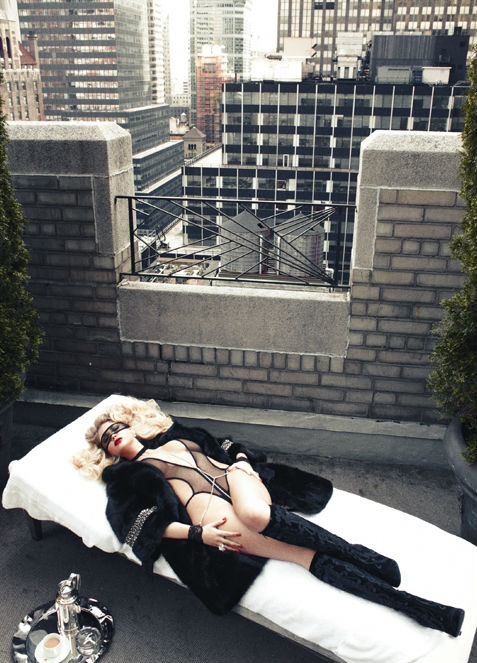
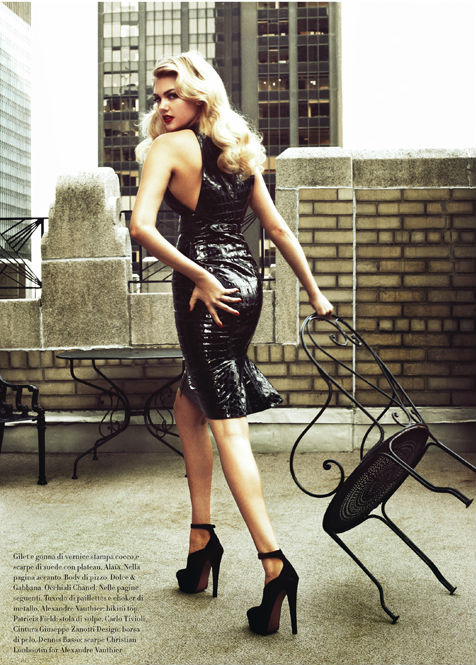
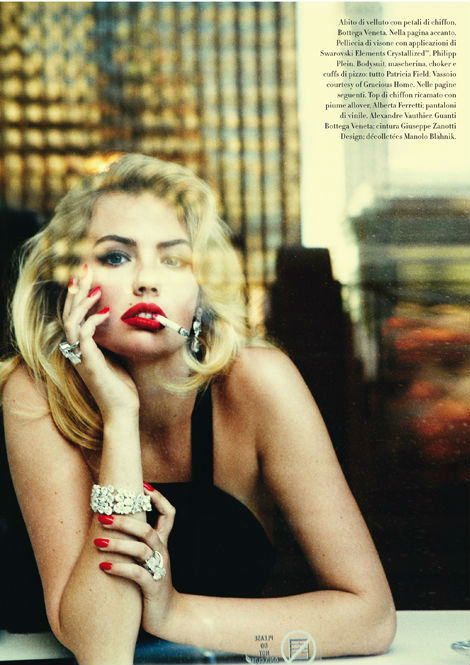
- Name the team: Meisel, Cerf de Dudzeele, McGrath, Oribe, Howard, Sozzani’s Italia.
- Name the citation: Helmut Newton’s 1980s urban erotic style, updated rather than costumed.
- Name the thesis: Seductive as fashion system, not celebrity accident.
- Keep markets separate: Italia myth ≠ Germany Weber romance ≠ Brasil “new sexy” ≠ V irony ≠ SI ice.
- Watch materials: latex/patent shine against shearling volume is the story’s visual argument.
- Prefer icon over scene: many verticals are power architecture, not hotel narrative.
On a second pass, ignore fame narratives and count how many frames depend on shine versus volume. That ratio is the Newton citation working in real time—and the reason this November 2012 Italia chapter still reads as a fashion story rather than a personality gallery.

Comments
Continue reading
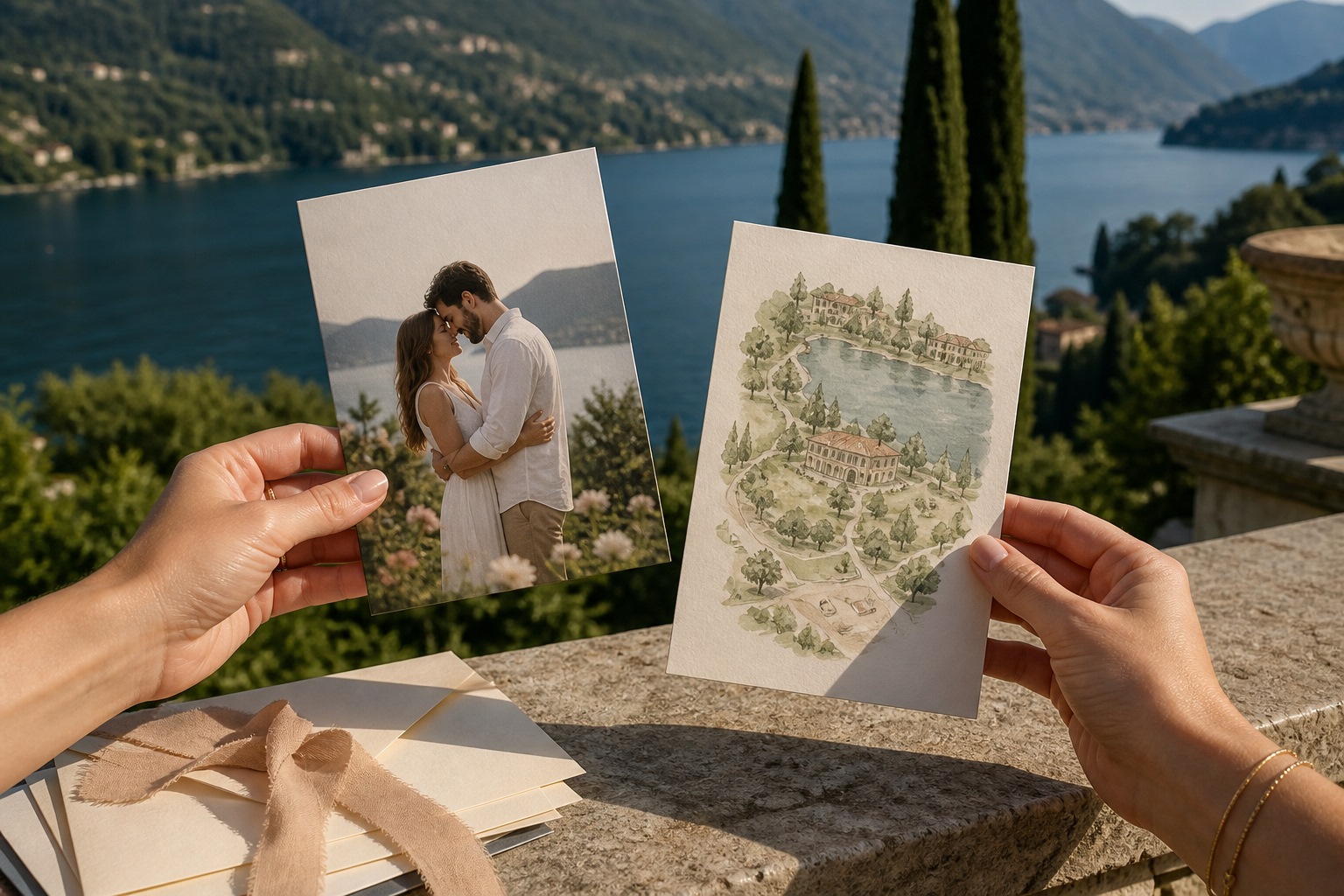
Photo vs Illustrated Save-the-Dates: How to Choose a Format
A practical comparison of photographic and illustrated save-the-dates—when a portrait earns the stamp, when a drawing carries the date, and how to match format to venue, guests, and printing.
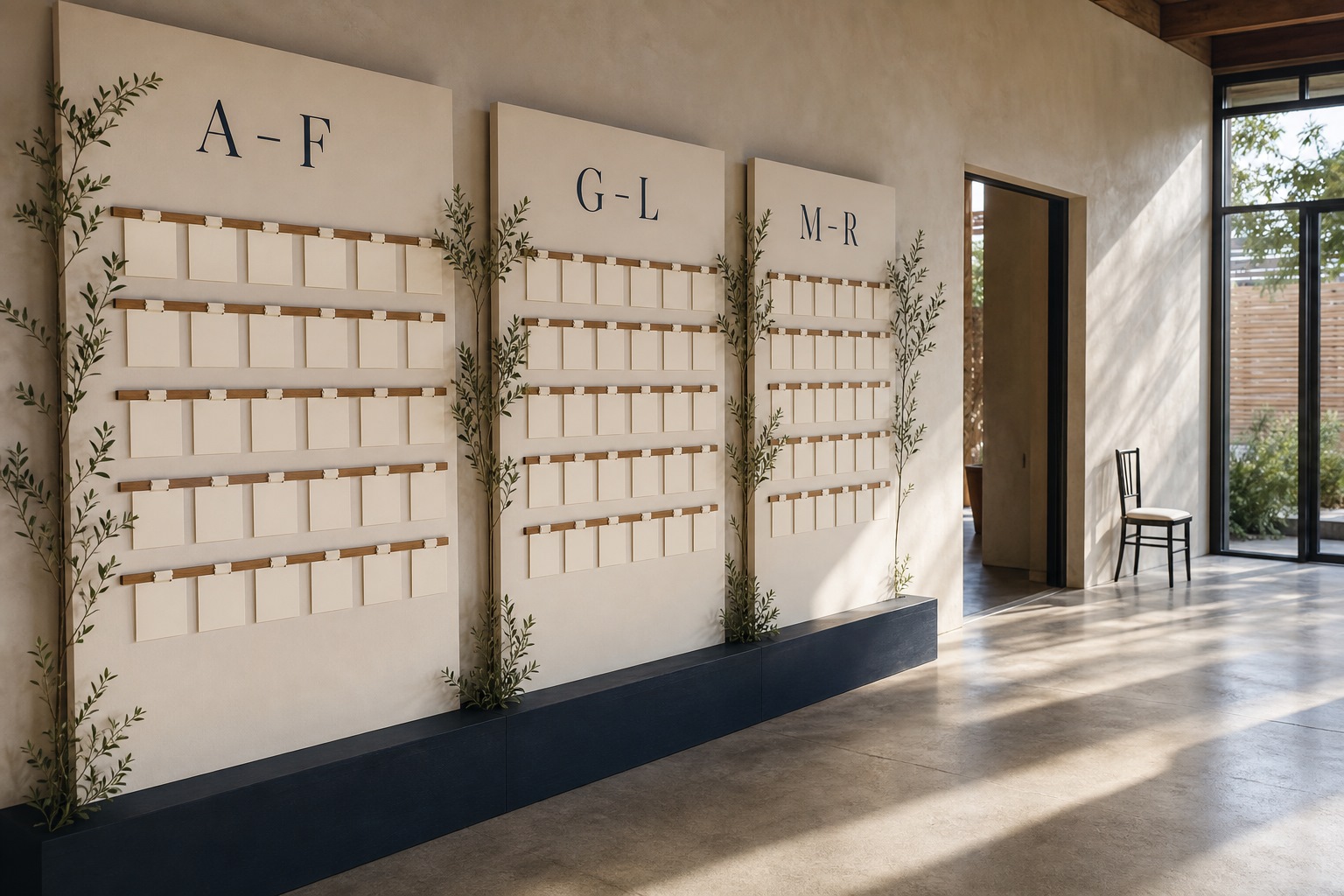
Escort-Card Displays That Aren’t a Table of Tiny Cards
Walls, branches, envelopes, mirrors, and numbered installations—how to stage escort cards so guests find their tables without a crowded lobby table.
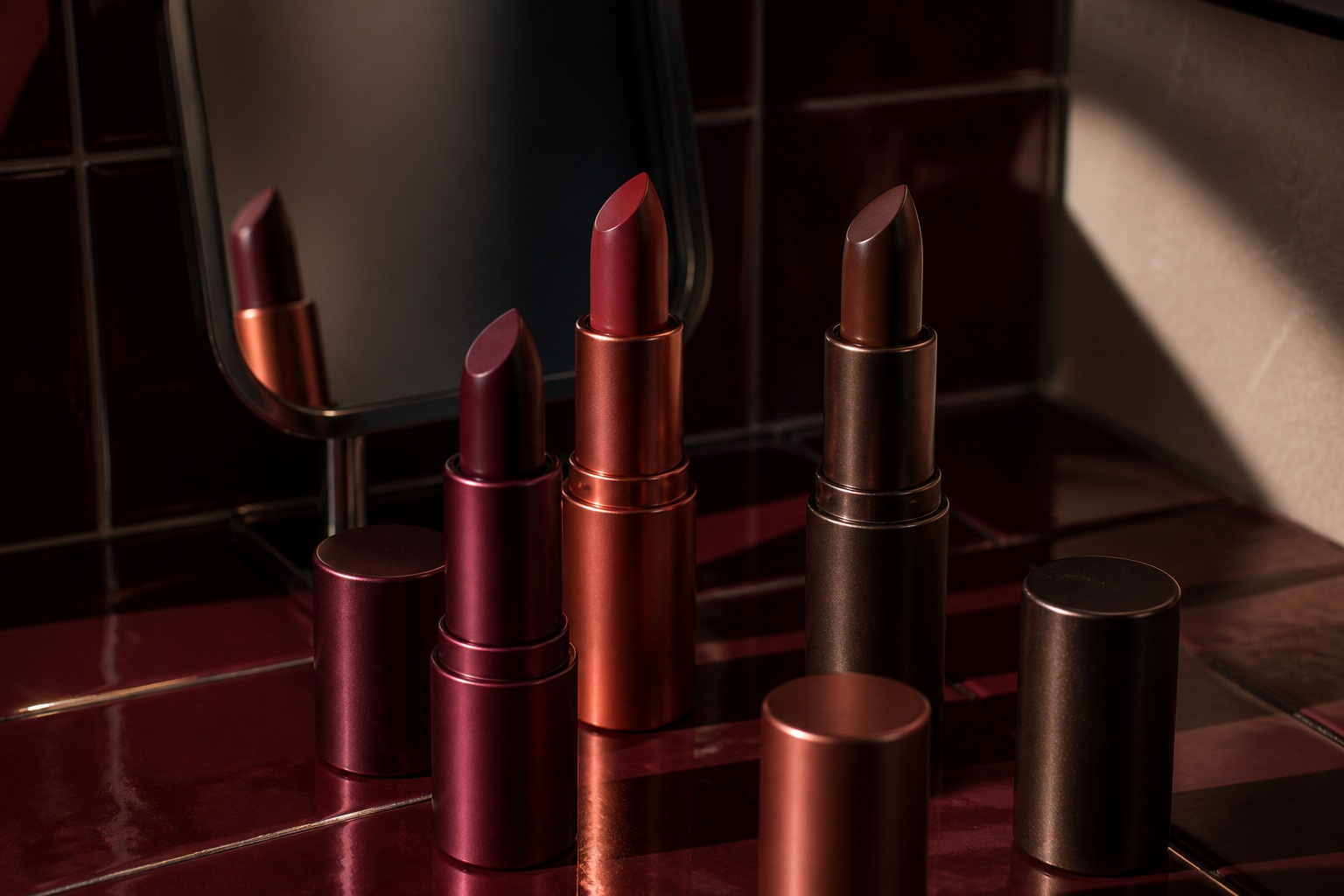
Berry, Brick, and Brown Lipsticks That Still Read as Color
A guide to berry, brick, and brown lipsticks—undertones, finishes, and light—when classic fire-engine red is not the shade you want to wear.