
Porcelain Figurines Hit the Ground: Martin Klimas
How German photographer Martin Klimas freezes ceramic figurines at the instant of impact—method, materials, and how to read the shatter.
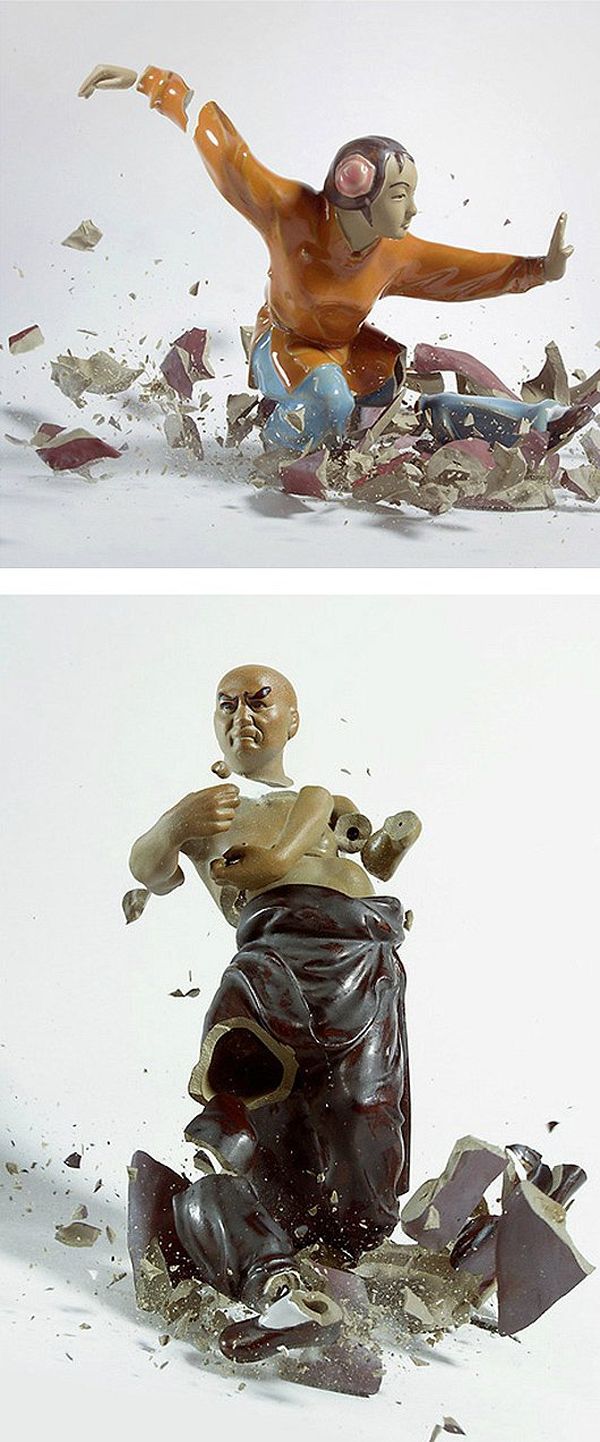
German photographer Martin Klimas is known for making destruction look deliberate. In his Porcelain Figurines series, ordinary ceramic sculptures—warriors, dancers, decorative animals, kung-fu characters—are dropped and photographed at the instant they meet the floor. What should be a blur of failure becomes a sharp, suspended event: limbs still readable, shards already airborne, dust catching the light like a second material.
The pictures sit in a long photographic conversation about freezing time. Eadweard Muybridge broke motion into frames; Harold Edgerton lit bullets and milk drops with strobes. Klimas works in that lineage, but his subject is sentimental kitsch rather than scientific demonstration. The figurines begin as mass-market ornaments. In the photograph they become temporary sculptures that exist for a fraction of a second and then only as an image.
How the images are made
Klimas has described dropping pieces from roughly three to four meters in the studio. A camera and strobe are set to catch the sound of impact—or otherwise timed so that the shutter opens when the ceramic fails. There is little room for “fixing it in post.” Alignment matters: the figurine should strike in a way that keeps the body readable while the base and limbs explode outward. Many drops produce only rubble. The keepers are the ones where the figure still seems to gesture—mid-fight, mid-dance, mid-collapse—while gravity has already won.
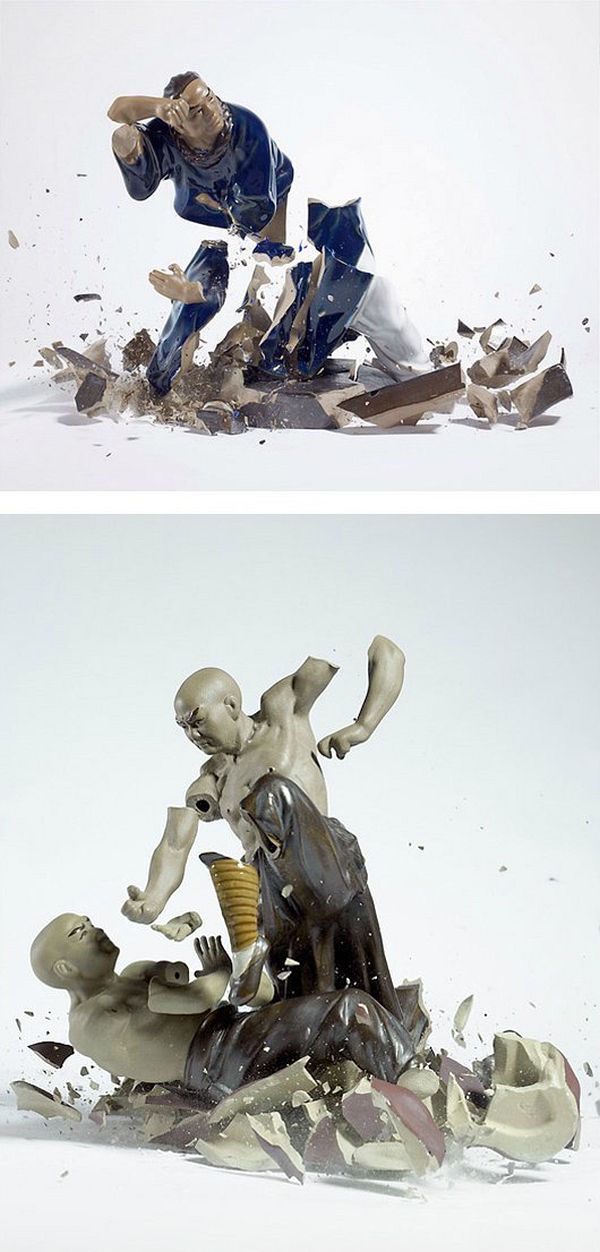
He has bought figurines from flea markets, online auctions, and local shops, later importing kung-fu figures in bulk when a particular cast worked well. Pairing two figures in one drop suggests combat; a single figure can look like a solitary leap that ends in shatter. Either way, the studio floor becomes both stage and destroyer.
Cleanup is part of the practice. Days can pass with nothing usable: hours of dropping, sweeping, and resetting. That labor sits behind the elegant stillness of the final print. High-speed photography often looks effortless because the unsuccessful frames never leave the studio.
Why porcelain
Porcelain and related ceramics break with complexity. Glass can spider into sheets; soft clay can thud. Fine ceramic produces intricate fragment fields—faces that remain intact for a beat while torsos atomize, glaze flashing as chips turn. Klimas has said he began with simpler smash subjects such as bottles and cans before committing to figurines around the early 2000s and refining the series over years.
There is also a cultural charge. European porcelain once signaled technical luxury; Chinese ceramic traditions go back far longer. Today many of the objects Klimas uses are inexpensive décor. Elevating them through high-speed capture asks whether craftsmanship and kitsch can share the same frame. Details that collectors admire in museum porcelain—fingers, drapery folds, painted eyes—become the last recognizable islands in a cloud of white dust.
Reading the “perfect moment”
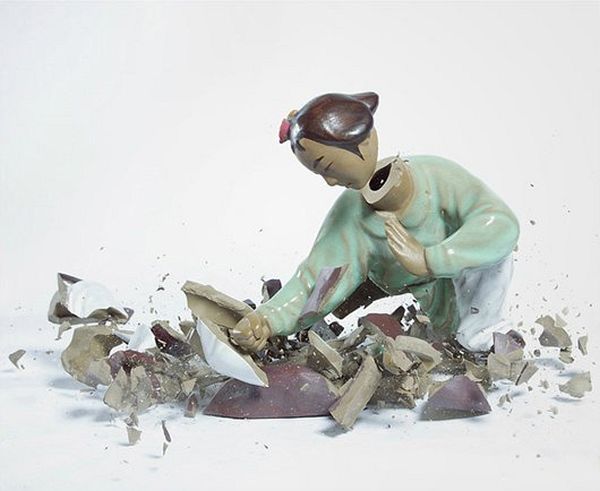
Klimas has spoken about being drawn to time made visible: catching something out of the flow rather than illustrating a storyboard. In these pictures, narrative arrives as a side effect. Viewers invent battles and dances because human figures imply intention, even when the only real intention was a studio drop.
Look first at posture. Is the head still upright? Are arms extended as if striking or shielding? Then look at the particle field. Large shards still carry painted surfaces; powder marks the true violence of the hit. The photograph holds both states at once—object and aftermath—without choosing between beauty and ruin.
That ambiguity is why the series travels well beyond photo-technique blogs. Designers see composition. Physicists see fracture. Others see a metaphor for fragile social roles or for collecting itself: the shelf ornament destroyed in order to be seen clearly.
Related strands in Klimas’s work
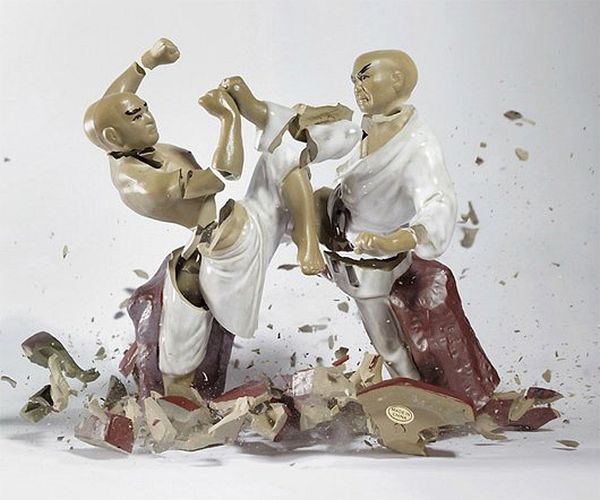
Porcelain Figurines is one chapter in a broader interest in impact and transformation. In other projects, Klimas has worked with bursting vessels and floral arrangements where a projectile or sudden force turns a still life into a storm of petals and glass. Across these series, the camera’s job is not to document a lifestyle product but to isolate a threshold state—solid becoming scatter.
Galleries presenting his work often stress that hybrid of precision and chaos. The lighting is controlled; the breakage is not fully controllable. Each successful frame is a negotiation between setup and chance. That balance keeps the images from feeling like pure lab demos or pure accident photos.
Looking at the pictures in this gallery
The images collected here emphasize vertical drama and the instant after contact. Some frames favor a tall figure dominating the composition; others open into a wider burst where negative space matters as much as ceramic. Because the backgrounds are typically clean, the eye stays on trajectory and fragment pattern.
Spend time with one photograph longer than a scroll allows. Track a single painted fragment from near the body out to the edge of the frame. Notice how motion blur is largely absent: strobe duration freezes chips that would otherwise streak. That clarity is the technical achievement; the emotional charge comes from recognizing a face or a weapon still mid-gesture.
What the series asks of the viewer
It is easy to treat smash photography as spectacle. Klimas’s better frames resist that reduction. They are careful about silhouette and about the dignity—or absurdity—of the figurine’s pose. A warrior who shatters while still “attacking” feels different from a decorative deer that simply detonates. The series keeps returning to bodies that seem to act, even as physics denies them a future.
There is also an ethics of waste that viewers sometimes raise: hundreds of dolls destroyed for a handful of pictures. Klimas’s own comments frame the attrition as necessary to the method. Whether that sits comfortably with a given viewer is part of the work’s afterlife. The photographs do not apologize; they present the cost as inseparable from the image.
For photographers, the takeaway is less “buy a sound trigger” than “define the moment you care about before you drop anything.” For everyone else, the series is a reminder that ordinary objects hide structural drama. Porcelain looks calm on a mantel. In Klimas’s studio, calm is only the starting condition.
Martin Klimas’s Porcelain Figurines remain among the clearest popular examples of high-speed studio work applied to figurative kitsch. The figures hit the ground; the camera arrives on time; what we get is neither intact ornament nor useless debris, but a third thing—breakage held still long enough to study.

Comments
Continue reading
Still-Life Photography at Home with One Window
A table, north or side light, and a handful of objects—how to shoot still lifes in a small room without a studio, softboxes, or a prop closet.

Dramatic Photo Art by Sukron Ma’mun (Ipoenk Graphic)
Cirebon, Indonesia photographer Sukron Ma’mun uses theatrical natural light to frame village life, play, and place in lyrical photo art.

Bird’s-Eye Views: Florian Beaudenon’s Instant Life
Paris photographer Florian Beaudenon’s Instant Life series captures people in their rooms from above—intimate, collaborative overhead portraits of everyday joy.