
Stunning Paintings of Movie Scenes
New York illustrator Alixce X. Zhang turns unforgettable film frames into intimate portraits—gallery notes on light, mood, and cinema as paint.
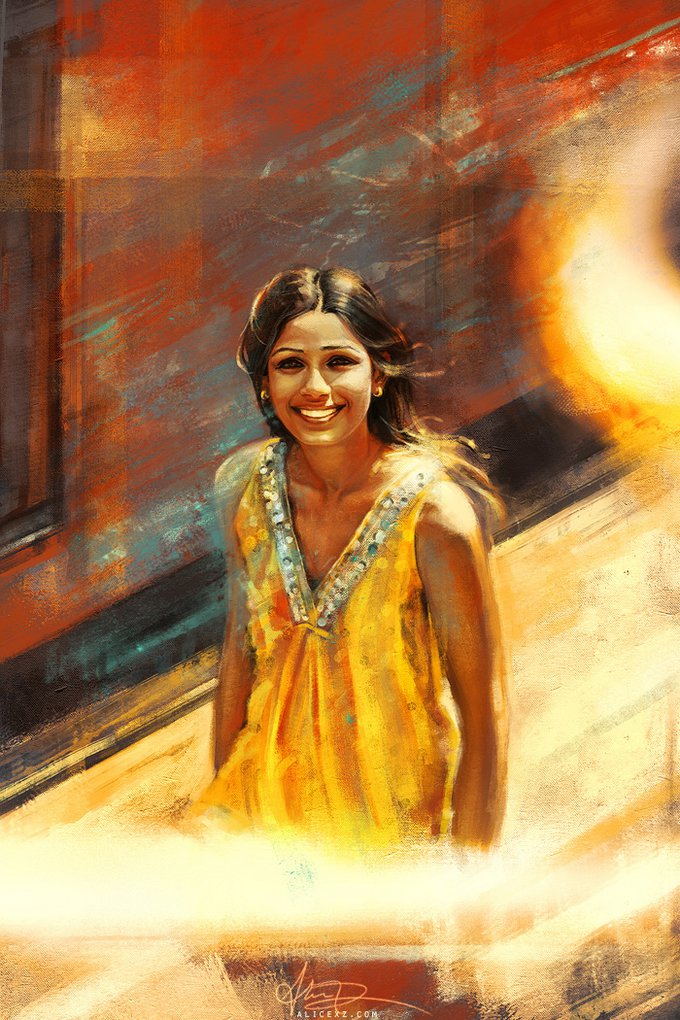
Alixce X. Zhang paints the moment after the cut—when a film frame has already become memory. Working as an illustrator and designer based in New York, she builds portraits and scene studies that feel less like merch stills and more like private altarpieces: saturated, intimate, and slightly larger than life. The faces hold the weight of the stories behind them. The compositions borrow cinema’s drama without copying a single promotional layout.
This gallery gathers some of her most recognizable movie-scene paintings—from dusty streets and neon hotels to oil fields, Gotham rain, and quiet rooms where love and regret share the same light. You can browse more of her work on her site at alicexz.com. What follows is a way of looking: how she turns famous frames into paintings that still surprise.
Slumdog Millionaire
Cinema as raw material, not costume
Fan illustration often freezes a character in a “cool pose.” Zhang’s stronger pieces do something quieter. They treat the film as a weather system—color temperature, costume texture, the angle of a glance—and then rebuild that weather in paint. You recognize the title, but you also feel the room. That is why a portrait of a gunman or a magician can still read as a study of light first and celebrity second.
Movie scenes are already edited for emotion. A painter’s job is not to re-edit them louder. It is to choose which detail survives when motion stops: the crease in a sleeve, the wet sheen on asphalt, the half-second before a smile turns into something else. Zhang’s work tends to keep that half-second. The result sits between portraiture and still from a dream you almost remember correctly.
New York’s illustration culture rewards polish and speed. These paintings reward lingering. Edges soften where memory softens. Contrast spikes where the original film made you lean forward. The homage is clear without becoming a tracing exercise.
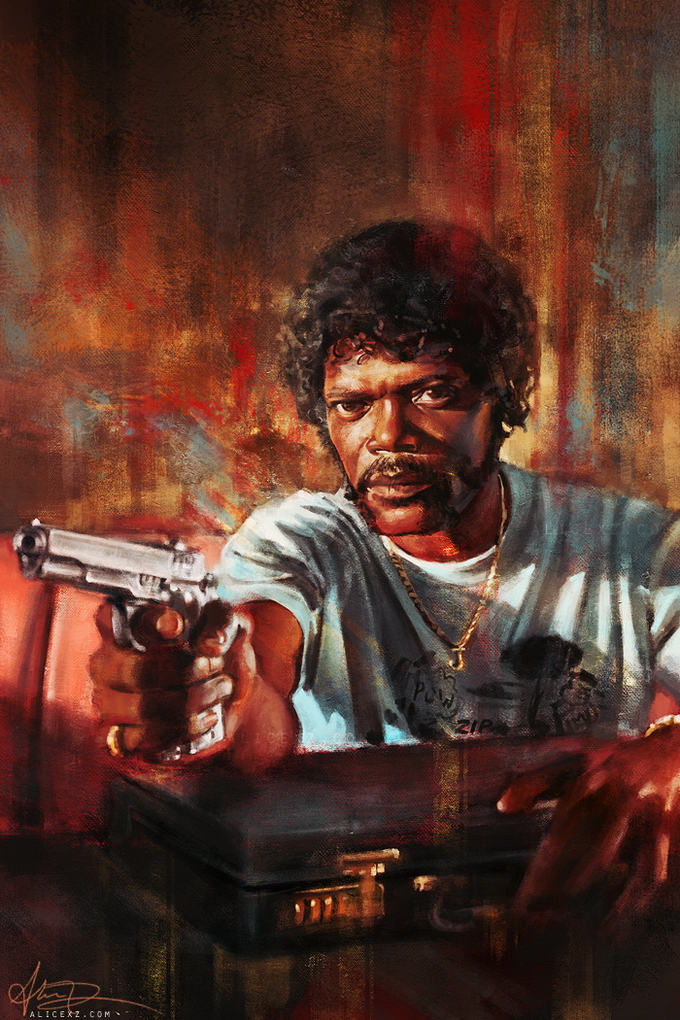
Pulp Fiction
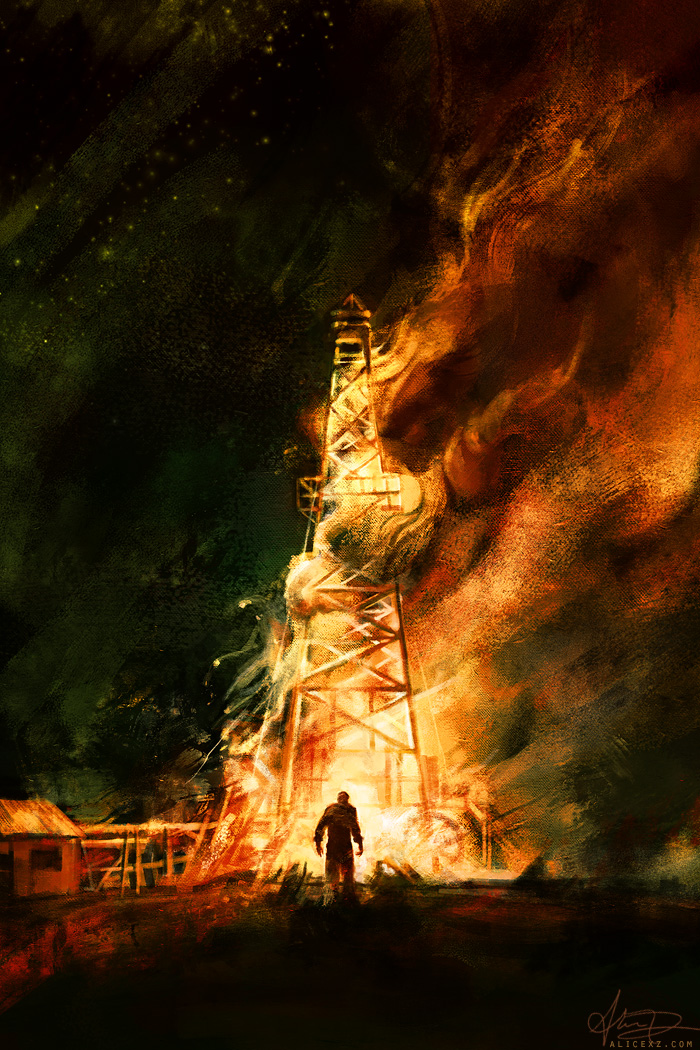
There Will Be Blood
How to read a painted film frame
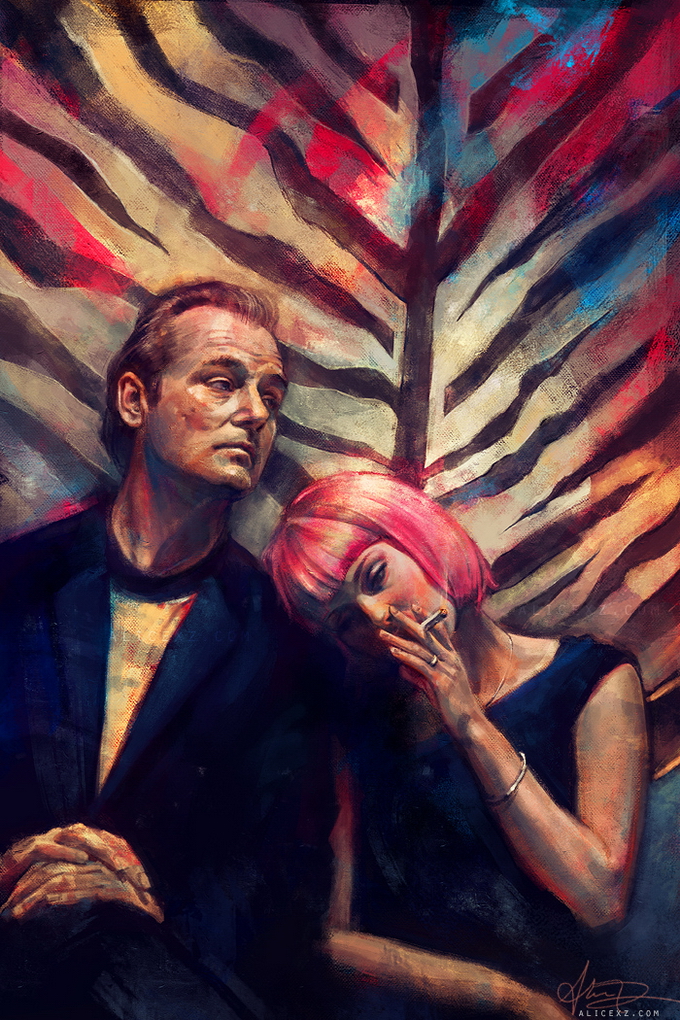
Start with temperature. Warm golds and dusty oranges pull you into heat, hunger, and ambition—the register of There Will Be Blood and other sun-struck dramas. Cooler blues and hotel greens open loneliness and jet lag—the register of Lost in Translation. Zhang’s palette is rarely “accurate to the DVD”; it is accurate to the feeling the scene left behind.
Next, find the face’s quietest feature. In many of these works the eyes do less shouting than the mouth, the jaw, or the way hair interrupts the light. That restraint is useful. Famous characters arrive with too much prior noise. A painter who whispers the likeness leaves room for you to meet the person again.
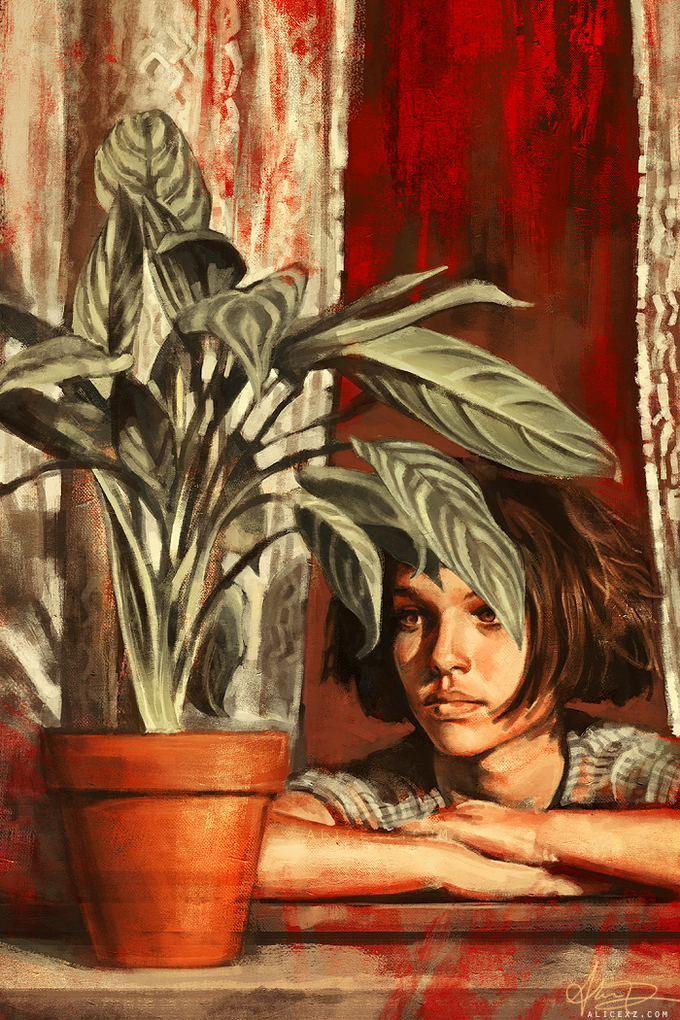
Then notice negative space. Cinema fills frames with production design; paintings can refuse some of that clutter. Empty field around a head becomes a kind of silence. In portraits drawn from The Prestige or Léon: The Professional, that silence matters as much as the props we expect—hats, coats, weapons, cigarettes. The painting decides which icons stay and which dissolve into atmosphere.
Lost in Translation
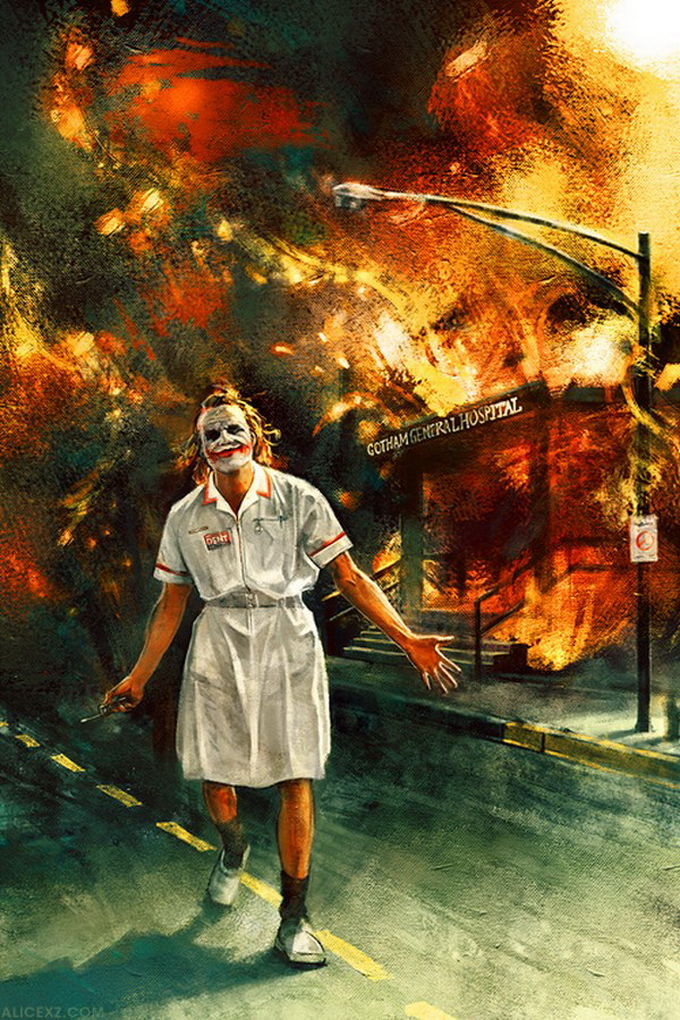
The Dark Knight
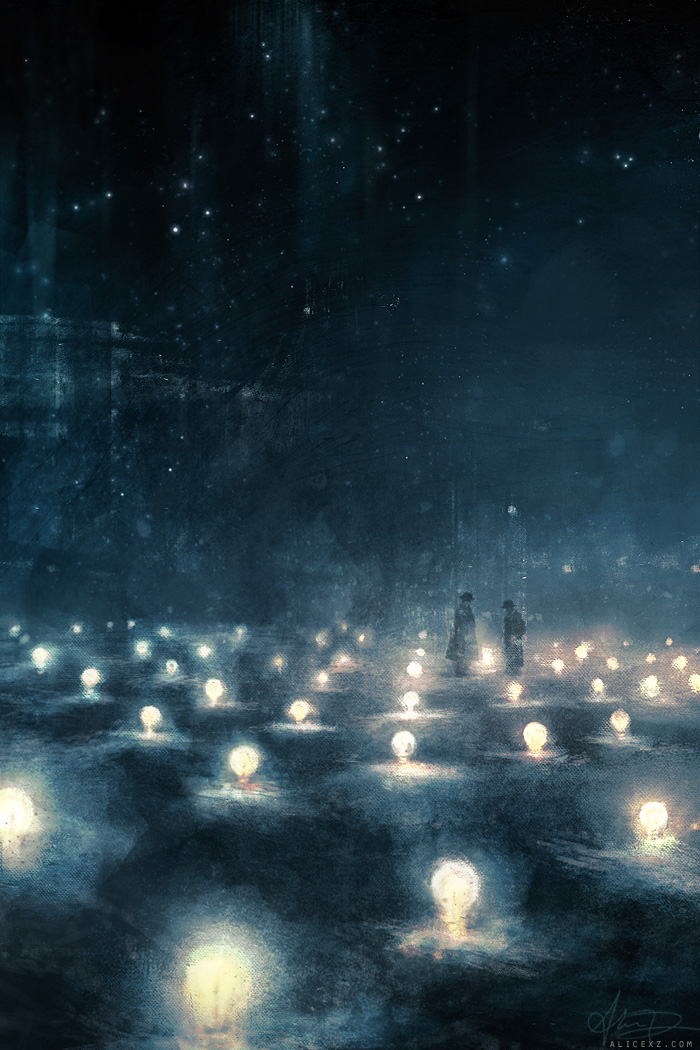
The Prestige
A gallery of titles, a single craft problem
Scroll the set and the titles change wildly—Pulp Fiction, Gladiator, In the Mood for Love, Les Misérables, Eternal Sunshine of the Spotless Mind, Django Unchained. The craft problem stays constant: how do you honor a film’s identity without becoming a poster printer? Zhang’s answer is consistency of attention. Faces are rendered with care. Costumes carry texture. Mood is treated as a design material, not a hashtag.
Action titles ask for graphic force. Romance and memory titles ask for haze and proximity. Comic-book darkness asks for wet streets and mask psychology. Period epics ask for fabric and dust. Moving between those demands is harder than specializing in one franchise look. The range here is part of the point: the artist is interested in cinema as a whole vocabulary, not in one director’s merch shelf.
If you paint or illustrate film subjects yourself, steal the method rather than the likeness. Choose one frame that already hurts a little when you remember it. Strip the composition until only three things remain—face, light direction, and one telling object. Paint those three until they argue with each other. Stop when the argument feels like the movie.
Léon: The Professional
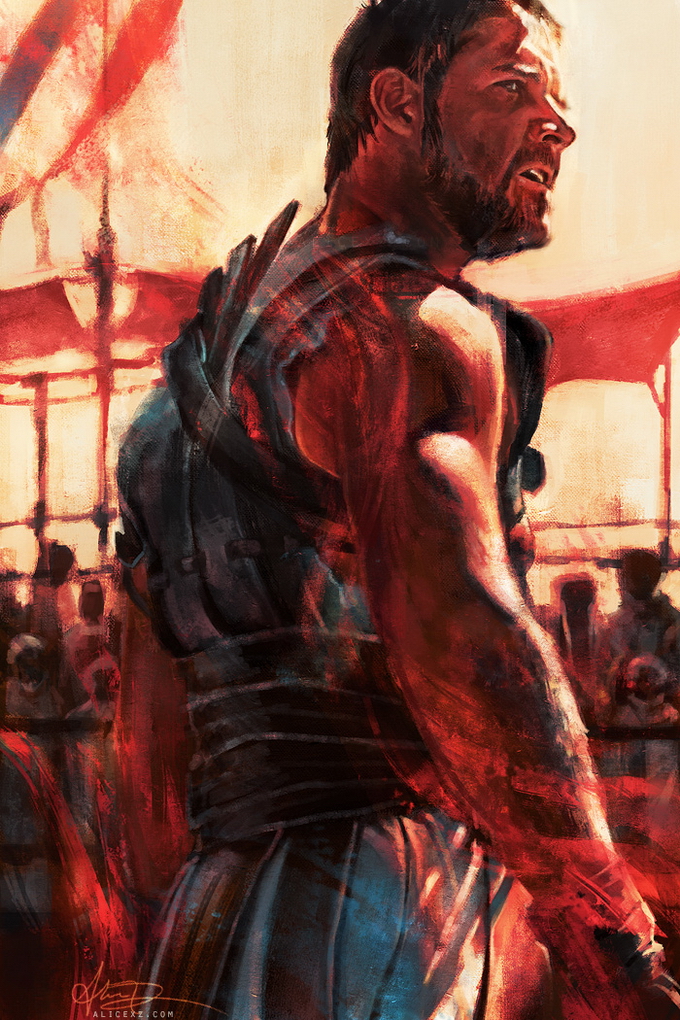
Gladiator
In the Mood for Love
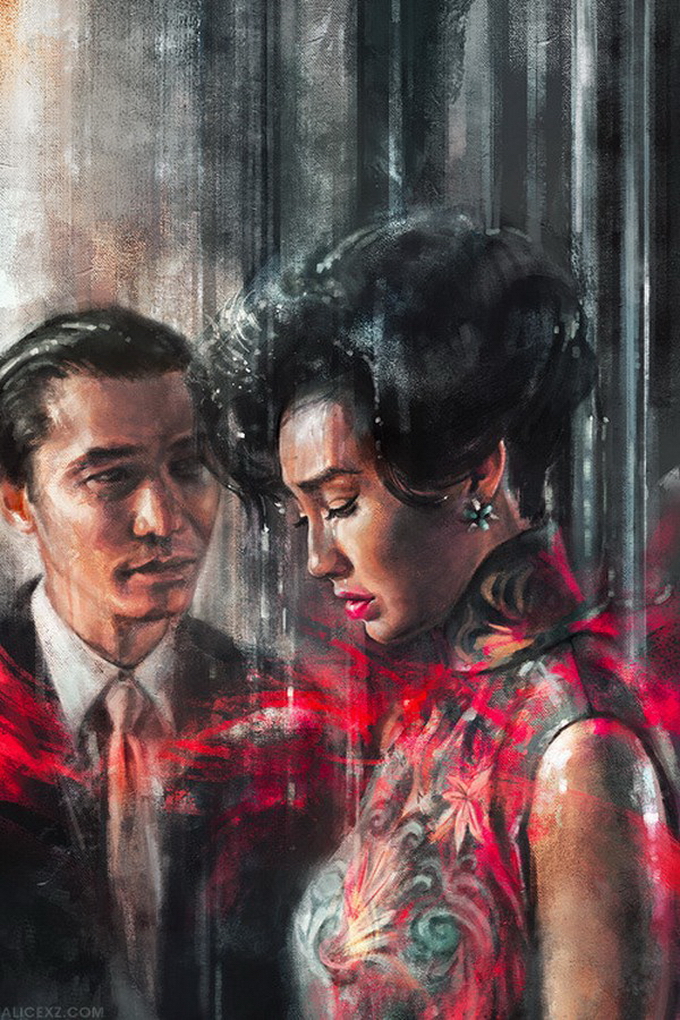
Why painted scenes still matter in a stills economy
We live among infinite screenshots. A painting of a movie scene is almost defiantly slow. It insists that a frame can be re-entered with brushwork, that fandom can be craft rather than only consumption. Zhang’s illustrations sit in that older tradition—album-cover seriousness applied to contemporary film memory.
They also remind you that likeness is a spectrum. Too exact and you get photocopy energy. Too loose and the title disappears. The sweet spot is recognition with surprise: you know who you are looking at, then you notice something the camera never lingered on. That surprise is the painting’s own cut.
Across Slumdog Millionaire through Django Unchained, the through-line is not genre. It is regard. Characters are staged as people under pressure—ambition, loneliness, violence, longing, spectacle—and the paint respects that pressure. You do not need spoilers. You need time.
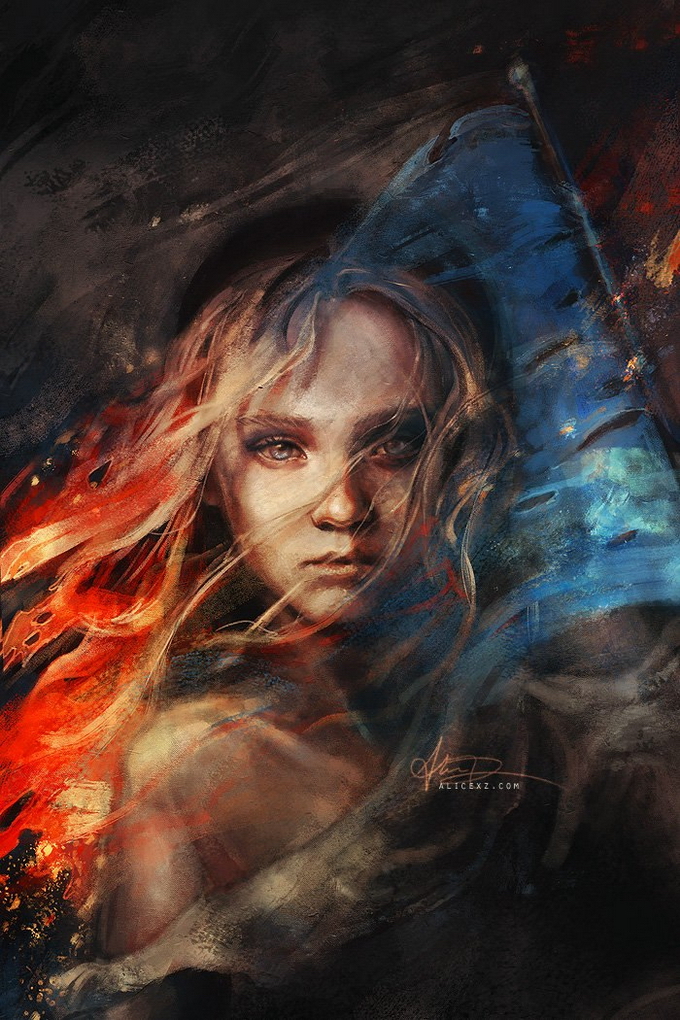
Les Misérables
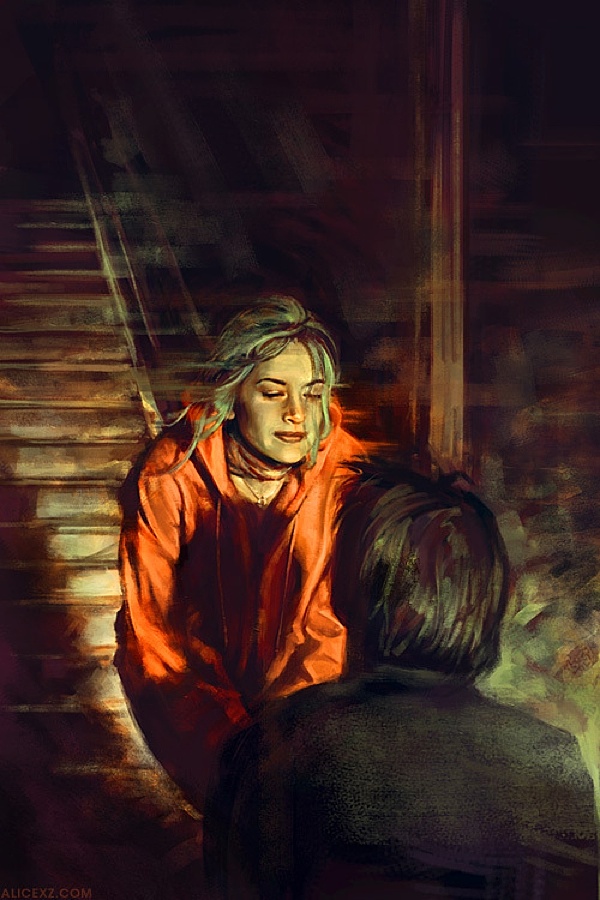
Eternal Sunshine of the Spotless Mind
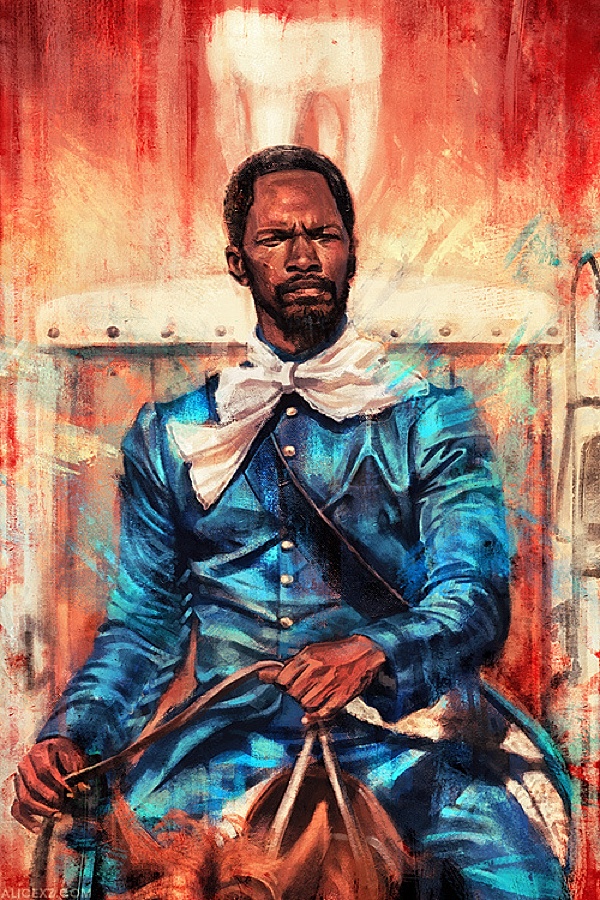
Django Unchained
Leaving the theater with the lights still down
When you finish the scroll, pick one painting and stay with it longer than the others. Ask what the film gave her and what she gave back. A good movie-scene painting does not replace the movie; it becomes a doorway you can reopen without a remote. Alixce X. Zhang’s doorway is made of careful faces, stubborn color, and the strange dignity of frames that refuse to stay only frames.
If another title rises in your mind as you leave—something not pictured here—that is the work doing its job. Cinema keeps making new weather. Painters who listen for it keep finding new rooms to hang it in. Somewhere between the last credit roll and the first brushstroke, a scene becomes a portrait again, waiting for someone to look as if they had never seen it on a screen.

Comments
Continue reading
Katie Rodgers’s Glittering Paper Fashion Illustrations
How Katie Rodgers builds Paper Fashion watercolors—pencil, wash, ink, then glitter—into dreamy fashion figures that sparkle on the page.
Photo vs Illustrated Save-the-Dates: How to Choose a Format
A practical comparison of photographic and illustrated save-the-dates—when a portrait earns the stamp, when a drawing carries the date, and how to match format to venue, guests, and printing.
Escort-Card Displays That Aren’t a Table of Tiny Cards
Walls, branches, envelopes, mirrors, and numbered installations—how to stage escort cards so guests find their tables without a crowded lobby table.