
Emmanuelle Brisson: The Air Shivers of Things Fleeing
French photographer Emmanuelle Brisson’s 2012 butterfly series stages flight and stillness—a white dress, soft outdoor light, and air thick with wings that may leave at any moment.
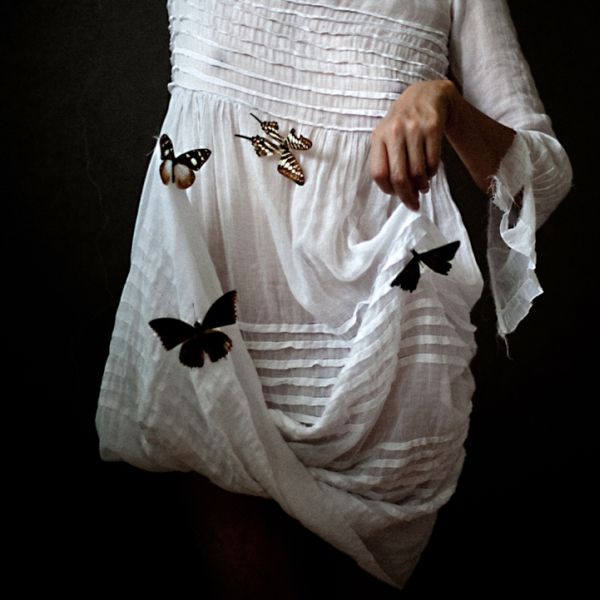
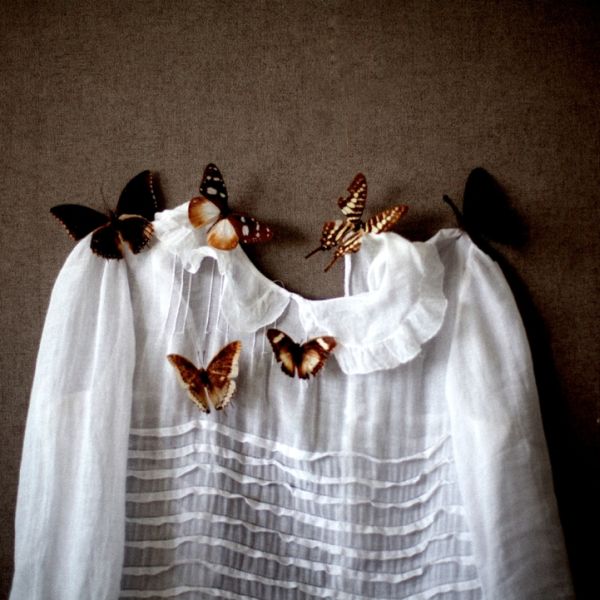
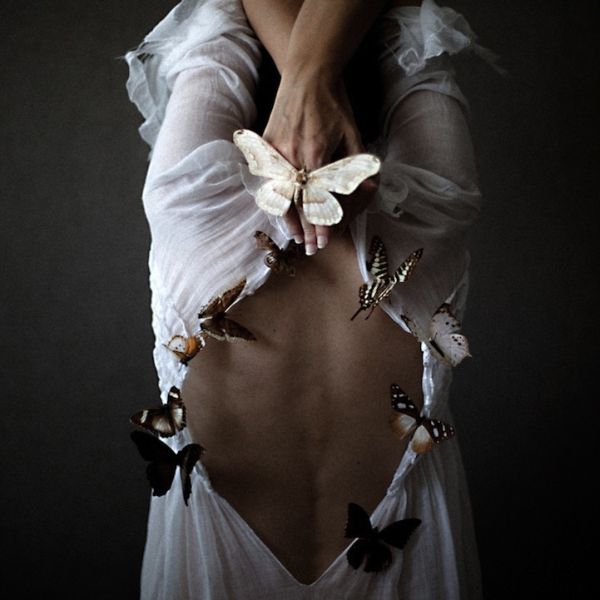
French photographer Emmanuelle Brisson titled her 2012 series L’air frissonne des choses qui s’enfuient—often rendered in English as The Air Shivers of Things Fleeing. The phrase fits the pictures: a woman in a thin white dress stands in soft outdoor light while butterflies gather around her body as if the air itself were shivering into wings. The images circulated widely that year on art and design blogs, not as a product campaign, but as a quiet surreal vignette—part fashion still, part nature study, part dream of flight held still long enough for a shutter.
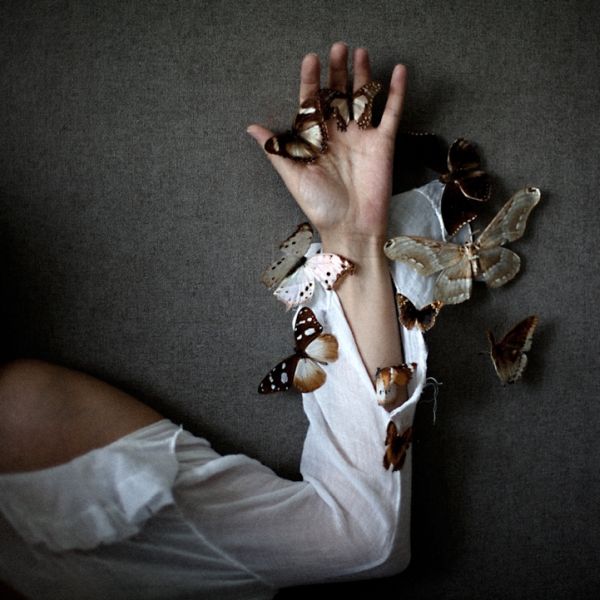
Brisson’s frames refuse the usual butterfly cliché of a single insect perched on a fingertip. Here the insects arrive in numbers. They land on shoulders, skim the hem, cluster near the face, and turn the dress into a temporary habitat. The model does not chase them. She receives them. That reciprocity is the series’ emotional center: flight and stillness sharing one body of air.
A French surreal calm, not a carnival
What first strikes many viewers is the mood. The palette stays restrained—neutral greens, pale fabric, muted sky—so the butterflies’ color and motion do the expressive work. Nothing in the set shouts. There is no graffiti wall, no neon prop, no staged “wow” grimace. Brisson builds a hush. The hush makes the insects feel louder. You notice wing edges, the slight blur of one still in flight, the way a cluster can look almost like embroidery until you remember it can leave.
The dress matters. White cloth against outdoor greens reads as both bridal and blank canvas. Butterflies on white become readable silhouettes; their patterns stay legible; their shadows fall cleanly. A busier wardrobe would have competed. Brisson chose a garment that behaves like a soft stage floor—simple enough that living decoration can dominate.
Things that flee, and the camera that waits
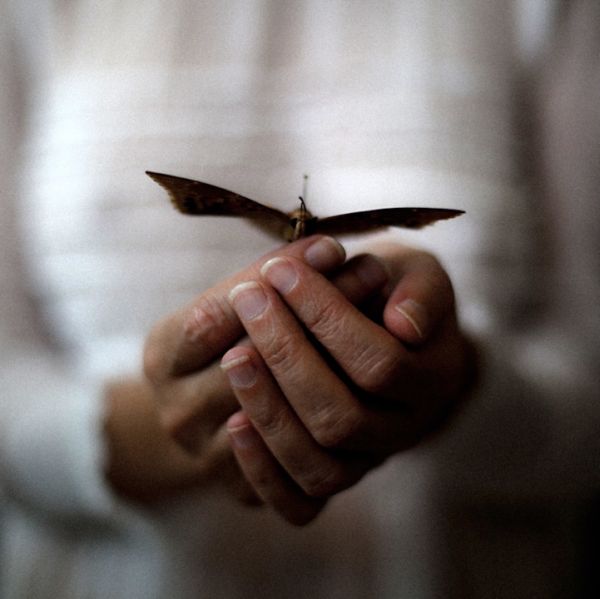
The title’s “fleeing” is not melodrama. Butterflies are built to leave. Photographing them in quantity means accepting chance: one wing opens too soon; one insect lifts off the shoulder; the composition you planned becomes a different one in half a second. Brisson’s success is not that every insect froze perfectly. It is that the overall weather of the frame—air thick with wings—survives those micro-failures. The shiver stays.
Working with live insects also implies ethics of patience. You cannot bully a flock into a better pose the way you can rearrange a still life. You wait for density, for a landing pattern that feels balanced, for a moment when the model’s breath does not scatter the nearest wings. The photographs look serene because the process behind them had to be calm. Panic would have emptied the air.
Fashion adjacency without fashion hard sell
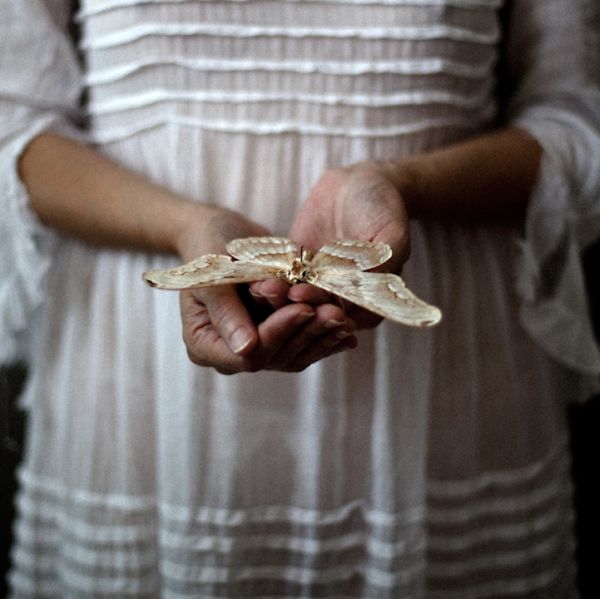
Viewers sometimes file the series under fashion photography because of the dress, the body, and the editorial polish of the light. That reading is fair—and incomplete. There is no logo, no seasonal collection, no product callout. The body is a meeting place for weather and animals, not a hanger for merchandise. If the pictures flirt with fairy-tale imagery—commentators once compared the scene to woodland helpers dressing a heroine—they do so without narrative captions. Brisson trusts the image to carry metaphor: beauty as something that alights, stays briefly, and can flee.
That restraint is why the gallery still feels contemporary. Trends in conceptual fashion photography come and go; a clear relationship between person, garment, and living winged matter remains readable. You do not need a press release to understand the tension between holding still and wanting to fly.
Compare the work, mentally, with harder surrealism that forces uncanny props into a room. Brisson’s uncanny is gentler: the world looks plausible, then slightly too inhabited by wings. The shiver is atmospheric rather than grotesque. Some first-time viewers have called the images eerie—poster-like, almost horror-adjacent—before the calm reasserts itself. That double take is useful. It proves the photographs are not only pretty insect studies; they carry a mild threat of departure, of beauty that will not stay on command.
Reading the set as a sequence of densities
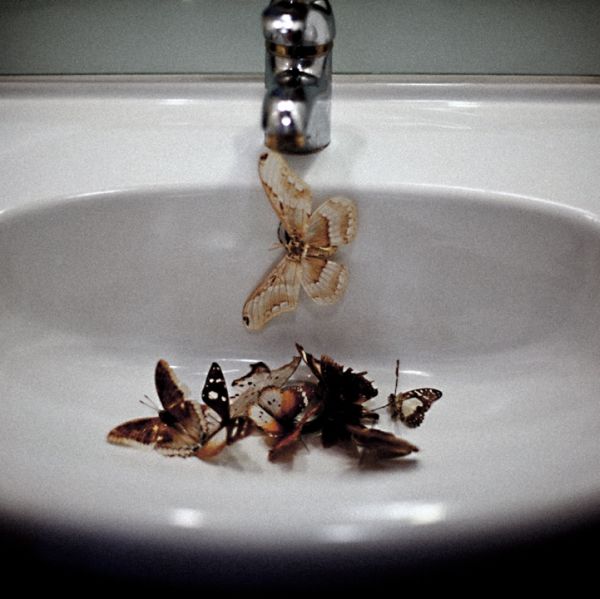
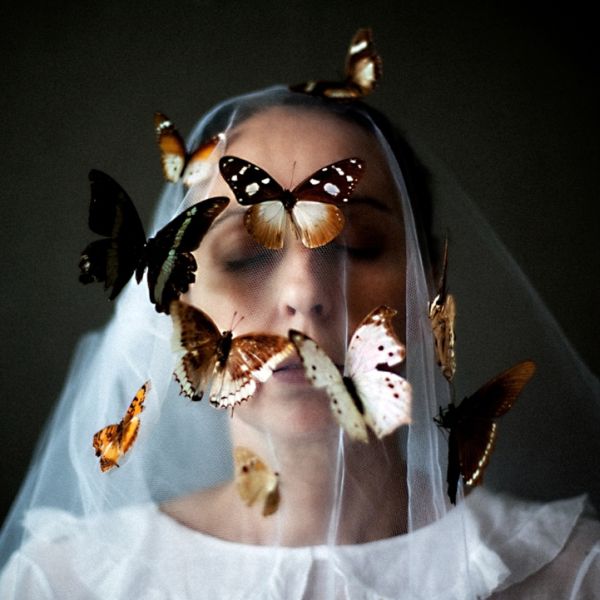
Move through the images as changes in weather rather than costume changes. In some frames the butterflies are sparse—accents along a sleeve or near the face, enough to prove the air is alive. In others the density rises until the dress almost disappears under patterned wings. That oscillation is part of the series’ music: thin air, then thick air, then thin again. A single “hero” shot would have sold the idea; the sequence shows how unstable the idea is. Flight keeps rewriting the composition.
Notice also where Brisson places the body in the frame. Sometimes the figure is centered and frontal, almost ceremonial. Elsewhere she turns, looks aside, or lets the insects occupy the foreground while the human presence softens. The photographer refuses one fixed hierarchy. Sometimes the person hosts the butterflies; sometimes the butterflies host the person. That swap keeps the series from becoming a simple beauty portrait with props.
Craft clues visible in the frames
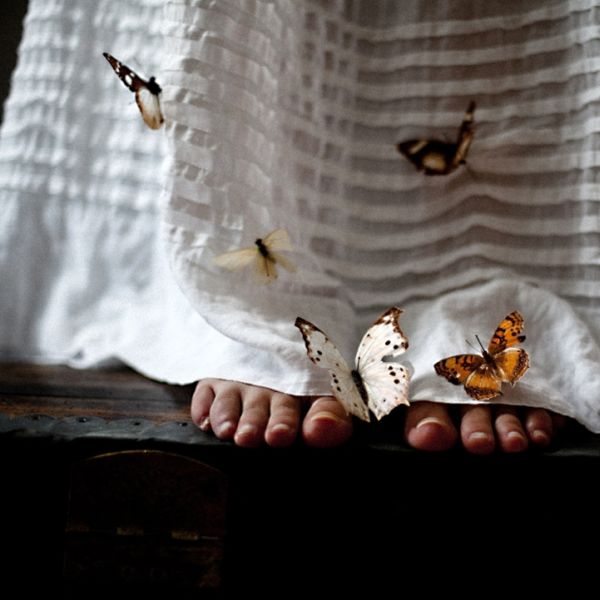
Even without a making-of reel, the pictures hint at method. Depth of field usually keeps both face and nearer insects readable enough to share the story; extreme bokeh would have turned butterflies into color smears and emptied the title of meaning. Exposure protects highlight detail in white cloth so wing patterns do not blow out into chalk. Posing stays within a narrow emotional range—receptive, unhurried—so the viewer’s attention can travel to the air around the body.
Those choices are photographic, not merely thematic. A different lens height, a harsher noon sun, or a busier background would have rewritten the series into something louder and less lasting. Brisson’s control is quiet. Quiet control is easy to miss when the subject is already magical; it is also why the magic holds up when you look a second time for seams.
Why the shiver still registers
A decade and more after the images first spread online, they still work because they stage a felt contradiction without explaining it away. Soft light says peace; living wings say escape. A white dress says stillness; insects say motion. The title names the shiver before you feel it—then the photographs make you feel it anyway. Brisson does not need digital fantasy skies or CGI swarms. She needs patience, a pale dress, outdoor air, and enough trust between photographer, model, and animals for a fleeting density to become a lasting picture.
Credit the maker when you share these frames: Emmanuelle Brisson, L’air frissonne des choses qui s’enfuient (2012). The butterflies will always look ready to leave. The photographs are what remains after they do—evidence that, for a few minutes, the air agreed to hold still.

Comments
Continue reading
Still-Life Photography at Home with One Window
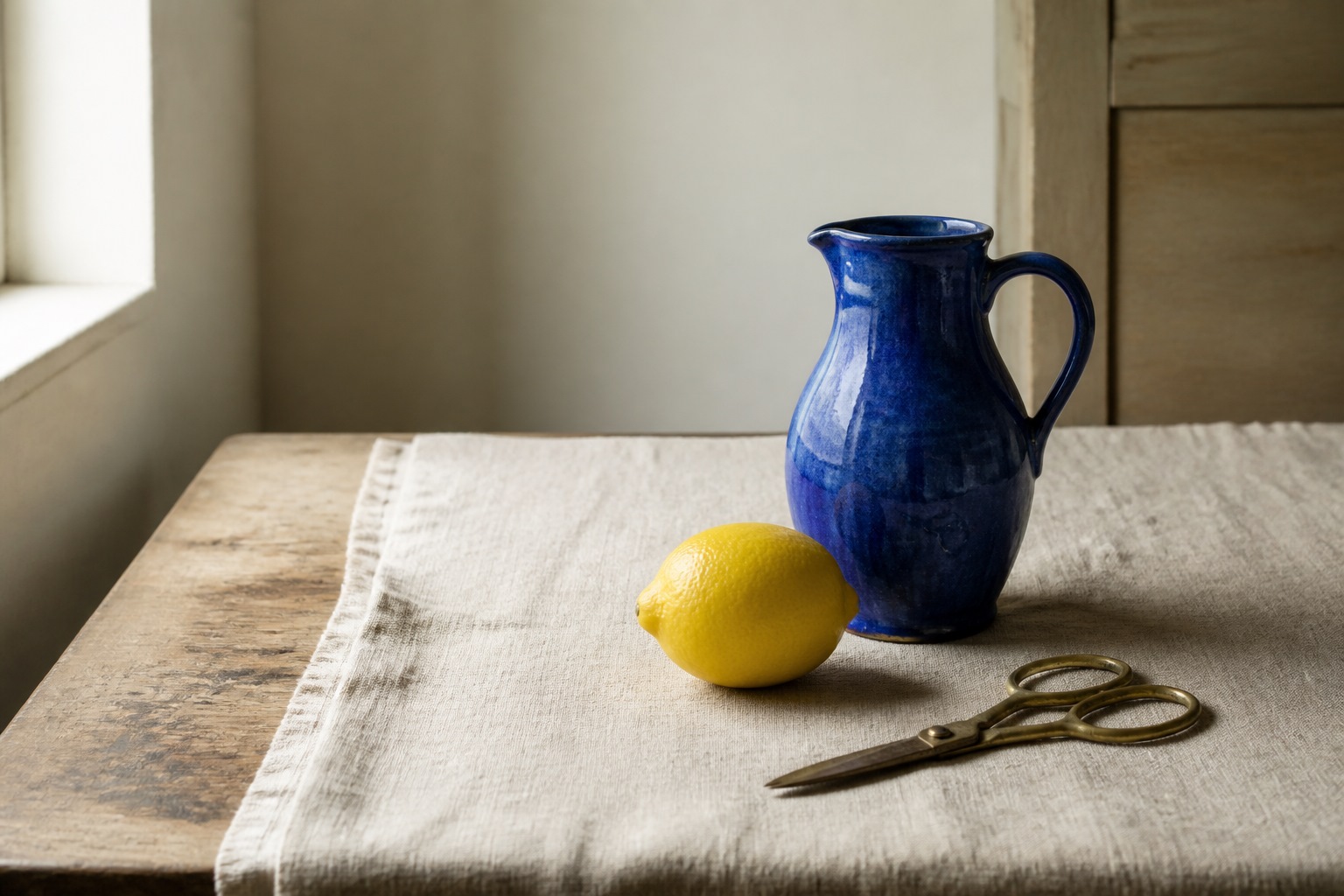
A table, north or side light, and a handful of objects—how to shoot still lifes in a small room without a studio, softboxes, or a prop closet.

Dramatic Photo Art by Sukron Ma’mun (Ipoenk Graphic)
Cirebon, Indonesia photographer Sukron Ma’mun uses theatrical natural light to frame village life, play, and place in lyrical photo art.
Bird’s-Eye Views: Florian Beaudenon’s Instant Life
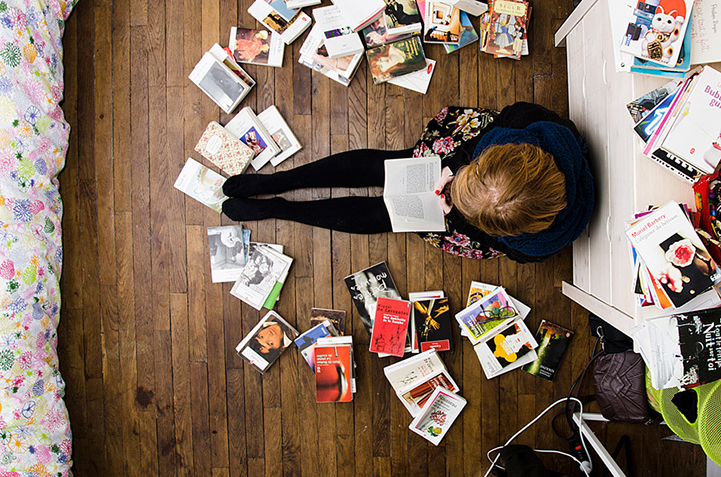
Paris photographer Florian Beaudenon’s Instant Life series captures people in their rooms from above—intimate, collaborative overhead portraits of everyday joy.