
Rita Hayworth: Golden Age Glamour in Still Light
Rita Hayworth through Hollywood’s Golden Age craft—dance partnerships, wartime pin-up fame, Gilda’s noir elegance, and how to read studio portrait lighting.
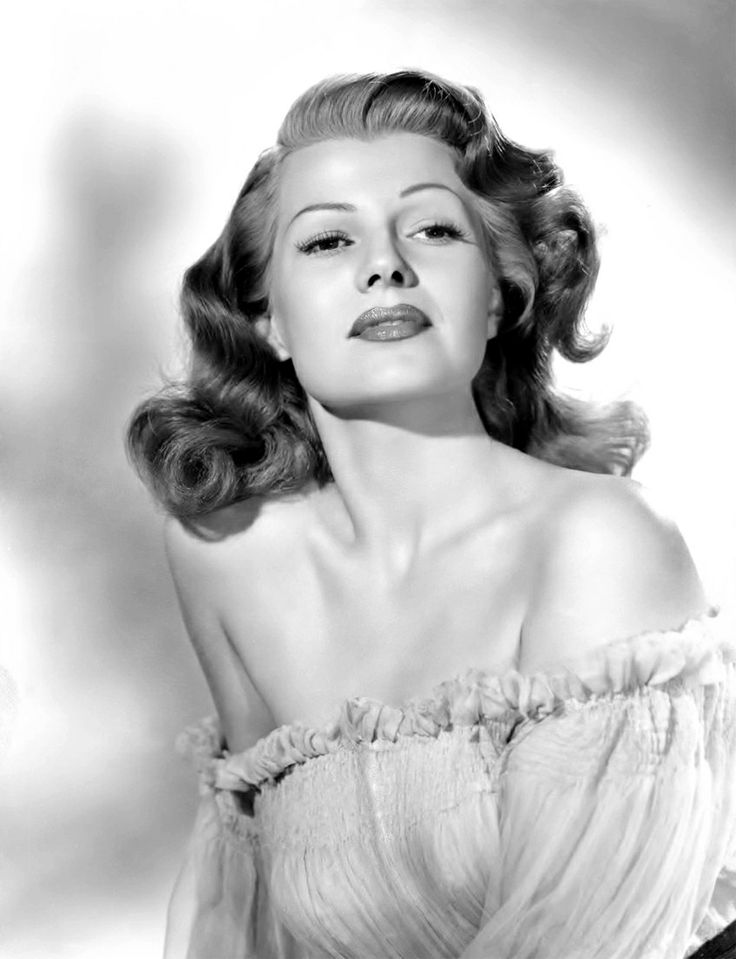
Rita Hayworth belongs to a different register of “timeless beauty” than later pop icons. Her fame was forged inside Hollywood’s Golden Age studio system: contract players, carefully lit stills, musicals that sold dance as romance, and wartime pin-ups that traveled farther than many features. If later stars became portable logos, Hayworth remains the smell of nitrate film and orchestra cues—glamour as an industrial craft of the 1940s.
A dancer first, then a studio invention
Born Margarita Carmen Cansino in Brooklyn in 1918, Hayworth grew up in a performing family and learned Spanish dance early. Hollywood eventually reshaped her look—darker roots lightened toward the famous auburn, hairline adjusted, surname anglicized—to fit the era’s idea of a leading lady. That transformation is part of the Golden Age story: stars were not only discovered; they were designed for the camera’s taste, under contracts that treated image as studio property.
What the redesign could not fake was movement. Fred Astaire, who partnered with her in Columbia musicals such as You’ll Never Get Rich (1941) and You Were Never Lovelier (1942), praised her as a dancer who could match him without vanishing into ornament. On screen, beauty and footwork reinforced each other. A still photograph of Hayworth often feels like a pause mid-phrase—shoulders ready, weight shifted, the next step implied. Even seated publicity poses keep a dancer’s spine.
That physical intelligence separates Golden Age glamour from later static “bombshell” branding. Hayworth’s allure is kinetic. The camera expects her to move again after the shutter clicks.
Pin-up fame before the noir crown
In August 1941, a Bob Landry photograph in LIFE magazine helped make Hayworth one of the defining American pin-ups of World War II, rivaled mainly by Betty Grable’s famous pose. Soldiers carried paper images into places where movie theaters could not follow. That circulation mattered: it taught a mass audience to recognize Hayworth as national mood as much as actress—soft lighting, lingerie suggestion, the promise of home and desire packaged for morale.
Pin-up Hayworth and musical Hayworth were related but not identical. One sold intimacy at a distance; the other sold elegance in motion under Technicolor and studio orchestras. Together they built the foundation for the role that locked her into film history: Gilda. Without the wartime paper fame, the noir crown would have sat on a less familiar head.
Gilda and the architecture of glamour
Gilda (1946), directed by Charles Vidor and shot with Rudolph Maté’s deep-shadow cinematography, turned Hayworth into a noir emblem. The strapless black dress, the hair tossed during “Put the Blame on Mame,” the cigarette held like a punctuation mark—these are Golden Age glamour distilled into costume and gesture. Studio photographer Robert Coburn’s promotional portraits amplified the same language: smoke, sequins, a look over the shoulder that reads as both invitation and warning.
What makes the glamour feel “golden” rather than merely pretty is control of light. Forties Hollywood still photography loved hard key lights that carved cheekbones, hairlights that made auburn read as fire, and backgrounds that dissolved into velvet black. Hayworth’s face was built for that system. The eyes catch the lamp; the mouth holds a line between smile and challenge. You can almost hear the orchestra swell under a silent publicity still.
Noir also gave her danger. Musical charm alone can age into sweetness; Gilda’s edge keeps the photographs sharp. The same woman who danced with Astaire could look as if she might ruin a casino’s evening—and the stills advertise both possibilities.
Beyond one role: range inside the system
Reducing Hayworth to Gilda alone misses the breadth Columbia asked of her. She could play comedy and drama; she could sell Technicolor musicals such as Cover Girl (1944); she could enter Orson Welles’s colder experiment in The Lady from Shanghai (1947), where blonde hair and fractured mirrors turn beauty into unease. The studio system rewarded recognizability, yet Hayworth’s best work shows how a star image could stretch without snapping.
Offscreen life—marriages, the public’s hunger for her private story—fed the mythology, but the photographs remain the cleanest entry point. Golden Age publicity was frank about artifice: makeup departments, wardrobe fittings, and portrait sessions were the factory floor of desire. Looking at Hayworth today means looking at that factory at peak craft, before television fully remade celebrity intimacy.
How to read a Hayworth still
If you treat the image above as a small lesson in studio glamour, try this sequence:
- Find the key light. Where is the brightest plane on the face? That choice decides whether she reads soft, fierce, or unreachable.
- Track the hair. Auburn waves were not casual; they were sculpted to catch backlight and frame the jaw.
- Watch the shoulders. Dance training often shows in posture even when the shot is still.
- Name the genre echo. Does the mood lean musical romance, wartime pin-up warmth, or noir danger? Hayworth’s wardrobe and gaze usually vote.
- Imagine the lobby card. Could this frame hang beside a 1946 one-sheet without needing a modern caption?
Those steps keep the viewing historical. You are not only admiring a beautiful woman; you are inspecting a finished product of Columbia-era image-making.
Why Golden Age glamour still lands
Modern beauty photography often chases immediacy—phone light, street texture, “real” skin. Hayworth’s era chased elevation. Skin was powdered into a continuous tone; contrast was theatrical; the star was meant to feel slightly larger than the room. That elevation can look distant now, which is precisely its charm. It reminds you that glamour was once a shared public language, like evening dress codes and big-band tempos.
Hayworth also complicates easy nostalgia. The same system that perfected her image demanded painful alterations and typecasting. Celebrating the photographs while noticing the cost is a more honest way to keep the Golden Age alive than pretending the factory was gentle. The auburn glow and the contract pressure belong to the same history.
When you compare Hayworth with other beauty icons, look for studio craft rather than pop-culture afterlife. Ask whether the picture could live in a 1946 lobby. If the lighting, hair, and posture feel like a contract with an orchestra pit, you are in Hayworth territory. Keep that filter nearby the next time a still stops you: name the light, name the genre, and let the auburn finish the sentence.

Comments
Continue reading
Timeless Beauty: Ava Gardner’s Classic Hollywood Glamour
Ava Gardner in respectful glamour framing—studio light, screen presence, and mid-century allure—distinct from Hepburn’s elegance-icon archive.
Sophia Loren: Italian Cinema Elegance
Sophia Loren’s Mediterranean elegance—from Naples roots and De Sica’s Two Women to Mastroianni comedies—and how to browse her portraits as Italian screen style.

Photo vs Illustrated Save-the-Dates: How to Choose a Format
A practical comparison of photographic and illustrated save-the-dates—when a portrait earns the stamp, when a drawing carries the date, and how to match format to venue, guests, and printing.