
Botanical Christmas Ornaments from Citrus, Herbs, and Dried Flowers
Dried orange slices, rosemary, bay, and pressed flowers as tree ornaments—how to dry, string, and store them so they last the season without going moldy.
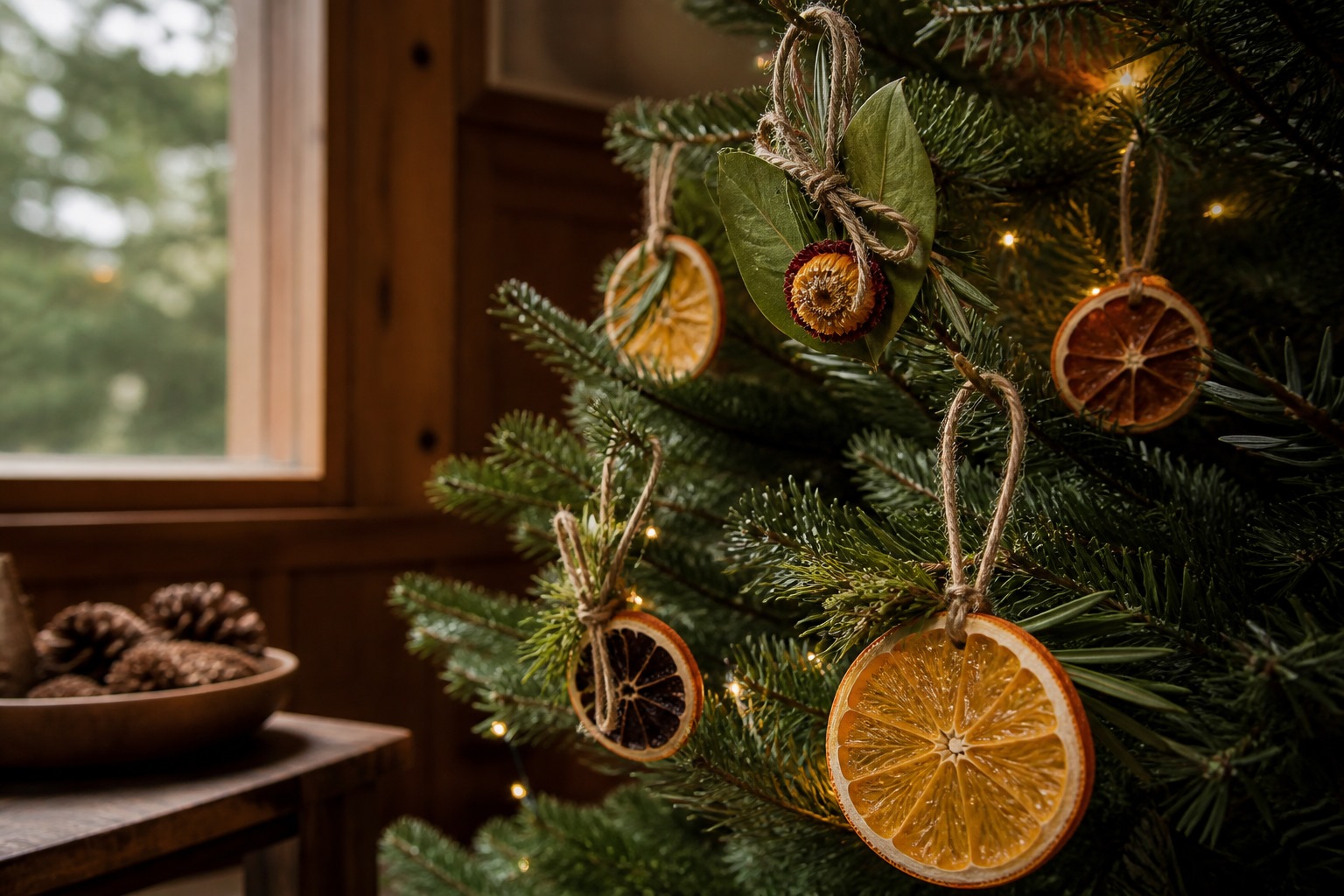
Felt, beads, and glitter already have their own tutorials on this site. Botanical ornaments are a different craft: you are preserving plant material, then hanging it where indoor heat and pine resin will try to ruin it. The look is citrus light, herb green, and dried flower brown—not a craft-foam Santa. For mixed material trees, see the broader ornament tutorials; this page stays with things that grew.
Citrus that does not mold
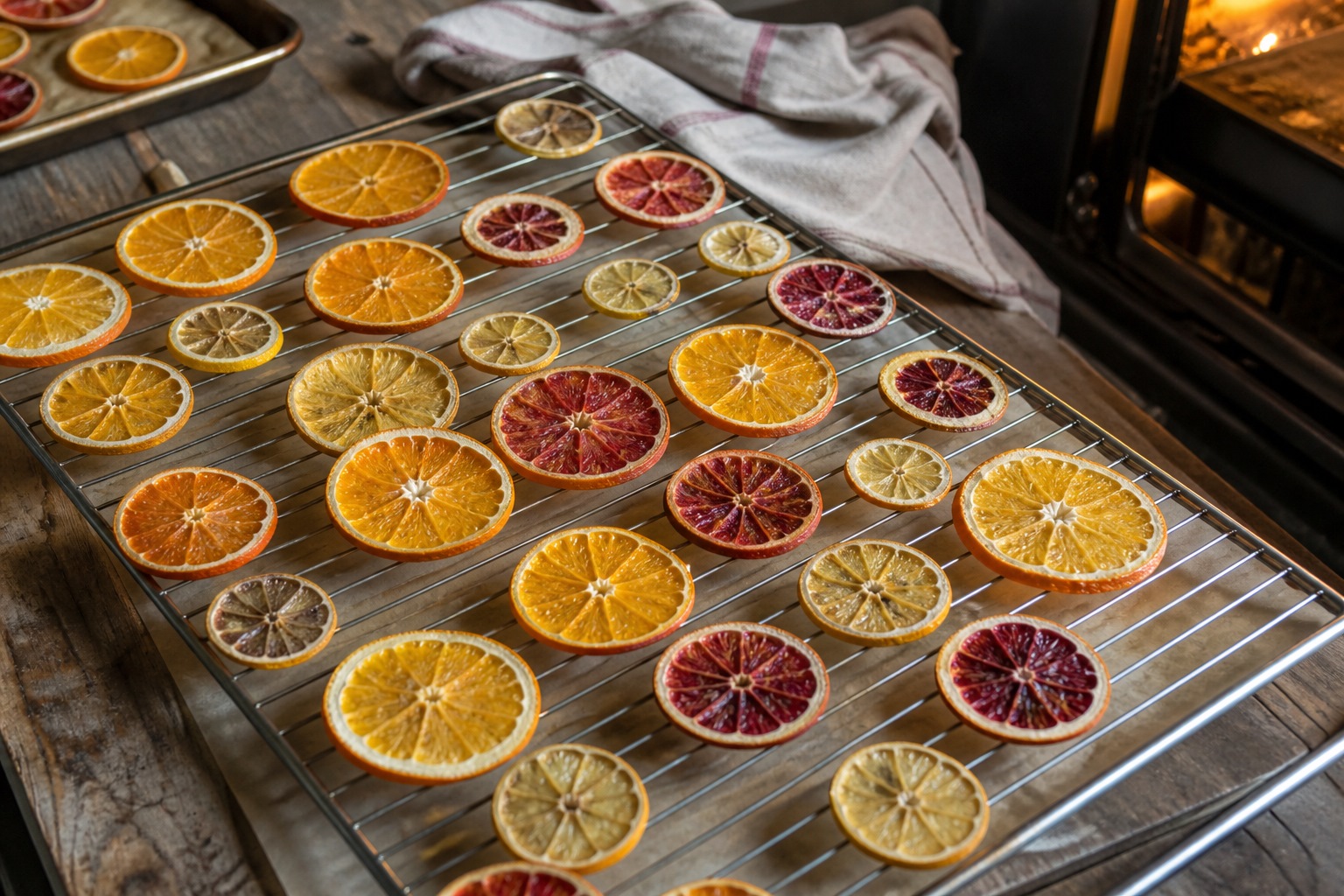
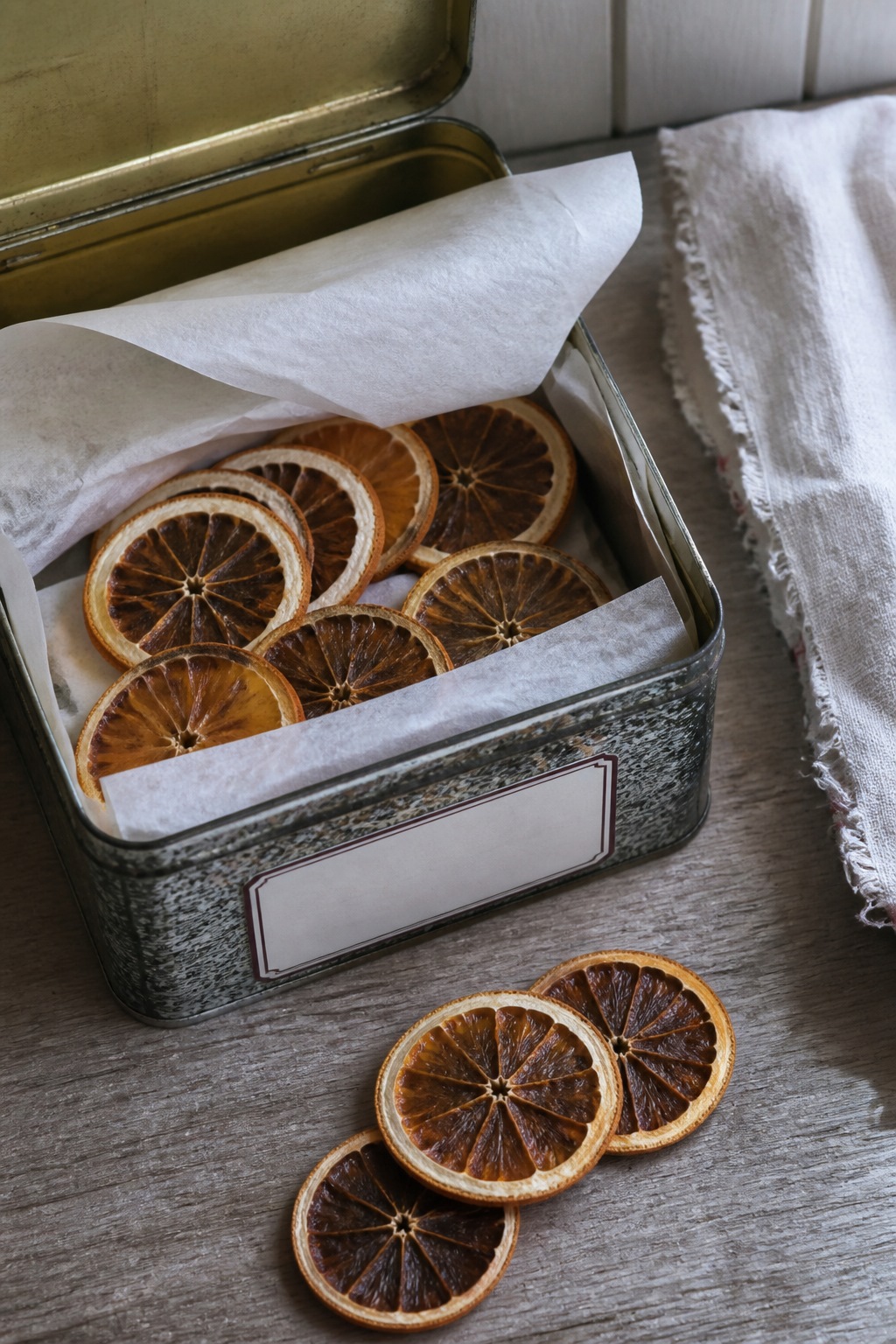
Slice oranges, lemons, or blood oranges 4–6 mm thick. Pat dry. Arrange on a rack, not a solid sheet, so air moves. Low oven (about 90–100°C) for several hours, flipping once, until the centers are leathery, not wet. A dehydrator is more even. Microwave-drying is fast and easy to scorch; watch in short bursts.
If a slice stays translucent and sticky, it is not done. Sticky is mold later. Done slices are stiff, slightly darkened, and smell like toast and orange peel, not juice.
Thread with a needle through the pith, not through a hole that tears the flesh. Twine looks right; metallic thread cuts. A small clove pressed into the center is optional and will scent a closed box in storage.
Herbs: rosemary, bay, thyme, sage
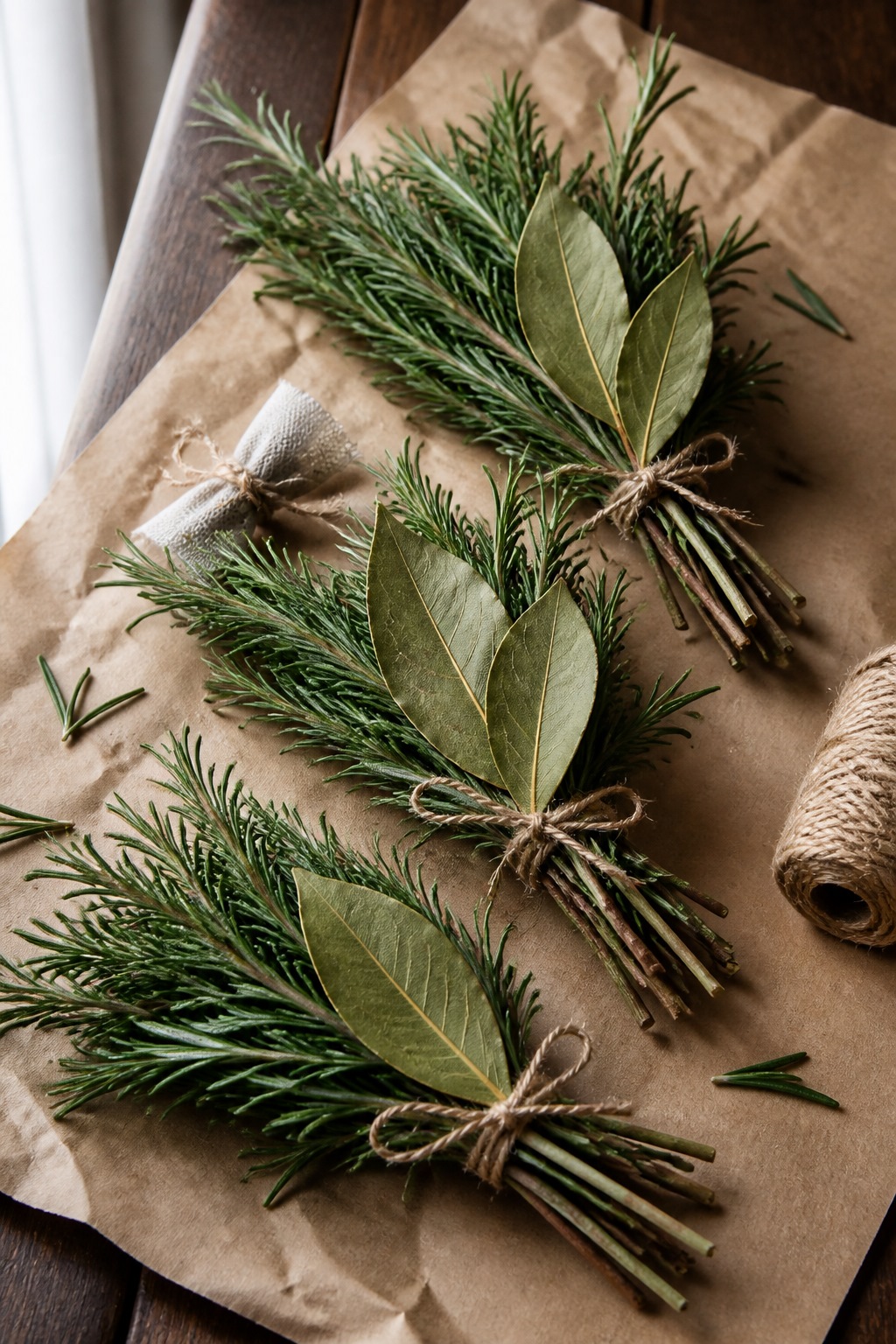
Rosemary sprigs hang well if you choose woody stems, not floppy tips. Bundle three, wrap the stems with fine wire, add a loop. They dry on the tree, which is fine if the room is not a steam bath.
Bay leaves can be a simple fan: three leaves, overlapped, stitched or glued at the stem with a linen wrap. They shatter if you bend them once fully dry, so shape while they still have a little give, or press them first between books.
Thyme and sage are better as wreathlets: a wire ring the size of a cookie, wrap stems around, snip stray ends. They shed. Put a tray under the tree the first week. Pick stems in the cool of the morning so they are not already wilted from a sunny windowsill. Rinse dust, shake dry, then wrap—wet herbs in a closed box mold before they see the tree.
Dried flowers without a funeral look
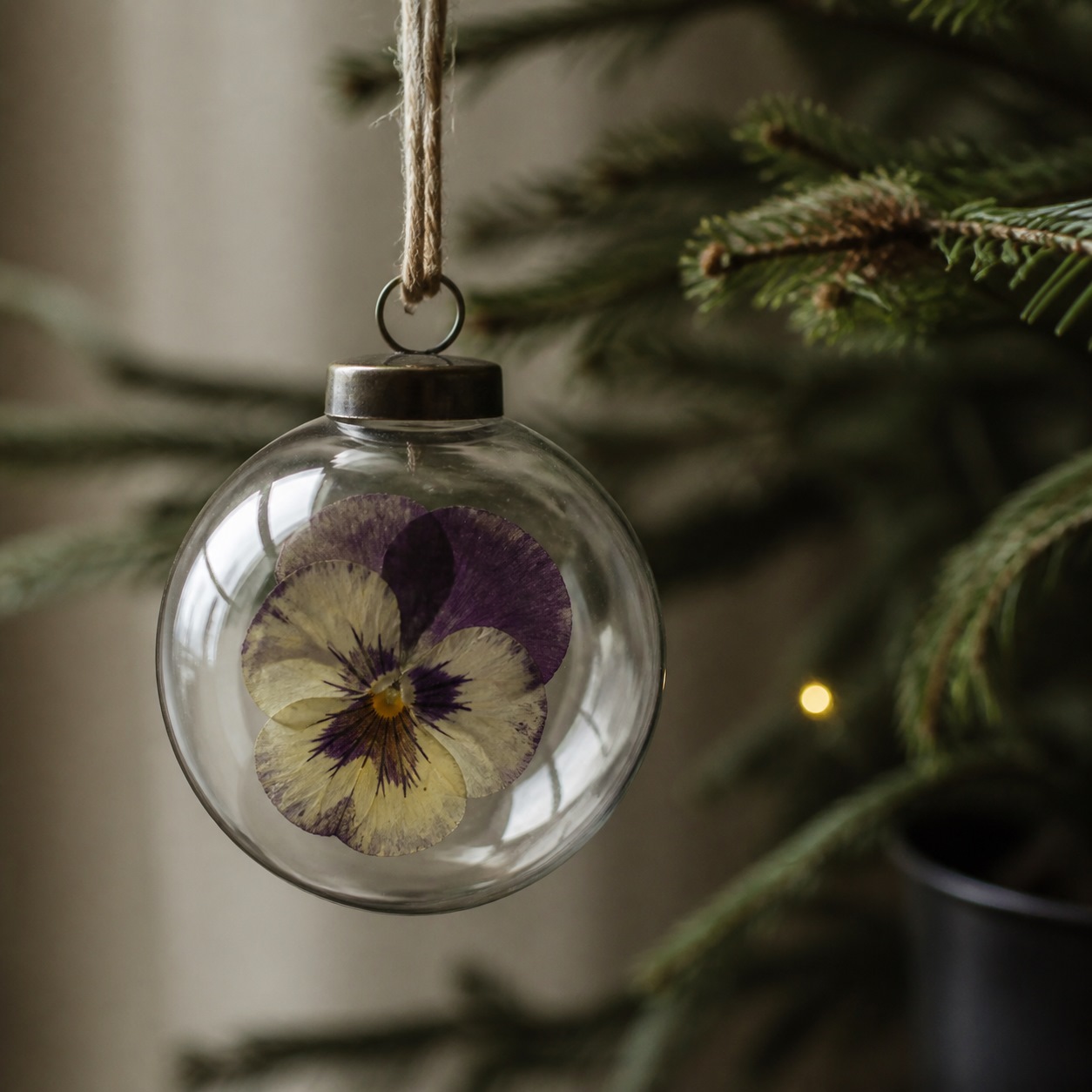
Statice, strawflower, hydrangea petals, and rosebuds dry in a way that still reads as winter, not as a wedding leftover. Pressed pansies in a two-glass “laminate” (clear plastic ornaments or small acrylic frames) keep color. Loose fragile petals on a string will snow all over the rug.
Avoid anything still succulent. Fresh eucalyptus looks grey-green in a vase and oily on a hot bulb. Dry it fully first.
Dye is a choice. Natural citrus will brown by January. If you want stained-glass orange, you are in craft-store territory; this method accepts the brown.
Combining with wood, paper, and light
A slice plus a cinnamon stick is a cliché because it works. Tie loosely so the stick can be composted separately later. Small wooden beads as spacers keep slices from kissing and sticking in storage.
Do not hang citrus against an incandescent bulb. LED is cooler. Even then, give a finger of air.
A whole dried pomegranate or a small apple looks architectural and is heavy. Use a stronger hook and a branch that can take it. Test over a table, not over a sleeping dog.
Grapefruit needs a longer dry than orange and sags on thin twine; two holes and a short loop hang it like a picture, not a pendulum. Lemon finishes faster and reads paler on a dark tree. Mix diameters on one branch so the eye has scale instead of a stack of identical coins.
Kids, pets, and what can be eaten
Clove-studded citrus looks like candy. So do cranberries on a string. If toddlers or dogs use the lower tree, hang botanicals high or skip the edible-looking ones. Dried beans and popcorn strings are traditional and also a vacuum problem; botanicals on this page are mostly slices and stems, which still shatter into crumbs.
Essential oils on pinecones are a separate craft and a separate lung conversation. Skip them in small rooms. The dried plant already smells; you do not need a bottle.
Allergies: strong eucalyptus and some dried flowers bother people who would be fine with felt. Ask before you fill a dining room tree with a herb garden.
A weekend sequence
Friday night: slice fruit, start the oven or dehydrator. Saturday: bundle herbs while the slices finish; press any last flowers you still have fresh. Sunday: string, photograph one test branch, adjust loop lengths so slices face forward. Hang the rest when the tree is up, not three weeks early in a humid kitchen.
If you only make one kind, make the citrus. It reads at a distance, it is cheap, and a failed slice is compost, not a wasted craft kit.
Scent, smoke, and the rest of the room
A tree loaded with orange and clove next to a scented candle is a crowded nose. Pick one. Open a window once when you first hang the botanicals; the first day is the strongest. After that they go quiet, which is what you want in a living room.
Wood stoves and open fires dry the air and can make slices brittle until they snap when the tree is bumped. Hang those higher or on an interior door wreath instead of the lowest branches.
If you celebrate with a fake tree, botanicals still work and often look better: the plastic needles are shiny, the dried fruit is matte. Contrast does the styling.
Storage until next December
Cool, dry, dark. Tissue between slices. A tin beats a plastic bag, which traps leftover moisture. Label the tin with the oven temperature and hours so you do not reinvent it next November. Inspect once in October; throw out anything speckled. Compost failed slices rather than spraying them with sealer.
Insects like stored botanicals. A fully dry product is the real defense.
Start citrus in November if you want them on a tree in early December. Herb bundles can be made the weekend you put the tree up. Flowers should have been drying since late summer—or buy them already dried and spend your time on the stringing, which is the part guests see. A grocery bag of oranges and a spool of twine is the whole kit; the oven time is the only scarce resource. Do not buy a plastic “dried orange kit.” The fruit aisle is the supplier.

Comments
Continue reading
Knit Kitchen Tools You Will Actually Use
Dishcloths, pot holders, bowl cozies, and other small knits for the kitchen—yarn choices, cotton vs wool, and projects that survive heat, water, and daily mess.
How to Wrap Gifts Without Wrapping Paper
Cloth, boxes, maps, leftover textile, and ribbon-only wraps—practical no-paper methods that still look finished under a tree or on a doorstep.
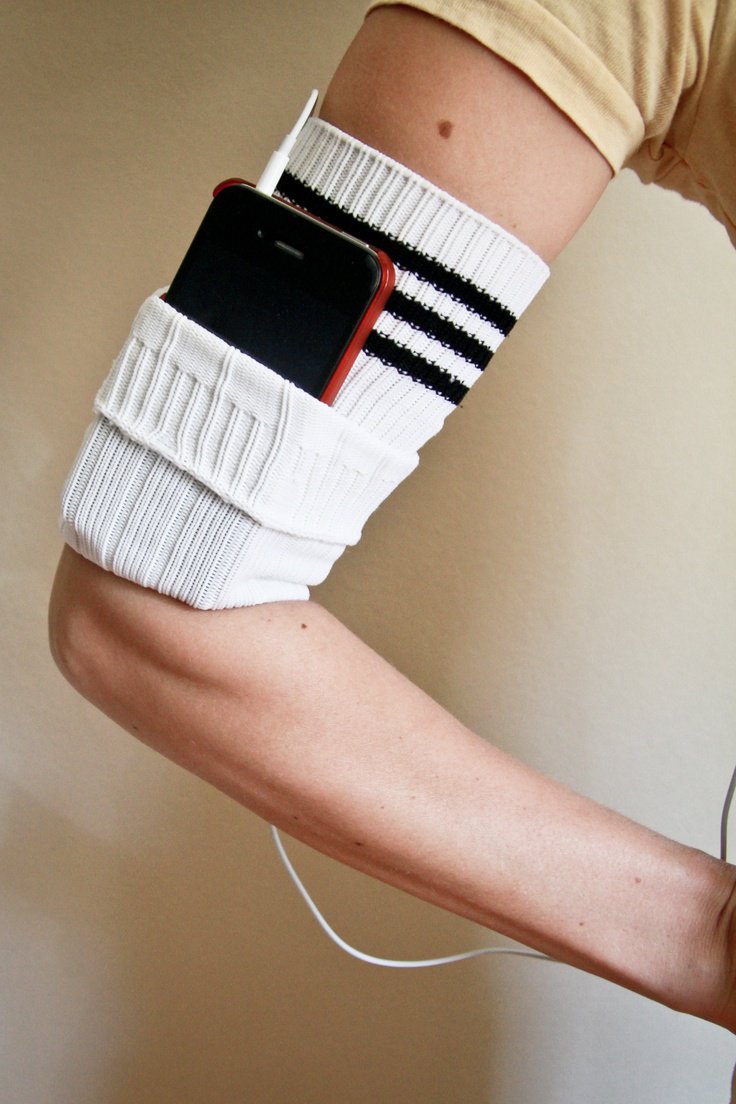
DIY Ideas for Old Socks: Rugs, Puppets, Mittens, and More
Sort leftover socks by fiber, then turn them into braided rugs, hand puppets, soft toys, mittens, and pin cushions with practical cutting and sewing tips.