
Clever Reuse Ideas for Plastic Bread Tags: Labels, Crafts, and Tiny Fixes
Practical ways to reuse plastic bread clips—cable labels, cord ties, desk helpers, kitchen fixes, and jewelry like layered stud earrings.
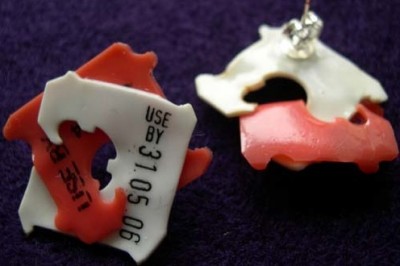
Plastic bread tags look like trash the moment the loaf is open: a small square clip, a printed date, maybe a bright color. They are also durable, flat, label-friendly, and shaped to grip. Treat them as raw material instead of litter and they become one of the most useful scraps in a kitchen drawer.
People who save them already know the quiet truth. A bread tag is not only a bag closer. It is a marker, a clasp, a craft chip, and—when you gather enough of them—a building unit for jewelry and light DIY projects.
The earrings above make the case visually. Cut or broken tags in white and orange-red are layered into irregular shapes, still showing a “USE BY” date on one fragment, then fitted with ordinary stud posts. The object that once sealed a bakery bag becomes wearable collage. That is the spirit of bread-tag reuse: keep the material’s history visible while giving it a second job.
What a bread tag is good at
Most plastic bread clips—sometimes nicknamed occlupanids in tongue-in-cheek natural-history jokes—share a few useful traits:
- They snap around thin materials without tape.
- They have a writable face for labels.
- They come in colors that can code categories.
- They are small enough to live in a jar without taking real storage space.
- They survive pockets, drawers, and bags better than paper scraps.
Those traits explain why the same clip shows up in offices, craft rooms, and travel kits. You are not inventing a new plastic product. You are finishing the life of one you already bought with the bread.
Cable labels and cord control
The most practical everyday reuse is cable identification. Write the device name on the blank side with a permanent marker—“monitor,” “lamp,” “router,” “charger”—then clip the tag near the plug. When a power strip turns into a spaghetti of identical black cords, the label saves the guessing game that usually ends with the wrong device going dark.
Color coding helps if you manage multiple rooms. Keep blue tags for computer gear, red for kitchen small appliances, green for lamps. Bun clips from hamburger packs work the same way; collect them during grilling season and build a small stock.
Bread tags also tame stored cords. Coil a spare charger or headphone cable, then clip the loop shut. The tag acts like a tiny reusable cable tie. For desk routing, some people adhere a clip under a table edge with removable adhesive so a cord can drop into the open slot and stay off the floor. It is not glamorous hardware—but it is free hardware.
Desk, drawer, and bag organizers
Around a desk, tags replace missing paper clips for thin stacks, mark the free end of a tape roll so you stop hunting the edge, and keep rubber bands or hair elastics in a neat cluster. In a sewing or craft drawer, clip them onto skeins or ribbon ends so strands do not unwind into a knot.
In a suitcase or toiletry bag, a labeled tag on a charging brick or adapter prevents the “which plug is this?” shuffle in hotel rooms. On a key ring, a bright tag can identify a spare house key without a metal charm that scratches everything else in the pocket.
Hair accessories benefit too. A bread tag can hold a buckle or clip closed in a travel pouch so hooks do not snag fabric. The same idea applies to small jewelry findings or craft clasps that otherwise wander.
Kitchen and household fixes
Return tags to bag duty whenever you reuse bread bags, freezer bags, or produce sacks. They still close better than a loose knot for many thin plastics. Use a fresh marker date if you are storing leftovers or frozen goods—turning the printed face into your own inventory system.
The hard plastic edge can scrape hardened food from a pan rim or lift a stuck label corner without gouging the way a knife might. For temporary sandal repairs, a tag can sometimes hold a strap in place long enough to get home. Keep expectations modest: these are emergency tools, not replacements for proper hardware.
Wine or party glasses can get a colored tag on the stem as a guest marker when you do not want disposable paper rings. Kids’ counting games and sorting trays can use mixed colors as tokens. The point is volume: once you stop throwing tags away, a jar fills fast, and small household problems suddenly have a matching small solution.
Craft and jewelry projects
Jewelry is where bread tags stop being only useful and start being expressive. The stud earrings in the photo show one path: break or cut tags into shards, layer contrasting colors, leave printed dates as graphic texture, and mount the collage on posts or hooks with jewelry adhesive rated for plastic.
Other wearable directions:
- Whole tags as quirky charms on a keyring or zipper pull.
- Drilled tags strung as a playful necklace with beads between colors.
- Painted tags sealed with clear coat for monochrome or patterned sets.
- Matched pairs sorted by bakery color for coordinated studs or drops.
Larger craft projects treat tags as tiles. Glue them in radiating patterns on a cardboard or wood base for a small lampshade panel, trivet underlayer, or wall collage. Overlap edges so the familiar clip silhouette becomes texture rather than a pile of identical squares. Wedding-dress or couture experiments made entirely from bread tags exist as spectacle art—proof of scale more than a weekend tutorial—but they underline how far the material can go when patience and wire structure enter the picture.
If you melt or heat plastic, work outdoors or with serious ventilation and never invent safety rules mid-project. Most home crafters get better results from cutting, layering, drilling, and gluing than from melting.
A simple collection system
Reuse fails when tags scatter under the toaster. Keep a dedicated jar or tin beside the bread box. Rinse sticky clips, dry them, and drop them in. Sort occasionally by color if you care about coding; otherwise dump and grab.
Decide in advance what “enough” means. A few dozen tags cover cables and kitchen needs. A few hundred open craft possibilities. Beyond that, stop collecting and start making—or pass extras to a classroom, makerspace, or friend who builds jewelry. Reuse is not a contest to hoard plastic forever.
What to try this week
- Label every cord on one power strip.
- Clip the free end of every tape roll in the house.
- Make one pair of layered studs or a single key charm from mixed colors.
- Date and close two reusable bags with tags instead of buying new clips.
Four small jobs will tell you whether bread tags belong in your permanent toolkit. If they do, the jar stays. If they do not, you still kept a handful of plastic out of the bin for a little longer—and you may have a pair of earrings that still shows the bakery date as a badge of honor.

Comments
Continue reading
Knit Kitchen Tools You Will Actually Use
Dishcloths, pot holders, bowl cozies, and other small knits for the kitchen—yarn choices, cotton vs wool, and projects that survive heat, water, and daily mess.
Botanical Christmas Ornaments from Citrus, Herbs, and Dried Flowers
Dried orange slices, rosemary, bay, and pressed flowers as tree ornaments—how to dry, string, and store them so they last the season without going moldy.
How to Wrap Gifts Without Wrapping Paper
Cloth, boxes, maps, leftover textile, and ribbon-only wraps—practical no-paper methods that still look finished under a tree or on a doorstep.