
Intersections from Above by Navid Baraty: Tokyo & New York Rooftop Views
Navid Baraty’s Intersection series looks straight down from rooftops in New York and Tokyo—vertigo, street geometry, and each city’s character from above.
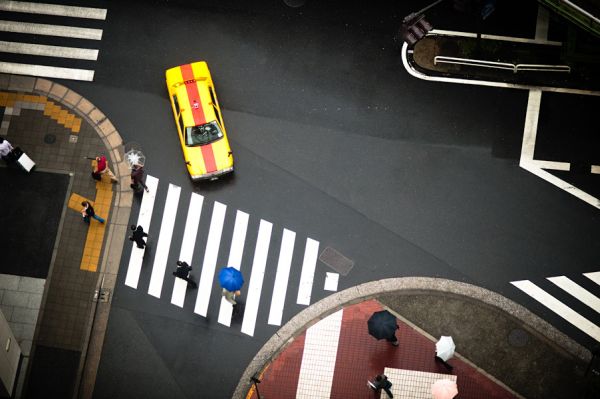
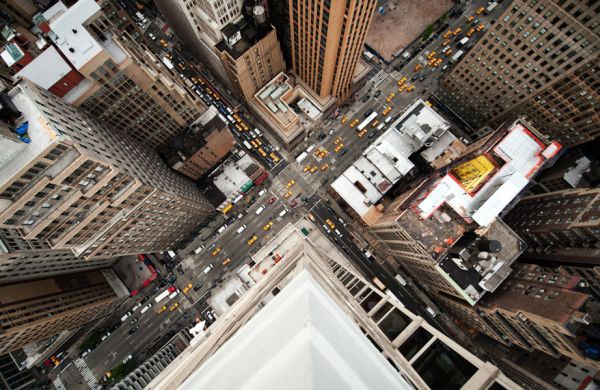
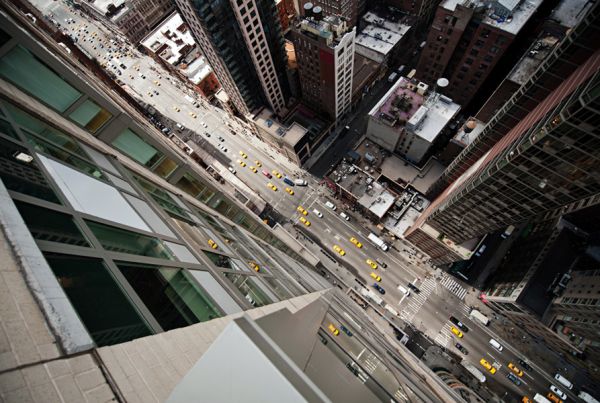
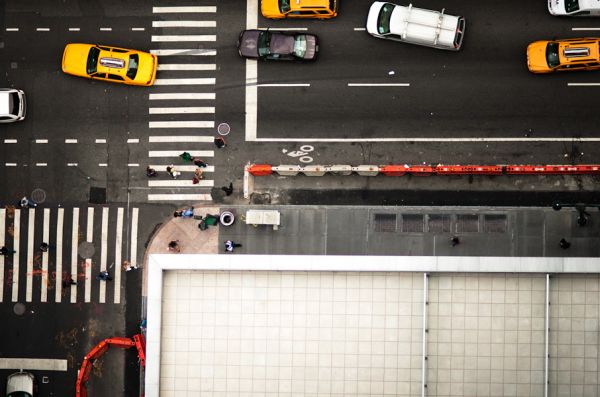
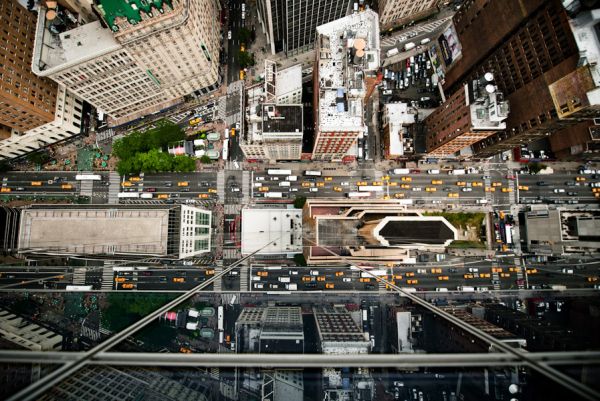
Navid Baraty’s Intersection series turns the usual city gaze upside down. Instead of aiming up at towers until they taper into sky, he leans over rooftops and points the camera straight down at the crossings below. The photographs gathered here come from that project’s early public life—views of New York City and Tokyo in which streets, cars, and pedestrians become patterns, and the familiar city becomes briefly strange.
Baraty, working from Brooklyn during the years these images circulated widely, has described the series as a way to reverse the smallness people feel among skyscrapers. From those heights, daily rhythm is still visible: taxis lining avenues, crowds surging at the change of light, figures disappearing into subway mouths. The vertigo is real; so is the choreography. Looking down does not erase the city. It rearranges what you notice first.
How the project began
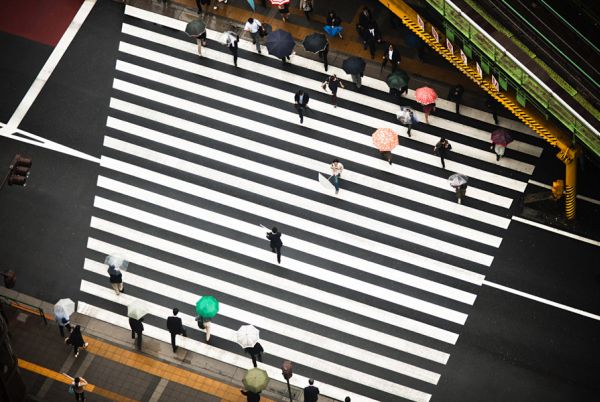
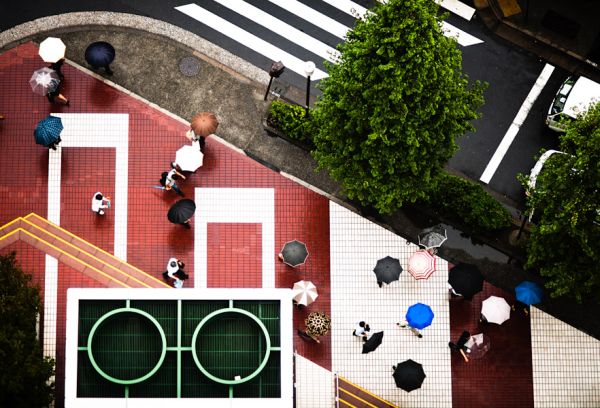
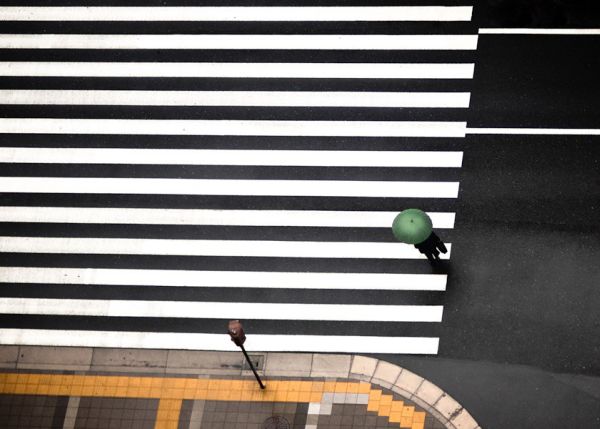
The idea arrived in Tokyo in 2009. Looking down from a skyscraper after lunch on a rainy day, Baraty noticed geometric street patterns dotted with umbrellas—an almost diagrammatic order that felt designed for that vantage point. Parallel lines, precise angles, and careful proportion read, to him, as a reflection of meticulous attention in the urban fabric below. The street was still a street; from above it also became a composition waiting for a frame.
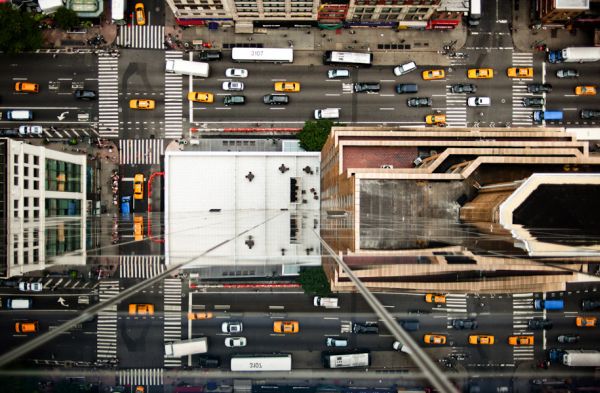
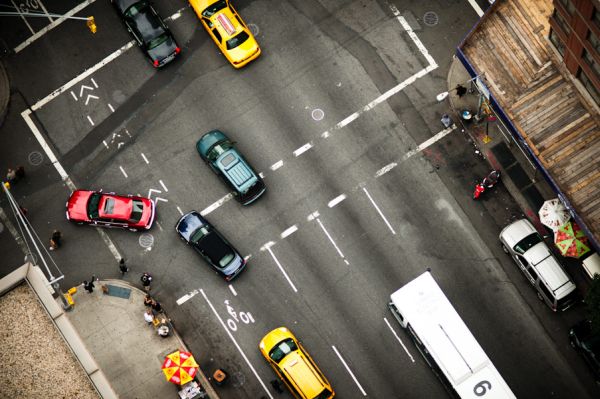
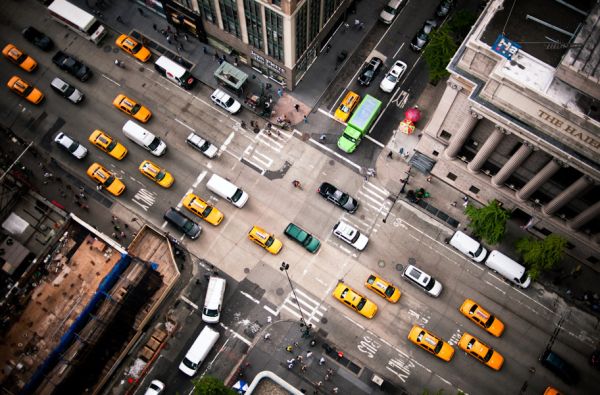
After moving to New York City around 2010, he continued the series to ask what the same downward look would say about a different city. Manhattan’s energy is famous at sidewalk level—horns, hurry, density, the sense that everyone is late. From a roof edge, that energy resolves into streams of yellow cabs, timed pedestrian waves, and the soft geometry of crosswalks. Chaos turns rhythmic when you can see the whole intersection at once. The same map that feels overwhelming underfoot becomes almost musical from above.
Access comes from rooftops, not helicopters or kites. Baraty has joked about wild speculation—window washer, Spiderman, kite-flying photographer—when the method is simpler and more physical: lean out, frame carefully, shoot. The craft includes finding buildings that overlook lively crossings, negotiating access through work or relationships, and managing wind and safety while composing a clean vertical view. The calm of the final print hides the edge of the roof.
That origin story matters because it keeps the series grounded in observation rather than gimmick. A rainy Tokyo lunch and a later New York move are ordinary enough events; the decision to keep looking down is the artistic commitment. Intersection is less a one-day stunt than a sustained habit of returning to height.
Tokyo order, New York flow
Part of the series’ interest is comparative. High above Tokyo, order and geometry dominate the reading: parallel lines, measured angles, a sense of presentation. High above New York, flow dominates: the constant stream of taxis, the pulse of crossing signals, the audible city imagined even when the photograph is silent. Baraty has written about wanting more than architectural abstraction—angles and reflections alone. He wanted the character of each city to remain perceptible from far above.
That ambition keeps the pictures from becoming pure pattern studies. You can still tell which metropolis you are looking at. Paint colors on asphalt, vehicle types, sidewalk widths, and the density of bodies all carry local information. Abstraction and documentary sit in the same frame. The intersection is a diagram and a lived place at once. Yellow cabs alone can announce New York before any caption appears; umbrella grids and measured lanes can tip the eye toward Tokyo.
Returning to the same crossings at different times of day deepens the study. Midday glare, evening light, night traffic, rain—all change the emotional temperature without changing the map. Midtown density offers especially rich motion; quieter neighborhoods offer different tempos. Chelsea, Union Square, the Financial District, Ginza—named places in the wider portfolio remind you that these are not generic “city” shots. They are specific corners, revisited until the feeling of the place shows through the geometry.
Comparison also teaches viewers how culture writes itself into infrastructure. Crosswalk timing, lane discipline, signage density, and the way people cluster at corners differ by city. From street level those differences are vibes; from above they become visible systems. Baraty’s dual-city approach makes that translation easier to trust.
What the downward view changes
Street-level photography of cities often celebrates façades, faces, and storefront detail. The downward view removes faces and enlarges systems. Pedestrians become marks. Cars become colored units in lanes. Crosswalks become graphics. Scale flips: architecture that felt overwhelming from the sidewalk becomes a frame around a stage. You lose intimacy with individuals and gain intimacy with the city’s pulse.
Vertigo is part of the aesthetic contract. Viewers who fear heights may feel a bodily response looking at these images—an involuntary step back from the screen. That sensation is useful. It reminds you that the calm pattern was earned at an edge. The photograph is not a satellite crop or a mapping tile; it is a human position held long enough to compose. The slight imperfections of handheld rooftop work, when they appear, are traces of that body.
There is also a quiet practical layer. Rooftop work depends on access and care. The images look effortless; the logistics are not. That gap between looking and making is worth keeping in mind when the series is shared as pure spectacle. Permission, weather, security, and the ethics of pointing a long lens at public life all sit behind the pretty geometry.
For urbanists, the pictures function almost as informal traffic studies. For poets of the city, they are reminders that beauty can live in asphalt paint and timed lights. For photographers, they are a lesson in choosing a viewpoint so strong that subject matter almost organizes itself—almost, but not quite, because framing and moment still decide whether the pattern sings.
Reading the gallery
Move through the set slowly. First, identify the intersection geometry—the cross, the T, the wide avenue cut. Then find the human scale: a cluster of walkers, a lone figure, a line of taxis. Ask what time of day the light suggests. Notice whether the frame feels more like Tokyo’s measured lines or New York’s streaming motion. Even without captions, vehicle color and street texture often give the city away.
Engineers and designers may see traffic diagrams. Walkers may feel displaced nostalgia for corners they know from below. Photographers may study edge-to-edge detail and how much sky is wisely left out. The series rewards all three readings because it refuses to choose only one. Try covering half an image with your hand; notice how much of the city’s character survives in a smaller crop. Then uncover it and feel the full intersection reassemble.
Baraty’s broader path—from engineering toward photography and later work that engages environment and travel—helps explain the appetite for systems made visible. Intersection is not a one-off gimmick of height. It is a sustained inquiry into how cities disclose their character when the camera abandons the tourist angle and accepts dizziness as a collaborator. The frames stop when the pattern and the pulse are both clear—no speech required after that.

Comments
Continue reading

Still-Life Photography at Home with One Window
A table, north or side light, and a handful of objects—how to shoot still lifes in a small room without a studio, softboxes, or a prop closet.

Dramatic Photo Art by Sukron Ma’mun (Ipoenk Graphic)
Cirebon, Indonesia photographer Sukron Ma’mun uses theatrical natural light to frame village life, play, and place in lyrical photo art.

Bird’s-Eye Views: Florian Beaudenon’s Instant Life
Paris photographer Florian Beaudenon’s Instant Life series captures people in their rooms from above—intimate, collaborative overhead portraits of everyday joy.