
Aliza Razell: Surreal Photos Joined to Vibrant Watercolors
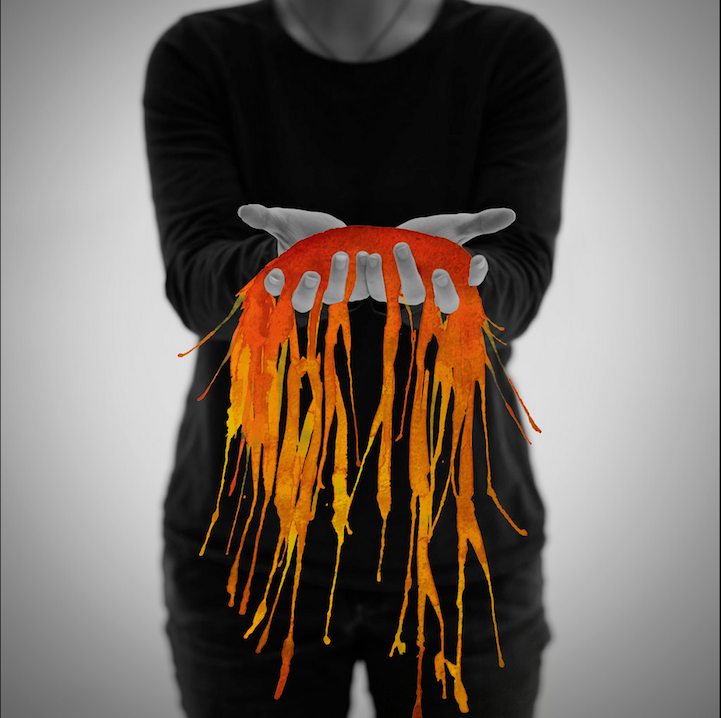
Aliza Razell composites self-portraits with separate watercolors for Anesidora—Pandora’s jar as visible pigment, myth pressure without fake paint shadows.
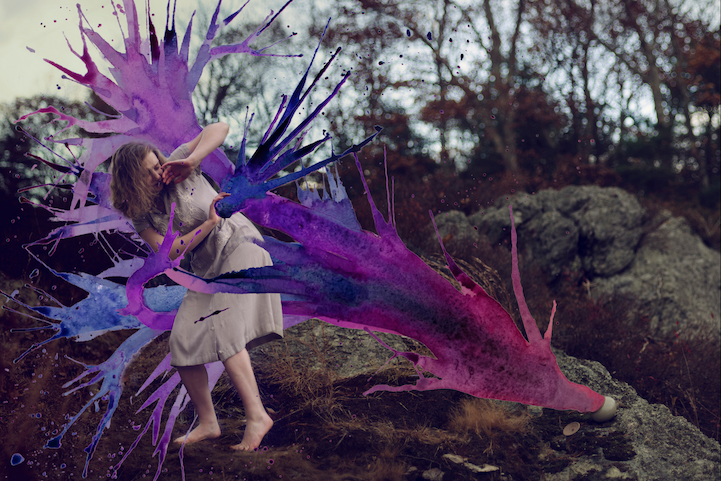
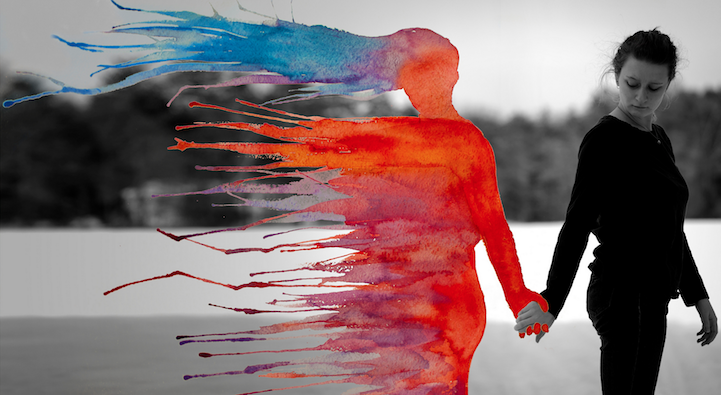
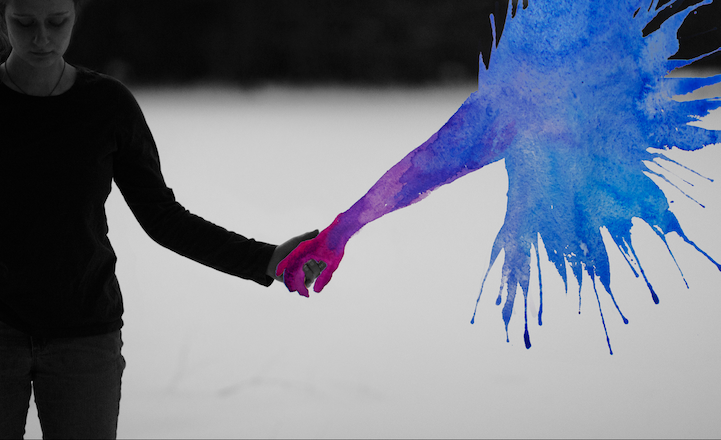
Aliza Razell’s hybrid images start as two separate acts: a photograph, often a self-portrait, and a watercolor painted on its own terms. She brings them together in Photoshop without pretending the paint is a physical object in the room. No fake shadows under a wash. No reflections engineered to sell the illusion. The join is visible on purpose—what she has called a Brechtian move in a culture of seamless composites. The picture admits it is made, and that admission becomes part of the feeling.
Around 2014, when she was nineteen and circulating work from a daily making habit, two series framed the experiment. Anesidora returns to the Pandora story with the older detail intact: the container was a jar, not a box, before later mistranslation hardened the English phrase. Ikävä—a Finnish word for the ache of missing someone or something—handles a quieter weather of longing. The images on this page come from the Anesidora side of that pair: myth pressure, bright pigment, photographic bodies holding still while color behaves like an event.
The daily practice context matters. A 365-style habit lowers the cost of experiments: try a collision, keep what sings, discard what only looks busy. Razell’s hybrids feel less like one-off stunts and more like a researched vocabulary of washes, edges, and photographic stillness. Early profiles quoted her “burning need to create”; the pictures show the need organized into method.
Paint as emotion, photo as stage
Razell has described a rawness in watercolor she could not get from photography alone—a sense that imagination arrived so vividly the surroundings went quiet, glassy, dull. That contrast is the engine. Photographic areas often sit cooler or more restrained; pigment flares as thought, omen, or spilled interior life. Because she refuses to “integrate” the paint into believable scene space, you read two ontologies at once: a person documented by a lens, and a feeling documented by a brush.
Greek myth gives Anesidora a narrative spine without turning the series into costume recreation. Pandora’s jar is a story about curiosity, consequence, and what escapes when a seal breaks. Razell’s versions treat that break as visual weather—color leaving containment—more than as literal props labeled for a classics quiz. You do not need the full genealogy of the myth to feel the release. The title keeps the older jar etymology in view for anyone who wants the scholarship; the pictures keep the emotional physics.
Anesidora as a name also tilts the story toward gift and release rather than only catastrophe. That ambivalence suits watercolor: pigment can read as wound, bloom, speech, or blessing depending on adjacency to the photographed body. Razell leaves that reading open; the paint’s job is intensity, not caption.
Process without the magic trick
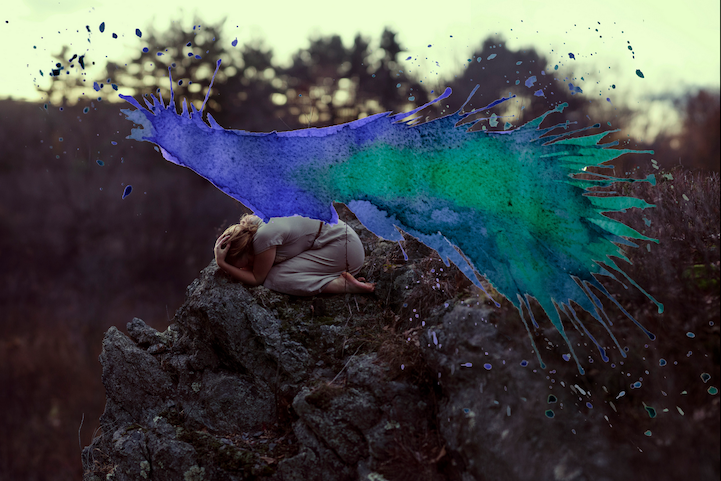
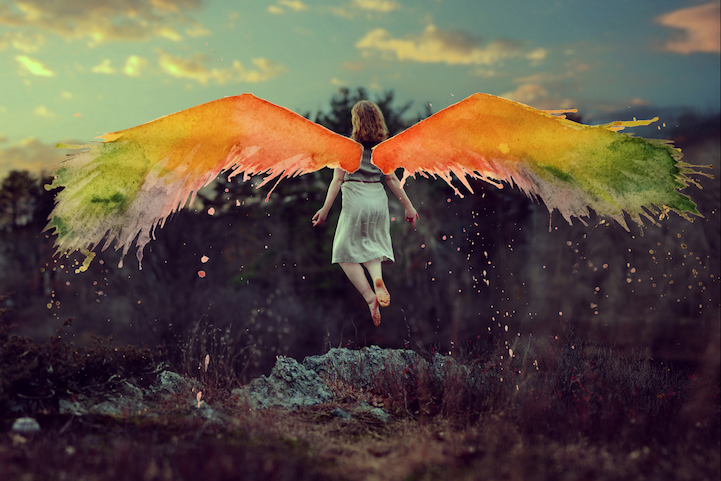
Technically the workflow is straightforward and strict. Shoot the photograph. Paint separately. Composite. Celebrate the flatness instead of hiding it. In an era when retouching often aims to erase evidence of labor, Razell’s rule set is almost ethical: do not lie about dimensionality. Illusion still happens—your eye tries to reconcile figure and wash—but the reconciliation is your work as a viewer, not a shadow layer the artist secretly added.
That honesty changes how the surreal registers. Many surreal photographs invent impossible events inside one coherent photographic space. Razell invents a second medium and lets the collision be the event. The uncanny is not “how did she levitate?” It is “why does feeling look wetter than skin?” Mixed media here is not decoration on a portrait; it is the subject.
Compare that approach with photographic surrealism that never leaves the camera’s contract, or with composites that hide every seam. Razell’s lane is hybrid and frank. If you are sorting artists on a surreal shelf, put her with makers who show their materials, not with makers who sell a single airtight dreamworld.
Anesidora beside Ikävä
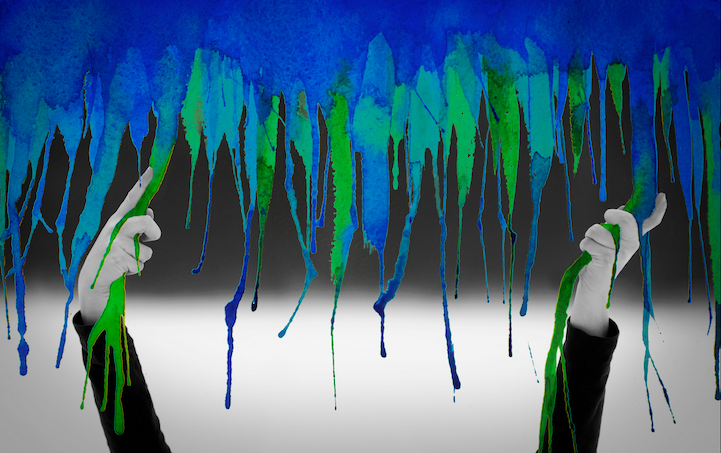
Even when a gallery shows only Anesidora frames, it helps to know the sibling series. Ikävä turns the same hybrid method toward absence and missing—less mythic jar, more private weather. Together they show a young artist testing whether pigment can carry emotional categories that straight photographs underplay. One series borrows a public story; the other borrows a word that resists tidy English. Both refuse to let the photo finish the sentence alone.
Self-portraiture matters to that refusal. When the face and body are the artist’s, the paint reads less like illustration applied to a model and more like thought erupting through a person who also holds the camera. Performance and diary overlap. The “burning need to create” line attached to early profiles sounds romantic until you look at the labor: daily making, separate painting sessions, careful composites that still look spontaneous.
How to look without forcing a caption
Razell prefers leaving room for interpretation. Use that permission. On a first pass, separate layers with your eyes: where does the photograph end, where does the wash begin, where do they overlap in a way that creates a third shape? On a second pass, ask what the paint is doing emotionally—threat, joy, contamination, blessing, speech. On a third, notice silence in the photographic zones. Dull surroundings are not failures of lighting; they are contrast devices that make pigment feel like a thought you can see.
If you make hybrid work, steal the restraint. Paint separately so brushwork stays brushwork. Composite without fake contact shadows if your point is collision rather than trompe-l’oeil. Title carefully when language carries history—as “jar” versus “box” does here. Myth can be a scaffold without becoming a costume brief.
Sit with one image until the paint stops feeling like a filter and starts feeling like a verb. That shift—from effect to action—is when Anesidora clicks.
What stays after the color shock fades is the argument about mediums. Photography can record a face; watercolor can record a surge; together they can record the gap between appearance and interior weather. Razell’s Anesidora pictures keep that gap open on purpose. The jar, in her hands, is not only a myth object. It is a method: contain two crafts, break the seal in public, and let the brightest material be the one that never pretended to be real skin.

Comments
Continue reading
Still-Life Photography at Home with One Window
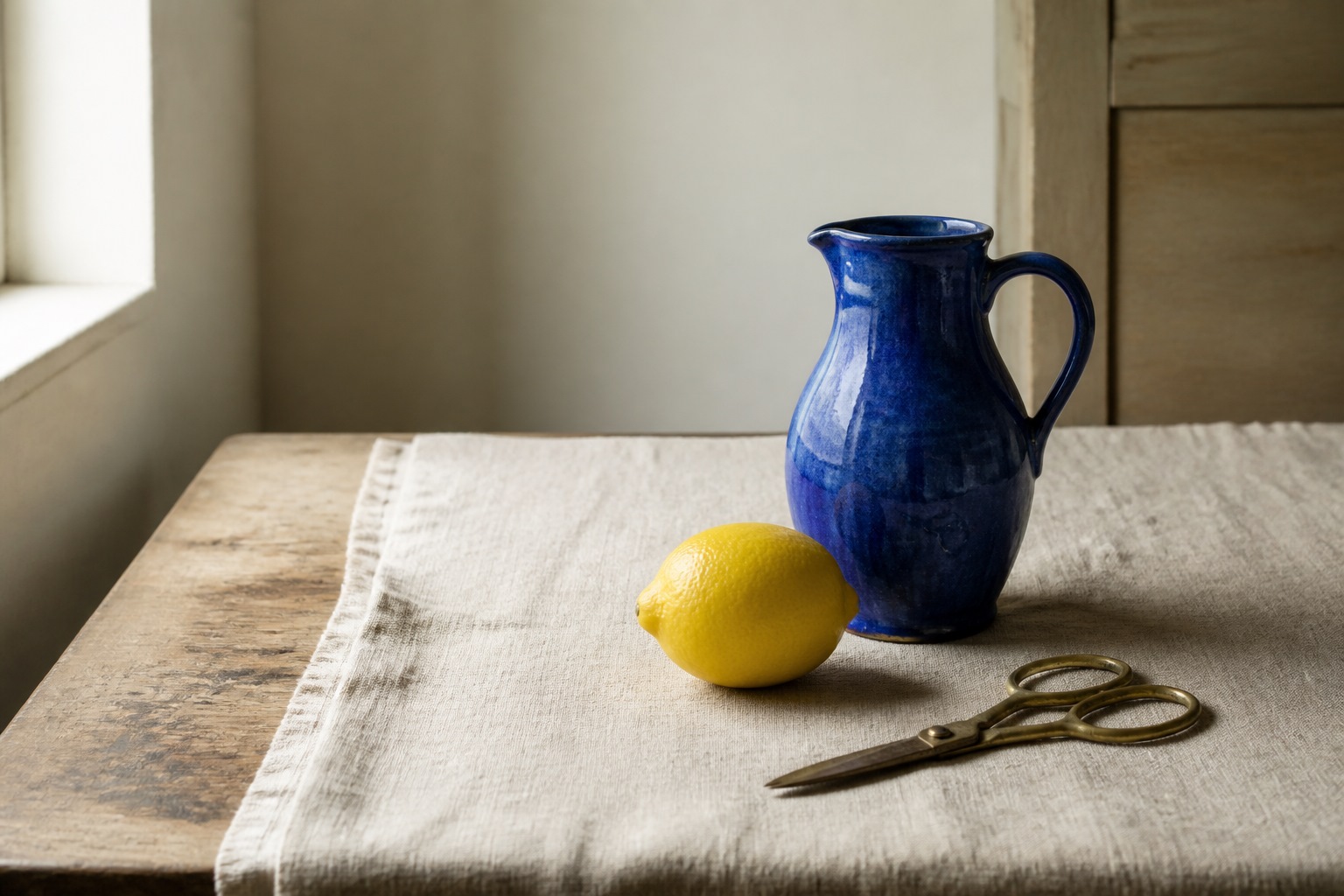
A table, north or side light, and a handful of objects—how to shoot still lifes in a small room without a studio, softboxes, or a prop closet.
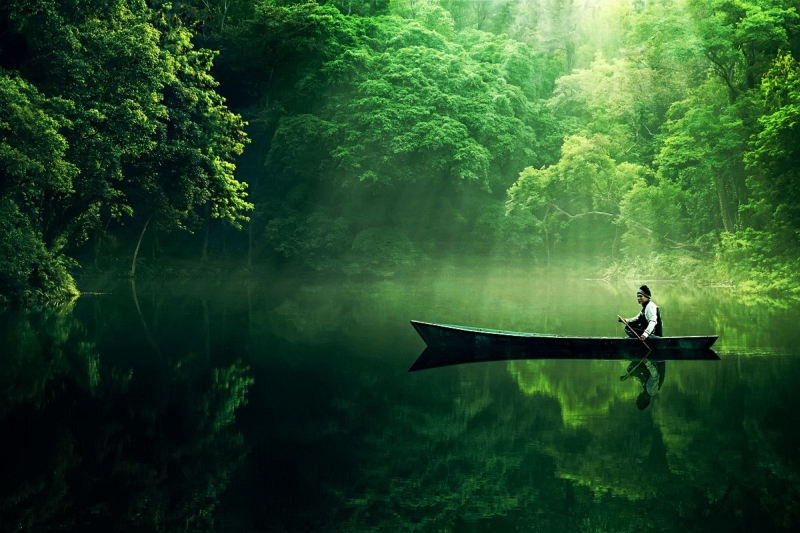
Dramatic Photo Art by Sukron Ma’mun (Ipoenk Graphic)
Cirebon, Indonesia photographer Sukron Ma’mun uses theatrical natural light to frame village life, play, and place in lyrical photo art.

Bird’s-Eye Views: Florian Beaudenon’s Instant Life
Paris photographer Florian Beaudenon’s Instant Life series captures people in their rooms from above—intimate, collaborative overhead portraits of everyday joy.