
Tiny Balcony Ideas That Make Small Outdoor Space Work
Practical small-balcony design: pick one job for the space, go vertical with plants, choose foldable furniture, and leave a clear path for your feet.
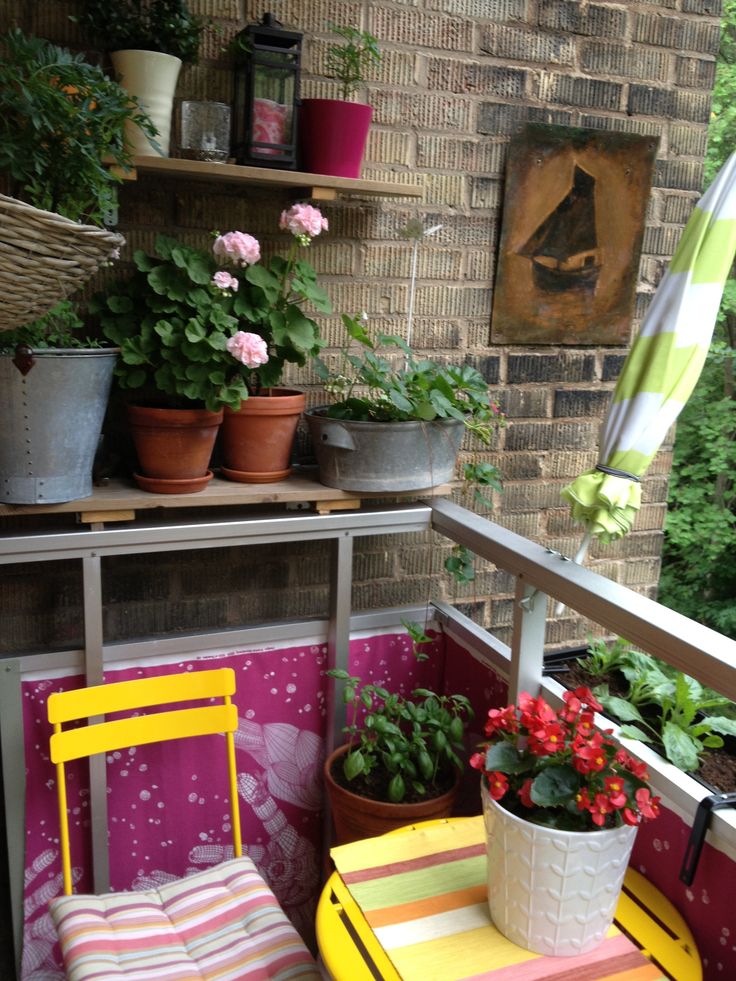
A tiny balcony is still an outdoor room. It will not replace a garden, but it can give you morning air, a place to drink coffee, a few plants that change with the season, and a visual break from the indoor plan of a flat. Urban apartments often treat the balcony as leftover space—storage for drying racks, unused gym gear, or boxes that never find a closet. The more useful approach is the opposite: decide what the balcony is for, then fit only what supports that use.
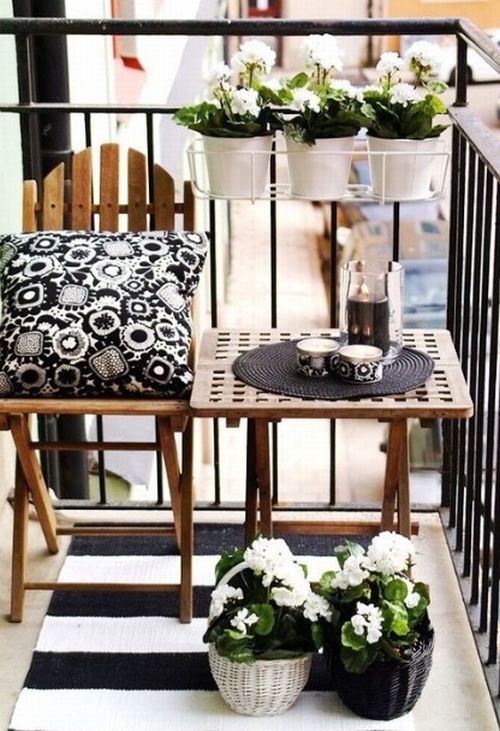
Small outdoor spaces punish clutter and reward clarity. One comfortable seat plus a vertical plant wall often feels larger than four mismatched chairs and a low table that blocks the door. Before you shop, measure width, depth, door swing, and railing height. Note sun hours, wind, and whether downstairs neighbors will mind drips from watering cans. Those constraints are the design brief.
Decide the job of the balcony first
Most tiny balconies do one primary job well. Pick it honestly. A reading perch needs a chair that fits your body, a small side surface for a cup, and enough light or shade to stay. A micro-garden needs pots that drain safely, soil that will not blow away, and plants matched to sun exposure. A dining nook for two needs a fold-down or narrow table and chairs that tuck away. A laundry or utility balcony can still look intentional if hooks, lines, and bins are chosen as a set rather than accumulated randomly.
Trying to do everything at once is how small spaces fail. If you want plants and seating, put plants on walls, railings, or stacked stands so the floor stays clear for feet and a chair. If you want dining, keep plants to a single row or hanging pots. The goal is not maximum stuff; it is a space you will actually step into every day.
Use the floor sparingly
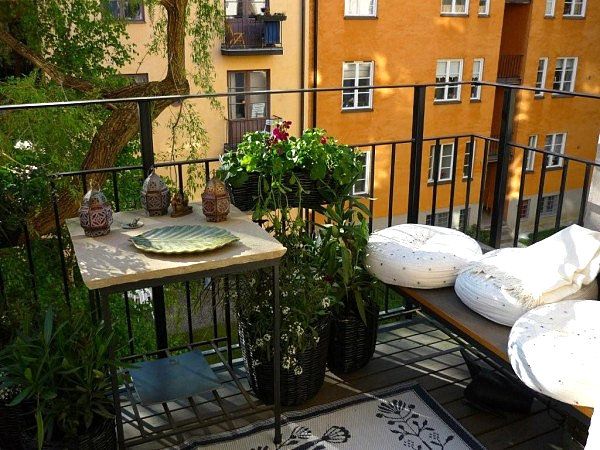
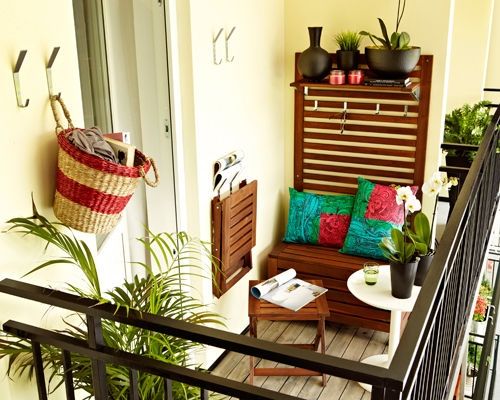
Floor area on a balcony is the most expensive real estate you own outdoors. Every object that sits on it reduces walking space and makes cleaning harder. Prefer slim profiles: a bench along the wall, a folding bistro set, a stool that doubles as a plant stand. Avoid deep lounge chairs unless the balcony is deep enough that you can still open the door fully and walk past without turning sideways.
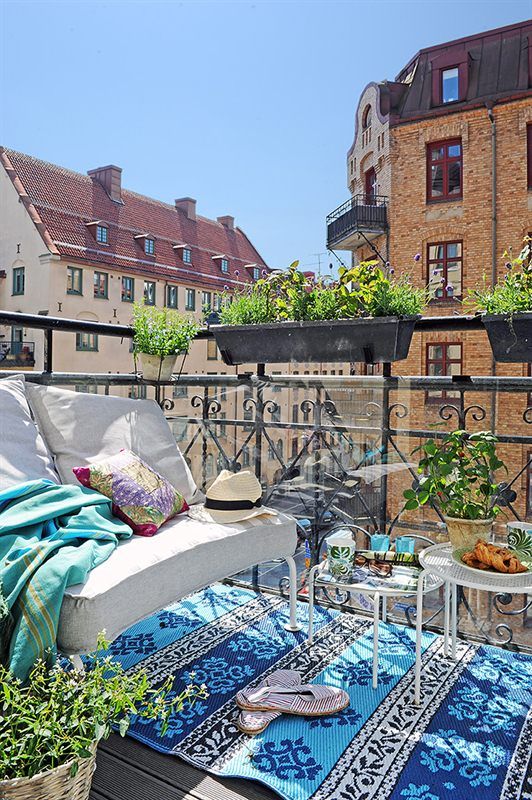
Flooring choices change the mood without adding furniture. Outdoor rugs define a “room” and hide plain concrete, but choose ones rated for weather and shake them out often so mold does not settle underneath. Interlocking deck tiles can warm the look of a cold slab; check weight limits for your building and leave gaps for drainage. Dark floors hide dirt; light floors bounce light into a shady flat—useful when the balcony is the only bright edge of the home.
Go vertical with plants and storage
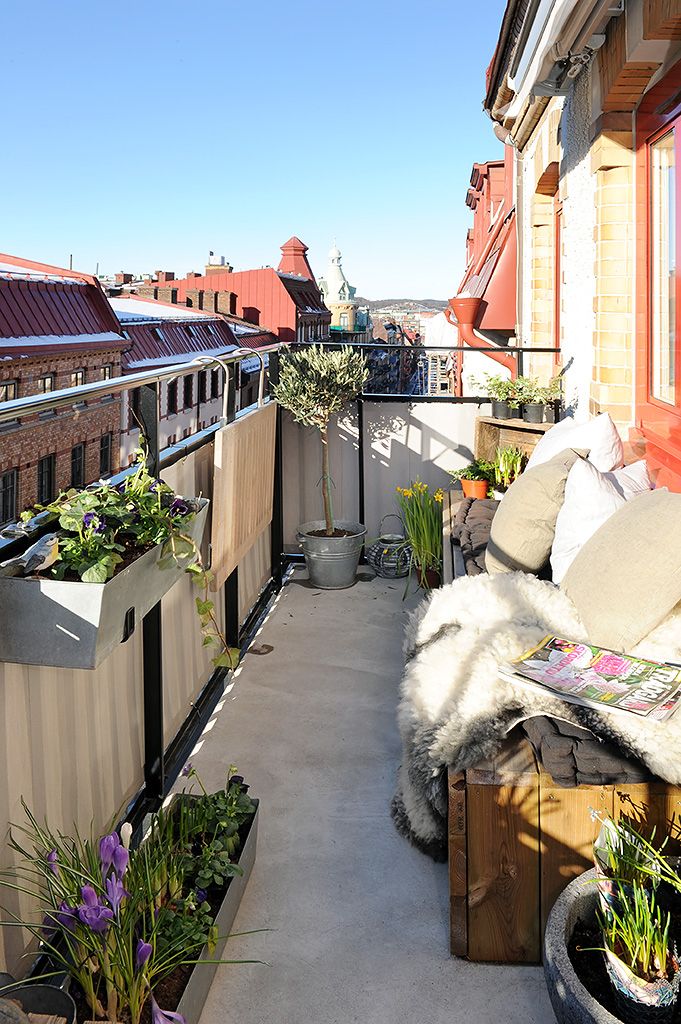
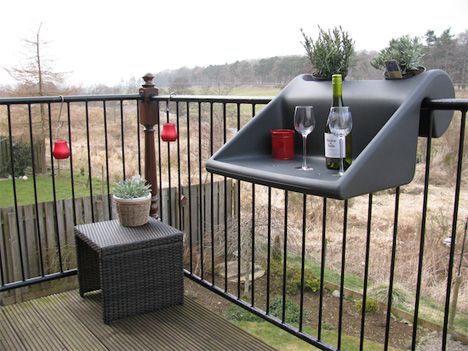
Height is the free dimension on a tiny balcony. Railing planters, hanging pots, wall-mounted shelves, and tall narrow plant stands pull life upward so the center stays open. Trailing plants soften hard railings; upright herbs keep cooking useful without sprawling across the floor. Group pots by watering need so drought-tolerant succulents are not sharing a tray with thirsty basil.
Weight and water matter more than style photos suggest. Terracotta looks warm but gets heavy when wet; fiberglass and quality plastic are lighter. Always use saucers or self-watering systems that do not dump onto the balcony below—many buildings ban open drainage for good reason. If wind is strong, secure hanging pots and choose denser plants that will not snap. A few well-kept plants beat a jungle you cannot maintain.
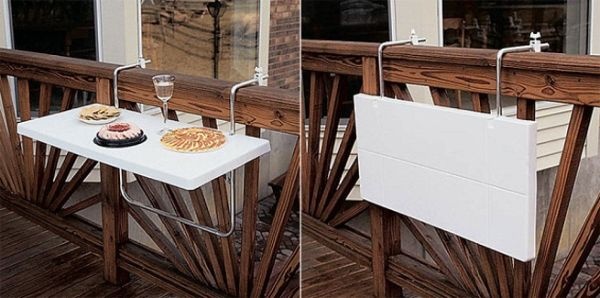
Furniture that folds, stacks, or serves two jobs
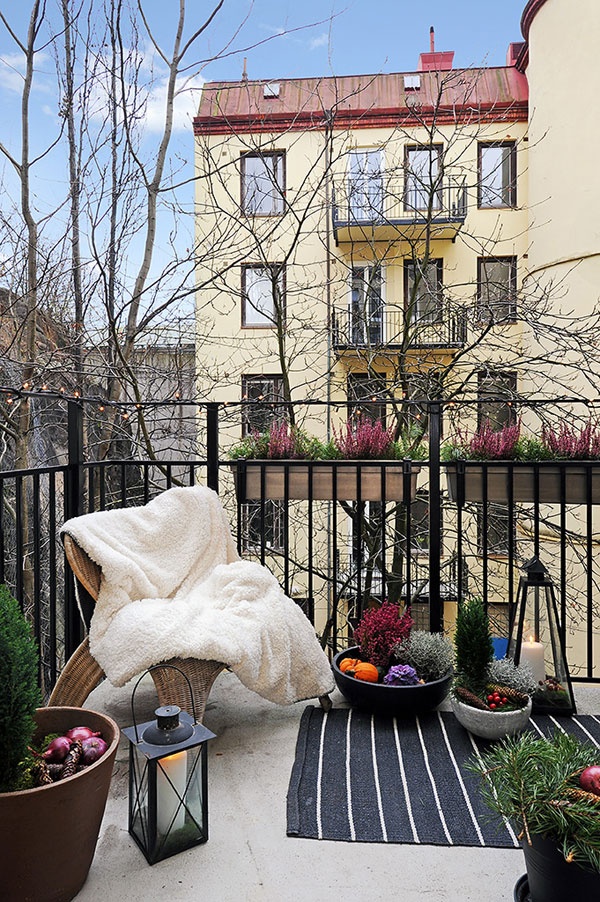
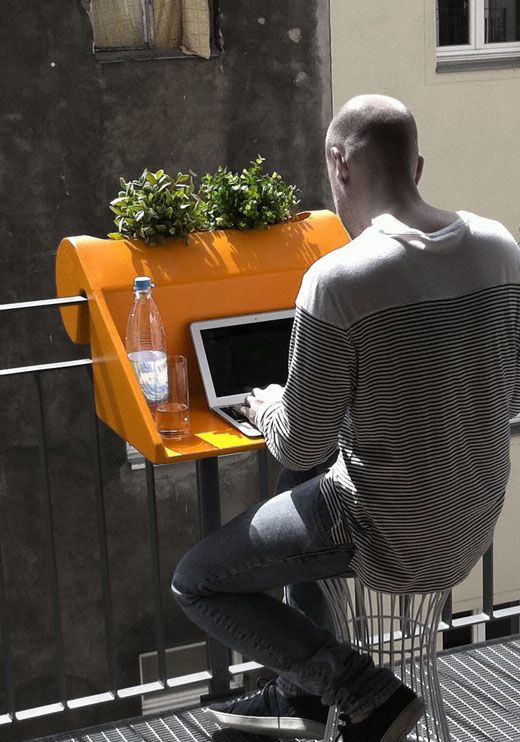
On a balcony measured in square meters rather than rooms, multipurpose pieces earn their keep. A bench with storage hides cushions and tools. A folding table becomes a desk for remote work in good weather and disappears when you need space to water plants. Nesting stools flex for guests without permanently crowding the railing. Look for outdoor-rated finishes: powder-coated metal, teak or other weather-stable wood, and fabrics labeled for outdoor use. Indoor pillows will mildew fast.
Scale is everything. Oversized sectionals photographed on rooftop terraces will dominate a 1×3 meter strip. Sit in the piece in a store if you can, or check dimensions against painter’s tape laid out on the balcony floor. Leave a clear path from the door—usually at least the width of your shoulders—so the balcony never feels like an obstacle course.
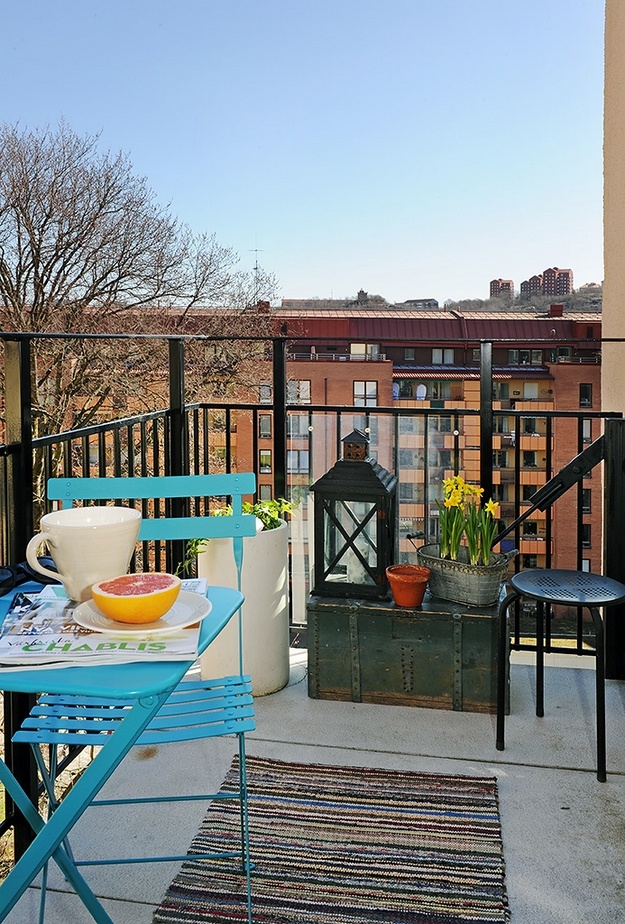
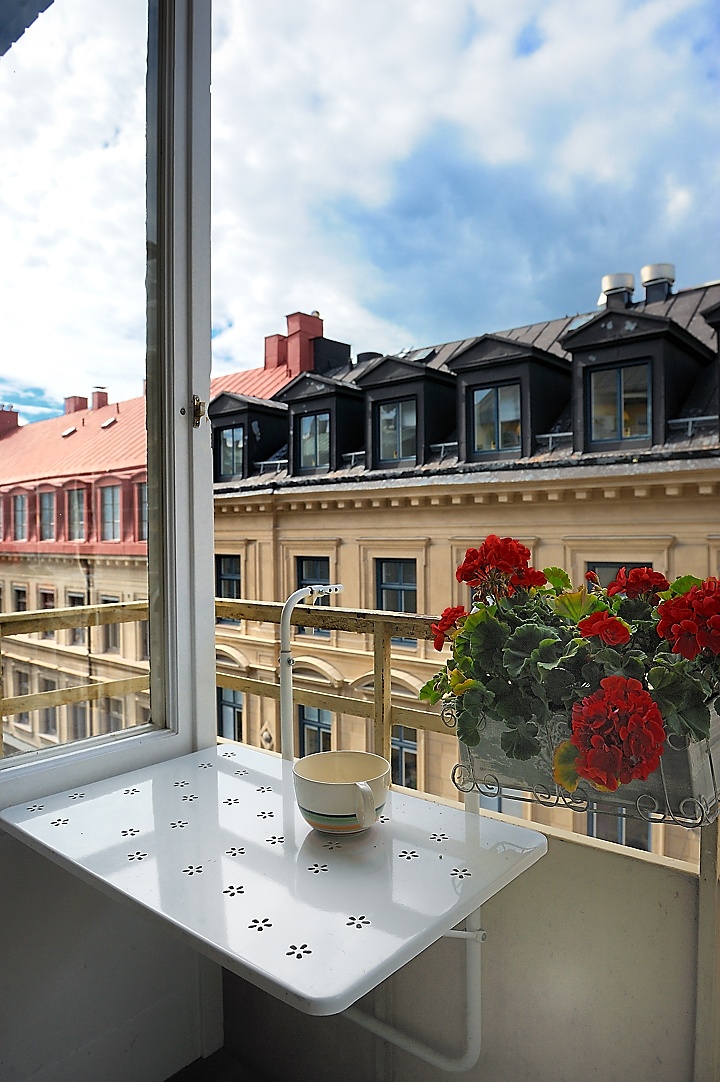
Privacy, shade, and weather without boxing yourself in
Urban balconies often face neighbors, streets, or harsh sun. A reed screen, outdoor curtain on a tension rod, or climbing plant on a trellis can soften sightlines without turning the space into a cave. Check building rules before drilling into railings or façades; many rentals allow freestanding screens and clamp-on solutions only.
Shade cloth, a small cantilever umbrella (if weight and wind allow), or a simple awning change how long you stay outside in summer. In cooler months, a throw and a windbreak matter more than décor. Avoid glass-heavy setups if your climate swings between heat and freeze unless you can ventilate; enclosed “winter gardens” need careful planning and often landlord approval.
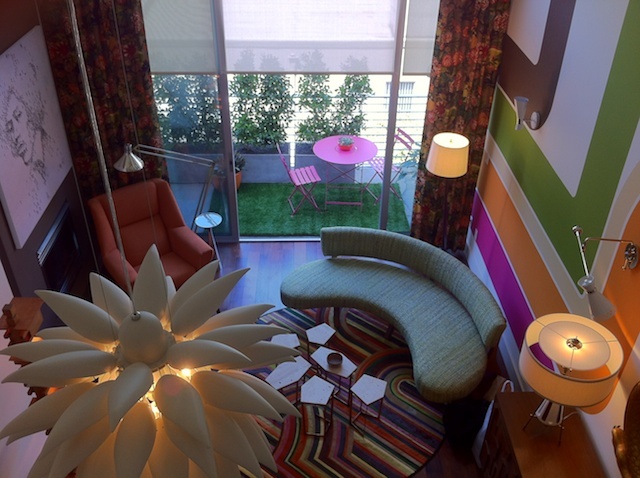
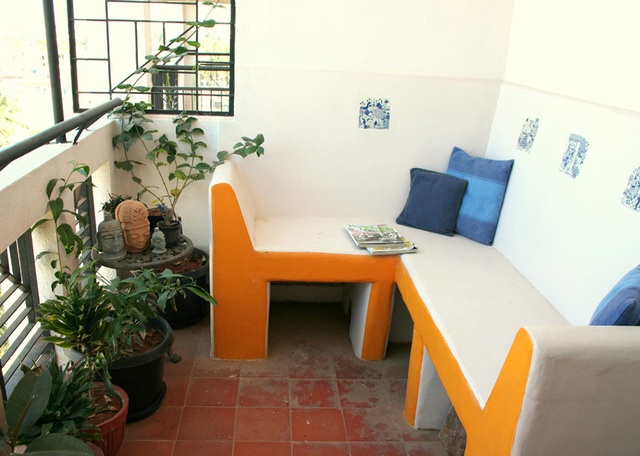
Light, color, and a calm palette
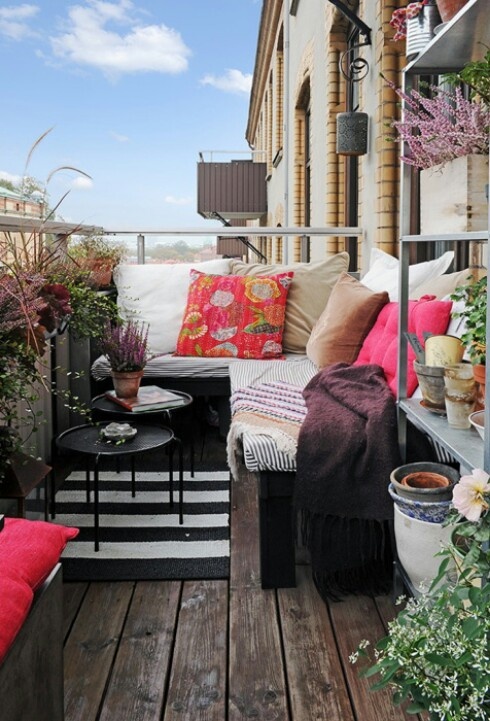
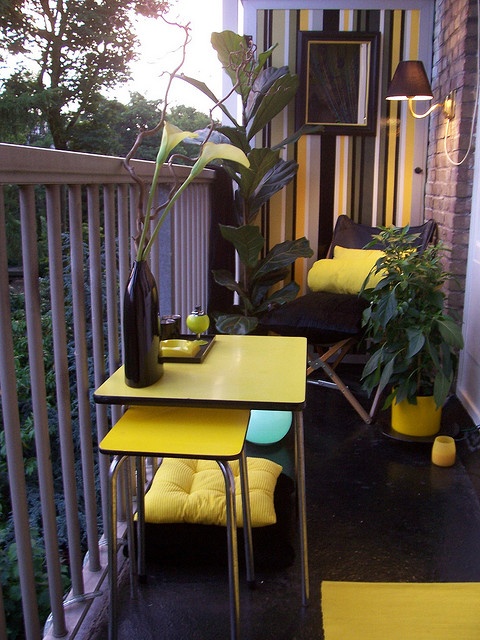
Evening light stretches balcony use past sunset. Battery or solar string lights, a single wall sconce if permitted, or a lantern on a side table are usually enough. Avoid dozens of competing fixtures; one warm layer looks intentional. Color works the same way: two or three tones across pots, cushions, and rug unify the scene. A mix of every bright plastic pot reads as storage, not design.
Mirror tricks and glossy surfaces can bounce light into a dark flat, but keep them modest—wind and condensation are real. A pale wall paint on the balcony side (if you own and may paint) or a light curtain can make a shallow space feel deeper than dark clutter ever will.
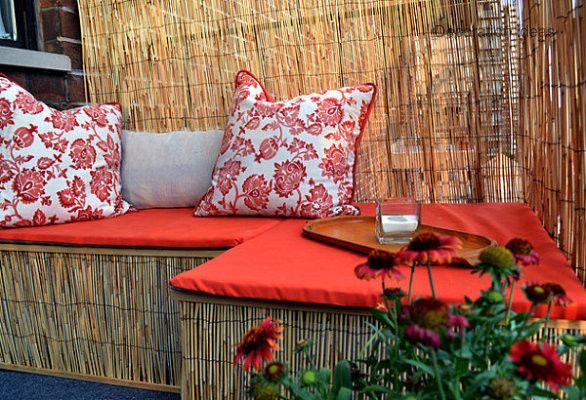
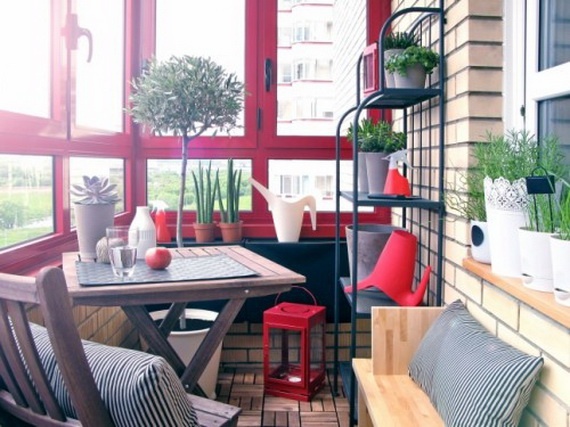
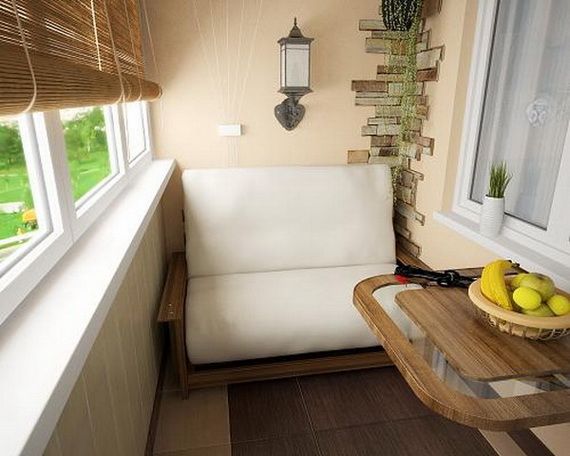
Rules, safety, and maintenance
Before hanging anything heavy or adding furniture that concentrates weight near the edge, learn your building’s load and attachment rules. Never block fire escapes or exit paths. Keep railings clear of climbable stacks if children visit. Sweep regularly; grit wears flooring and blows indoors. Wipe metal so rust does not stain façades. Bring cushions inside when storms are forecast.
Seasonal editing keeps the balcony usable. In spring, refresh soil and swap winter textiles for lighter ones. In autumn, cut back plants that will not survive and store fragile décor. A tiny balcony that is cleaned and edited four times a year will always feel larger than one that accumulates “just one more pot.”
A practical order of work
Clear everything off and scrub the floor and railing. Tape out furniture footprints. Choose one primary use. Add seating or table first, then vertical planting, then textiles and light. Live with the setup for a week before buying more. If you find yourself stepping over objects to water a plant, something needs to leave—not something new needs to arrive.
A tiny balcony earns its keep when it invites five quiet minutes outdoors, not when it photographs like a showroom. Measure twice, buy less, grow up the walls, and leave a path for your feet. That is enough design for a space measured in footsteps rather than rooms.

Comments
Continue reading

Sculptural Shoes That Were Never Meant to Walk Far
When footwear leaves the sidewalk: gallery heels, unwearable lasts, and object-shoes that belong on a plinth more than on a commute.

Ads That Live on the Floor, the Street, and the Mall
Ambient and out-of-home advertising that uses pavement, escalators, parking lots, and mall floors as the media—not a magazine page.
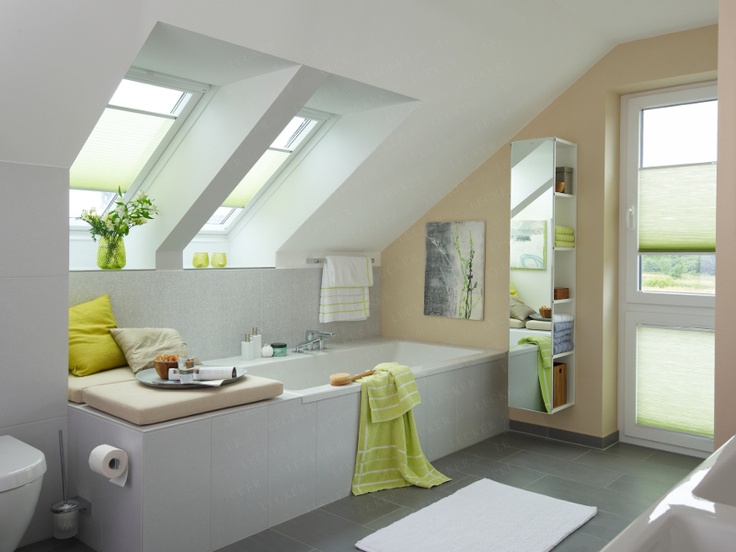
Attic Bathroom Design Ideas: Light, Layout, and Roof-Friendly Fixtures
Design ideas for converting an attic into an extra bathroom—working with slopes, skylights, wet-zone materials, eaves storage, and fixture placement.