
Ads That Live on the Floor, the Street, and the Mall
Ambient and out-of-home advertising that uses pavement, escalators, parking lots, and mall floors as the media—not a magazine page.
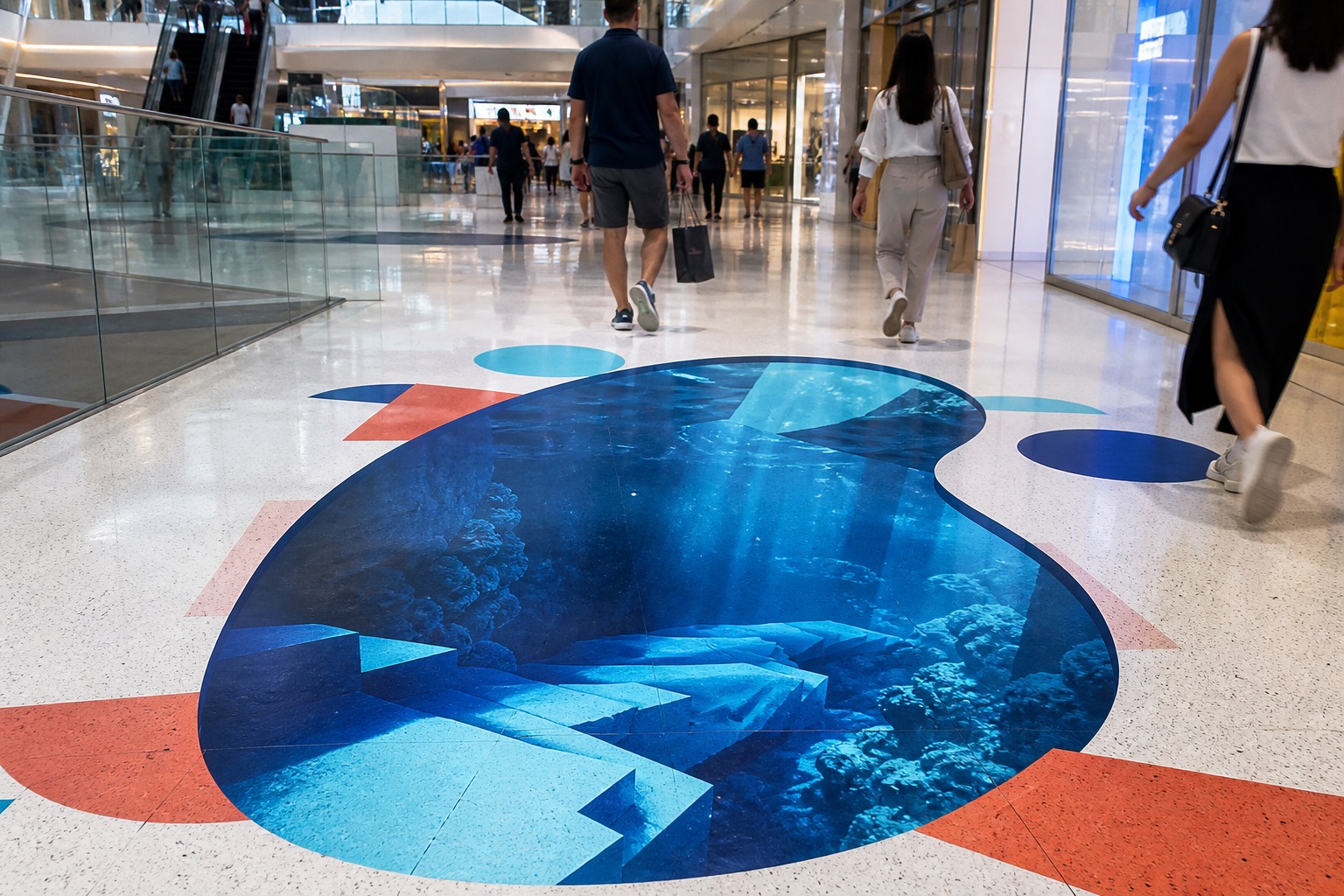
Print ads live in a rectangle. Ambient ads live in a place you already occupy: the tiles you walk, the parking bay, the escalator panel, the mall corridor. The joke or the product has to finish in real space, at real scale, with real people in the way. If you want cleverness that still sits on a page, the archive of print and ambient examples is the sibling; this piece stays on the street and the floor.
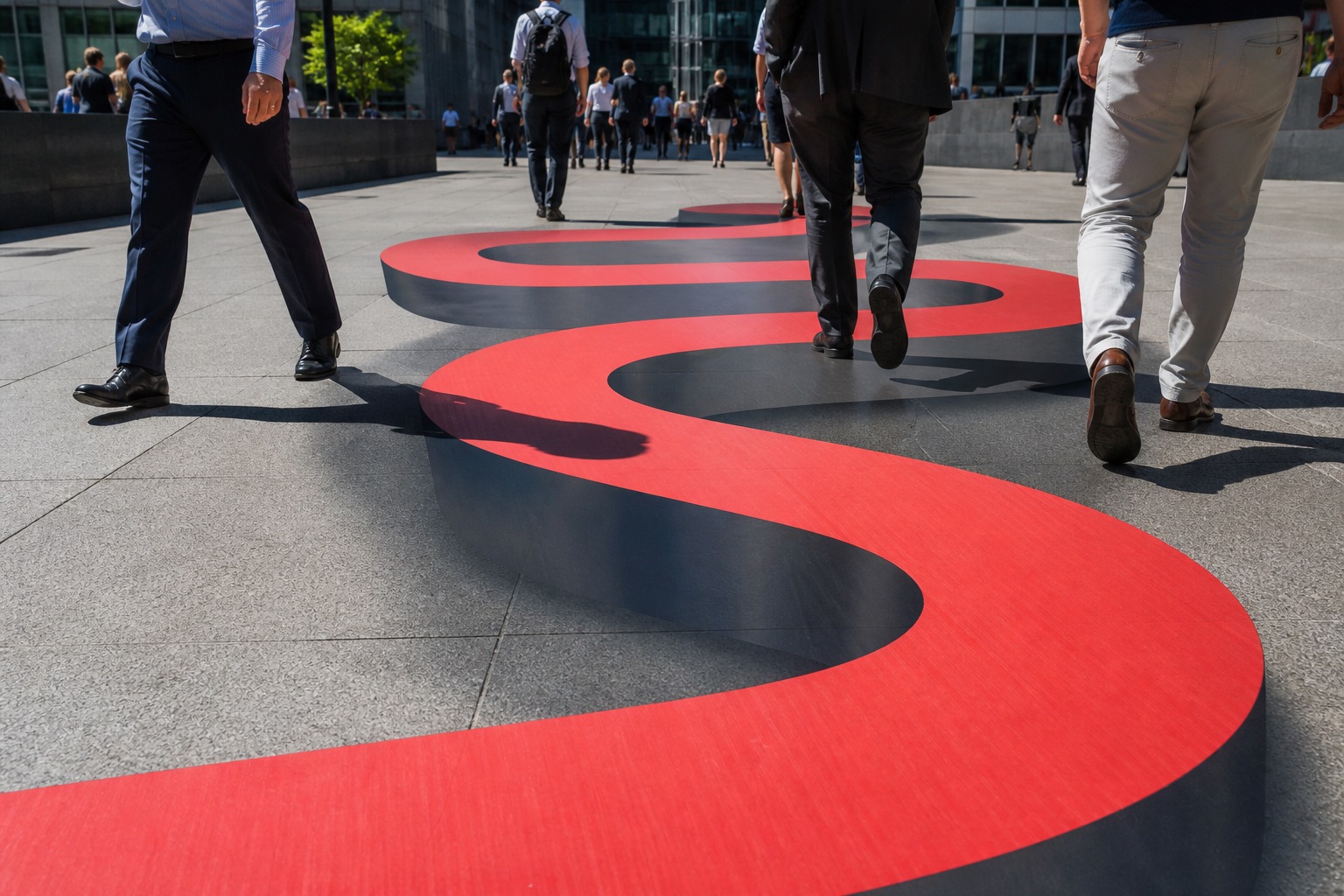
The floor is a billboard you cannot skip
Floor graphics work because pedestrians look down at thresholds, queues, and wet-floor cones. A campaign that uses that glance has to survive scuffs, glare, and being cropped by someone’s shopping bags. High contrast, one idea, a logo that still reads when half the vinyl is under a stroller.
Classic moves: a giant object “crushed” underfoot (bug, car, product), a trompe-l’œil hole or height, a path that only makes sense from one direction. If the illusion needs a helicopter, it is not a floor ad. It is a stunt photograph of a floor ad.
Streets, lots, and transit
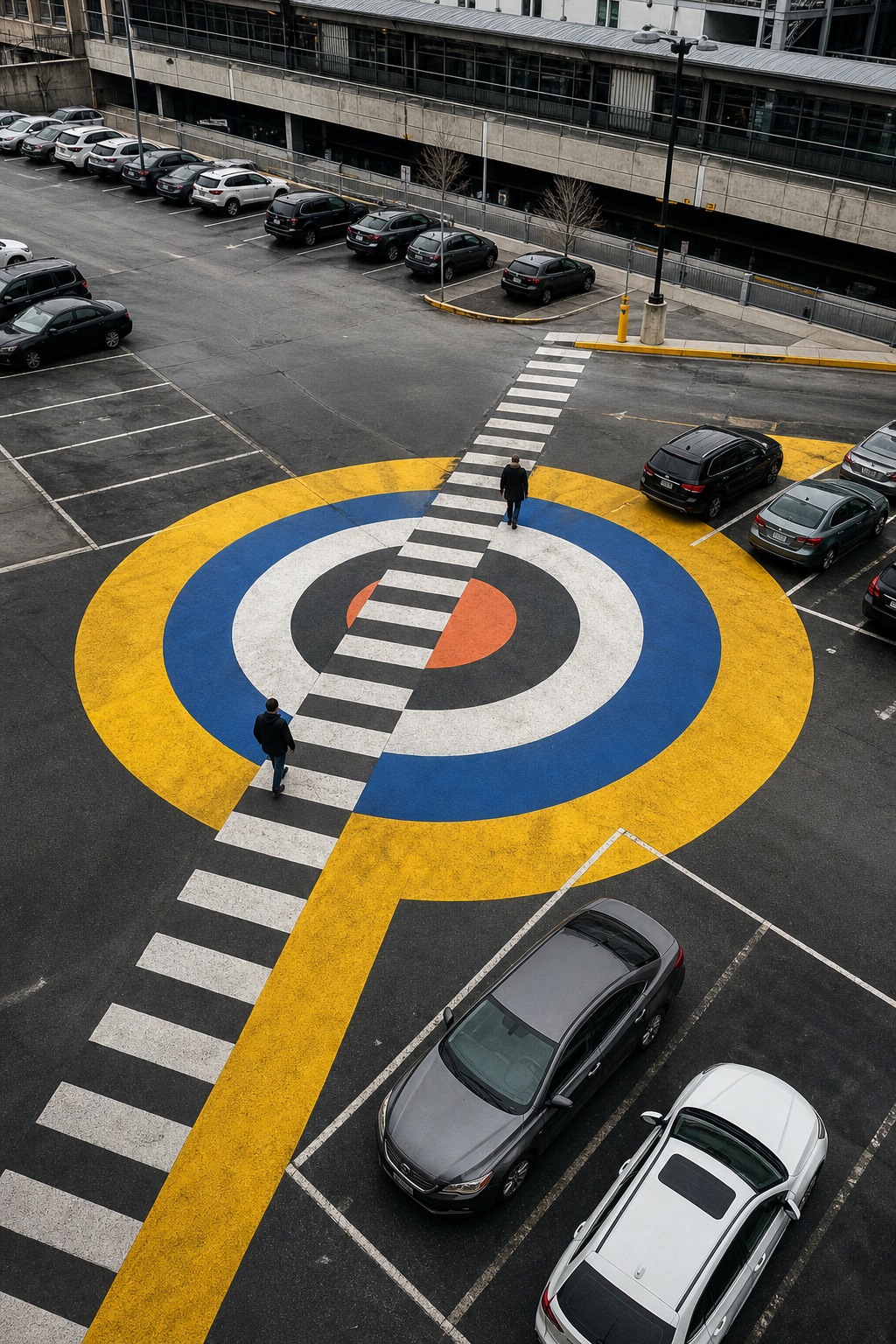
Parking-space takeovers turn white lines into a canvas. They last until the next rain and the next shift of cars. Photograph them empty and occupied; occupancy is the proof the media is real.
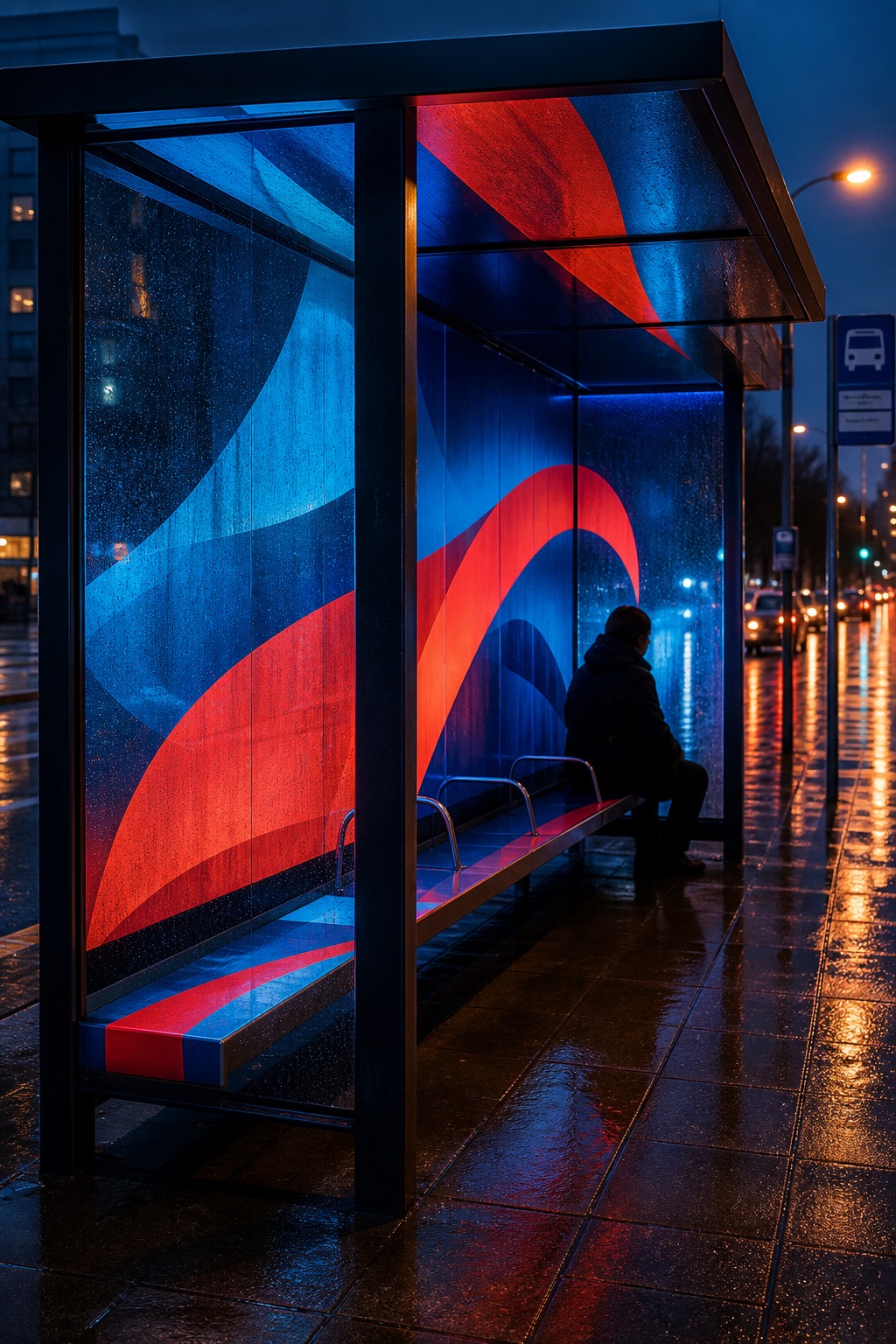
Crosswalks, bus shelters, and construction hoardings are rented media with rules. Ambient work that ignores permits becomes graffiti with a brand budget. The interesting pieces use the existing furniture: a shelter that becomes a giant product carton, a hoarding that continues the building’s windows, a bike rack that is also a slogan you can lock to.
Transit interiors are closer to print—repeatable panels—but the interruption is physical. Doors open through the headline. Poles split the visual. Design for the split.
Malls, escalators, and indoor weather
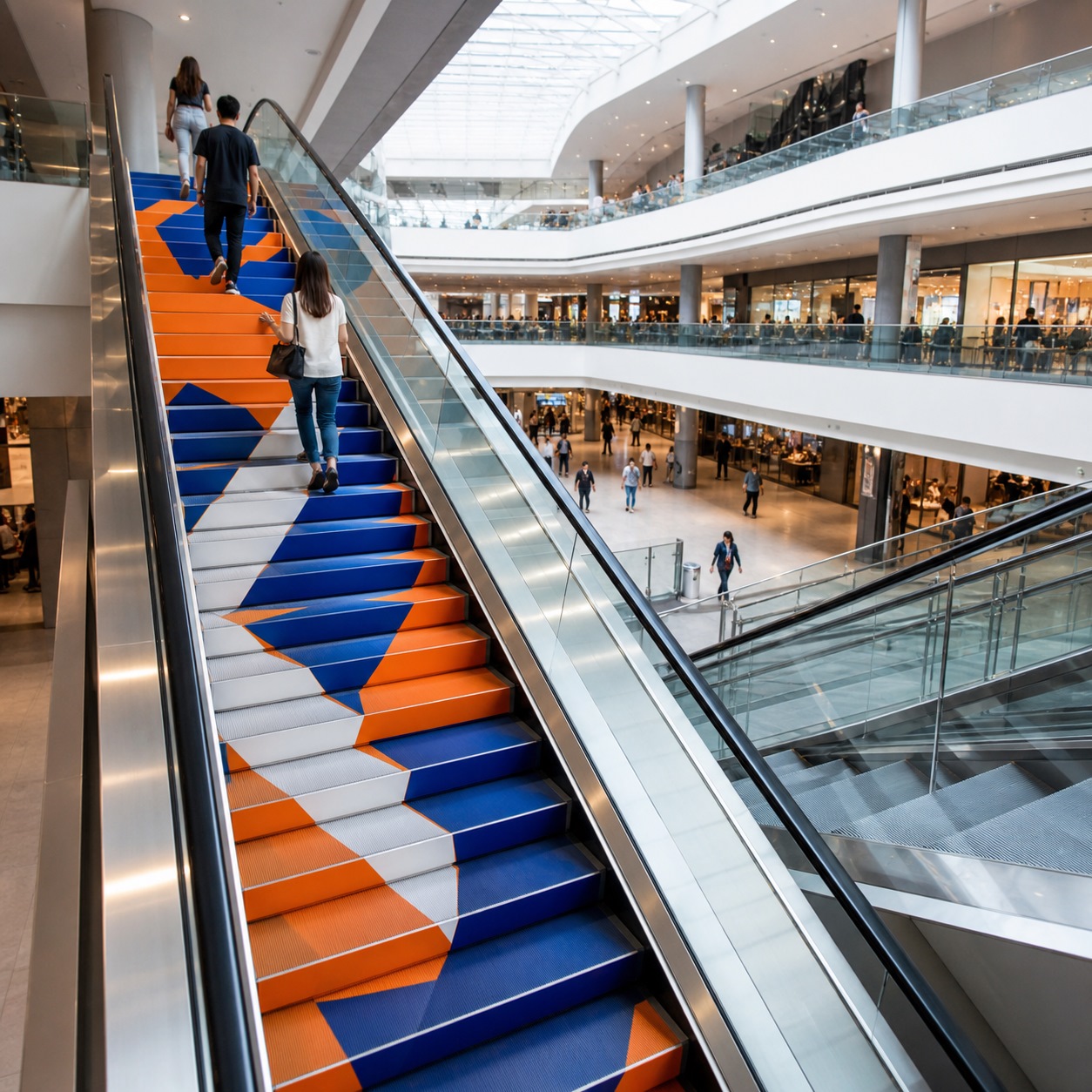
Malls offer climate control and a captured audience walking predetermined loops. Floor vinyl here lasts longer than on a city sidewalk. Escalator risers create a flipbook if the frames are sequenced; most brands print the same frame on every riser and waste the motion.
Atriums tempt hanging pieces. Hanging pieces photograph well from the food court and disappear from the shopper’s eye-line. If the audience is on the ground, put the work on the ground or on the rail they hold.
What makes an ambient ad hold up
It should still make sense when a stranger stands in the wrong place. A one-point perspective floor hole that only works from the south entrance is a director’s viewfinder, not public work.
It should survive a photograph taken by a phone, because that is how it travels. If the only good angle needs a ladder, you have made a campaign for the agency’s awards entry.
It should be kind to the space. Oil-slick vinyl on a staircase is a lawsuit. Ink that stains historic stone is vandalism. The constraint is part of the craft.
Scale, type, and the three-second rule
Type that works in a magazine at 12 points does not work under a shoe. Floor and pavement type needs to be closer to architectural signage: few words, heavy weight, huge x-height. If the brand insists on a paragraph of terms, those terms belong on a URL, not on the vinyl.
Color must survive dirt. Pastel floor graphics in a commuter station last a week as a concept and a day as a picture. High contrast is not a lack of taste here; it is weatherproofing.
Sound and smell are rare in this medium and memorable when honest: a coffee brand that actually vents coffee in a shelter is ambient. A coffee brand that prints a giant cup on the floor is a floor sticker. Both can be fine. Only one is using the place.
Documenting work that will be gone on Monday
Ambient ads are temporary. The archive is photographs, and photographs lie about crowd density and about the angle. Shoot from eye height first, then from the “hero” angle the agency will prefer. Keep both. The eye-height frame is the one that tells you whether the public ever received the idea.
Note the date, the weather, and whether the piece was still intact. A torn floor graphic is data about materials. A pristine drone shot of a closed lot is data about access.
If you are the one commissioning, budget for deinstall. Vinyl that stays down into the next tenant’s event is how brands get a reputation with venues. The last frame of the job is a clean floor. Night versions—projections, lit pavement—need a different permit and vanish in rain; shoot a noon frame as well as dusk. Keep a folder of failures: slippery vinyl, type that disappeared at midday, a shelter that blocked a map. Failures teach materials faster than awards books.
Who the work is actually for
Commuters, shoppers, and people late for a train are not an awards jury. If the idea requires a caption in the case film, it failed in the street. If it made a stranger laugh, stop, or take a picture without being asked, it used the place. Brands that only measure “earned media” from influencer drone shots are measuring a different product than the one on the floor.
Cities also have a right to boredom. Not every blank pavement wants a brand. The best ambient work often sits in spaces that are already commercial: malls, stations, car parks. Putting a floor ad on a residential sidewalk is a different ethic. Craft and permission are not the same as “it would look cool.”
How to look at them
Stand where a tired person would stand: the queue, the curb cut, the top of the escalator. If the idea arrives in one second, it is working. Your eyes, at five-foot-something, are the media test. Walk the whole approach—from the door, from the opposite corridor, from a wheelchair height if you can. An ad that only works for a standing adult facing south is still a print ad that wandered outdoors. If you cannot walk it, you are editing a photograph of an ad, not the ad.

Comments
Continue reading
Sculptural Shoes That Were Never Meant to Walk Far
When footwear leaves the sidewalk: gallery heels, unwearable lasts, and object-shoes that belong on a plinth more than on a commute.
Attic Bathroom Design Ideas: Light, Layout, and Roof-Friendly Fixtures
Design ideas for converting an attic into an extra bathroom—working with slopes, skylights, wet-zone materials, eaves storage, and fixture placement.
Ladder Shelving Repurpose Ideas: DIY Bookcases, Dividers & More
Turn an old ladder into shelving, a room divider, towel rack, or narrow desk—practical DIY steps, safety checks, and styling tips with photo ideas.